
Understanding Why Your Backflow Preventer is Leaking
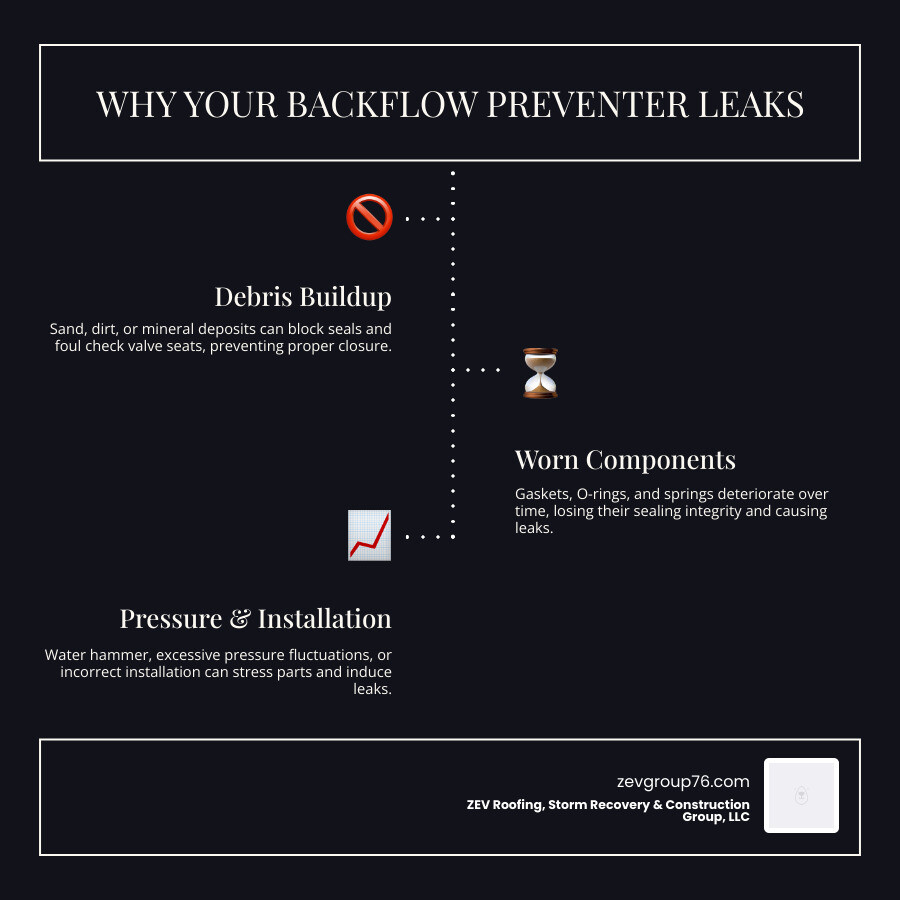
Why is my backflow preventer leaking? This common plumbing issue can signal anything from normal operation to a serious system failure. The main reasons your backflow preventer might be leaking include:
Most Common Causes:
- Debris buildup – Sand, dirt, or mineral deposits blocking seals
- Worn internal parts – Deteriorated gaskets, springs, or O-rings
- Pressure issues – Water hammer or excessive back pressure
- Installation problems – Incorrect placement or overtightened fittings
A backflow preventer is designed to protect your clean water supply from contamination. Occasional dripping during system shutdown is normal. However, constant dripping or gushing water indicates a problem that needs immediate attention.
Your backflow preventer contains check valves, springs, and seals that can fail over time. According to plumbing experts, debris in the first check valve causes leaks 9 times out of 10. Other culprits include worn washer seals that dry out and crack, or corroded springs in the relief valve.
The key is knowing when you’re dealing with normal operation versus actual failure. A small drip when the system shuts off is expected, but persistent flow means contaminated water could enter your drinking supply.
At ZEV Roofing & Construction, we understand that a leaking backflow preventer is a concern. While our primary focus is on roofing, storm recovery, and general construction, we believe in providing comprehensive information to help you maintain a safe and functional property. Protecting your water supply is just as crucial as protecting your roof!
Identifying the Problem: Signs of a Leaking Backflow Preventer
Think you have a leak? Identifying the problem is straightforward once you know what to look for. Answering why is my backflow preventer leaking starts with spotting the signs.
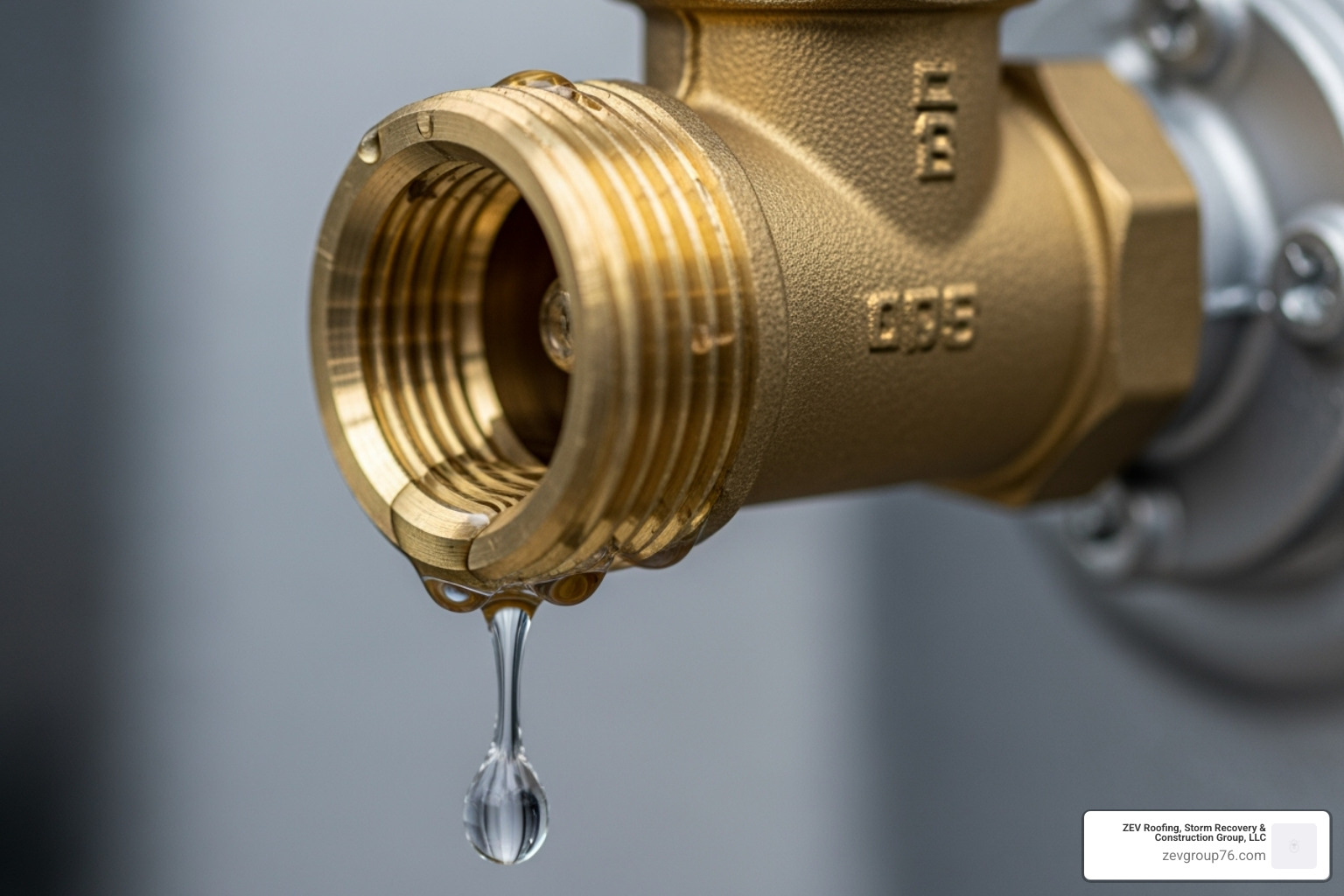
The most obvious sign is water pooling around the device. A puddle or consistently wet area indicates a leak. Indoors, this can lead to water damage, mold, and expensive repairs.
It’s important to know the difference between dripping vs gushing. A small, occasional drip when your irrigation system shuts down is normal operation, as the device relieves excess pressure. However, a constant drip means something is wrong internally. If water is gushing out, it signals a major internal failure requiring immediate action to protect your water supply and prevent a high water bill.
Other red flags include:
- Decreased water pressure: If your shower feels weak or faucets sputter, a leaking backflow preventer could be the cause.
- Unusual noises: Hissing can mean water or air is escaping, while banging or water hammer suggests loose or damaged internal parts struggling with pressure changes.
- Rust and corrosion: Rust or green/blue stains on the unit indicate prolonged moisture exposure from a slow leak, warning of bigger failures to come.
Catching these signs early saves money, frustration, and potential health risks. Just like with roof damage, addressing small problems before they escalate is key.
Why Is My Backflow Preventer Leaking? Common Causes Explained
Understanding the common culprits behind a leaking backflow preventer can help you diagnose the issue. Most problems fall into a few predictable categories.
Debris and Mineral Buildup
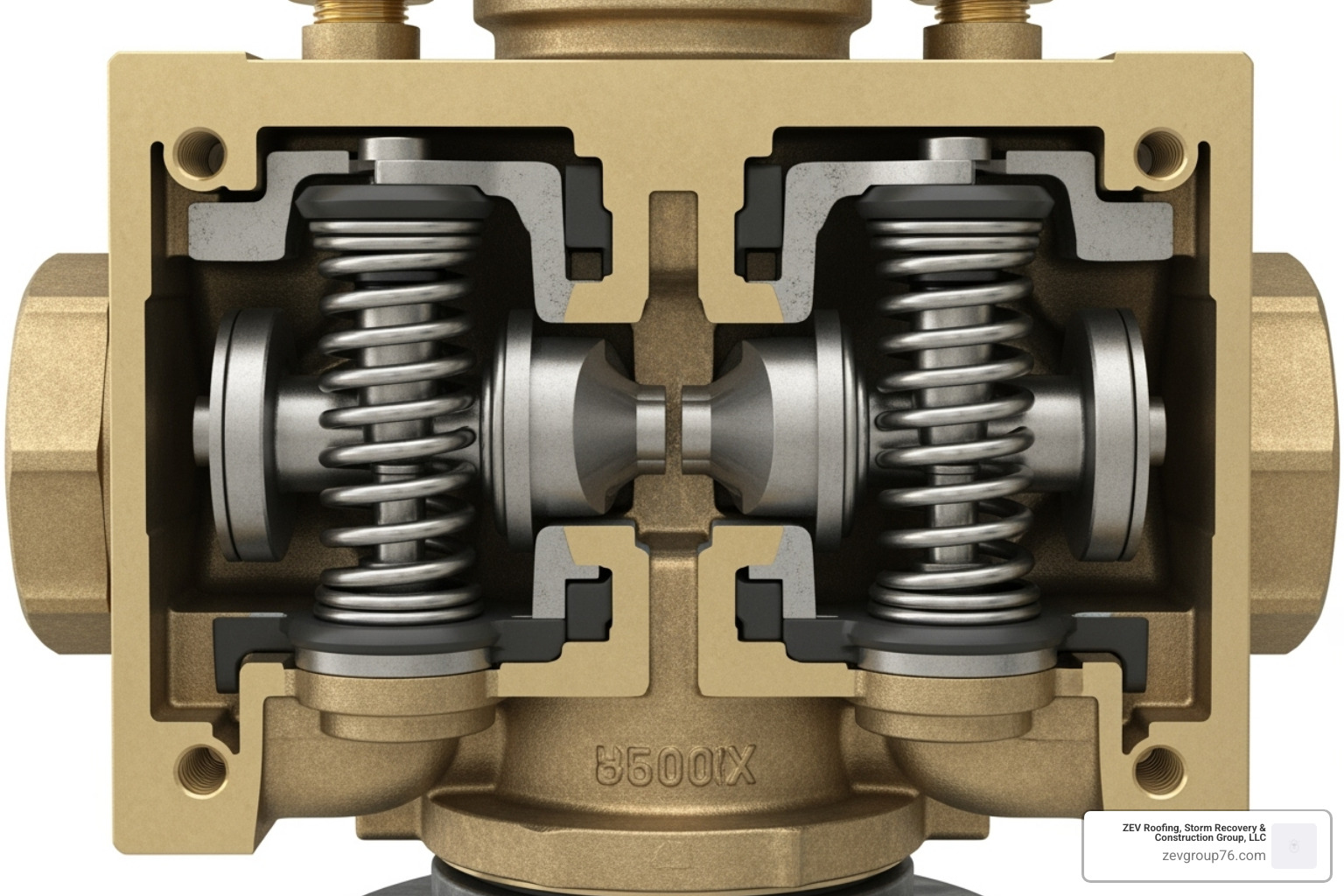
Often, the answer to why is my backflow preventer leaking is as simple as a grain of sand. Debris is the number one cause of leaks. Tiny particles of sand, dirt, or pipe scale can get wedged in the device’s seals, preventing them from closing completely. The relief valve seat and the first check valve are particularly vulnerable. When the first check valve is fouled, water escapes through the relief port, causing a constant drip.
This debris can come from the municipal water supply (especially after main repairs), get left behind during installation, or build up over time as mineral deposits from hard water. In many cases, simply cleaning out this debris can solve the leak.
Worn-Out Internal Components
Like any mechanical device, the parts inside your backflow preventer wear out over time.
- Worn washer seals, gaskets, and O-rings are common culprits. These rubber components can become brittle, crack, or lose flexibility, allowing water to escape.
- Corroded or weakened springs can fail to hold check valves and other components in place, leading to leaks.
- Deformed rubber discs in the check valves can also prevent a complete seal.
These parts are designed for heavy use but aren’t invincible. Regular maintenance and timely replacement can prevent most of these failures. For more info about our repair services, we’re here to help with comprehensive solutions for your property.
Why is my backflow preventer leaking due to pressure or installation issues?
Sometimes, the leak is a symptom of a larger system issue or improper installation.
- Water hammer: Sudden stops in water flow create shockwaves (loud banging noises) that can damage internal components and knock seals out of place.
- Excessive back pressure: If pressure on the downstream side (e.g., your irrigation system) becomes too high, it can overwhelm the device and cause leaks.
- Pressure fluctuations: Constant changes in incoming water pressure cause valves to open and close repeatedly, accelerating wear and allowing debris to get lodged in seals.
- Incorrect installation: A common mistake is placing the backflow preventer before a timer in an irrigation system, which can cause pressure buildup and leaks. Overtightening fittings can also crack parts or distort seals. The solution may involve adjusting your system, not just the device. For technical details, see the Cross-Connection Control Manual.
DIY Fix vs. Calling a Professional: What’s the Right Move?
Once you’ve spotted the leak, you need to decide whether to fix it yourself or call a pro. Since backflow preventers protect your drinking water, many jurisdictions require a certified plumber for repairs and testing to comply with local codes.
Simple Troubleshooting Steps You Can Try
Before calling for backup, you can try a few safe, simple steps:
- Shut off the water supply using the main shut-off or the device’s isolation valves.
- Check connections. Sometimes a leak is just a loose fitting. Hand-tighten only for hose connections, as over-tightening with a wrench can crack plastic parts or damage seals.
- Clean debris from the valve. If you’re comfortable, you can carefully remove the cap to look for and remove particles of sand or dirt. You can also try rinsing the spring assembly by pressing it open and closed while running clean water through it.
- Check the washer seal on hose-end units. If the rubber washer looks cracked or worn, replacing it may solve the problem.
If these steps don’t work, it’s time to call an expert.
When to Call a Certified Professional
Some situations absolutely require professional help. Call a certified plumber if:
- Water is gushing. This signals a major internal failure. Shut off your water and call for help immediately.
- You have a persistent leak. If your troubleshooting doesn’t stop a constant drip, it means an internal part has failed.
- Specialized tools are needed. Professionals have the right equipment and expertise for proper repair and testing.
- It’s time for annual certification. Most areas legally require annual testing by a certified professional. A leaking device will fail this test, and only a pro can perform the test and submit the required paperwork.
At ZEV Roofing & Construction, we value having the right expert for the job. We recommend licensed, certified plumbers for backflow preventer issues to ensure the repair is safe and compliant. For all your other property protection needs, check out Our Services.
Preventative Maintenance to Avoid Future Leaks
An ounce of prevention is worth a pound of cure, especially for your backflow preventer. Proactive maintenance can save you from expensive repairs and potential health risks.
The best way to prevent asking why is my backflow preventer leaking is through annual inspection and professional testing. Most municipalities legally require this. A certified technician can spot worn seals, debris, or pressure issues early and provide the necessary documentation to keep you compliant.
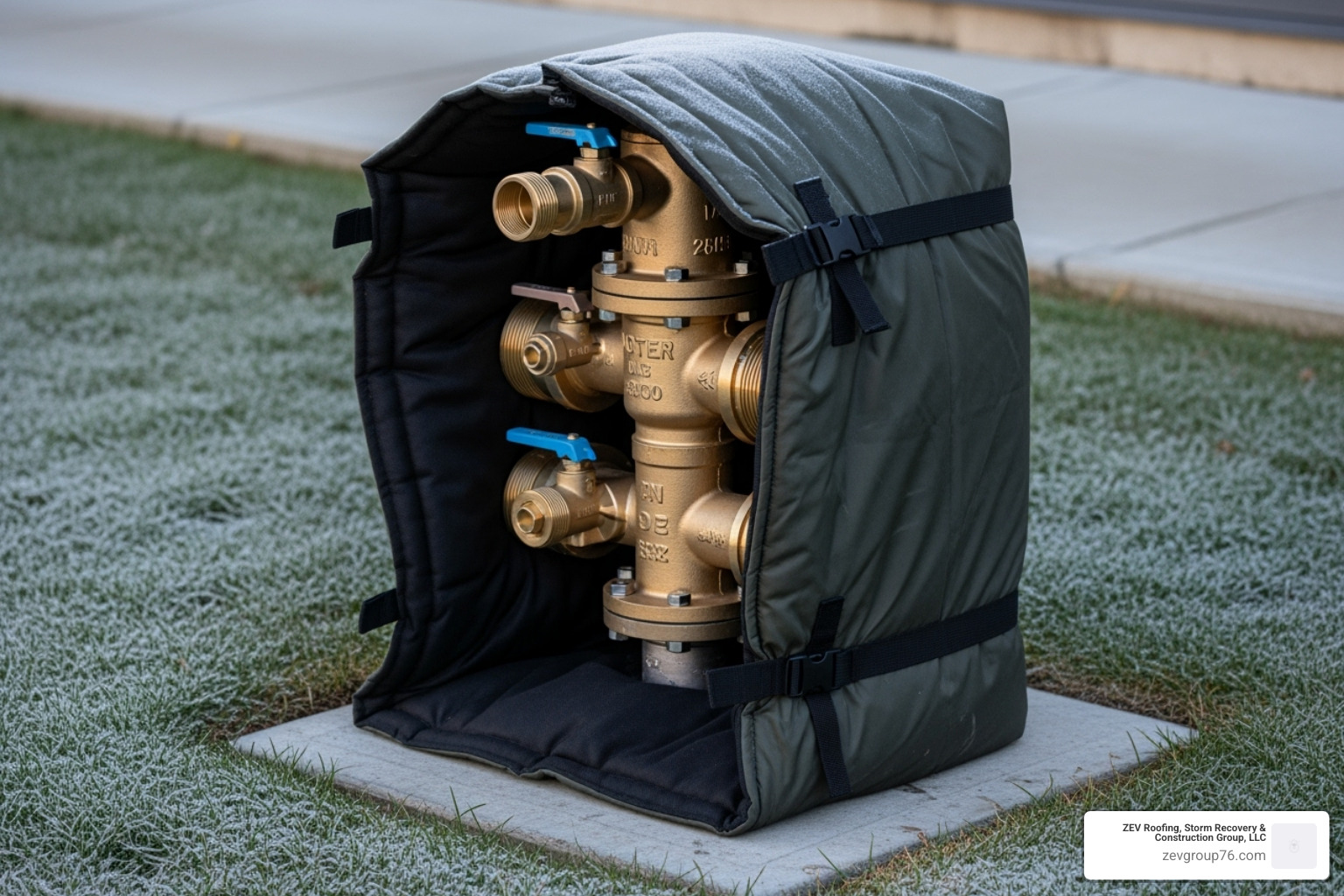
In Texas and New Mexico, winterization is crucial to prevent freeze damage. When water freezes and expands inside the device, it can crack housings and pipes. Before the first freeze, wrap exposed pipes and the device with foam pipe insulation or an insulated pouch. More importantly, drain the system completely by shutting off the water, opening drain valves, and, for irrigation systems, using compressed air to blow out the lines.
The consequences of neglect can be severe:
- Water contamination: A failed device can allow fertilizers, pesticides, and other contaminants from an irrigation system to flow back into your drinking water.
- High water bills: Even a small, constant drip can waste thousands of gallons, while a major leak will cause your bill to skyrocket.
- Property damage: Leaks can damage floors and walls, promote mold growth, erode foundations, and create icy hazards in winter.
- Fines and penalties: Your local municipality can issue fines for failing to keep up with required testing.
At ZEV Roofing & Construction, we believe in protecting your entire property. Just as we help homeowners with Storm Damage Repair, we encourage proactive maintenance of all home systems. For more on protecting your property, see our Comprehensive Leak Prevention services.
Frequently Asked Questions about Leaking Backflow Preventers
We get plenty of questions about backflow preventers. While we’re known for roofing and storm recovery, we understand protecting your water supply is just as important. Here are answers to some common questions.
How often should a backflow preventer be tested?
In most areas, backflow preventers are required to be tested annually. This is typically mandated by your local municipality or health department regulations. The test must be performed by a certified backflow tester with specialized equipment. They will spot potential issues and submit the results to the authorities to prove you are in compliance. Annual testing is preventative care that ensures your water supply is safe.
What’s the difference between a backflow preventer ‘dripping’ and ‘gushing’?
Knowing the difference helps you decide how to act.
- Normal dripping: A few occasional drops from the relief valve during system startup or shutdown is normal. The device is simply relieving minor pressure changes.
- Constant drip indicates failure: If water drips continuously, even when the system is off, it points to a fouled valve or worn internal part. This requires attention as it wastes water and means your system isn’t fully protected.
- Gushing water: A steady stream of water indicates a major internal failure. This is an emergency requiring immediate action. Shut off the water and call a professional to prevent contamination and a massive water bill.
Why is my backflow preventer leaking right after installation?
It’s frustrating, but some initial drips can be normal as the system pressurizes and internal parts settle. However, if the leak persists, it could be due to:
- Debris from installation: Tiny pipe shavings or dirt can get caught in the seals.
- Improperly seated gasket: A pinched or misaligned gasket won’t create a watertight seal.
- Overtightened fittings: Cranking down too hard on connections can crack plastic parts or distort seals, causing leaks.
If your why is my backflow preventer leaking question persists more than a few minutes after installation, or if the flow is significant, call your installer or a certified plumber to investigate.
Conclusion
A leaking backflow preventer is a warning sign that your water protection system is compromised. Asking “why is my backflow preventer leaking,” is the first step toward ensuring your water supply remains safe and clean.
We’ve covered the signs to watch for, from a constant drip to gushing water, and the common causes like debris buildup, worn-out internal components, pressure issues, and installation problems. While some minor issues can be a DIY fix, the critical role of these devices in water supply protection often requires professional attention to prevent contamination.
Preventative maintenance is key. Annual testing by a certified professional and proper winterization can prevent most problems before they start.
At ZEV Roofing & Construction, we believe in protecting your entire property. We safeguard homes from storm damage across Lubbock TX, Shallowater TX, Plainview TX, New Deal TX, Wolfforth TX, Slaton TX, and throughout West Texas and Eastern New Mexico. We empower homeowners with knowledge for total home protection, because every system matters, from the roof over your head to the clean water in your pipes.
Don’t let a small leak become a big problem. Early diagnosis and timely professional repair save money and protect your health. For durable solutions that keep your property safe from every angle, explore our [Comprehensive Leak Prevention](https://zevgroup76.com/leak-prevention/) services. Your home deserves protection from the ground up—and that includes the water flowing through it.