
Why Storm Damage Siding Repair Demands Immediate Attention
Storm damage siding repair is essential to prevent water intrusion, structural issues, and costly secondary damage. Here’s what to do immediately after finding siding damage:
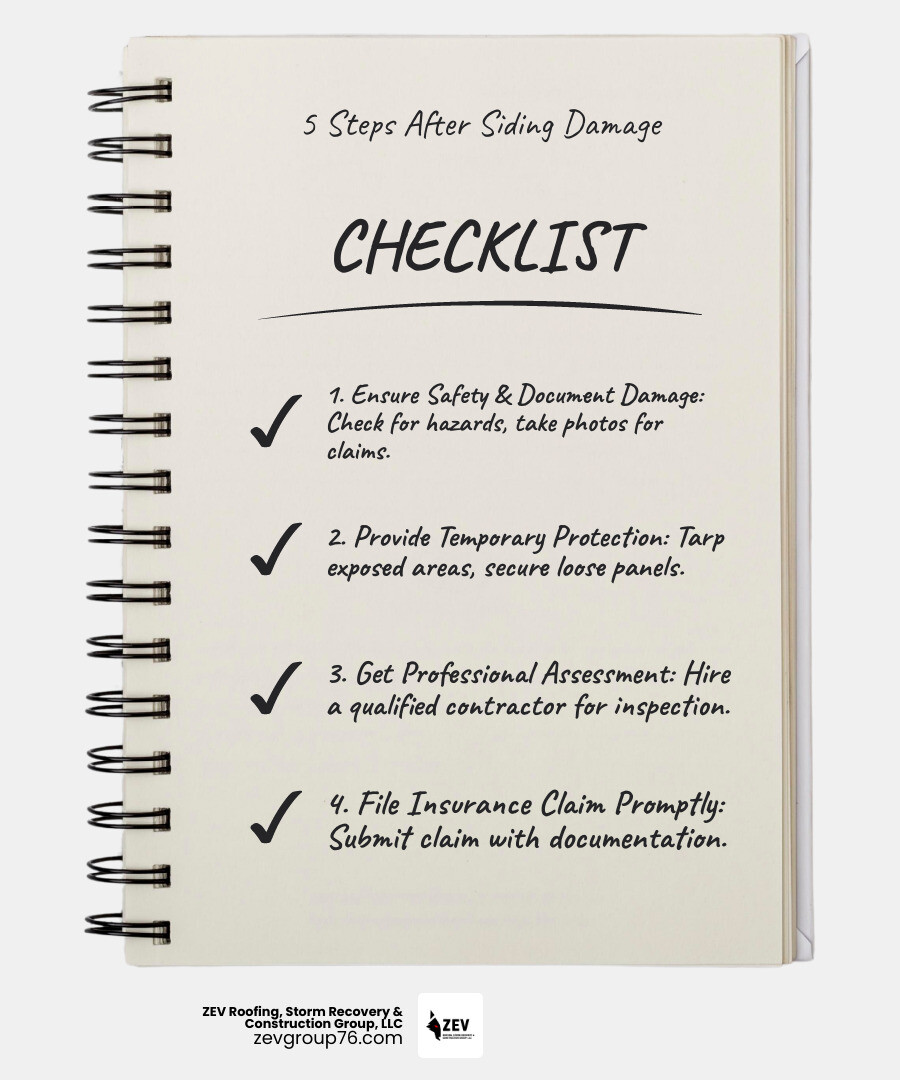
Essential Steps After Storm Damage:
- Ensure Safety – Check for downed power lines, electrical hazards, or flooding before inspecting
- Document Everything – Take detailed photos and notes of all visible damage for insurance claims
- Provide Temporary Protection – Cover exposed areas with tarps and secure loose panels
- Get Professional Assessment – Hire a qualified contractor to inspect for hidden damage
- Contact Your Insurance – File a claim promptly with thorough documentation
Storms wreak havoc on your home’s exterior, and siding is the first line of defense. In 2023 alone, the U.S. saw 28 separate billion-dollar weather disasters, and winds as low as 55 mph can pull siding off your home. When hail, high winds, or debris strike, the damage might seem cosmetic. But unseen moisture can seep behind panels, leading to rot, mold, and structural damage that costs thousands to fix if you wait.
The good news? Addressing storm damage quickly can save you significant money and stress. Whether you’re dealing with a few cracked panels or extensive damage, understanding your options—repair versus replacement, navigating insurance, and choosing the right contractor—makes all the difference. This guide walks you through every step to restore your home’s protection.
I’m Eli Hita, Managing Partner of Zev Roofing, Storm Recovery, & Construction Group, LLC, and I’ve spent over 15 years working in structural construction across West Texas, where severe weather is a fact of life. My team specializes in storm damage siding repair and recovery, helping homeowners and businesses restore their properties with resilient materials designed to withstand our region’s harshest conditions.
Relevant articles related to storm damage siding repair:
Immediate Actions: What to Do Right After the Storm
When a storm passes, your first priority is safety. Before stepping outside, look for hazards like downed power lines. If you see any, keep a safe distance and call 911 immediately. Avoid walking through standing water, as it can hide unseen dangers. Only begin your assessment when it’s absolutely safe.
Once the immediate danger has passed, your next crucial step is to carefully document everything. This means taking detailed notes and clear, high-resolution photos or videos of all visible damage. Get close-ups of specific issues like cracks or holes, and also wide shots that show the overall affected area. This documentation will be invaluable when you file your insurance claim. Think of yourself as a detective gathering evidence – the more thorough you are, the stronger your case for coverage. For more information on the various types of damage storms can inflict, check out our guide on damage from storm.
After documenting, your goal is to prevent further damage. Cover exposed areas with waterproof tarps, securing them firmly. You can also temporarily secure loose panels with screws or nails. These temporary fixes buy you time and prevent water from seeping into your home’s structure.
Neglecting even seemingly minor storm-damaged siding can lead to a cascade of problems. Water intrusion is the most immediate risk. When siding is compromised, moisture can penetrate the protective layer, leading to structural rot in the wood framing beneath. This weakens your home’s integrity. Furthermore, damp conditions behind siding are a breeding ground for mold and mildew, which can pose serious health risks and be costly to remediate. Pests like insects and rodents also find these compromised areas attractive entry points. Don’t let a small issue become a monumental one; prompt action is key. For a deeper dive into how to spot and repair various types of siding damage, refer to our comprehensive article on Spotting and Repairing Siding Damage After a Storm .
Common Signs of Siding Damage
Spotting storm damage isn’t always obvious, especially from the ground. However, knowing what to look for can help you identify problems early. Our experienced team at ZEV Roofing & Construction is adept at finding these issues, but a preliminary check by you can give us a head start.
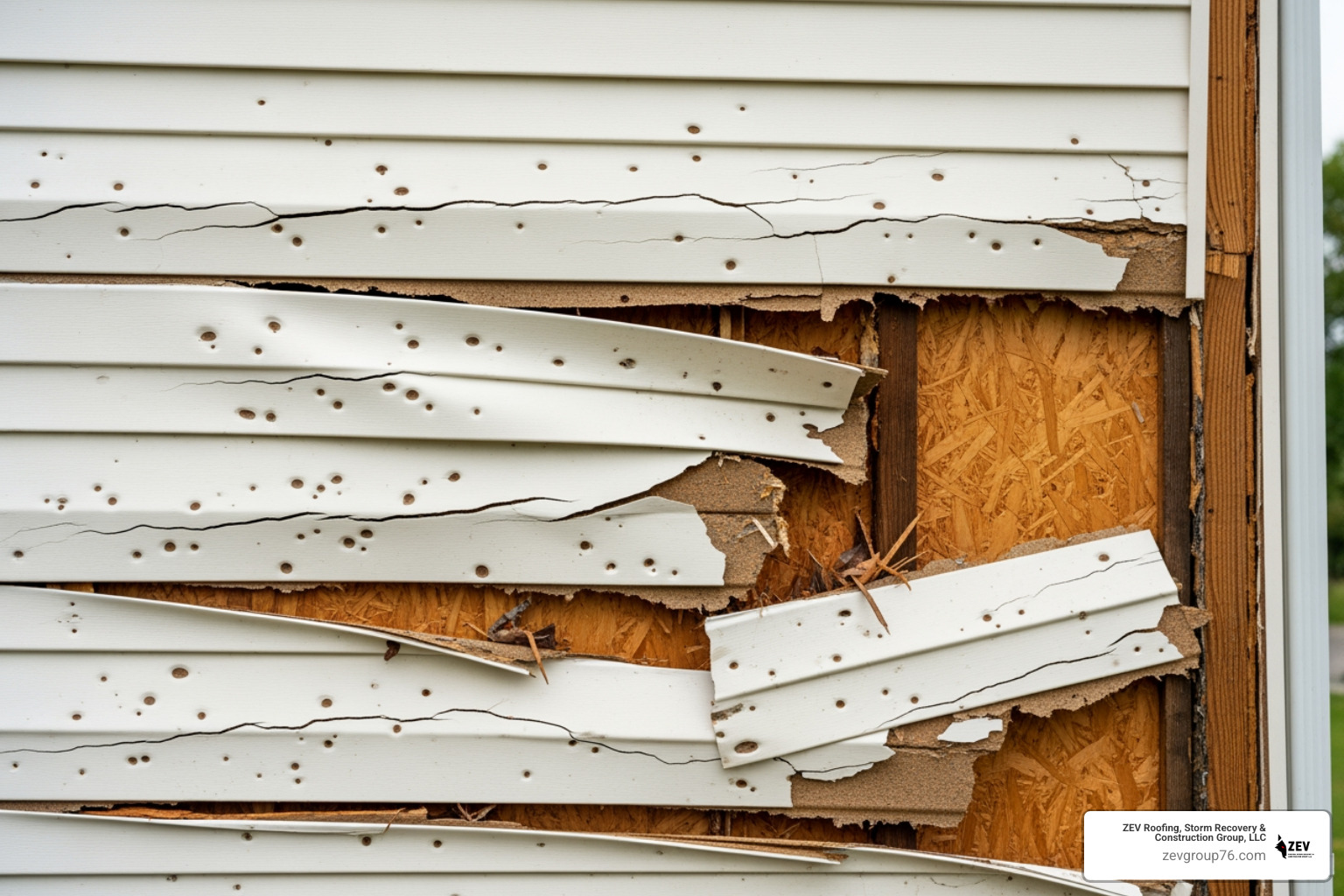
Here are the common signs of siding damage to watch out for:
- Cracks and Splits: These are often caused by hail impact or extreme temperature fluctuations. They can range from hairline cracks to significant splits that compromise the entire panel.
- Holes and Punctures: Flying debris during high winds or large hail can create direct holes in your siding. These are clear entry points for water and pests.
- Dents and Dings: Hail is a prime culprit for these. On vinyl, they might be subtle, but on metal siding, they’re often quite visible. While sometimes cosmetic, severe dents can compromise the material’s integrity.
- Warping or Buckling: This often indicates moisture accumulation behind the siding, causing the material to distort. It can also be a sign of improper installation or extreme heat exposure.
- Loose or Missing Panels: High winds, even as low as 55 mph, can rip panels right off your home. Loose panels are vulnerable to further damage and leave the underlying structure exposed.
- Peeling Paint: While sometimes a sign of age, peeling paint on wood siding, especially after a storm, can indicate moisture trapped underneath, pushing the paint away from the surface.
- Water Stains: Discoloration or streaks on your siding, particularly below windows or seams, can signal water infiltration and potential damage to the underlying sheathing.
How Storms Affect Different Siding Materials
Different siding materials react to the fury of a storm in unique ways. Understanding these vulnerabilities helps us better assess and repair your home.
- Vinyl Siding Damage: Vinyl is tough, but not invincible. High winds can cause panels to loosen, buckle, or even tear off. Hail can leave behind small, circular cracks or punctures, and sometimes cause the vinyl to become brittle and shatter. The challenge with vinyl often lies in matching existing colors, as sun exposure can cause fading over time.
- Wood Siding Damage: Wood siding, while beautiful, is highly susceptible to water damage. Heavy rains can cause it to swell, warp, and eventually rot if moisture gets trapped. Hail and flying debris can leave dents, chips, and cracks, which then allow water to penetrate. Additionally, mold and mildew can quickly take hold in damp conditions.
- Fiber Cement Siding Damage: Known for its durability and resistance, fiber cement is a robust choice. However, severe impacts from large hail or heavy debris can still cause it to crack, chip, or even shatter in some areas. While it resists moisture better than wood, compromised sections can still allow water intrusion.
- Metal Siding Damage (Aluminum, Steel): Metal siding is generally impact-resistant, but hail and debris can cause noticeable dents and dings. While these might seem purely cosmetic, they can compromise the protective coating, leading to rust over time, especially in our humid Texas and New Mexico weather. Strong winds can also bend or tear metal panels.
For a detailed guide on how to assess and repair siding after a storm, including specific considerations for various materials, we recommend reading our article on Storm Damage? How to Assess and Repair Your Siding.
The Big Decision: Repair or Replace Your Siding?
After storm damage, you must decide whether to repair or replace your siding. This choice depends on the extent of the damage, the age and condition of your siding, and the financial implications. Our team at ZEV Roofing & Construction helps homeowners in Texas and New Mexico make this informed decision.
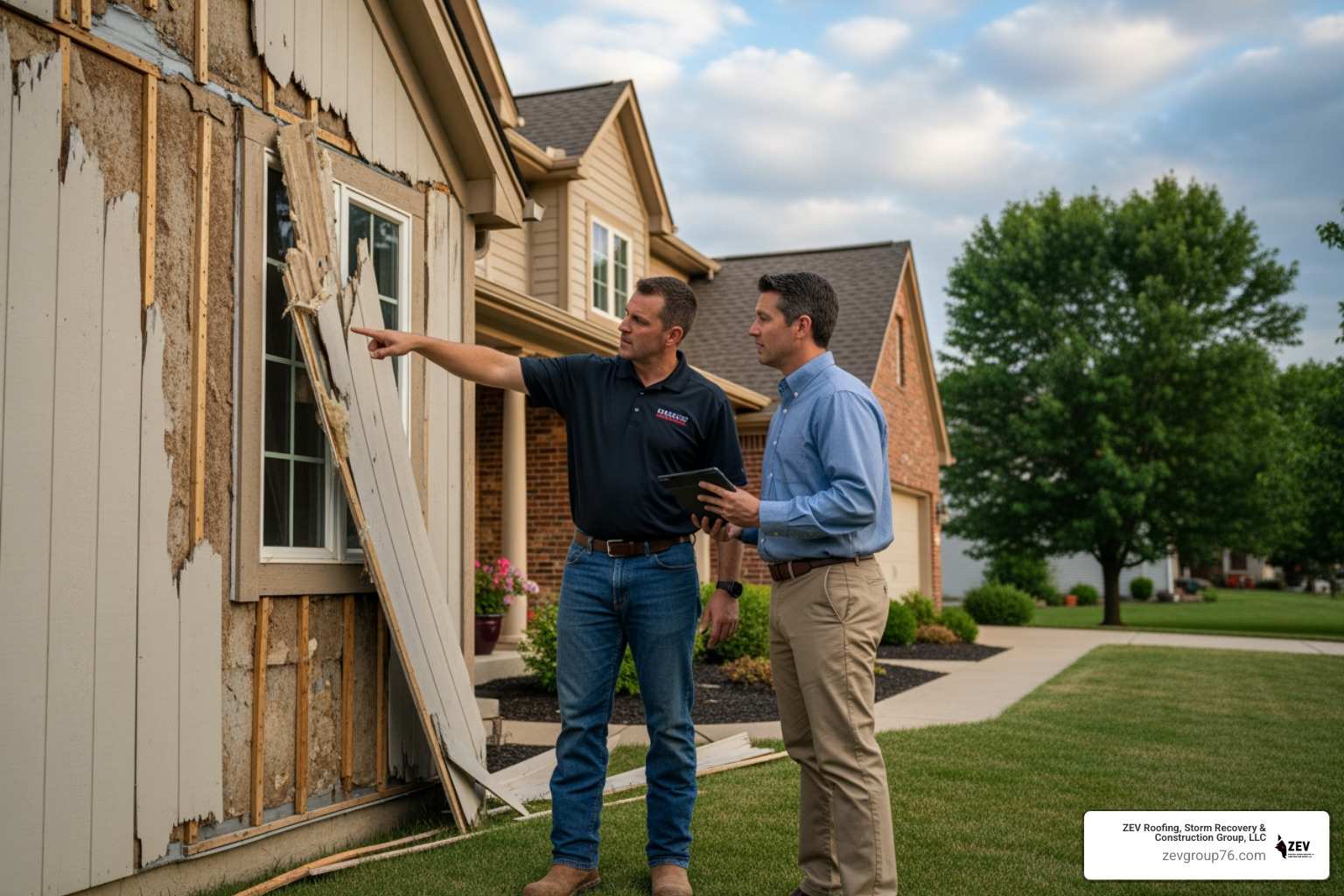
When we assess your home, we consider several factors. First, the extent of damage is paramount. A few isolated cracks are very different from widespread buckling or missing panels across multiple walls. Second, the age and condition of your current siding play a huge role. Siding typically lasts 25 to 60 years, depending on the material and how well it’s been maintained. If your siding is nearing the end of its lifespan, even minor damage might be a sign that a full replacement is a more economical long-term solution. Finally, we look at the cost-benefit analysis. Sometimes, patching up old, faded siding can be a temporary fix that costs more in the long run than investing in new, more durable materials. You can explore more about the financial aspects in our guide to siding replacement cost.
Siding is a long-term investment, typically lasting 25 to 60 years. Its protective ability diminishes with age, and older siding lacks modern innovations in weather resistance, energy efficiency, and mold prevention.
When to Repair Siding
Repairing your siding is often the most sensible and cost-effective solution when the damage is contained and relatively minor. We typically recommend repairs in situations where:
- Minor, Localized Damage: You have just a few panels that are cracked, dented, or loose. These are usually isolated incidents that don’t affect the entire system.
- A Few Cracked Panels: If a hailstorm leaves behind only a handful of cracked vinyl or fiber cement panels, replacing just those specific pieces can restore your home’s protection without a major overhaul.
- Cosmetic Issues: Small scratches, shallow cracks, or minor dings that don’t compromise the siding’s protective qualities can often be patched or painted over, especially if the siding is otherwise in excellent condition.
- Newer Siding: If your siding is relatively new and still has many years of life left, repairing the damaged sections is usually the way to go. The challenge here might be matching the color, as even newer siding can fade slightly.
- Budget Constraints: When a full replacement isn’t feasible, repairs offer a more immediate and affordable solution to maintain your home’s integrity.
Minor repairs, like fixing a few loose panels or sealing small cracks, typically range from $300 to $1,000. These can often be completed in a few hours to a full day, getting your home back in shape quickly.
When to Replace Siding
Sometimes, repair simply isn’t enough. A full siding replacement, while a larger investment, can be the best course of action for long-term protection and value. Consider replacement when:
- Extensive or Widespread Damage: If large sections of your siding are missing, severely warped, buckled, or show widespread cracking and holes, a full replacement ensures uniform protection.
- Multiple Missing Sections: High winds can remove entire areas of siding. If this happens in several spots, piecemeal repairs can look patchy and may not offer consistent defense.
- Signs of Water Infiltration: If we find evidence of moisture behind the siding, such as rot in the sheathing, mold growth, or damage to interior walls, it’s a clear sign that the siding’s protective barrier has failed extensively. A replacement allows us to address these underlying issues thoroughly.
- Old or Brittle Siding: As siding ages, it becomes less resilient. If your siding is near or past its expected lifespan (which is typically 25 to 60 years), even minor storm damage can indicate its overall weakness. Patching old siding may only delay the inevitable and lead to recurring problems.
- Upgrading Materials: Storm damage can be an opportunity to upgrade to more durable, energy-efficient, or aesthetically pleasing materials. Modern siding innovations offer superior weather resistance, better insulation, and improved curb appeal.
A full siding replacement is a larger investment, usually costing between $5,000 and $15,000 or more, depending on the size of your home and the materials chosen. Major replacements for an entire home typically take several days to a few weeks, depending on the home’s size and complexity. This ensures a seamless, long-lasting solution.
The Complete Process for Storm Damage Siding Repair
When your home in Texas or New Mexico suffers storm damage, navigating the repair process can feel overwhelming. But with ZEV Roofing & Construction, we make it simple and transparent. Our comprehensive approach ensures your home is restored efficiently and effectively.
The journey begins with a professional assessment. Our experts conduct a thorough inspection, identifying both obvious and hidden damage. We use specialized tools to detect moisture intrusion and structural issues that might not be visible to the untrained eye. This assessment forms the basis of our repair plan. Next, we move to material selection. If replacement is needed, we’ll guide you through options that not only match your home’s aesthetics but also offer improved durability and weather resistance for our local climate. We prioritize solutions that provide long-term protection.
The installation process is carried out by our skilled crews, ensuring every panel is secured according to manufacturer specifications and local building codes. We work diligently to minimize disruption to your daily life, maintaining a clean and safe worksite. Finally, upon completion, we conduct a rigorous final inspection with you to ensure every detail meets our high standards and your complete satisfaction. For more insights into comprehensive home repairs, visit our page on exterior home repair.
Navigating Insurance for Storm Damage Siding Repair
Dealing with insurance companies can be a maze, but we’re here to help you through it. Most homeowner’s insurance policies cover “sudden and accidental” damage, which includes damage from storms like hail and high winds. However, damage from neglect or normal wear and tear is typically not covered.
The first step is documenting damage for claims. As we mentioned, take extensive photos and notes. This evidence is crucial. Then, filing a claim promptly is key. Contact your insurance agent as soon as you find damage.
When working with adjusters, it’s beneficial to have a contractor present during their inspection. Our team can help point out damage that might be missed, ensuring nothing is overlooked. It’s important to understand your policy, particularly your deductible and whether you have Replacement Cost Value (RCV) or Actual Cash Value (ACV) coverage. This distinction can significantly impact your payout.
| Feature | Replacement Cost Value (RCV) | Actual Cash Value (ACV) |
|---|---|---|
| Definition | Covers the cost to replace damaged property with new, similar quality items at current market prices. | Covers the cost to replace damaged property minus depreciation (wear and tear). |
| Payout | Initially pays ACV, then the depreciated amount once repairs are completed and invoices submitted. | Pays only the depreciated value of the damaged item. |
| Benefit | Provides funds to fully restore your property without out-of-pocket expenses beyond deductible. | Lower premiums, but you pay the difference for new materials/items. |
| Consideration | Ideal for ensuring your home is fully restored to its pre-loss condition. | May not be sufficient to cover the full cost of repairs/replacement. |
For assistance with insurance claims, our insurance restoration contractor services are designed to simplify the process for you. If you’re in Texas, you should also be aware of specific regulations. The Texas Department of Insurance (TDI) provides valuable information, especially concerning the Windstorm Inspections Program in coastal areas. We ensure all our repairs comply with local building codes, including those relevant to the Texas Windstorm Inspections Program, where applicable. You can find more specific guidance from the TDI on repairing exterior siding after a storm.
DIY vs. Professional Storm Damage Siding Repair
When faced with storm damage, the thought of DIY repair might cross your mind. While a handy homeowner might tackle a small, cosmetic fix, we generally advise against extensive DIY storm damage siding repair for several compelling reasons:
- Safety Hazards: Working at heights, especially on ladders, carries inherent risks. Our professionals are trained and equipped with the right safety gear.
- Voided Warranties: Improper installation can void your siding manufacturer’s warranty, leaving you without coverage for future issues.
- Improper Installation: Siding needs to be installed precisely to ensure proper water shedding and allow for thermal expansion and contraction. Incorrect installation can lead to warping, buckling, and further water intrusion.
- Hidden Damage Missed: Without professional experience and tools, it’s easy to miss underlying structural damage, moisture issues, or compromised sheathing, which can lead to much larger problems down the line.
The benefits of hiring a professional like ZEV Roofing & Construction far outweigh the perceived savings of DIY. We bring:
- Expertise and Tools: Our teams have the specialized knowledge and equipment to identify all damage, select the right materials, and perform repairs to code.
- Efficiency: We can complete repairs much faster and more effectively, minimizing the time your home is vulnerable.
- Warranty on Work: We stand behind our craftsmanship with warranties, giving you peace of mind that the job is done right.
- Insurance Claim Assistance: Our experience with insurance companies helps streamline your claim and ensures you receive fair compensation.
For more detailed information on repairing damage from high winds, including why professional help is often the best choice, read our wind damage repair complete guide.
Finding the Right Contractor and Preventing Future Damage
Choosing the right contractor for your storm damage siding repair is as crucial as the repair itself. In Texas and New Mexico, where severe weather is common, you need a team you can trust. Here at ZEV Roofing & Construction, we pride ourselves on our qualifications and customer-focused approach.
Here are key contractor qualifications to look for:
- Licensed and Insured: Always verify that any contractor you consider is fully licensed and insured. This protects you from liability in case of accidents or subpar work.
- Local References: Ask for references from past clients in your area. A reputable contractor will be happy to provide them. Word-of-mouth is powerful, and we’re proud of our strong reputation in Lubbock, Plainview, and beyond.
- Storm Damage Experience: Ensure the contractor has extensive experience specifically with storm damage repair. This specialized knowledge is critical for identifying all damage and navigating insurance claims.
- Written Estimates: Always get multiple, detailed written estimates. This allows you to compare costs, materials, and scope of work transparently. Be wary of contractors who offer suspiciously cheap work or demand full payment upfront.
For more in-depth advice on selecting a siding contractor in our service areas, explore our siding contractor Plainview complete guide.
Beyond repairs, regular maintenance is your best defense against future storm damage. While we can’t stop storms, we can prepare your home to withstand them better:
- Annual Inspections: Schedule an annual inspection with a professional to catch small issues before they escalate. This includes checking for loose panels, cracks, or areas where caulking might be failing.
- Cleaning Siding: Periodically clean your siding to remove dirt, mildew, and debris. This not only maintains its appearance but also prevents moisture from being trapped against the material.
- Trimming Vegetation: Keep trees and shrubs trimmed back from your home. Overhanging branches or bushes too close to the siding can cause abrasive damage during windy conditions and provide easy access for pests.
- Sealing Gaps: Regularly check and seal any cracks or gaps around windows, doors, and utility penetrations. These are common entry points for water and pests.
Frequently Asked Questions about Siding Repair
What are the signs of hidden damage behind my siding?
Signs of hidden damage behind siding include peeling paint or wallpaper on interior walls, a musty odor indoors, or warped/soft spots on the siding itself. These suggest moisture is seeping through, potentially causing rot or mold. Higher energy bills can also be a sign of damaged insulation. While these are strong indicators, a professional inspection is the best way to confirm and pinpoint the extent of hidden damage.
How long does the siding repair or replacement process take?
The timeline for storm damage siding repair depends on the project’s scope. Minor repairs, like fixing a few loose panels or patching cracks, can often be done in a few hours to a full day. A full siding replacement for an average-sized home typically takes several days to a few weeks. This timeline is influenced by the home’s size, siding material, weather, and whether hidden damage needs to be addressed first. Our team at ZEV Roofing & Construction works efficiently and keeps you informed throughout the process.
Can I just repair one or two damaged siding panels?
Yes, if damage is isolated to one or two panels and the rest of your siding is in good condition, a targeted repair is a practical, cost-effective solution. This works well for vinyl or fiber cement siding. The main challenge is matching the color and style, as sunlight can cause fading over time. If a perfect match isn’t possible or your siding is near the end of its lifespan (25 to 60 years), replacing a larger section or even the entire wall might be a better long-term investment for a consistent look and uniform protection.
Restore Your Home’s First Line of Defense
Facing storm damage to your home’s siding can be daunting, but as we’ve outlined, taking prompt, informed action is your best defense. From ensuring your immediate safety and meticulous documentation to understanding the nuances of repair versus replacement and navigating insurance claims, each step is critical. Neglecting even minor issues can lead to costly structural damage, mold, and pest infestations, turning a small problem into a homeowner’s nightmare.
Your home in Texas or New Mexico deserves the best protection against our unpredictable weather. At ZEV Roofing & Construction, we combine expert craftsmanship with durable solutions and a customer-focused approach. We’re not just fixing siding; we’re restoring your peace of mind and protecting your investment for years to come. Don’t let storm damage compromise your home’s integrity. Contact us for a professional storm damage assessment and repair – we’re ready to help you weather any storm.