
Why Quick Action Saves Your Property and Your Wallet
When searching for water damage services near me, time is your biggest enemy. Water damage can escalate from a minor leak to a major disaster in just 48 hours, leading to mold growth, structural damage, and repair costs that can soar from hundreds to thousands of dollars.
Here’s what you need to know right now:
- Emergency Response: Call professionals within 24 hours to prevent mold growth
- Documentation First: Take photos for insurance before moving anything
- Safety Check: Turn off electricity and water if safe to do so
- Professional Assessment: Only certified technicians can detect hidden moisture
- Insurance Claims: Many restoration companies work directly with your insurer
Water damage claims are among the most common issues homeowners face, with costs ranging from $1,000 to over $5,000 depending on severity. The good news is: acting fast dramatically reduces both damage and costs.
Whether you’re dealing with burst pipes, storm damage, appliance leaks, or sewage backups, this guide will help you find the right restoration professionals. We’ll cover everything from emergency steps to vetting contractors and navigating insurance claims.
Experts agree: if materials stay wet for more than 48 hours, you’re looking at potential mold problems that can make your home’s air unhealthy. That’s why finding qualified water damage services near me isn’t just about property—it’s about protecting your family’s health.
Understanding Water Damage: Causes, Risks, and Immediate Actions
Water damage can quickly turn your peaceful home into a disaster zone. It often happens unexpectedly from surprising sources. Understanding the causes and recognizing warning signs early can save you thousands of dollars and weeks of headaches.
Common Causes and Hidden Dangers
While major floods cause damage, some of the worst problems stem from small, persistent issues that go unnoticed.
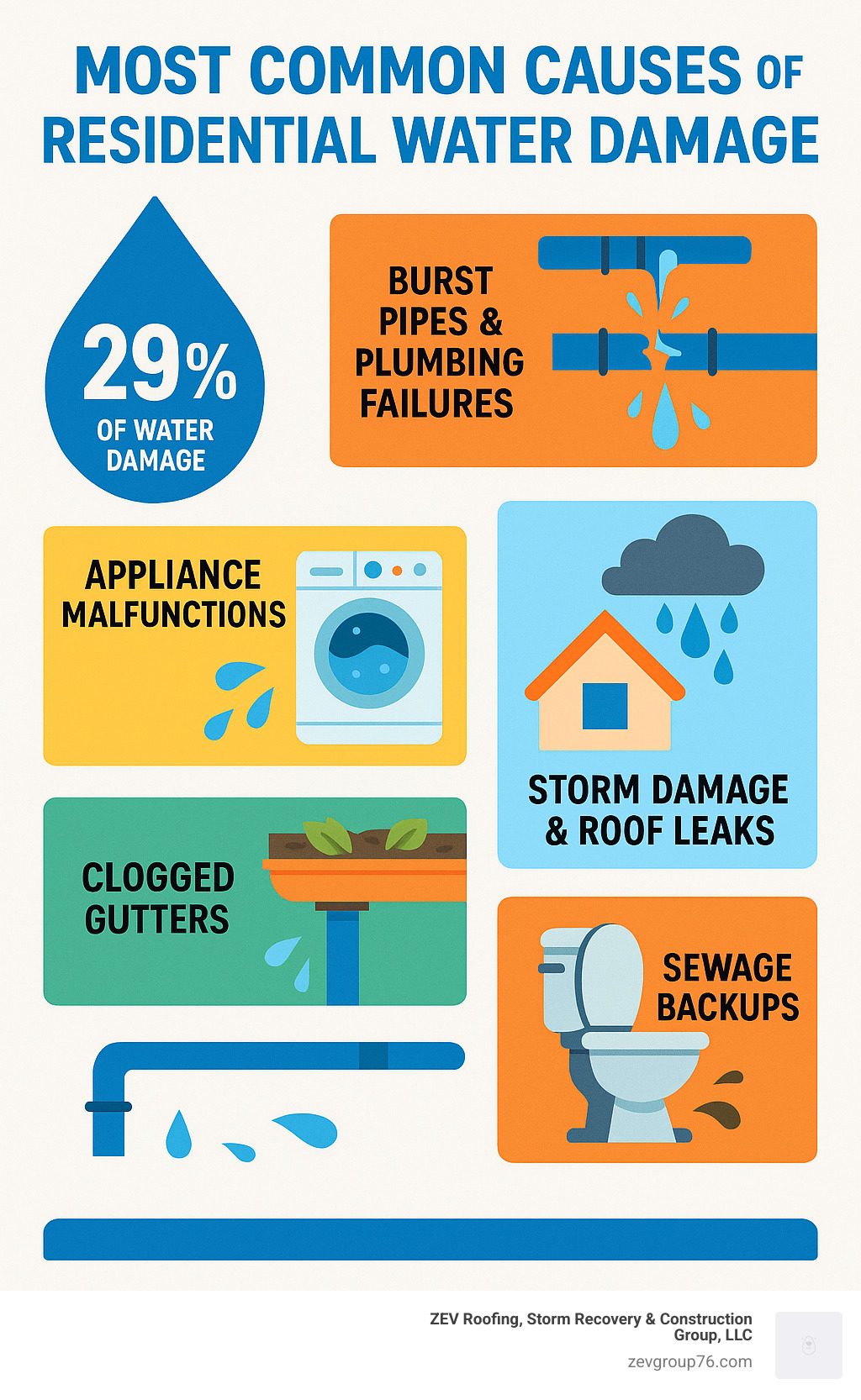
Plumbing failures are behind nearly 30% of water damage claims. This ranges from a slow, unnoticed drip behind a wall to a sudden pipe burst. Burst pipes are especially common during temperature swings or unexpected cold snaps.
Household appliances can also be a source. Appliance leaks from washing machines, dishwashers, refrigerators, and water heaters cause significant damage. A washing machine hose can fail without warning, flooding your laundry room and seeping into adjacent rooms.
Heavy storms can overwhelm your home’s defenses, leading to serious Storm Damage Repair needs. High winds and hail can compromise your roof, causing roof leaks that drip into your attic, walls, and living spaces. Even clogged gutters can create major problems by directing water toward your foundation or under roof shingles.
Water damage is tricky because it loves to hide. You might have it now and not even know. Hidden signs often appear as musty odors, wall discoloration, or peeling paint that you might dismiss as normal wear and tear.
The real danger isn’t just the water; it’s what comes next. Health risks multiply quickly when materials stay wet for more than 48 hours. Mold growth can explode, releasing spores that trigger allergies and respiratory problems. Standing water also becomes a breeding ground for harmful bacteria.
Beyond health concerns, water damage attacks your home’s structural integrity. Wood beams can rot, drywall can crumble, and foundations can weaken. A small leak can eventually threaten your entire home’s stability.
Your Emergency Checklist: First Steps to Take
When water damage strikes, your first actions can make the difference between a manageable cleanup and a complete disaster. Move quickly, but don’t panic.
Safety first – always. If you see standing water anywhere near electrical outlets, appliances, or wiring, stay out of that area. Water and electricity are a deadly combination. Your first priority should be to shut off the water main if you can do so safely. This stops the flow and prevents additional damage. Next, turn off electricity to any affected areas at your circuit breaker.
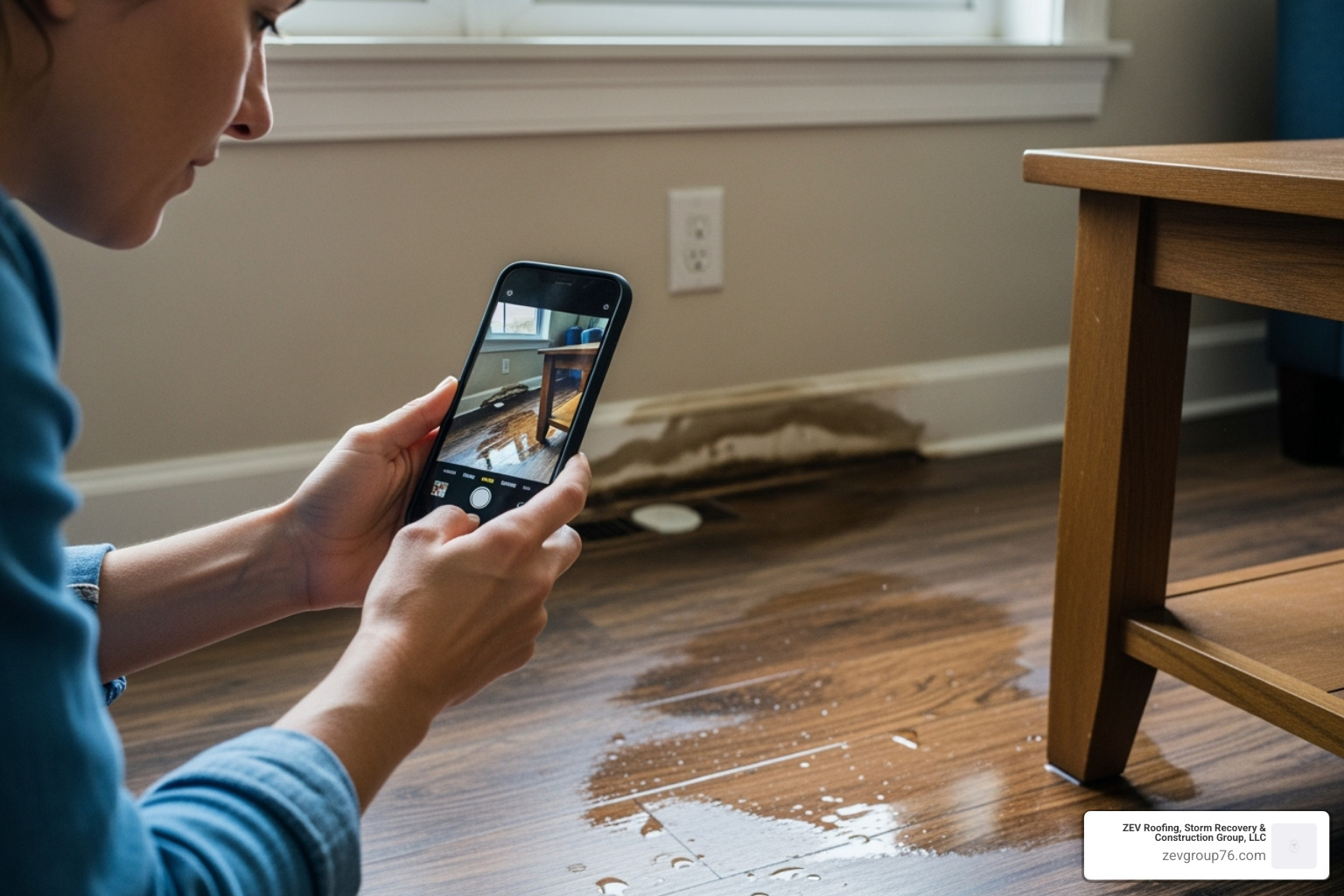
Once you’ve handled the immediate safety concerns, grab your phone and start documenting the damage. Take photos and videos of everything – the water source, damaged areas, and any affected belongings. Your insurance company will need this evidence, and your memory won’t be reliable when you’re stressed and dealing with contractors weeks later.
Now you can start protecting what you can. Begin moving valuables like furniture, electronics, and important documents to dry areas. Start mopping and blotting up standing water with towels, mops, and buckets – every bit you remove helps prevent further damage. Improving ventilation by opening windows and running fans helps start the drying process and can slow mold growth.
Here’s what you should absolutely avoid: Don’t use your regular vacuum cleaner on water – it’s dangerous and can damage the vacuum. Don’t try to handle visible mold yourself. Don’t walk through standing water if electricity hasn’t been turned off. And most importantly, don’t wait around hoping things will dry on their own.
When you’re searching for water damage services near me, every hour counts. Professional restoration companies have the equipment and expertise to handle what you can’t, and they can often work directly with your insurance company to streamline the entire process.
The Professional Solution: A Deep Dive into the Restoration Process
Your quick emergency actions are just the beginning. Professional water damage services near me offer specialized expertise, industrial-grade equipment, and a systematic approach you can’t replicate, ensuring your home is truly restored, not just dried out.
Think of professional restoration like surgery—it’s not a DIY job. The process follows three distinct phases that build on each other: mitigation, remediation, and restoration.
Mitigation, Remediation, and Restoration Explained
Understanding these phases helps you know what to expect when the professionals arrive at your door.
Mitigation is the emergency response phase – the cavalry arriving to stop the bleeding. This means immediately preventing further damage by stopping water sources, extracting standing water with powerful pumps, and setting up initial drying equipment. If a storm has damaged your roof, for example, mitigation might involve emergency tarping to prevent more water from entering your home. It’s all about stabilizing the situation quickly.
Remediation comes next, and this is where the real detective work begins. This phase focuses on thorough water extraction using industrial equipment, followed by intensive drying and dehumidification to pull every bit of moisture from your home’s structure. The professionals also handle removing damaged materials – that soggy drywall, contaminated insulation, or warped flooring that simply can’t be saved. It’s not just about getting things dry; it’s about creating a completely safe environment free from mold risks.
Restoration is the final phase – the “build-back” where your home transforms from a construction zone back into your comfortable living space. This could mean anything from simple repairs like patching drywall and repainting, to major reconstruction involving new flooring, cabinets, or even structural repairs. At ZEV Roofing, Storm Recovery & Construction Group, we handle this entire process seamlessly because we’re also a full-service general contractor. You can explore our complete range of capabilities under Our Services.
Advanced Techniques and Equipment Used by Pros
Professional water damage services near me shine by using advanced technology to get your home back to normal.
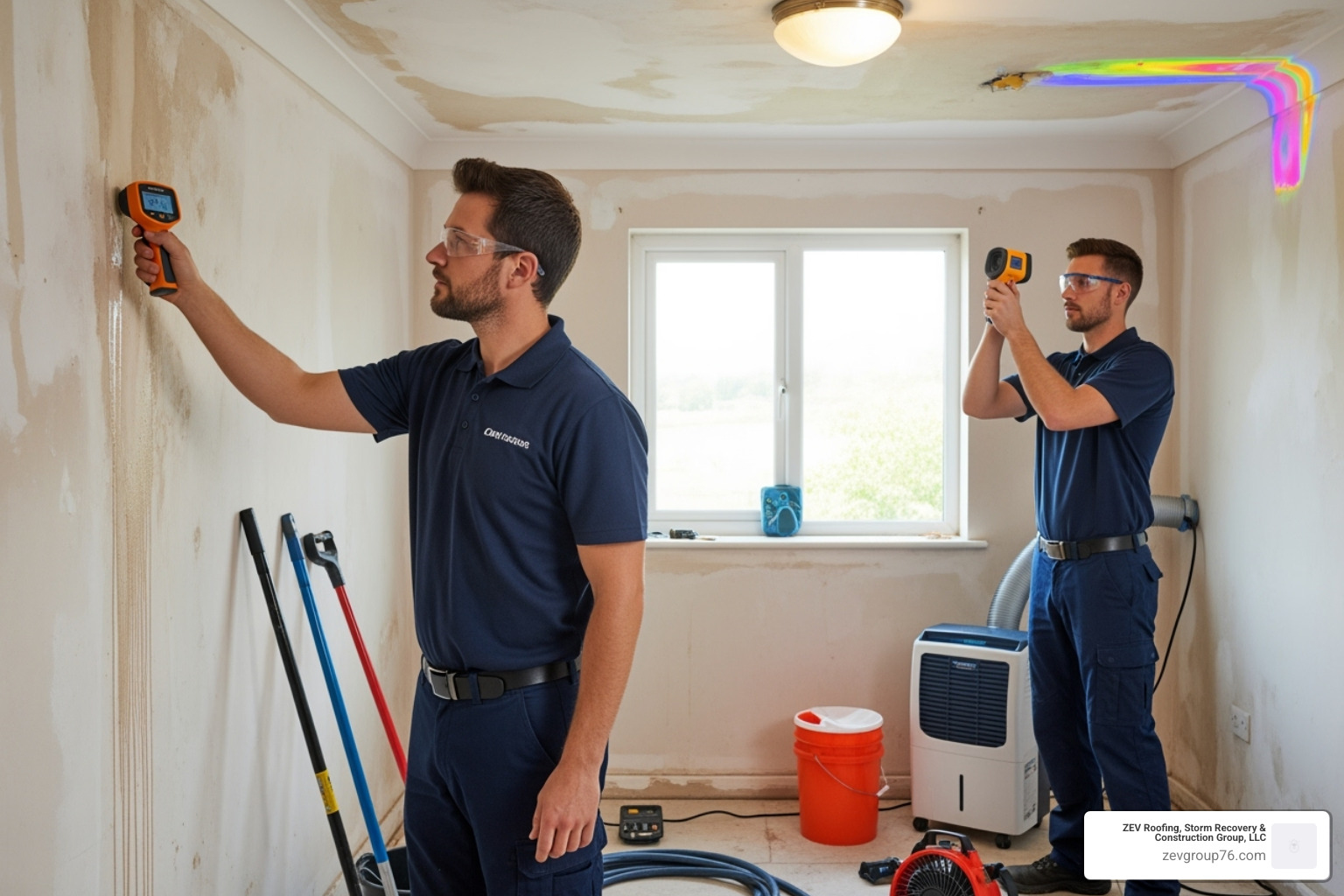
The real game-changer is moisture detection technology. Professionals use sophisticated moisture meters and thermal imaging cameras that can literally see through your walls to find hidden water pockets. It’s like having X-ray vision for water damage. This ensures no sneaky moisture gets left behind to cause mold problems months later.
For the heavy lifting of water removal, industrial-grade dehumidifiers work around the clock, pulling moisture from both the air and your home’s materials at a rate that would make your household dehumidifier weep with envy. High-speed air movers create strategic airflow patterns across wet surfaces, turning your home into a carefully orchestrated drying machine.
Health and safety get serious attention too. HEPA vacuums capture microscopic particles including mold spores that regular vacuums would just blow around your house. Specialized sanitizing agents eliminate bacteria and other nasties that love to party in wet conditions. And when it comes to those lingering musty smells, professional odor removal technology doesn’t just mask the problem – it neutralizes odors at the molecular level.
This comprehensive approach means your home doesn’t just look restored – it’s genuinely safe, clean, and ready for your family to move back in with confidence.
How to Hire the Best Water Damage Services Near Me
Finding the right water damage services near me during a flood can feel impossible. But making a good choice now saves headaches, money, and stress later.
Vetting a Reputable Restoration Company
For anything more than a tiny spill, the DIY vs Professional debate favors professionals. They spot hidden moisture, have specialized equipment, and prevent future mold problems.
The first thing to look for is 24/7 availability. Water damage happens anytime. A reputable company will have a real person answer your call at 3 AM, not a voicemail. A strong local presence is also key for a fast response. For residents in Texas and New Mexico, a team that understands our unique weather challenges is invaluable.
Before committing, check online reviews. Read comments about crew respectfulness, punctuality, and communication. Check multiple platforms like Google, Yelp, and the Better Business Bureau.
Get multiple estimates, but be wary of a quote that’s dramatically lower than others. It could mean cut corners or hidden fees. The best companies are upfront about everything.
Communication expectations matter. A good company explains their process and keeps you updated, treating you like a partner. Transparency is essential when your home is being repaired.
Want to do your homework? Start by checking company ratings on the BBB to see how they handle customer complaints and whether they’re accredited.
Essential Qualifications for Water Damage Services Near Me
Not all “experts” are qualified. True professionals have verifiable credentials.
The gold standard in our industry is IICRC certification. The Institute of Inspection, Cleaning and Restoration Certification sets the rules for how water damage restoration should be done. When technicians are IICRC certified, they’ve studied the science behind water damage – how moisture moves through different materials, which equipment works best in different situations, and how to prevent secondary damage like mold.
This isn’t just a piece of paper on the wall. IICRC-certified technicians understand the difference between Category 1 water (clean water from a supply line) and Category 3 water (grossly contaminated water from sewage backups), and they know how to handle each safely. You can learn more about the importance of IICRC certification and even verify a company’s credentials on their website.
If you’re dealing with potential mold issues, look for NORMI certification as well. The National Organization of Remediators and Mold Inspectors focuses specifically on indoor air quality and mold problems.
Beyond certifications, make sure any company you hire has proper state licensing for restoration work. Every legitimate restoration company should carry proof of insurance – both liability insurance (in case they accidentally damage something else in your home) and workers’ compensation (so you’re not liable if someone gets hurt on your property). Ask to see these certificates; reputable companies won’t hesitate to provide them.
Finally, check if their technicians are bonded. This provides extra protection against theft or damage caused by employees. It’s rare, but it’s nice to know you’re covered.
Navigating the Insurance Claims Process
Here’s where having the right restoration company really pays off – literally. The insurance claims process can be a maze, but experienced professionals know exactly how to steer it.
Your first call should always be to your insurance company, ideally within 24 hours of finding the damage. When you’re contacting your insurer, be prepared with basic details: what happened, when it happened, and what areas are affected. Don’t guess about coverage – ask specific questions about your policy.
Understanding your policy is crucial, and this is where many homeowners get surprised. Standard homeowner’s insurance typically covers sudden, accidental water damage (like a burst pipe) but excludes gradual damage (like a slow leak that’s been going on for months) and flood damage from external sources. If your basement floods because of heavy rain, you might need separate flood insurance through FEMA.
Remember all those photos and videos you took? They’re about to become very important. Documenting the loss thoroughly helps your claim move faster and ensures you don’t miss anything. Professional restoration companies will add their own detailed documentation, including moisture readings and daily progress reports that insurance companies expect to see.
Many restoration companies have staff who specialize in working with adjusters. They speak the same language, understand what documentation is needed, and can help present your case effectively. Some companies even offer direct insurance billing, which means they’ll work directly with your insurance company for payment. This can be a huge relief when you’re already dealing with the stress of water damage.
As a full-service general contractor, we understand that water damage often reveals other issues that need attention. We can provide comprehensive help with your claim from a General Contractor to make sure everything gets properly assessed and covered, from the initial water extraction all the way through final reconstruction.
The bottom line? The right restoration company doesn’t just dry out your property – they become your advocate throughout the entire process.
Frequently Asked Questions & Proactive Prevention
When water damage hits, you’re likely overwhelmed with questions. We’ve helped countless homeowners find straight answers and practical solutions. Let’s tackle the most common concerns we hear, and then we’ll share some simple prevention tips that can save you thousands of dollars down the road.
Top Questions About Water Damage Restoration
“How long is this going to take?” – This is a top concern, as you want your life back to normal quickly.
For typical scenarios, most water damage services near me complete the core restoration process (extraction, drying, sanitizing) in 3 to 7 days. However, every situation is different. A small leak from your dishwasher might be resolved in just a couple of days, while a burst pipe that flooded your entire first floor could take longer.
The timeline depends on water penetration depth, soaked materials, and water contamination level. If mold has already started growing or if we need to do major reconstruction work, you’re looking at additional time. Hurricane damage, for instance, often requires extended restoration efforts because the damage is so widespread.
“What’s this going to cost me?” – We know cost is a major concern during this stressful time.
The average cost ranges from $1,000 to over $5,000, but we’ve seen cases go much higher depending on the severity. Several factors influence the final bill: how much area was affected, what type of water we’re dealing with (clean water is much easier to handle than sewage), and what materials need replacing.
Clean water from a broken supply line is Category 1 – relatively straightforward. Gray water from appliances or Category 3 black water like sewage requires specialized handling and safety equipment, which increases costs. If we find mold or need to rebuild walls, floors, or ceilings, that adds to both time and expense. This is why getting a detailed estimate from a reputable company is so important.
“Can we stay in our house during all this?” – This depends entirely on your specific situation and what’s safe for your family.
For minor water damage in a small area – like a bathroom leak that’s quickly contained – you can usually stay put. But if there’s significant structural damage, mold growth, sewage contamination, or if we need to shut off electricity for safety reasons, temporary relocation is often the wisest choice.
Your restoration professional will conduct a thorough safety assessment and give you honest advice about what’s best for your family’s health and safety. We’d rather have you stay in a hotel for a few days than risk your wellbeing.
How to Prevent Future Water Damage
Nobody wants to go through water damage twice. The good news is that most water damage is preventable with some basic regular home maintenance – and it doesn’t have to be complicated or expensive.
Your roof is your home’s first line of defense, so schedule a Roof Inspection at least once a year, and definitely after any severe weather. Look for missing or damaged shingles, cracks, or loose flashing around chimneys and vents. Catching small problems early with prompt Roof Repair can prevent major leaks later. Sometimes, if your roof is getting older or has sustained significant damage, a complete Roof Replacement might be the most cost-effective long-term solution.
Gutter maintenance might seem boring, but clogged gutters are responsible for countless basement floods and foundation problems. Clean them twice a year, and make sure water flows freely through downspouts. If your current gutter system isn’t adequate for your home’s needs, professional Gutter Installation can make a huge difference in protecting your property.
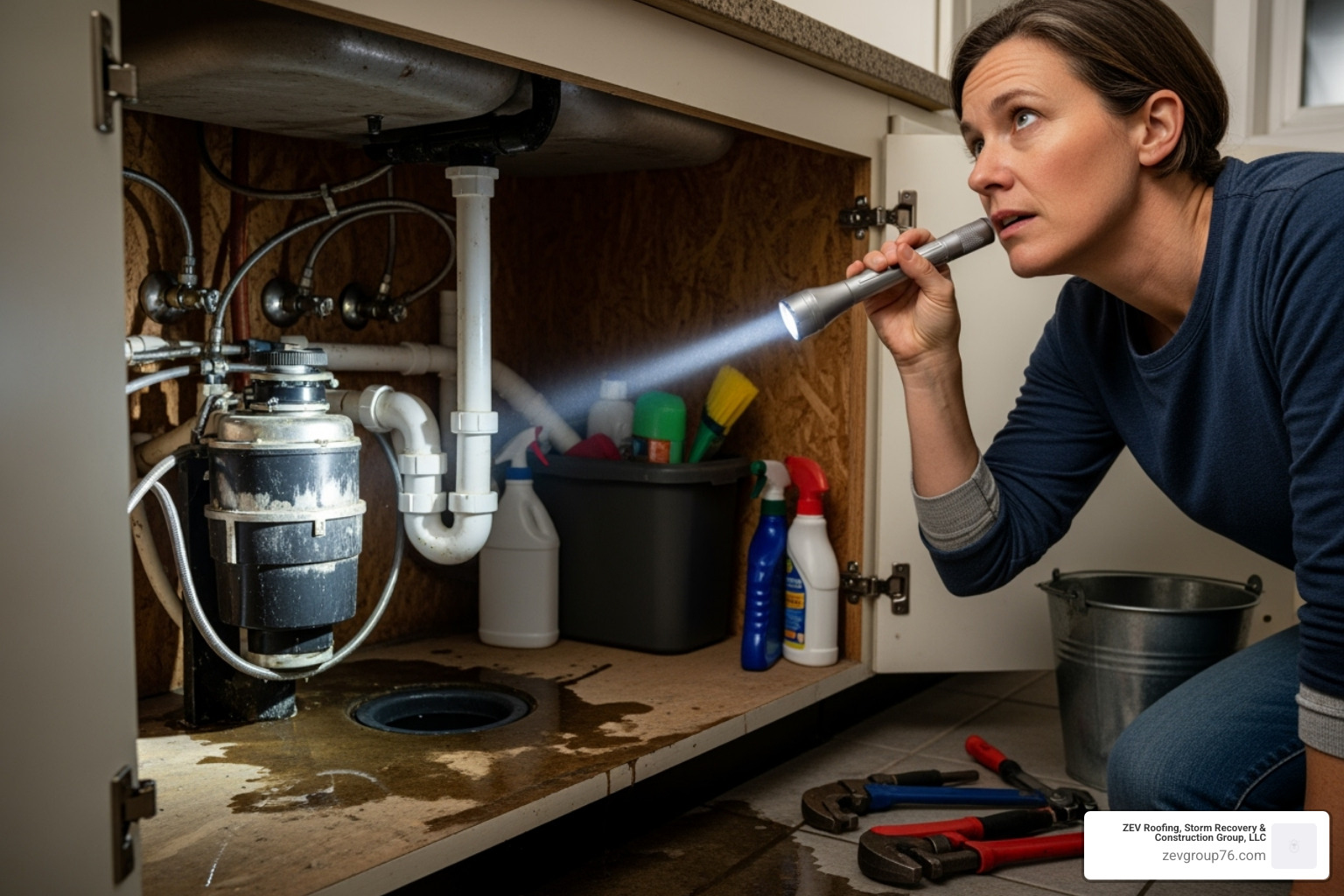
Keep an eye on your appliances – they’re often the sneaky culprits behind water damage. Check the hoses and connections on your washing machine, dishwasher, and refrigerator’s ice maker every few months. Those rubber hoses become brittle over time, so replace them every 3-5 years before they fail. Water heaters also need attention, especially as they age.
Small leaks become big problems faster than you’d think. That slow drip under your kitchen sink or the toilet that rocks slightly when you sit on it? Those are warning signs worth addressing through proper Leak Prevention measures. Consider installing smart water leak detectors that can alert your phone if they sense moisture – they’re relatively inexpensive and can save you thousands.
Don’t forget about your home’s exterior. Check your Exterior Siding for cracks, holes, or gaps where water could sneak in. Damaged siding allows moisture into your walls, where it can cause rot and mold growth without you even knowing it’s happening.
The bottom line? A little preventive maintenance goes a long way toward keeping your home dry and your family safe. Most of these checks take just a few minutes but can save you weeks of disruption and thousands of dollars in repairs.
Conclusion: Restoring Your Property and Peace of Mind
When water damage strikes, it feels overwhelming. But remember: you’re not alone, and with the right approach, your property and peace of mind can be fully restored.
The most important lesson from helping countless homeowners is to act fast. The first 48 hours are critical. If materials stay wet longer, you face potential mold problems that affect your family’s health and increase restoration costs.
Finding the right water damage services near me doesn’t have to be overwhelming, even when you’re stressed. Look for the essentials: IICRC certification (this is non-negotiable), strong local reviews, transparent communication, and companies that can work directly with your insurance. These professionals bring industrial-grade equipment and expertise that simply can’t be matched with a DIY approach.
But here’s something equally important: prevention really is your best friend. Those simple maintenance tasks – checking your roof after storms, cleaning gutters, inspecting appliance hoses – they might seem small, but they’re your first line of defense against future headaches.
At ZEV Roofing, Storm Recovery & Construction Group, LLC, we’ve seen how devastating water damage can be for families across Texas and New Mexico. While our specialty is roofing and storm recovery, we understand that water damage often starts with structural issues – compromised roofs, damaged siding, or storm-related problems that let water into places it shouldn’t be.
We serve communities throughout Lubbock TX, Shallowater TX, Plainview TX, New Deal TX, Wolfforth TX, Slaton TX, and across West Texas and Eastern New Mexico. Our team knows the unique challenges that our regional weather patterns can create, from sudden hailstorms to flash flooding.
What sets us apart is our commitment to you. We don’t just fix the immediate problem; we offer insurance claim assistance, ensure quality repairs, and build long-term solutions to protect your property.
Water damage is stressful enough without worrying if you’ve chosen the right help. Take those crucial first steps to stay safe, document everything, and then reach out to certified professionals who understand both the technical and emotional aspects of restoration.
Your home is more than just a building – it’s where your family feels safe and secure. Don’t let water damage take that away from you any longer than necessary.