
Why Finding the Right Storm Damage Contractor Makes All the Difference
When you need a storm damage contractor, you’re facing a stressful situation. Your property is damaged, insurance claims are looming, and you need help fast.
What to look for in a storm damage contractor:
- Licensed and insured with proper local credentials
- IICRC or HAAG certified for professional expertise
- Strong local reputation with verifiable references
- Insurance claim experience to maximize your settlement
- Emergency response capability for immediate protection
- Transparent communication with written estimates
- Multiple trade expertise beyond just roofing
As one industry expert notes: “In an instant, Mother Nature can release powerful weather patterns, leaving behind substantial storm damage to your home or business.”
The aftermath of severe weather like hail, wind, or flooding can feel overwhelming. The contractor you choose will determine whether your recovery is smooth or becomes a nightmare.
Storm chasers often appear after major weather events, offering quick fixes before disappearing. In contrast, reputable local contractors focus on proper restoration, insurance advocacy, and long-term solutions.
The difference can mean thousands of dollars and months of frustration. Understanding how to identify and vet the right storm damage professional is crucial for your property’s future.
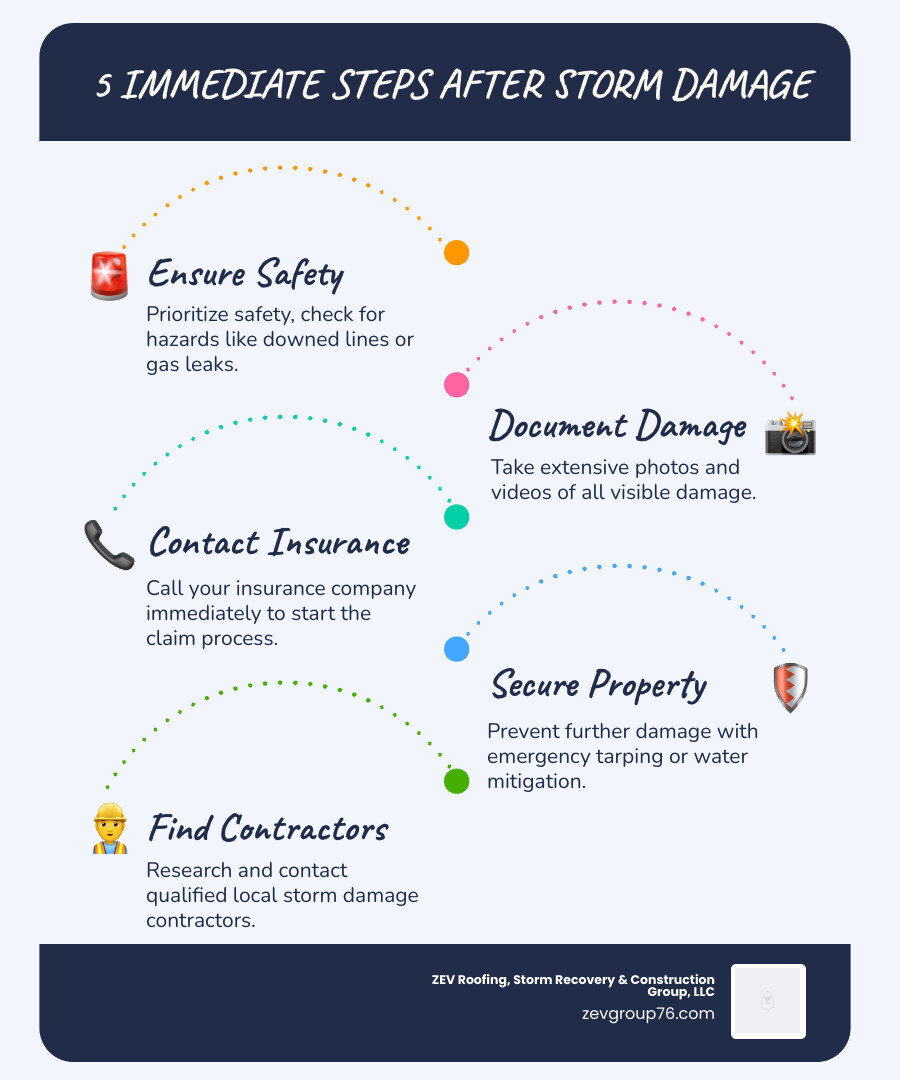
The Immediate Aftermath: Your First Steps After a Storm
When the storm passes, your safety comes first. Before doing anything else, scan for immediate dangers like downed power lines, a compromised roof structure, or the smell of gas. If you notice any of these hazards, stay clear and call the appropriate professionals.
Once it’s confirmed safe, resist the urge to start cleaning up immediately. Your next actions are crucial for your insurance claim.
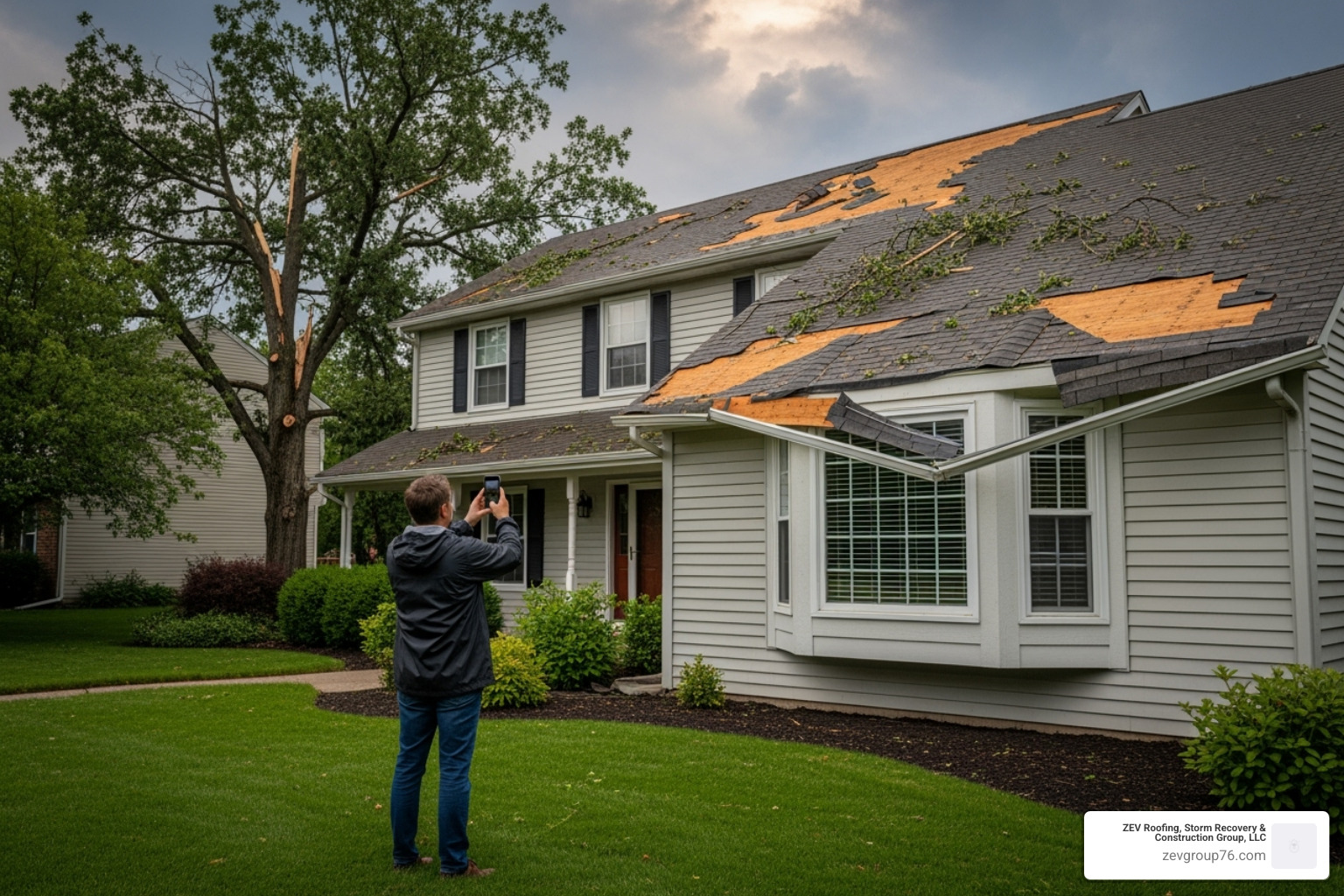
Grab your phone and document everything. Take photos and videos of all damage, including missing shingles, water stains, debris, and cracked windows. Capture multiple angles, close-ups, and wide shots to give your insurance adjuster a clear picture of the situation.
Next, perform quick damage control, also known as mitigation, to stop things from getting worse. Emergency tarping over a compromised roof can prevent further water intrusion. If you can safely remove standing water or set up fans to dry wet areas, do so. For serious damage, you’ll need a qualified storm damage contractor for emergency board-up and tarping services.
Call your insurance agent immediately. The sooner you report the claim, the smoother the process will be. Review your policy to understand your coverage. If you’re in a federally declared disaster area, check for additional help at federal disaster assistance.
Signs Your Home Has Sustained Storm Damage
Storm damage can be subtle. Problems might not appear until weeks later.
- Missing or damaged shingles are obvious red flags. Look for shingles that are cracked, curled, or dented by hail.
- Dents on your siding or gutters indicate hail impact.
- Cracked windows can worsen quickly with temperature changes.
- Water stains on ceilings or walls often point to roof damage.
- Debris scattered around your yard, especially near the house, suggests potential impact damage.
- Leaks in the attic, such as wet insulation or visible water, are clear signs your roof was hit.
- Granules in your downspouts mean your asphalt shingles have lost their protective layer, likely due to hail.
Even if everything looks fine from the ground, get a professional roof inspection after a major storm. A trained eye can spot subtle issues that could lead to costly repairs later.
Why Quick Action is Crucial
Procrastinating on storm damage repairs is a costly mistake.
- Mold can begin to grow within 24 to 48 hours in moist conditions, creating a health hazard that is expensive to remediate.
- Small problems become big problems quickly. A minor roof leak can compromise your home’s structural integrity.
- Insurance companies have deadlines for filing claims. If you miss the window, you may have to pay for all repairs yourself.
- Water damage spreads rapidly, ruining flooring, furniture, and drywall. The longer water sits, the more expensive the cleanup.
- Property value decreases with unrepaired damage. Swift restoration helps preserve your investment.
- Securing your home by repairing damaged roofs, windows, or doors protects your family from future storms, pests, and theft.
Acting quickly is essential to minimize your losses and get your life back to normal.
How to Find a Reputable Storm Damage Contractor
Finding a reputable storm damage contractor requires careful vetting, especially when you’re under pressure. A local, reliable contractor is your best ally. Unlike transient “storm chasers,” a local contractor has a reputation to uphold in the community and will be available for follow-ups and warranty claims.
Start by checking their credentials. Ensure they are properly licensed and insured in your state and locality, and ask for proof of general liability and workers’ compensation insurance to protect yourself from liability.
Read reviews on platforms like the Better Business Bureau (BBB). A high rating indicates a commitment to customer satisfaction. Experience also matters. A contractor who has repaired hundreds of homes or has decades of industry experience brings valuable expertise and reliability.
Key Qualities of a Professional Storm Damage Contractor
A professional storm damage contractor has several distinguishing qualities:
- Licensed and Insured: They must have the necessary local licenses and comprehensive insurance (general liability and workers’ compensation).
- IICRC Certification: The Institute of Inspection, Cleaning and Restoration Certification (IICRC) sets high standards for water damage restoration and mold remediation.
- HAAG Certification: For roof damage, HAAG certification is the gold standard, signifying advanced training in assessing how wind and hail affect roofing systems.
- Years of Experience: A proven track record with hundreds of successful projects demonstrates reliability and deep knowledge.
- Strong Local Reputation: A contractor rooted in the community is accountable and often relies on positive word-of-mouth.
- Transparent Communication: A professional contractor keeps you informed, often with a dedicated project manager.
- Provides Written Estimates: Always get a detailed, written estimate outlining the scope of work, materials, timeline, and costs.
- Offers Warranties: Reputable contractors stand by their work with warranties on materials and craftsmanship.
For more insights, you can Learn More about contractor qualifications.
Questions to Ask a Potential Storm Damage Contractor
Before hiring, ask these questions to gauge their professionalism and experience:
- What is your experience with local building codes? A good contractor ensures all repairs meet or exceed current codes.
- Can you provide references from recent storm damage projects? Speaking to past clients provides insight into their quality and communication.
- Are you a General Contractor? A general contractor can manage all aspects of restoration, from roofing to interior repairs, providing a single point of contact.
- How do you handle insurance claims? An experienced contractor can help document damage and negotiate with adjusters to maximize your settlement.
- What is your typical project timeline? A reliable contractor should provide a realistic timeline and keep you updated.
- Who will be my primary point of contact? Knowing who to call ensures smooth communication.
The Restoration Journey: From Claim to Completion
Once you’ve selected your storm damage contractor, the restoration journey begins. This process transforms your damaged property back into a safe, comfortable space.
The journey starts with a thorough damage assessment. A professional contractor will conduct a detailed inspection, using specialized training like HAAG certification to identify all damage. This assessment creates an accurate repair plan and builds a solid foundation for your insurance claim.
Next, mitigation services prevent further damage. This may involve installing emergency tarps, boarding up broken windows, or using industrial fans to dry water-damaged areas.

Debris removal follows, clearing away fallen branches, scattered roofing materials, and broken glass. A professional crew handles this efficiently, leaving your property ready for reconstruction.
The core of the process is reconstruction. Whether you need a simple Roof Repair or extensive structural work, your contractor will focus on restoring your property with quality craftsmanship and durable materials, often making it more resilient than before.
Throughout the project, quality assurance is a top priority. The process concludes with a final walkthrough, where you and your contractor review all completed work to ensure it meets your expectations.
Services Offered by Restoration Specialists
A comprehensive storm damage contractor offers a wide range of services:
- Emergency board-up and tarping provide immediate protection for your property.
- Water extraction and structural drying use professional-grade equipment to remove water and prevent mold growth.
- Roof Replacement and repair services address all aspects of roof damage, from shingles to the underlying structure.
- Siding and gutter repair restores your home’s exterior, matching materials for a seamless look.
- Window and door replacement addresses damage to your home’s security and energy efficiency.
- Interior repairs handle related issues like water-stained ceilings, damaged drywall, and warped flooring.
- Commercial Roofing and business property restoration services are also available for non-residential buildings.
Navigating Insurance with Your Storm Damage Contractor
An experienced storm damage contractor is an invaluable advocate during the complex insurance claims process.
- Filing the claim: Your contractor can help you gather the necessary documentation for your insurer.
- Meeting the adjuster: Having your contractor present ensures the adjuster sees the full scope of necessary repairs. They speak the same technical language and can act as your expert witness.
- Understanding your policy: They can help you decode complex policy language regarding coverage, exclusions, and deductibles.
- Maximizing your settlement: A skilled contractor knows how to document damage and write comprehensive estimates that insurance companies accept, ensuring you receive fair compensation.
- Documenting all communication: Professional contractors keep detailed records of all interactions, which is crucial if questions arise.
- Handling denied claims: If a claim is initially denied, your contractor can help provide supplemental documentation to support a re-evaluation.
For additional resources, you can Visit FEMA for disaster resources.
Proactive Protection: Preparing Your Home for Future Storms
The best time to prepare for a storm is when skies are clear. Proactive preparation gives your home the best chance against severe weather.
Regular roof inspections are your first line of defense. An annual professional inspection can spot loose shingles or damaged flashing before they become major problems in a storm.
Securing outdoor items is crucial. Bring in or tie down patio furniture, grills, and garbage cans so they don’t become flying projectiles in high winds.
Reinforcing windows and doors with storm shutters or pre-cut plywood can make a huge difference. Having these materials ready saves you a frantic trip to the hardware store.
Gutter cleaning is often overlooked. Clogged gutters can cause water to back up onto your roof or overflow around your foundation. Clean gutters properly channel water away from your home.
Tree trimming is another smart move. Removing dead or weak branches can prevent them from falling on your roof during a storm.
Create an emergency kit with water, non-perishable food, flashlights, batteries, and copies of important documents. You’ll be glad you have it if the power goes out.
Finally, review your insurance coverage annually. Ensure you have adequate coverage for the types of storms common in your area. Flood damage often requires a separate policy, a fact many homeowners learn too late.
To get ahead of potential issues, Learn about Leak Prevention to understand where your home might be vulnerable.
Storms are inevitable, but with preparation, you can face them with confidence instead of panic. Your future self—and your storm damage contractor—will thank you.
Frequently Asked Questions about Storm Damage Repair
When dealing with storm damage, homeowners have many questions. Here are answers to some of the most common concerns.
Will my insurance policy cover all storm damage repairs?
Coverage depends on your specific policy. Most homeowners’ insurance covers damage from wind, hail, and falling objects. However, you must review your policy’s exclusions and limitations.
Flood damage is almost always excluded from standard policies and requires separate flood insurance. Earthquake damage is also typically excluded unless you have a specific add-on.
Your deductible—the amount you pay out-of-pocket—is another key factor. Some policies have a separate, higher deductible for wind and hail damage. A knowledgeable storm damage contractor can help you understand your policy and how it applies to your situation.
How long does the storm damage restoration process take?
The timeline varies significantly based on several factors. Minor repairs, like replacing a few shingles, might take a few days. Major restoration projects involving structural damage can take weeks or even months.
Factors influencing the timeline include the severity of the damage, material availability (which can be strained after a major storm), and weather conditions. The insurance approval process can also affect when work begins.
A professional contractor will provide a realistic timeline and keep you updated. Quality work takes time, and it’s better to do it right than to do it fast.
What’s the difference between a roofer and a storm damage contractor?
Choosing the right professional is crucial for your recovery.
A roofer specializes in roofing systems—installation, repair, and maintenance. They are a good choice for isolated roof damage.
In contrast, a storm damage contractor manages the entire restoration process. They act as a general contractor, coordinating multiple trades to repair siding, windows, gutters, and interior damage like drywall and flooring.
Most importantly, storm damage contractors specialize in insurance claims. They know how to document damage, work with adjusters, and advocate for you to ensure all damage is covered. When a storm affects multiple parts of your home, a dedicated storm damage contractor provides a single point of contact, simplifying the entire process.
Conclusion: Rebuilding with Confidence
When a storm damages your home, it can feel overwhelming. The roof that protected your family may be compromised, and you might be wondering where to begin.
We’ve learned that the right partner makes all the difference. A skilled storm damage contractor doesn’t just fix your house; they walk with you through a stressful experience, restoring your sense of security.
This guide has covered the crucial first steps, how to find a reputable professional, and how to steer the insurance process. The goal is to empower you with knowledge to make confident decisions.
For homeowners throughout Texas and New Mexico, we at ZEV Roofing & Construction understand that every storm damage situation is unique. We provide comprehensive solutions for everything from hail-damaged roofs to widespread structural issues.
Our customer-focused approach means you get a dedicated point of contact, expert craftsmanship, and an experienced team that will fight to get you the insurance settlement you deserve.
Don’t let storm damage threaten your home’s safety. The sooner you act, the better the outcome. Take the next step toward recovery and get your property assessed by professionals who care about getting your life back to normal.
Schedule your professional Storm Damage Repair assessment today and let us help you rebuild with confidence.