
Why TPO Roof Repair is Critical for Your Building
TPO roof repair involves fixing damage to Thermoplastic Polyolefin (TPO) single-ply membranes, common on commercial and flat roofs.
Quick TPO Repair Guide:
- Small punctures: Clean area, apply TPO patch with compatible adhesive
- Seam separation: Heat weld or apply TPO seam tape
- Larger tears: Cut membrane patch 2-3 inches beyond damage, prime and weld
- Ponding water: Address drainage issues and repair weakened membrane
- Professional help needed: For extensive damage, warranty preservation, or heat welding
TPO roofing is popular for commercial properties due to its durability, energy efficiency, and cost-effectiveness. However, these white, reflective membranes can lose 20-30% of their reflectivity in just the first three years, making timely repairs essential for maintaining energy savings.
TPO roofs face unique challenges. Ponding water can weaken seams, UV exposure gradually degrades the membrane, and foot traffic from HVAC technicians can cause punctures. The seams connecting TPO sheets are particularly vulnerable to cracking or separating during extreme weather.
Acting quickly on damage protects your investment. Neglecting small issues leads to costly replacements and potential structural damage to your building.
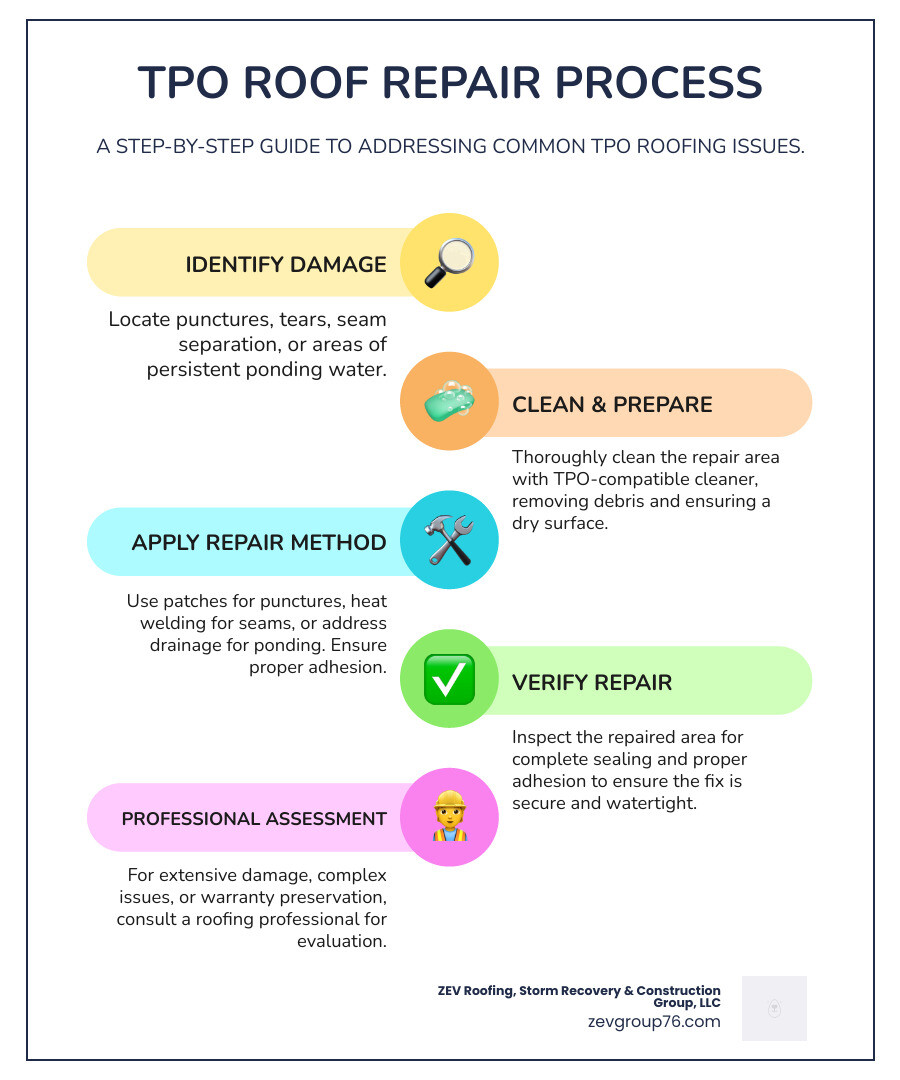
Understanding TPO Roofing and Common Damage
TPO (Thermoplastic Polyolefin) is a single-ply membrane and a top choice for commercial roofs in Texas and New Mexico. It’s a blend of polypropylene and ethylene-propylene rubber, giving it both strength and flexibility.
Most TPO roofs are bright white to reflect sunlight, keeping buildings cooler and lowering energy bills—a significant benefit in hot climates. TPO is also cost-effective and naturally resistant to UV rays, tears, and punctures. It can be installed in various ways, including fully adhered, mechanically attached, or ballasted. For more details on TPO, see this guide on thermoplastic polyolefin TPO roofing.
Even durable TPO isn’t invincible. Understanding TPO roof repair is crucial for protecting your investment. If you need help with your commercial roof, learn more about our Commercial Roofing services.
Signs Your TPO Roof Needs Attention
Catching problems early is key. Here are the warning signs that your TPO roof needs help:
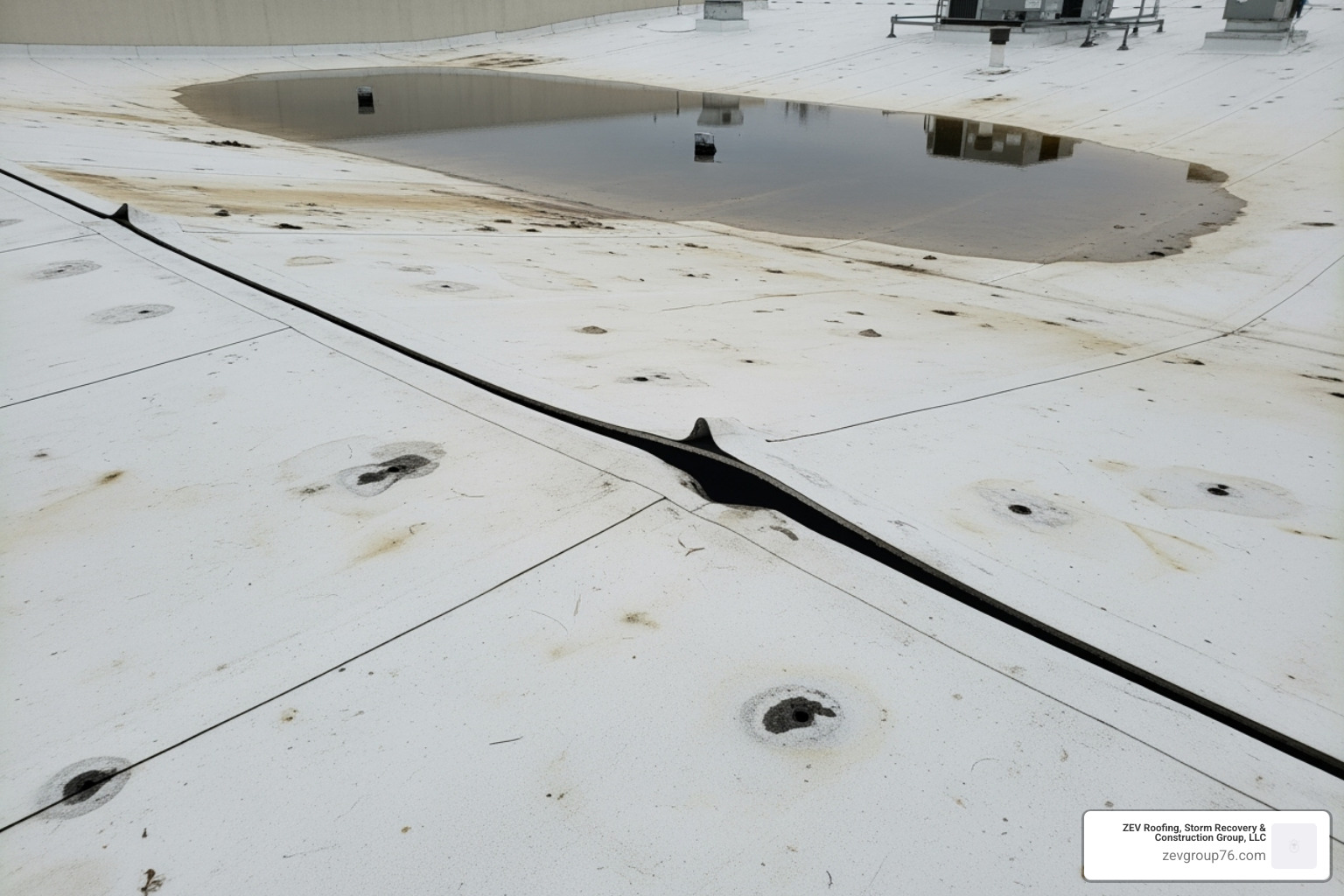
- Ponding water: Water that sits for more than 48 hours is a major red flag. It weakens the membrane and can penetrate seams.
- Punctures and tears: Even small holes from storm debris or maintenance can lead to major leaks.
- Cracked or separated seams: The joints where TPO sheets connect are common failure points due to weather, building movement, or UV exposure.
- Blisters and bubbles: These raised areas indicate trapped air or moisture and are weak spots waiting to pop.
- UV degradation: A chalky, faded, or brittle surface means the membrane is losing its protective qualities.
- Increasing energy bills: If cooling costs are rising, your roof may have lost its reflectivity, forcing your HVAC system to work harder.
Common Types of TPO Roof Damage
Understanding the cause of damage helps with prevention and repair.
- Foot traffic damage: HVAC technicians, inspectors, and maintenance crews can cause wear or punctures, especially without proper walkways.
- Debris impact: Hail, falling branches, or construction materials can cause immediate damage. Always inspect your roof after a storm.
- Seam failure: Improper installation, extreme temperatures, or age can cause heat-welded seams to fail.
- Weather exposure: Years of UV rays and temperature swings gradually make the membrane brittle, leading to cracks.
- Shrinkage: As TPO ages, it can contract, putting stress on seams and flashing, which can pull connections apart.
- Hail damage: Large hailstones can puncture or bruise the membrane, often requiring professional assessment. Our Storm Damage Repair services can evaluate and fix any damage.
The Complete TPO Roof Repair Process: A Step-by-Step Guide
A proper TPO roof repair requires careful preparation. Weather is a key factor; repairs should be done in dry, moderate temperatures with low wind. Cold weather makes TPO brittle, while extreme heat can make materials too soft to handle.
Safety is also crucial. Always use proper fall protection, ensure ladders are stable, and keep the work area clear.

Essential Materials and Tools for TPO Roof Repair
Using the right tools and materials is non-negotiable for a lasting TPO roof repair.
- TPO membrane patch material: Should match the existing roof’s thickness and color.
- TPO-specific cleaner: Removes dirt and oxidation that prevent adhesion.
- TPO seam primer: Prepares the surface for a chemical bond.
- TPO-compatible adhesive: Creates the bond between the patch and roof. You can find quality TPO-compatible adhesive from reputable suppliers.
- TPO seam tape: Provides extra reinforcement for seams.
- Heat gun or hot air welder: Creates the strong, monolithic bond.
- Seam roller: Applies firm pressure to ensure bonding and eliminate air bubbles.
- Other tools: Utility knife, cleaning rags, measuring tape, and safety equipment (gloves, glasses).
Using incompatible materials can worsen damage and void your warranty.
Step 1: Cleaning and Preparing the Damaged Area
Proper cleaning is critical for a successful TPO roof repair.
First, remove all loose debris from the damaged area. Next, use a TPO-specific cleaner on the damaged spot and at least 6-12 inches beyond it. Scrub vigorously to remove invisible contaminants like oils and oxidation. If the cleaner requires rinsing, do so and wait for the area to dry completely.
The final prep step is applying TPO seam primer to the clean, dry surface. Follow the manufacturer’s instructions for application and drying times. A properly prepared surface is the foundation of a durable repair.
Step 2: Repairing Punctures and Tears
This step requires precision.
Cut a TPO patch that extends 2-3 inches beyond the damage on all sides. Always round the corners of the patch to prevent them from peeling up over time.
Clean and prime both the patch and the prepared roof surface. If using adhesive, apply it as directed, then carefully place the patch and press firmly from the center outward to remove air bubbles.
Heat welding the patch creates the strongest repair. Use a hot air welder to heat the patch and the existing membrane simultaneously until they soften. Then, use a seam roller to press them together, creating a watertight bond. This process requires skill to avoid overheating or underheating the membrane. Always test the weld with a blunt tool to ensure it is fully fused.
Step 3: Securing and Resealing TPO Seams
Failed seams are a common entry point for water, making this a critical part of TPO roof repair.
Inspect seams for cracks, separations, or loose edges. Clean the entire seam area, including both TPO sheets, and apply primer. For significant separations, professional heat welding is the best solution. Re-heat the separated edges and use a seam roller to press the sheets together, re-fusing the material.
For minor issues or as extra protection, TPO seam tape provides an excellent waterproof seal over clean, primed seams. A final application of TPO-compatible liquid seam sealant along the edges can offer additional insurance against water intrusion.
DIY vs. Professional TPO Roof Repair: Making the Right Call
When your TPO roof is damaged, you may wonder if you can fix it yourself or if you need a professional. While DIY seems budget-friendly, it’s not always the smart choice for TPO roof repair, which requires specialized materials and techniques.
Consider the trade-offs:
- Cost: DIY has lower upfront material costs, but a failed repair can lead to much higher expenses later.
- Tools: Professionals use industrial-grade heat welders and diagnostic tools that provide superior, lasting repairs.
- Skill: TPO repair requires technical knowledge of membrane compatibility, welding temperatures, and adhesion. Professionals have specialized training and experience.
- Time: A repair that takes a professional a few hours could take a DIYer an entire weekend.
- Warranty: DIY repairs often void manufacturer warranties, leaving you unprotected against material defects.
- Effectiveness & Risk: Professional repairs are long-lasting, while DIY attempts can be temporary and may worsen the problem.
For a professional assessment, our Roof Repair services can provide lasting solutions.
When DIY Might Be an Option
Some minor tasks may be suitable for a careful property owner:
- Minor cleaning: Removing loose debris and light dirt is good preventive maintenance.
- Superficial scuffs: Scratches that haven’t penetrated the membrane can sometimes be sealed with a TPO-compatible liquid sealant.
- Tiny cracks: Applying sealant to a hairline crack can be a temporary fix, but it must be monitored.
- Pre-made repair kits: Peel-and-stick TPO patches can be used for very small punctures.
For any DIY task, you must use TPO-specific products to avoid causing more damage.
Why and When to Call a Professional
For most issues, calling a professional is the safest and most effective choice for TPO roof repair.
- Extensive damage: Large tears, multiple punctures, or widespread blistering require comprehensive, professional solutions.
- Active leaks: If water is getting in, the damage is likely more significant than it appears. Professionals can diagnose the true source of the leak.
- Seam separation: Repairing seams properly requires specialized heat welding equipment and expertise.
- Heat welding requirements: The gold standard for TPO repair is heat welding, which creates a bond as strong as the original membrane. This process requires professional tools and training.
- Warranty concerns: To maintain warranty coverage, most TPO manufacturers require repairs to be done by trained professionals.
- Old or brittle membranes: Aging TPO can be difficult to work with and may crack further if repaired improperly. An expert can assess if a repair is viable or if a roof coating or replacement is a better option.
The bottom line is that TPO roof repair requires specialized skills. Our Roof Inspection services can help you understand your roof’s condition and determine the best path forward. Professional repairs protect your investment for years to come.
Proactive Maintenance to Extend Your TPO Roof’s Lifespan
Proactive maintenance for your TPO roof, much like for a car, prevents expensive problems and reduces the need for TPO roof repair. A little attention now can save you thousands later.
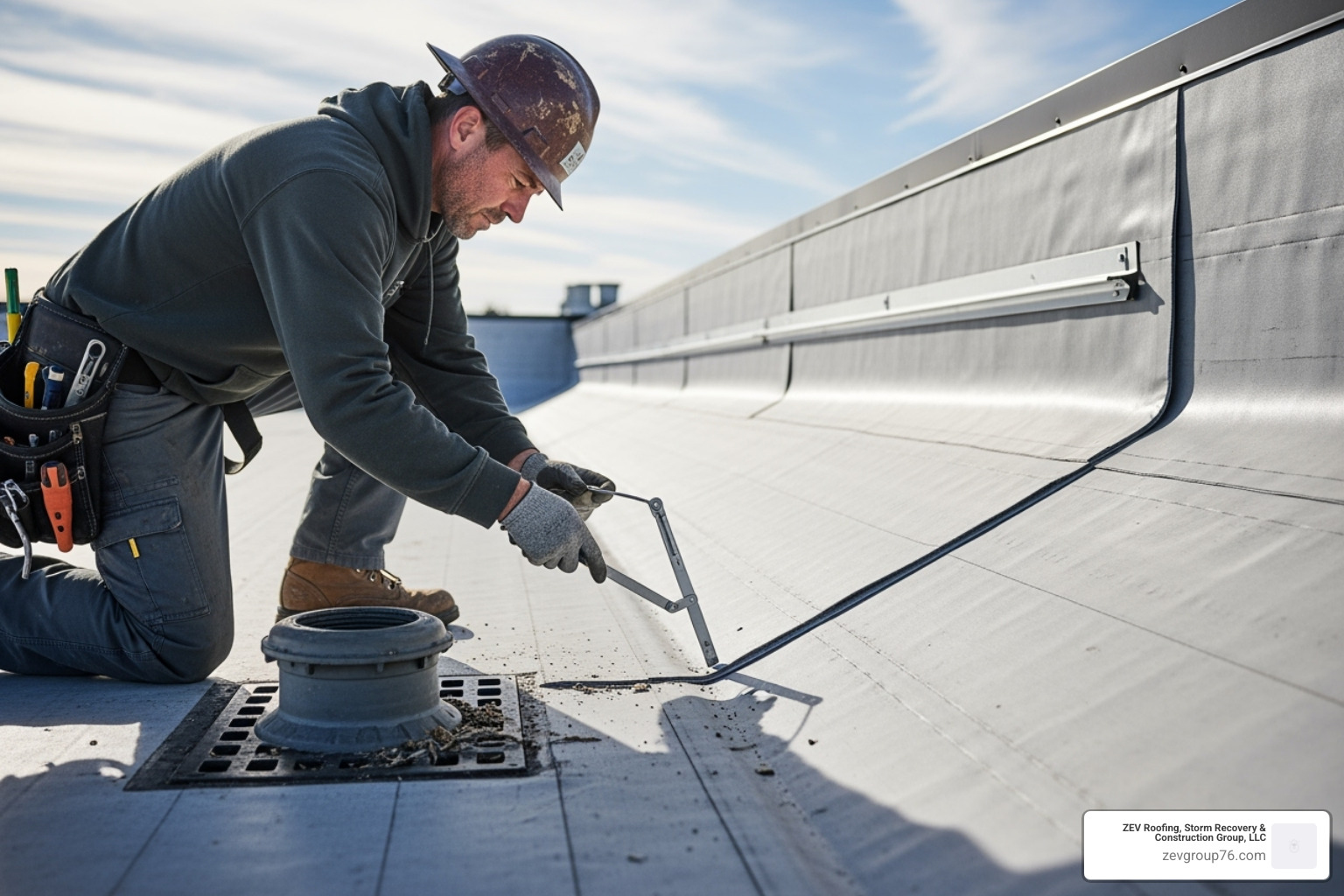
- Regular inspections are your first line of defense. We recommend professional inspections twice a year, in spring and fall, to catch small issues like punctures or stressed seams before they escalate.
- Keep your roof clean of leaves, branches, and dirt. Debris traps moisture against the TPO membrane, which can lead to mold or punctures.
- Clean gutters and drains regularly. Clogged drainage is the primary cause of ponding water, which puts constant pressure on seams and weakens the membrane. This is a key part of Leak Prevention.
- Manage foot traffic. If your roof sees regular traffic for HVAC maintenance, consider installing protective walkways or pads to prevent cumulative damage.
- Fix small problems immediately. Address minor scuffs, cracks, or loose seams right away before they spread.
Partnering with professionals for a maintenance contract can simplify roof care. We handle inspections, cleaning, and minor repairs, so you can focus on your business. A well-maintained TPO roof performs better, lasts longer, and provides peace of mind.
Frequently Asked Questions about TPO Roof Repair
We’ve answered many questions about TPO roof repair over the years. Understanding the specifics of TPO helps you make better decisions for your building.
How long does a TPO roof repair last?
The longevity of a TPO roof repair depends on the method and quality. A professional repair using heat welding can last for the remaining life of the roof. Heat welding creates a “monolithic bond,” fusing the patch with the existing membrane so there are no weak points for water intrusion.
Patch and tape repairs are effective for smaller issues and are quite durable, but they should be checked during regular inspections. The quality of materials and installation is always the key factor for a long-lasting repair.
Can you repair an old TPO roof?
Yes, older TPO roofs can often be repaired, but its effectiveness depends on the membrane’s condition. If the TPO has been well-maintained, it can be repaired successfully.
However, if the membrane has become severely brittle, chalky, or is cracking, welding is much more difficult. In these cases, we might recommend a roof coating system, like acrylic or silicone, to restore reflectivity and extend the roof’s life. For roofs that are too degraded, a full replacement may be the most cost-effective long-term solution. We will always provide an honest assessment of all your options.
What happens if you use the wrong sealant on a TPO roof?
Using non-compatible materials on TPO, like asphalt-based sealants, causes serious damage. The chemicals in these products can attack the TPO membrane, causing it to soften, swell, or even dissolve. The damaged area becomes weak and brittle, leading to more cracks and leaks.
Crucially, using the wrong materials will almost certainly void your manufacturer’s warranty. The repair itself will also fail, leading to more extensive TPO roof repair or even a full replacement. What seems like a shortcut can become an expensive nightmare.
Always use TPO-compatible products, preferably from the same manufacturer as your membrane. If you’re unsure, call a professional. It’s better to ask a question than to fix avoidable damage.
Conclusion
Proper TPO roof repair is a long-term investment in your property. As we’ve covered, spotting early warning signs like ponding water and cracked seams, and understanding the correct repair process, is key to keeping your roof watertight and energy-efficient.
Timely repair is absolutely crucial. A small puncture or separated seam, if ignored, can lead to structural damage, mold, and costly replacement. A minor patch job today can prevent a major expense tomorrow.
Professional expertise makes the difference with TPO roofing. Its unique properties require specialized knowledge and heat welding equipment. The wrong approach can worsen damage or void your warranty.
Here at ZEV Roofing & Construction Group, LLC, we provide expert TPO roof repair services across Texas & New Mexico. Whether you’re in Lubbock, Shallowater, Plainview, New Deal, Wolfforth, Slaton, or surrounding areas in West Texas and Eastern New Mexico, we deliver quality craftsmanship and customer care. We understand your roof protects your valuable assets, and we use only TPO-compatible materials and proven techniques.
Don’t wait for a small problem to become a disaster. If you’ve noticed warning signs or are concerned about recent storm damage, we’re here to help.
Ready to protect your investment? Contact us for Storm Damage Repair and inspection today, and let’s ensure your TPO roof remains in top condition for years to come.