
Facing Storm Damage? Here’s What to Do First
When your home is hit by severe weather, finding roof damage can be alarming. Getting a professional storm roof repair service quickly is crucial to protect your home and prevent more problems.
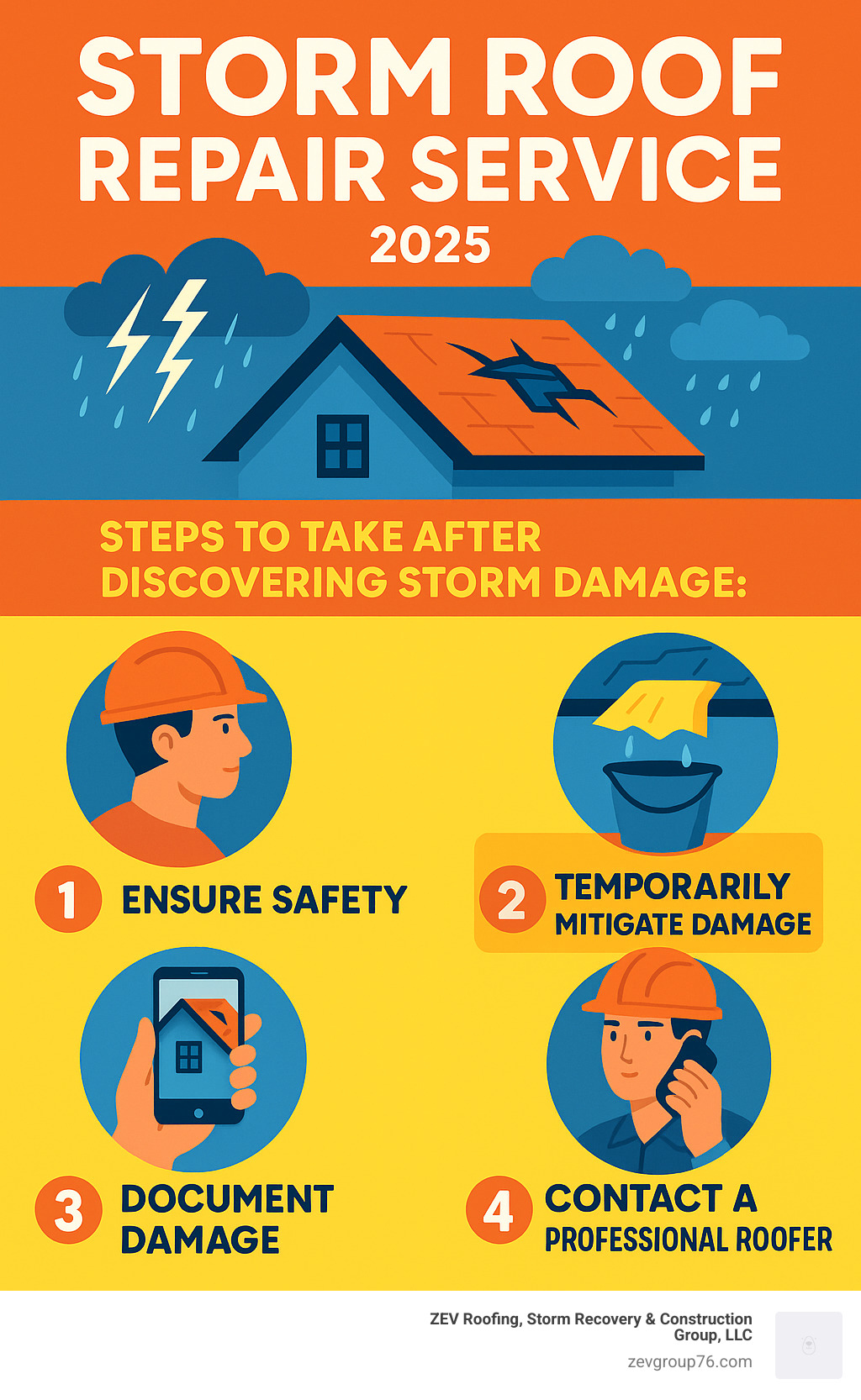
After a storm, swift action can save you money and headaches. Here are the first steps to take:
- Safety First: Do not climb on your roof. Look for damage from the ground. Watch out for downed power lines or unstable structures.
- Stop Leaks: Place buckets under any drips. Use plastic sheeting to protect furniture and floors from water.
- Document Everything: Take clear photos and videos of all damage. This helps with insurance claims.
- Call a Pro: Contact a qualified storm roof repair service like ZEV Roofing. They can assess the damage safely and advise on your next steps.
Storms bring high winds, hail, and heavy rain that cause serious roof problems. In fact, high winds, hail, and falling trees cause 60% of all roofing emergencies. Ignoring even small damage can lead to bigger issues like mold or wood rot. Fixing issues early can save you 30-50% compared to waiting.
Step 1: Assess the Damage Safely
After a storm, your first instinct might be to check your roof up close. Stop right there. A damaged roof can be incredibly dangerous to walk on, and your safety is paramount.
Never climb onto your roof after a storm. The surface could be slippery, weakened, or hiding structural problems. Plus, downed power lines create serious electrical hazards. Scan your surroundings before stepping outside.
Instead, inspect from the ground. Grab a pair of binoculars and walk around your home. Look at every section of your roof, paying special attention to areas around chimneys, vents, and where different roof sections meet—these spots often take the biggest beating.
This ground-level inspection is your first step toward getting the right storm roof repair service. For more detailed guidance, check out our roof inspection information.
Common Signs of Storm Damage
Knowing what to look for helps you explain the situation clearly when you call for help.
Missing shingles are the most obvious red flag, leaving your roof deck exposed. Even shingles that are still in place might show curled or lifted edges, which means the wind broke their protective seal.
Cracked shingles from hail or flying debris are like tiny doorways for water. If you have an older roof, these damaged shingles are especially vulnerable.
A sneaky sign many homeowners miss is excessive granules in your gutters. Hail knocks these protective, rock-like pieces loose from asphalt shingles.
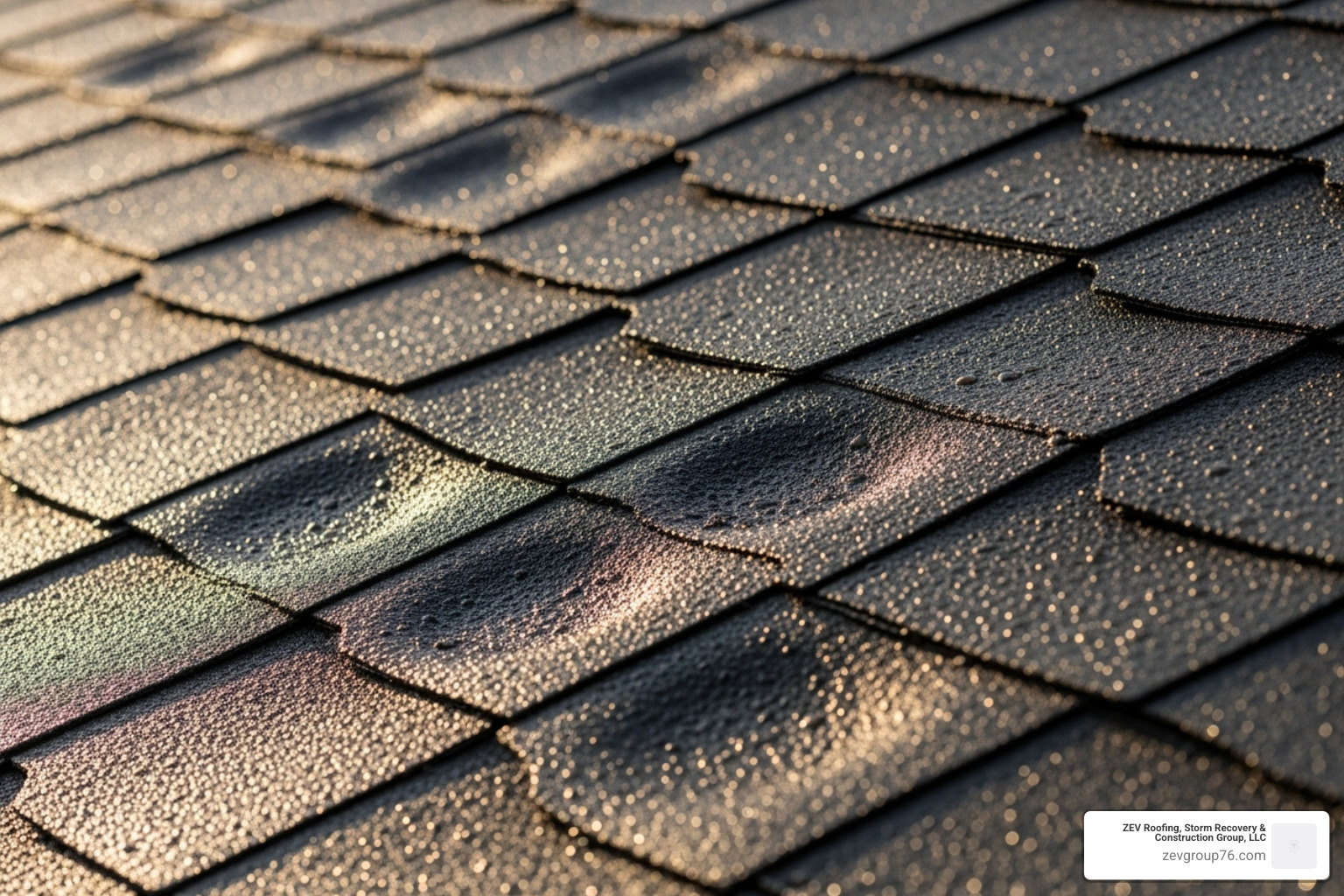
Dented flashing around chimneys and vents creates entry points for water and needs immediate attention.
Don’t forget to check inside. Water stains on ceilings or in your attic are clear signs of a compromised roof. A sagging or uneven roofline indicates a serious structural concern that needs professional evaluation right away.
How Damage Varies by Roofing Material
Not all roofs respond to storms the same way.
Asphalt shingles show damage in many ways. Hail creates circular “bruises” that weaken the shingle, while wind can tear them off or curl their edges.
Metal roofs handle wind well but can be dented by large hailstones. These dents can affect performance and potentially lead to rust.
Flat roofs are challenged by pooling water from heavy rain and punctures from debris. Wind can also lift edges and seams.
Wood shake roofs can split and crack, leading to rot once water gets in. Tile roofs, while tough, are brittle and can be cracked or shattered by hail and falling branches.
| Roofing Material | Common Storm Damage | How Damage Manifests |
|---|---|---|
| Asphalt Shingles | Hail, Wind, Falling Debris | Granule loss, bruising (circular dents), cracking, tearing, curling, lifting, missing shingles. Can lead to exposed fiberglass mat. |
| Metal Roofs | Hail, Wind, Falling Debris | Dents, punctures, creasing, uplifted panels (especially at seams), scratches that can lead to rust. |
| Flat Roofs (TPO, PVC, EPDM, Modified Bitumen) | Wind, Heavy Rain, Debris | Punctures, tears, delamination (layers separating), pooling water (leading to accelerated deterioration), uplifted seams or edges. |
| Wood Shake/Shingles | Hail, Wind, Fire (lightning) | Splitting, cracking, curling, cupping, missing shakes/shingles, impact damage. Susceptible to rot if water penetrates. |
| Tile Roofs (Clay, Concrete) | Hail, Wind, Falling Debris | Cracking, chipping, breaking, dislodged tiles. Can be brittle under direct impact but generally durable against wind. |
Understanding your roof material helps us at ZEV Roofing provide the most effective repair for your situation.
Step 2: Take Immediate Action to Prevent Further Harm
Once you’ve safely assessed the damage from the ground, your priority is protecting your home’s interior. Every minute counts in preventing water from causing expensive secondary damage.
Start by protecting what’s inside. Move furniture, electronics, and valuables away from areas with leaks. Relocating belongings now is much easier than dealing with water-damaged items later.
Set up a leak defense. Place buckets under active drips. For larger areas, lay down plastic sheeting over floors and furniture. This temporary barrier can save you thousands in water damage.
If you can safely access your attic, you can place containers directly under leak sources. However, be extremely cautious—attics have low light, potential electrical hazards, and unstable footing. If you have any doubts, wait for the professionals.
Leave the dangerous work to the experts. Don’t attempt to tarp the roof yourself. Emergency tarping requires safety equipment and experience. A qualified storm roof repair service has the tools and training to safely install temporary protection until permanent repairs can be made.
For more guidance on protecting your home, check out our leak prevention tips.
The Dangers of Delaying Your Storm Roof Repair Service
That “small” roof problem won’t stay small for long. A minor leak today can snowball into a home disaster.
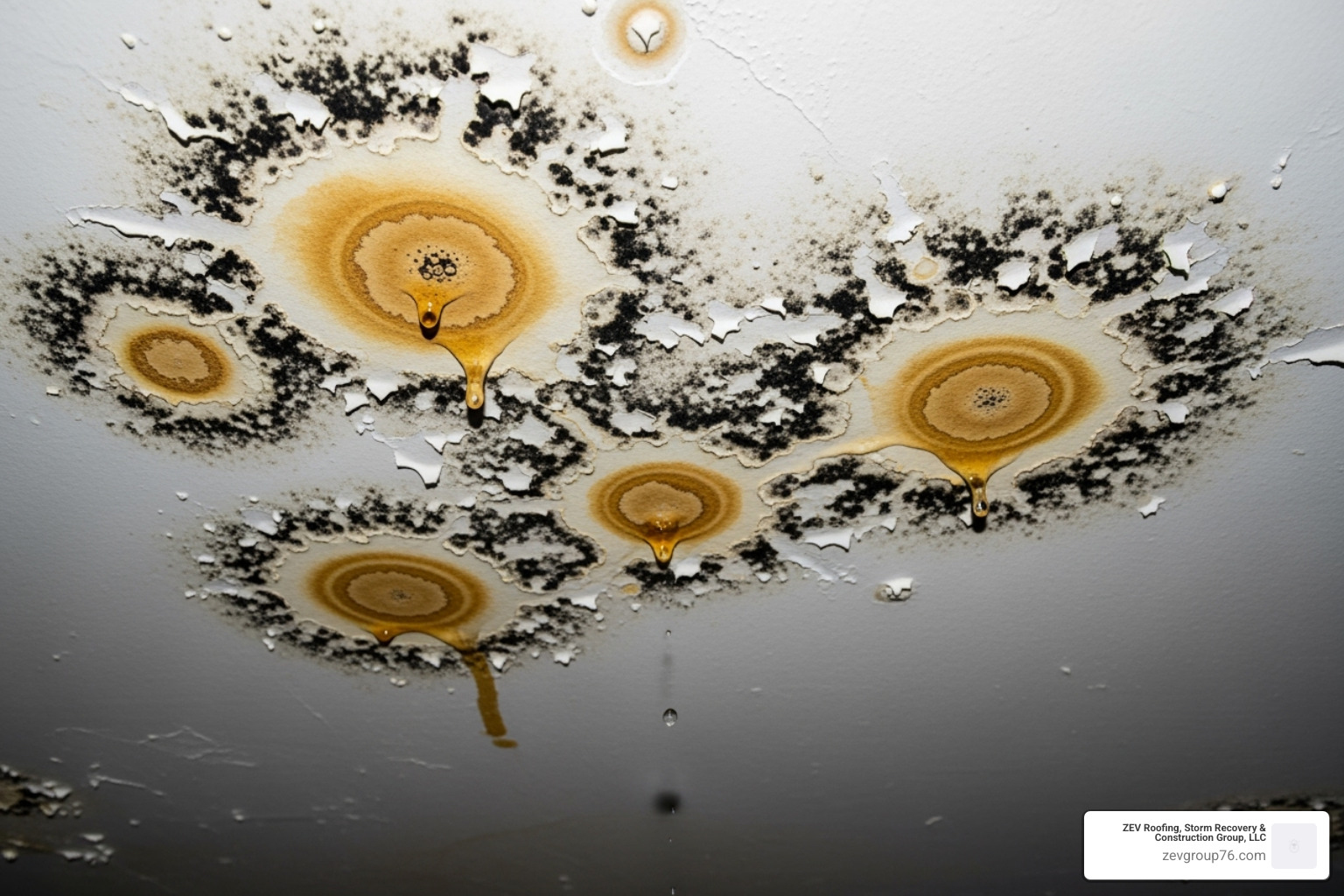
- Water damage spreads fast. It seeps into drywall, soaks insulation, and can destroy furniture and personal belongings.
- Wood rot is a silent destroyer. Moisture in your roof decking and rafters compromises your home’s structural integrity, making future repairs more complex and expensive.
- Toxic mold growth is a serious health threat. Dark, moist conditions are a perfect breeding ground for mold, which can cause respiratory problems and allergic reactions.
- Electrical shorts create fire hazards. When water reaches electrical wiring, you risk dangerous shorts, power outages, and even house fires.
- Energy bills will climb. Damaged insulation forces your heating and cooling systems to work overtime, increasing your utility bills.
- Repair costs multiply over time. The Federal Alliance for Safe Homes research shows that fixing emergencies early saves 30-50% on costs compared to waiting. A small repair today could become a full roof replacement if you delay.
The bottom line? Acting quickly is essential. Don’t let a manageable storm repair turn into a major home renovation project.
Step 3: Navigating the Insurance Claim Process
Dealing with insurance after storm damage can feel overwhelming, but organization and professional help make it manageable. A storm roof repair service that knows the claims process is a valuable partner.
First, review your homeowner’s insurance policy. Understand your coverage, deductible, and any rules for filing claims. Many policies require you to report damage within 24-48 hours, so time is critical.
Contact your insurance company as soon as possible. Have your documentation—photos, videos, and detailed notes—ready to share. Your insurer will want to know what happened and when.
Keep detailed records of everything moving forward. Note who you speak with at the insurance company, log call dates, and save all receipts for temporary repairs. This paper trail is crucial if disputes arise.
For comprehensive guidance, check out this resource on How to file an insurance claim.
Your insurance company will send an adjuster to inspect the damage. Having a professional roofer on your team at this stage is invaluable.
How a Professional Roofer Can Help
Working with a storm roof repair service that understands insurance claims makes a huge difference. At ZEV Roofing, we’ve helped countless homeowners in Texas and New Mexico steer this process.
- Comprehensive Damage Documentation: We conduct thorough inspections with professional equipment, taking high-resolution photos and detailed notes that insurance companies trust.
- Meeting with Adjusters: We can meet with your insurance adjuster on-site to walk through the damage. Our team can point out subtle issues that might otherwise be missed and speak the same technical language as adjusters.
- Accurate, Detailed Estimates: We provide estimates using industry-standard pricing that help your insurer understand the true cost of restoration, including any secondary damage.
- Ensuring All Damage Is Covered: Our expertise ensures all storm-related damage, including hidden problems, is identified and included in your claim.
- Streamlining the Process: We handle the technical details so you can focus on getting your life back to normal. We act as your advocate to ensure you get the coverage you’re entitled to.
With our experience in Storm Damage Repair, we know what insurance companies expect and how to present your claim effectively. We’re not just fixing your roof—we’re your partners throughout the recovery.
Step 4: Choosing a Professional Storm Roof Repair Service
When your roof is damaged, choosing the right storm roof repair service is one of your most important decisions. This isn’t the time to go with the first contractor who knocks on your door.
Your roof is your home’s first line of defense. A reputable, experienced roofer will restore it properly and guide you through the overwhelming recovery process.
Local reputation is key. A company with deep roots in your community, like ZEV Roofing, understands the unique weather patterns in Texas and New Mexico. This local knowledge makes all the difference.
Experience with storm damage is crucial. Storm repair requires specialized knowledge to spot the subtle signs of hail versus wind damage.
Also, verify proper licensing and insurance. This protects you from potential headaches, and any legitimate contractor will happily provide proof.
Check customer reviews and BBB ratings. Look for companies that consistently deliver quality work and stand behind their promises.
Always insist on written estimates that detail the work, materials, and cost to avoid confusion later.
Warranties on both materials and workmanship are your safety net. A contractor who offers strong warranties believes in their work.
We believe that Why Hiring a Qualified Roofer is Essential for Your Full Roof Replacement in Tampa, FL applies everywhere, including Texas and New Mexico. Quality work ensures long-term protection.
What to Look for in a Storm Roof Repair Service
Asking the right questions can save you from costly mistakes. Here are key questions to help you separate the professionals from the pretenders:
- Do you offer 24/7 emergency services?
- What’s your debris cleanup process?
- What materials do you use and why?
- What’s your timeline for completion?
- Can you help with insurance claims?
- What certifications do your technicians have?
- What warranties do you provide?
- Can you provide local references?
- How do you ensure safety during repairs?
- What if you find additional damage during repairs?
The right storm roof repair service will welcome these questions and provide clear answers. If a contractor seems annoyed or gives vague responses, that’s a red flag. Your home is too important to trust to anyone who won’t address your concerns.
Step 5: Prevention and Maintenance for Future Protection
While we can’t control the weather, we can prepare our roofs to handle storms. Proactive maintenance is like a regular check-up—it saves you the stress and expense of an emergency.
Emergency repairs address existing damage, while routine maintenance catches small issues like loose shingles or cracks before they become major problems. The savings are significant, as proactive maintenance can slash emergency repair expenses by up to 60%. A 2023 study found that roofs with routine inspections saved homeowners an average of $4,500 over 10 years.
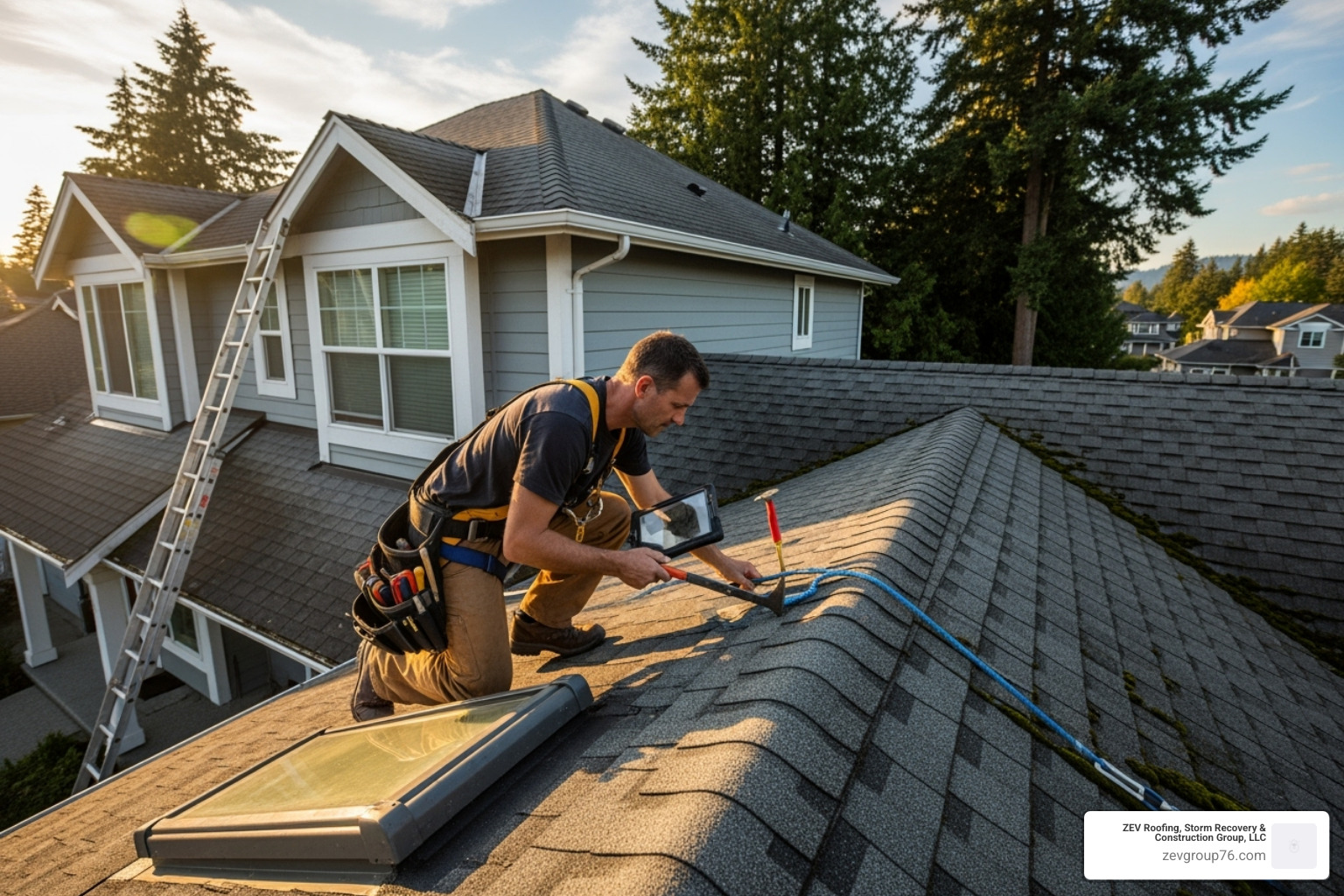
Good roof maintenance includes:
- Annual inspections: We recommend professional inspections at least once a year, ideally in spring and fall, to catch issues before harsh weather makes them worse.
- Gutter cleaning: Clogged gutters cause water to back up on your roof, which accelerates deterioration and creates leak pathways.
- Trimming overhanging branches: This simple step prevents heavy branches from falling on your roof during high winds and causing a storm roof repair service emergency.
The long-term benefit of this proactive approach is a longer roof life. Proper care can add 12+ years to a roof’s lifespan, helping you reach the higher end of the typical 15-30 year range for asphalt shingles. This means delaying a full, costly roof replacement for over a decade.
At ZEV Roofing, we’ve seen how preventive care helps our Texas and New Mexico customers avoid panicked calls and major projects. It’s better for your roof, your budget, and your peace of mind.
For more information on keeping your roof in top condition, visit our page on Roof Repair.
Frequently Asked Questions about Storm Roof Repair
After a storm, it’s normal to have questions about your damaged roof. As a leading storm roof repair service in Texas and New Mexico, we’ve heard them all. Here are the most common ones.
Should I repair or replace my roof after a storm?
The answer depends on the extent of the damage and your roof’s age and condition.
- Extent of damage: A few missing shingles can often be repaired, but widespread damage from hail or wind may require a full Roof Replacement.
- Roof’s age: If an older roof (20+ years) sustains significant damage, replacement is often more cost-effective than extensive repairs.
- Cost-benefit analysis: When the cost of repairs approaches the cost of a replacement, a new roof with a full warranty is the better long-term investment.
A professional assessment from a storm roof repair service like ZEV Roofing will give you a clear, honest recommendation.
How much does emergency storm damage roof repair cost?
Costs for storm damage repair vary widely, but here are the main factors:
- Minor repairs, like replacing a few shingles, typically cost between $300 and $1,500.
- Severity of damage and your roofing material are major cost drivers. Asphalt shingles are generally more affordable to repair than specialty materials like tile or metal.
- Labor rates and the need for emergency services (which can cost 20-30% more) also affect the price.
- Difficult accessibility to the roof can also increase costs.
We always provide a detailed, written estimate before any work begins so there are no surprises.
How long can I wait to repair a storm-damaged roof?
Here’s the short answer: don’t wait. A damaged roof is a ticking time bomb for more serious issues.
- Small leaks can quickly lead to major problems like wood rot, toxic mold, and electrical issues.
- Structural issues like a sagging roof are safety concerns that require immediate attention.
- Your insurance company has deadlines. Most policies require you to report damage within 24-48 hours to ensure coverage.
- Mold can grow within 24-48 hours in damp conditions, turning a small leak into a health hazard.
The moment you suspect storm damage, contact a professional storm roof repair service like ZEV Roofing. We can assess the situation quickly and give you peace of mind.
Conclusion
Feeling overwhelmed by roof damage after a storm is natural, but you’re not alone. This guide provides a clear roadmap to recovery.
To recap the key steps: prioritize safety, act quickly to mitigate further damage, document everything for insurance, and partner with a professional storm roof repair service.
The clock starts ticking the moment a storm passes. Small issues can quickly escalate into expensive nightmares involving mold and structural work if you delay. Quick action paired with professional expertise makes all the difference. It’s the key to protecting your family, your investment, and your peace of mind.
At ZEV Roofing, Storm Recovery & Construction Group, LLC, we are your storm recovery partners in Texas and New Mexico. We guide our customers through every step with expert craftsmanship and genuine care, handling the technical details and insurance claims while treating your home as our own.
Don’t let storm damage steal another night of sleep. Your roof protects what matters most and deserves the best care possible.
Contact us for expert storm damage repair and let’s get your home back to being the safe haven it should be.