
Why Choosing the Right Storm Damage Roofer Can Save You Thousands
When severe weather strikes, storm damage roofers quickly arrive in affected neighborhoods. While some are professionals ready to help, many are “storm chasers” looking to exploit homeowners with high-pressure tactics and shoddy work. Choosing the wrong one can cost you thousands.
What to look for in a reputable roofer:
- Local presence – A physical office and local phone number.
- Proper credentials – Licensed, bonded, and insured in your state.
- No pressure tactics – Won’t demand immediate signatures or large upfront payments.
- Insurance expertise – Helps guide your claim without breaking the law.
- Quality references – Verifiable local testimonials and a good BBB rating.
Don’t panic if someone claims your roof needs immediate replacement. You typically have 1-2 years to file an insurance claim, giving you time to research and choose a reputable contractor. This guide will help you spot the scams and find a professional who will protect your home for decades to come.
First Steps: What to Do When a Storm Hits Your Home
When a storm damages your roof, it’s natural to feel overwhelmed. The most important thing is to take a deep breath and not panic. Hasty decisions made under pressure often lead to bigger problems, especially with opportunistic storm damage roofers knocking at your door. Prioritize your family’s safety before assessing the damage.

Identifying Common Signs of Roof Damage
Inspect your roof safely from the ground, using binoculars or your phone’s camera zoom. Never climb onto a potentially damaged roof. Look for these common signs:
- Missing or cracked shingles: High winds can peel shingles off, while hail leaves cracks or circular “bruises.”
- Granules in gutters: Finding sand-like shingle granules in your downspouts is a key sign of hail damage.
- Loose flashing: Check the metal strips around chimneys, vents, and skylights for damage.
- Interior water stains: Discoloration on ceilings or walls is a clear sign of a leak.
- Sagging roof deck: A drooping roofline indicates a serious structural issue requiring immediate professional help.
If you notice these signs, you can find more details on our Damaged Shingles page or learn about our professional Roof Inspection services.
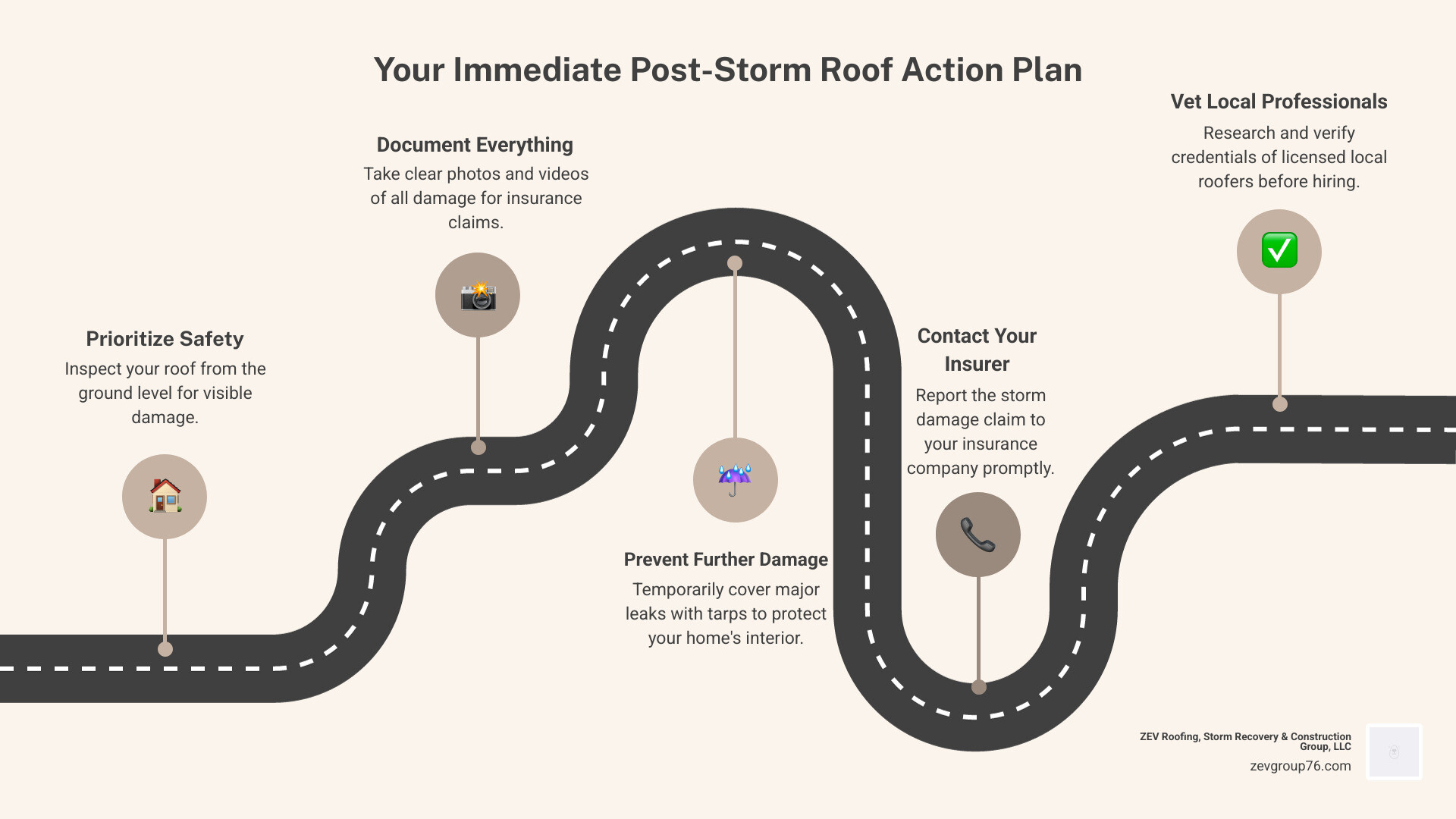
Your Immediate Action Plan
- Document everything. Take clear photos and videos of all damage, inside and out.
- Temporarily cover major leaks. If you can do so safely, use a tarp to prevent further water damage while you wait for help.
- Call your insurance agent. Report the damage and ask about their claims process and what documentation they need. For additional help, you can consult disaster recovery resources from FEMA.
- Contact trusted local roofers. Resist the urge to hire the first person at your door. You have time—most policies allow 1-2 years to file a claim—so do your research.
Storm Chasers vs. Local Professionals: Spotting the Scams
After a storm, two types of storm damage roofers show up: reputable locals and out-of-state “storm chasers.” Telling them apart protects your home and wallet.
Storm chasers set up temporary operations, push high-pressure sales, and chase insurance money before leaving town.
Local roofers are invested in long-term relationships and reputation. At ZEV Roofing, we proudly serve Texas and New Mexico communities including Lubbock TX, Shallowater TX, Plainview TX, New Deal TX, Wolfforth TX, Slaton TX, West Texas, and Eastern New Mexico. We’re here before, during, and after the storm.
Red Flags of a Storm Chasing Scam
Be wary of any contractor who:
- Knocks on your door uninvited with a high-pressure pitch.
- Has out-of-state license plates on their vehicle.
- Cannot provide a permanent, physical local address.
- Demands a large upfront payment or cash-only deals.
- Pressures you to sign a contract on the spot.
- Offers to waive or pay your insurance deductible (this is insurance fraud).
The Risks of Hiring a Storm Chaser
Hiring a storm chaser can lead to:
- Shoddy Workmanship: Corner-cutting that leads to premature failures and costly Roof Repair.
- Worthless Warranties: No one to call when problems appear.
- Insurance Fraud: Illegal practices that can jeopardize your claim.
- A Disappearing Act: They vanish, leaving you with avoidable Leak Prevention headaches.
Take time to vet contractors. Choosing local pros is the safest path to lasting quality.
First Steps: What to Do When a Storm Hits Your Home
A strong storm is stressful—don’t panic. Put safety first, avoid rushed decisions, and keep unsolicited storm damage roofers off your roof until you’ve assessed next steps.
Identifying Common Signs of Roof Damage
Inspect from the ground (binoculars help). Look for:
- Missing Shingles: Wind may expose decking.
- Cracked or Denting Shingles: Hail “bruises” or cracks weaken shingles.
- Granules in Gutters: Sand-like debris signals hail wear.
- Loose Flashing: Around chimneys, vents, and skylights.
- Interior Leaks: Ceiling or wall stains—address quickly; see our Leak Prevention services.
- Sagging Roof Deck: Structural concern—call a pro immediately.
For more, see Damaged Shingles or book a Roof Inspection.
Your Immediate Action Plan
- Document: Photos/videos inside and out.
- Tarp (if safe): Cover active leaks temporarily.
- Call Insurance: Start the claim and ask what they need.
- Contact Local Pros: Get assessments from trusted storm damage roofers.
You typically have time to file—make an informed choice.
Storm Chasers vs. Local Professionals: Spotting the Scams
After a major storm, you’ll see two groups: reputable local pros and out-of-state “storm chasers.” Knowing the difference can save you thousands.
| Feature | Storm Chasers | Local, Reputable Roofers |
|---|---|---|
| Location | Out-of-state; temporary or no office; focused on fast insurance checks. | Permanent local office and phone number; reputation-driven. We serve Lubbock TX, Shallowater TX, Plainview TX, New Deal TX, Wolfforth TX, Slaton TX, West Texas, Eastern New Mexico, and New Mexico. |
| Licensing | Questionable or non-local licenses; reluctant with paperwork. | Properly licensed, bonded, and insured; happy to show proof. |
| Warranties | Vague or none; hard to find later. | Clear written warranties backed by a local presence. |
| Sales Tactics | High-pressure, unsolicited, “emergency” claims. | Options explained, detailed estimates, no pressure. |
| Accountability | Disappear or rebrand to dodge reviews. | Easy to reach for service and warranty work. |
Red Flags of a Storm Chasing Scam
Unsolicited door-knocking with urgent claims—be skeptical.
Out-of-state license plates signal extra scrutiny is needed.
Vague or P.O. Box addresses mean little accountability.
Demands for large upfront payments—reputable firms don’t do this.
Pressure to sign immediately—you deserve time to decide.
Offers to pay your deductible—that’s insurance fraud.
The Risks of Hiring a Storm Chaser
Expect shortcuts, invalid warranties, and potential insurance issues. What looks like a bargain often becomes expensive follow-up work and ongoing leak concerns.
Choosing established local storm damage roofers means accountability, quality, and peace of mind.
First Steps: What to Do When a Storm Hits Your Home
Don’t panic. Prioritize safety, then proceed methodically to avoid costly mistakes and pushy storm damage roofers.
Identifying Common Signs of Roof Damage
Check safely from the ground:
- Missing Shingles: Wind-lifted and torn away.
- Cracked or Denting Shingles: Hail bruises or circular fractures.
- Granules in Gutters: A strong sign of hail wear.
- Loose Flashing: Around chimneys, skylights, vents, and valleys.
- Interior Leaks: Stains indicate active intrusion—see our Leak Prevention services.
- Sagging Roof Deck: Serious—call a professional immediately.
Learn more on Damaged Shingles or schedule a Roof Inspection.
Your Immediate Action Plan
- Inspect from the ground with binoculars or camera zoom.
- Document interior/exterior damage thoroughly.
- Tarp safely to stop major leaks until help arrives.
- Call insurance for claim steps and documentation needs.
- Contact trusted locals for assessments and estimates.
You have time—choose carefully.
Storm Chasers vs. Local Professionals: Spotting the Scams
Post-storm, storm damage roofers appear fast. Some are legitimate locals; others are transient “storm chasers.” Know the difference to protect your claim and roof.
| Feature | Storm Chasers | Local, Reputable Roofers |
|---|---|---|
| Location | Out-of-state; temporary presence; contract-and-go. | Established office and phone; community reputation. We serve Lubbock TX, Shallowater TX, Plainview TX, New Deal TX, Wolfforth TX, Slaton TX, West Texas, Eastern New Mexico, and New Mexico. |
| Licensing | Often invalid locally; missing permits/insurance. | Proper state licensing, liability, and workers’ comp—ready to show. |
| Warranties | Vague/unenforceable once they leave. | Solid, enforceable warranties with ongoing support. |
| Sales Tactics | Door-to-door, pressure, “limited time” pitches. | Professional estimates, time to compare, no pressure. |
| Accountability | Hard to find later; may rebrand. | Long-term relationships and easy follow-up/warranty work. |
Red Flags of a Storm Chasing Scam
- Unsolicited door-knocking with urgent claims.
- Out-of-state license plates on work trucks.
- Vague or P.O. Box addresses instead of a real office.
- Large upfront payments required before work.
- Pressure to sign immediately to avoid “missing out.”
- Offers to pay your deductible (insurance fraud).
The Risks of Hiring a Storm Chaser
They often use cheaper materials and skip essentials, leading to failed systems and poor Roof Repair outcomes. Warranties are usually useless, and fraudulent claims can put you at risk. Disappearing contractors leave you with unfinished work and lasting Leak Prevention issues.
Choose established local pros for quality, accountability, and code-compliant repairs.
First Steps: What to Do When a Storm Hits Your Home
Take a breath—then act safely and deliberately. Avoid on-the-spot decisions with pushy storm damage roofers.
Identifying Common Signs of Roof Damage
From the ground, look for:
- Missing Shingles from wind.
- Cracked/Dented Shingles from hail.
- Granules in Gutters after storms.
- Loose Flashing at chimneys, skylights, vents, valleys.
- Interior Leaks (stains or drips)—address fast.
- Sagging Roof Deck—call a pro.
If you suspect damage, see Damaged Shingles or request a Roof Inspection.
Your Immediate Action Plan
- Document damage thoroughly.
- Tarp safely to limit water entry.
- Call insurance to start the claim.
- Contact local roofers you trust for estimates.
You usually have 1–2 years to file—use that time wisely.
Storm Chasers vs. Local Professionals: Spotting the Scams
Days after severe weather, two types of storm damage roofers arrive: established locals and “storm chasers” who follow storms for quick sales. The difference shows up in licensing, pressure tactics, warranties, and what happens after you pay.
Storm chasers often have out-of-state plates, temporary addresses, and urgency-driven pitches. Local pros like ZEV Roofing have permanent offices, proper insurance and licensing, and stand behind their work across Lubbock TX, Shallowater TX, Plainview TX, New Deal TX, Wolfforth TX, Slaton TX, West Texas, Eastern New Mexico, and New Mexico.
Red Flags of a Storm Chasing Scam
- Unsolicited door-knocking with high-pressure sales pitches
- Out-of-state license plates on work trucks
- Vague addresses or P.O. Box listings instead of physical offices
- Demands for large upfront payments before work begins
- Pressure to sign contracts immediately without time to review
- Offers to pay your insurance deductible (this is insurance fraud)
The Risks of Hiring a Storm Chaser
Expect substandard Roof Repair, code issues, and warranties that vanish when they do. Fraud risks can jeopardize your claim, and poor installation creates ongoing Leak Prevention problems that cost more to fix later.
Bottom line: legitimate storm damage roofers don’t need pressure tactics—they win on quality, transparency, and accountability.