
Why Storm Damage Roof Replacement is More Complex Than You Think
Storm damage roof replacement is more than just repairs; it involves navigating insurance claims, avoiding contractor scams, and making critical decisions while your home is vulnerable. The process can be confusing, leaving homeowners susceptible to fraud.
Quick Answer for Storm Damage Roof Replacement:
- Document the damage – Take photos from the ground; never climb on a damaged roof.
- Contact your insurance company – Report the claim and get a claim number.
- Get a professional inspection – Have a reputable roofer assess the damage.
- Understand your policy – Know if you have ACV (depreciated value) or RCV (full replacement cost).
- Choose your contractor carefully – Avoid door-to-door “storm chasers” and verify credentials.
- Supplement if needed – Your contractor should help ensure the insurance estimate covers all necessary work.
The average roof replacement costs between $8,000 and $12,000, but homeowners insurance typically covers storm damage. The key is knowing if your policy pays the depreciated Actual Cash Value (ACV) or the full Replacement Cost Value (RCV). This guide will walk you through every step, helping you protect yourself from scams, work with adjusters, and get a quality roof that lasts.
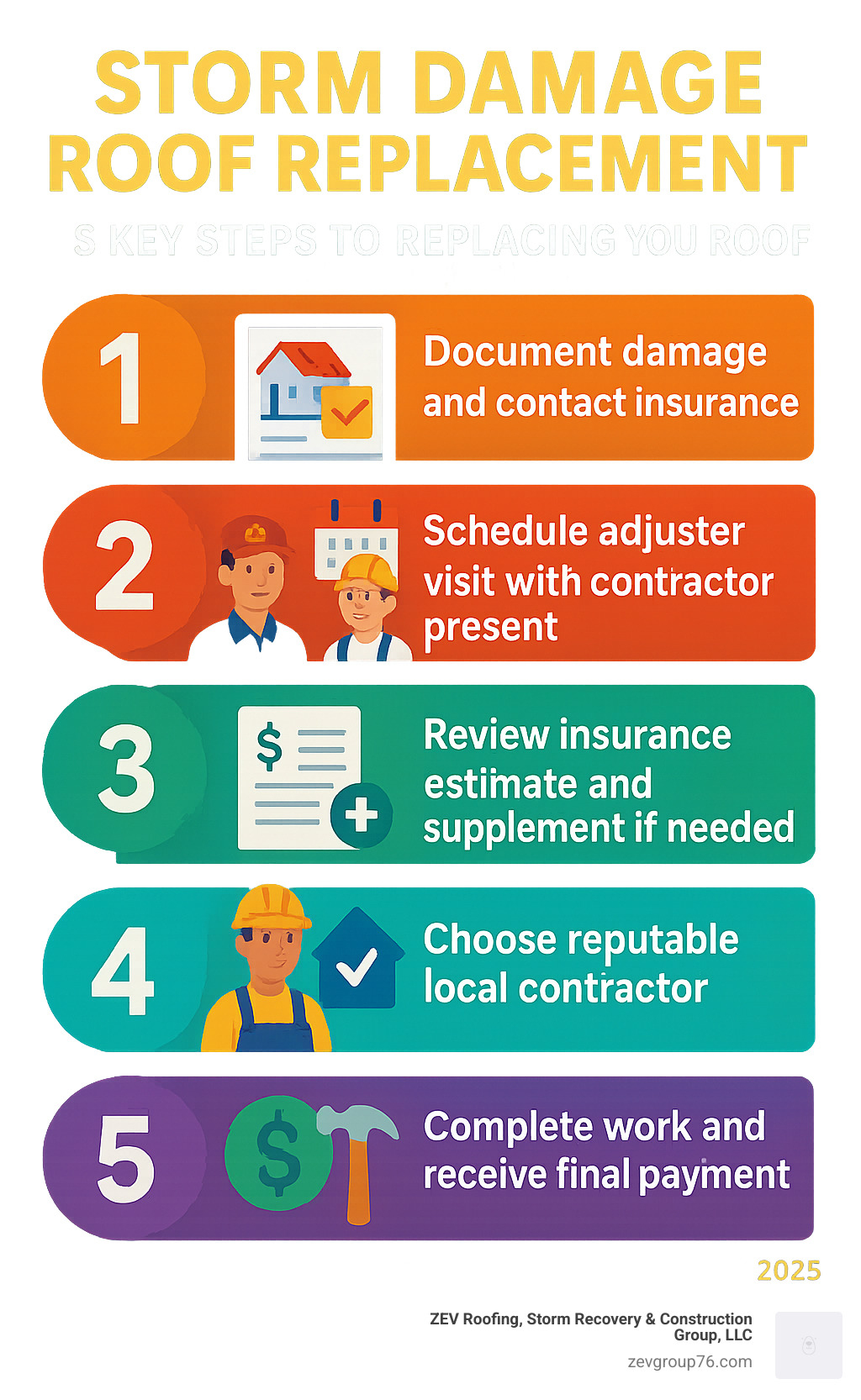
Step 1: Immediate Actions and Initial Assessment
After a storm, your first steps are crucial. Stay calm and follow this process to protect your home and prepare for your claim.
Safety absolutely comes first. Never climb on a damaged roof. It’s unstable and dangerous. Wait for a professional with the right safety equipment.

Once it’s safe, take clear photos and videos of all visible damage from the ground. Document missing shingles, debris, and damaged gutters. If you see active leaks, call a roofer for emergency tarping to prevent further water damage. Also, photograph collateral damage like dented siding or torn window screens, as this helps validate your claim. Check your attic for water stains or leaks.
Finally, locate your homeowners insurance policy to understand your coverage and deductible. Then, schedule an initial Roof Inspection with a trusted local professional. Their assessment will be invaluable when you contact your insurance company.
What Signs of Storm Damage Warrant a Replacement?
Is it a repair or a full storm damage roof replacement? Here are key signs that point toward replacement:
- Missing shingles: Large patches of missing shingles suggest widespread wind damage and system failure.
- Damaged Shingles: Look for shingles that are creased, torn, or lifted. A broken seal means they are no longer waterproof.
- Hail impact marks: Circular dents or cracks expose the shingle’s inner layers to UV rays, causing rapid deterioration.
- Significant granule loss: If your gutters are full of shingle granules, your roof’s protective layer is gone.
- Leaks and water stains: Any water inside your home means the roof has been breached.
- Structural sagging: A sagging roofline indicates serious structural issues that need immediate attention.
As a general guideline, if more than 25-30% of your roof is damaged, replacement is usually the most cost-effective solution.
Understanding Your Homeowners Insurance Policy
Your policy is your financial lifeline. Most policies cover damage from sudden events like wind, hail, and fallen trees. However, they don’t cover general wear and tear on an old roof. Be aware of policy exclusions and your deductible amount—the portion you pay out-of-pocket. Any contractor offering to “waive” your deductible is committing insurance fraud. Understanding these basics puts you in control. For more guidance, learn about our services.
Step 2: The Insurance Claim Process for Storm Damage Roof Replacement
Once you’ve assessed the damage, it’s time to steer the insurance claim. This process is a collaboration between you, your insurer, and your roofer.
Start by filing your claim. Call your insurance company to report the damage and get a claim number. They will assign an adjuster to inspect your property. It is critical to have your chosen roofing contractor present during the adjuster’s visit.
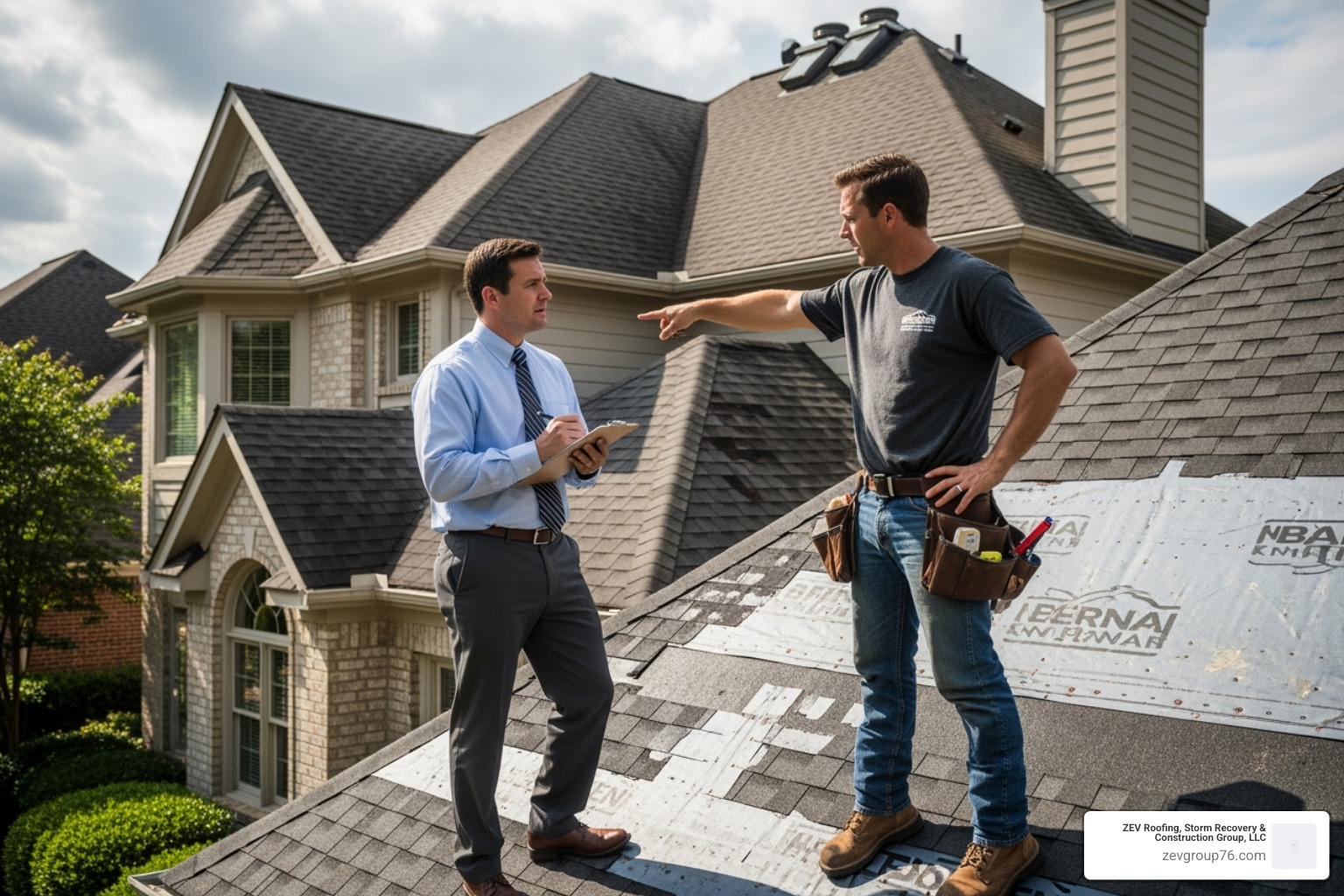
Why? An experienced roofer can point out subtle damage or code-required upgrades that an adjuster might miss. Your contractor acts as your advocate, ensuring the adjuster’s scope of work is complete and accurate. This initial estimate is the foundation for your insurance payout, so getting it right from the start is essential for your storm damage roof replacement.
What is the Difference Between ACV and RCV Policies?
Understanding whether you have an Actual Cash Value (ACV) or Replacement Cost Value (RCV) policy is the most important factor in your claim. It determines how much money you’ll receive.
- ACV policies pay for the depreciated value of your old roof. If your 25-year roof is 15 years old, you’ll only get paid for its remaining value, leaving you to cover the rest.
- RCV policies cover the full cost of a new roof. You’ll typically receive an initial check for the depreciated value, and a second check for the remaining amount (the “recoverable depreciation”) after the work is completed and invoiced.
| Policy Type | Initial Payout | When is it Paid? | Final Payout (after work) | Homeowner Out-of-Pocket |
|---|---|---|---|---|
| ACV | Depreciated Value | Upfront | N/A | Deductible + Remaining Cost |
| RCV | Depreciated Value | Upfront | Recoverable Depreciation | Deductible |
With an RCV policy, your only out-of-pocket cost for a storm damage roof replacement should be your deductible. An ACV policy will require you to pay the deductible plus the depreciation amount.
What is ‘Supplementing’ and Why is it Crucial?
The insurance adjuster’s initial estimate is often just a starting point. Supplementing is the process of requesting additional funds for items that were missed, undervalued, or required by local building codes.
It’s not about inflating a claim; it’s about ensuring you have enough to do the job right. Common reasons for supplements include:
- Missing line items: Specialized flashing, ventilation, or ice and water shields.
- Code upgrades: Your new roof must meet current building codes, which may require different materials or installation methods than your old roof had.
- Overhead and profit: For complex jobs, this ensures your contractor can properly manage the project.
An experienced contractor will review the adjuster’s estimate and submit detailed supplement requests with photos and code references. This process is crucial to getting the full coverage you’re entitled to under your policy. Learn more about Why Hiring a Qualified Roofer is Essential for Your Full Roof Replacement in Tampa, FL (the principles apply everywhere).
Step 3: How to Find a Reputable Roofer and Avoid Scams
After a storm, your neighborhood will be flooded with contractors. Some are legitimate local professionals, but many are “storm chasers” who follow bad weather, perform shoddy work, and disappear. Choosing the right contractor for your storm damage roof replacement is critical.
Always choose a local contractor. A local roofer has a reputation to uphold in your community, understands local building codes, and will be around to honor their warranty. Always verify their licensing and insurance (both general liability and workers’ compensation) to protect yourself from liability. Check online reviews and ask for local references you can contact or drive by.
Finally, insist on a detailed, written estimate that outlines the scope of work, materials, timeline, and total cost. Vague contracts are a major red flag.
Red Flags of a Roofing Scam Artist
Scammers prey on stressed homeowners. Watch out for these warning signs:
- Door-to-door pressure: Be wary of anyone who shows up uninvited and pressures you to sign a contract on the spot.
- “Free roof” promises: Any contractor who offers to waive or cover your deductible is committing insurance fraud. Your deductible is your legal responsibility.
- High-pressure sales tactics: A reputable roofer will give you time to review estimates and make an informed decision.
- Vague contracts: A professional contract is detailed and protects both you and the contractor.
- Demands for full payment upfront: A reasonable deposit is standard, but never pay for the entire job before work begins.
Questions to Ask a Potential Roofing Contractor
Before you hire anyone, ask these questions to vet their qualifications:
- Are you licensed and insured in our state? Ask to see the certificates.
- How much experience do you have with insurance claims? This is crucial for a smooth process.
- Can you provide local references? A proud contractor will happily share their work.
- Are you certified by shingle manufacturers? Certifications (like from GAF or Owens Corning) often lead to better warranties.
- What is the project timeline? This helps set clear expectations.
- Who will supervise the job on-site? Ensure there is a point of contact for quality control.
- What warranties do you offer? Ask about both material and workmanship warranties.
- Will you handle permits and cleanup? Professionals manage all aspects of the job, including pulling permits and leaving your property clean.
At ZEV Roofing, we are prepared to answer all these questions. Check Our Roofing Services to see our commitment to professionalism and quality in Texas and New Mexico.
Step 4: Finalizing Your Roof Replacement
With the insurance claim approved and a trusted contractor selected, you’re ready for the final steps of your storm damage roof replacement.
Claim Approval and Project Kickoff
Once your claim is approved, carefully review and sign the contract. It should detail the total cost, payment schedule, materials, and timeline. This is also the time for material selection. Your insurance covers “like kind and quality,” but you may choose to upgrade to more storm-resistant shingles for added peace of mind.
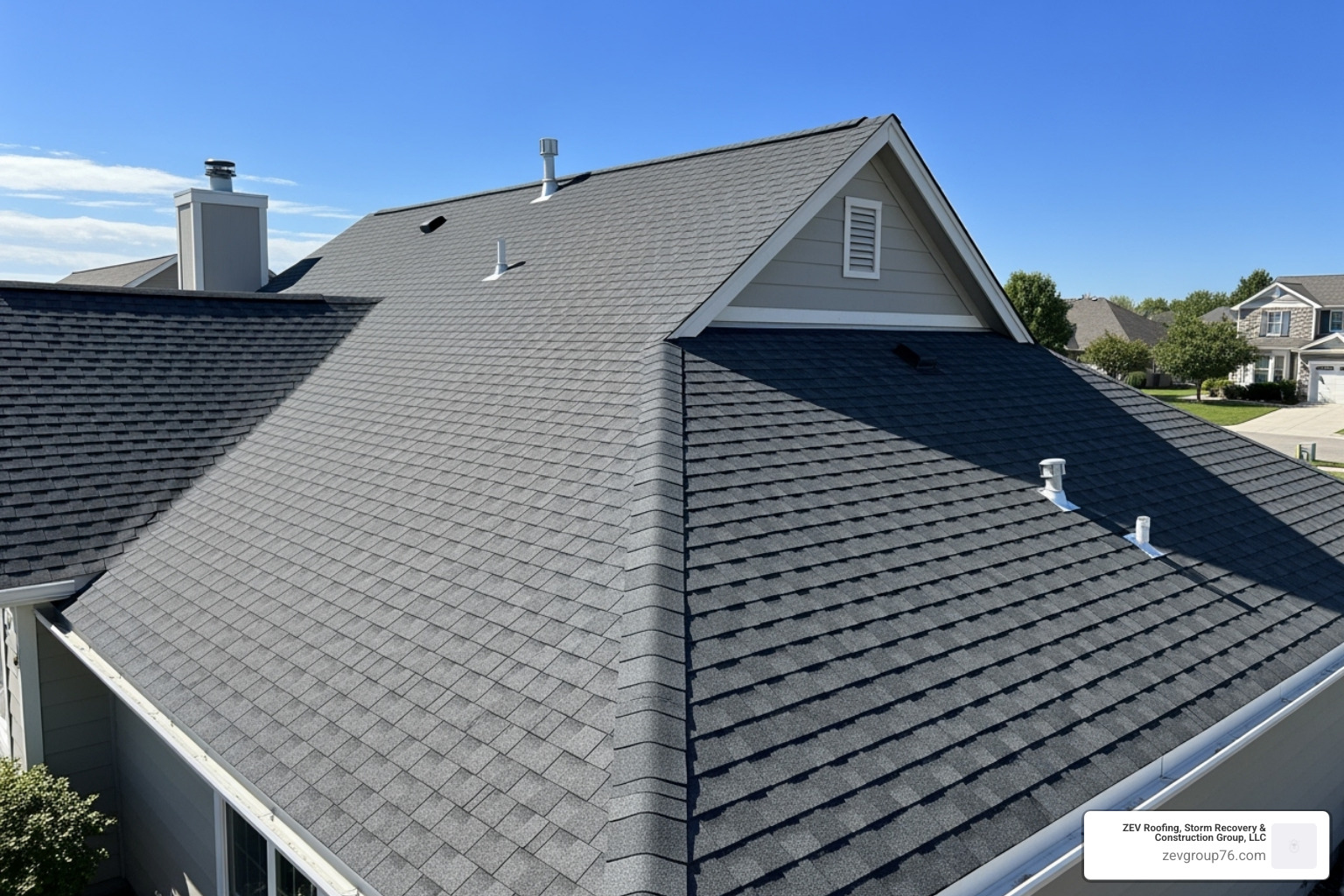
Your contractor will then schedule the work, coordinating material delivery and permits. A typical Roof Replacement takes just one to three days, and you can usually remain in your home during the process.
Final Payment and Warranty
After the new roof is installed, your contractor will submit the final invoice to your insurance company to release the recoverable depreciation (for RCV policies). You will then pay your deductible directly to the contractor and endorse the insurance checks. Your home is now protected, and you have a brand-new roof that should last for decades.
Will Filing a Claim Increase My Insurance Premiums?
This is a common concern, but claims for “Acts of God” (like hail or wind) are viewed differently than claims from negligence. Since you can’t prevent a storm, a single claim is unlikely to cause a dramatic rate hike, especially when many in your area are also filing.
However, claim frequency does matter. Multiple claims in a few years can signal higher risk to insurers. If your policy is not renewed, it simply means you have time to shop for new coverage, not that you’ve been “dropped.”
The cost of a new roof (often $8,000-$12,000+) far outweighs a potential minor premium increase. Delaying repairs can lead to much costlier interior water damage and structural issues. For more industry perspectives, you can Read more from industry leaders.
Frequently Asked Questions about Storm Damage and Insurance
Navigating a storm damage roof replacement claim brings up many questions. Here are answers to the most common concerns we hear from homeowners.
Should I call my insurance company or a roofer first?
We recommend calling a trusted, local roofer for a professional Roof Inspection first. A roofer can confirm if the damage is storm-related and warrants a claim, preventing you from filing an unnecessary claim for simple wear and tear. After the inspection, contact your insurance company to report the damage. The ideal scenario is to have your roofer present when the insurance adjuster inspects your roof to ensure all damage is documented.
How does the age of my roof affect the insurance claim?
Age is a key factor in calculating depreciation. With an Actual Cash Value (ACV) policy, an older roof means a smaller payout. However, with a Replacement Cost Value (RCV) policy, legitimate storm damage is often covered for a full replacement, regardless of age. The insurance company knows that replacing a damaged roof is cheaper than paying for the extensive interior water damage that could result from leaving it unrepaired.
What if my insurance company denies my claim?
A denial isn’t the final word. Here are your next steps:
- Request a written explanation for the denial.
- Work with your roofer to gather more detailed evidence and photos.
- Request a second inspection with a different adjuster, and make sure your roofer is present.
- Consider hiring a public adjuster who works on your behalf to negotiate the claim.
- Consult an attorney specializing in insurance law as a last resort.
Persistence and proper documentation are your best tools. Many initially denied claims are approved on appeal.
Conclusion
Navigating a storm damage roof replacement is complex, but with the right knowledge, you can manage the process confidently. The keys to success are to document all damage, understand your insurance policy, and, most importantly, choose a reputable, local roofing contractor who will be there long after the storm chasers are gone.
Your home is your most significant investment; it deserves protection from a partner who understands the responsibility. You need a contractor who can manage the insurance process, fight for the coverage you deserve, and deliver quality craftsmanship. Avoiding fraud is just as critical as getting a good roof.
At ZEV Roofing & Construction, we’ve guided countless homeowners in Texas and New Mexico through this exact process. We don’t just install roofs—we handle the insurance paperwork, supplement claims to ensure full coverage, and restore your peace of mind. We’re a local company invested in our community.
Don’t let storm damage leave you feeling vulnerable. For expert help with your Storm Damage Repair, Contact Us today. We’re here to restore more than just your roof—we’re here to restore your security.