
Why Storm Damage Restoration Services Are Critical for Property Recovery
When severe weather strikes your property, a storm damage restoration service becomes your lifeline back to normalcy. These specialized companies provide comprehensive recovery solutions that go far beyond basic repairs – they restore your property to its pre-loss condition while helping you steer complex insurance claims.
Key Storm Damage Restoration Services:
- Emergency Response – 24/7 availability for immediate damage mitigation
- Water Extraction & Drying – Industrial equipment removes moisture and prevents mold
- Structural Repairs – Professional rebuilding of damaged roofs, walls, and foundations
- Content Restoration – Cleaning and restoring damaged personal belongings
- Insurance Assistance – Expert help with claims documentation and negotiations
As one industry expert notes: “When any type of natural disaster, big or small, strikes your property, storm damage professionals are near you and available when you need storm damage clean-up, repair, or restoration.”
The restoration process typically involves five critical stages that can mean the difference between a quick recovery and months of ongoing problems. Acting fast is essential – water damage can lead to mold growth within 24-48 hours, while exposed structural elements continue deteriorating until properly secured.
Professional restoration companies bring specialized equipment like industrial dehumidifiers, thermal imaging cameras, and HEPA air scrubbers that homeowners simply don’t have access to. They also understand the complex insurance requirements and documentation needed to maximize your claim coverage.
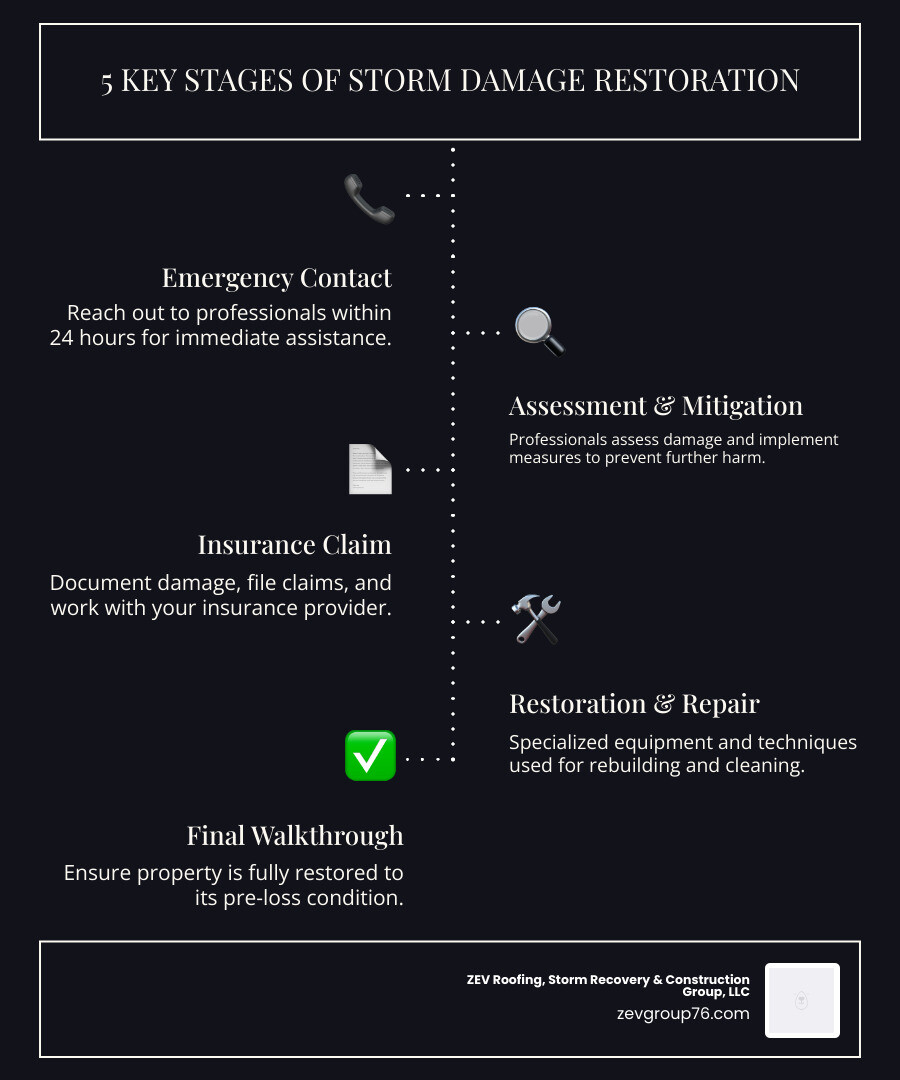
The Anatomy of Storm Damage: Common Causes and Effects
When Mother Nature releasees her fury, she doesn’t hold back. The aftermath can transform your peaceful home into a scene that looks like a disaster movie – and unfortunately, you’re starring in it. Understanding what you’re up against is the first step toward effective recovery with a professional storm damage restoration service.
Hurricanes pack a one-two punch that’s hard to beat. These massive storms bring sustained winds of 74 mph or higher, but it’s often the water that causes the most heartbreak. Take Hurricane Harvey – it dumped over 50 inches of rain on parts of Houston, leaving thousands of homes underwater. The combination of devastating winds and torrential rainfall creates a perfect storm of destruction that requires specialized restoration expertise.
Tornadoes are nature’s wrecking balls. These violently rotating columns of air can level a house in seconds, leaving behind twisted debris and structural damage that’s both dramatic and dangerous. The cleanup from tornado damage often involves complete reconstruction rather than simple repairs.
Hailstorms might seem less intimidating, but don’t be fooled. Ice chunks ranging from pea-sized to golf ball-sized (or even larger) can pummel your roof, siding, and vehicles with surprising force. The damage might not look catastrophic at first glance, but those impacts can compromise your home’s protective barriers in ways that show up later.
Flooding is perhaps the most insidious threat. Water finds its way into every crack and crevice, saturating materials and creating conditions for long-term problems. Whether it’s from storm surge, overflowing rivers, or simply too much rain too fast, water damage requires immediate professional attention.
Each of these natural disasters leaves its own signature of destruction, but they all share one thing in common: the need for comprehensive restoration that goes far beyond what most homeowners can handle alone.
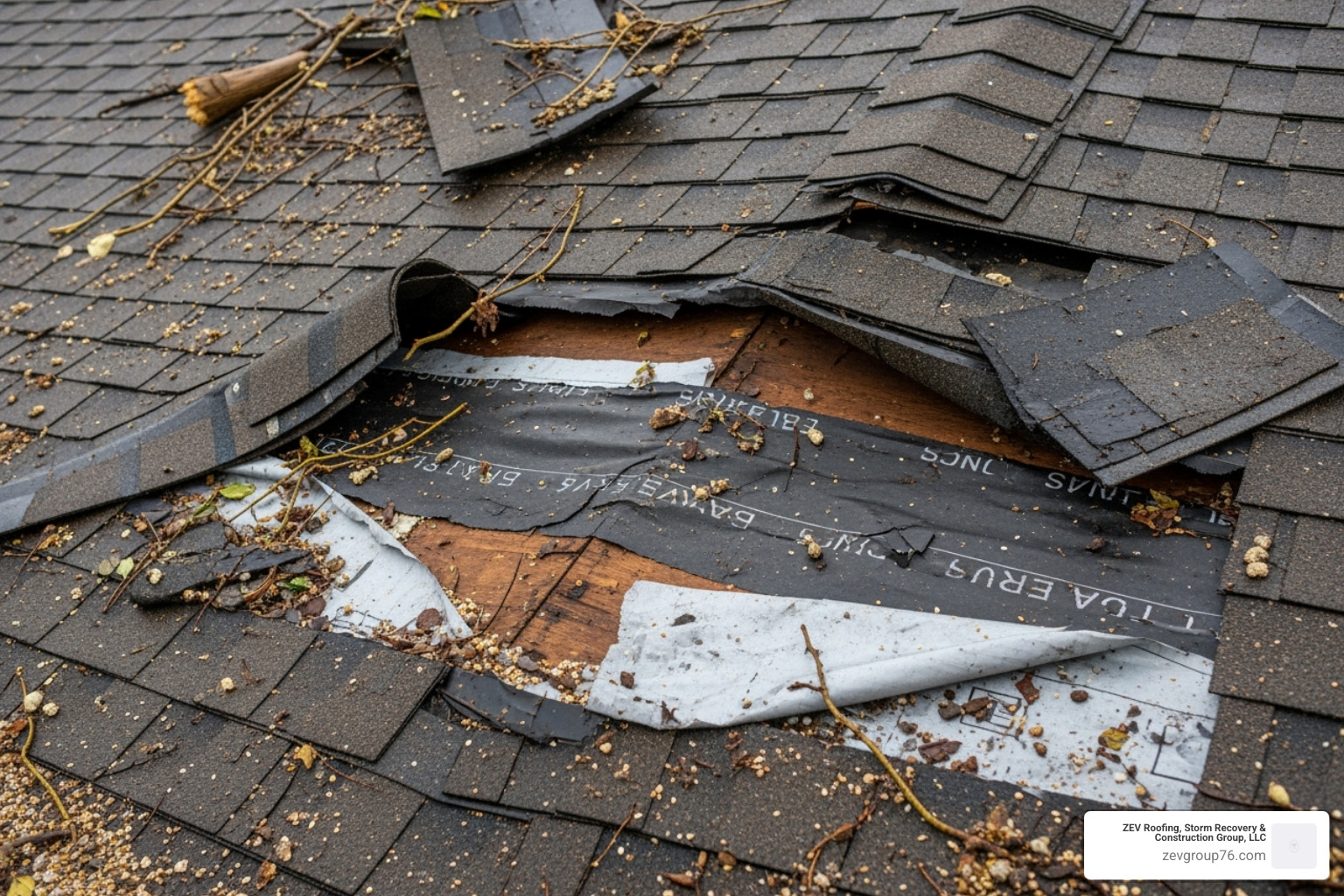
Wind, Water, and Hail: A Trio of Threats
These three forces often work together like a destructive team, each making the others more dangerous. Understanding how they operate helps explain why professional restoration is so critical.
Wind-driven rain is sneakier than you might expect. Even if your roof looks fine from the ground, powerful winds can force water under shingles, behind siding, and through the tiniest openings. This creates hidden water damage inside your walls and ceilings that you won’t find until it’s already caused significant problems.
Roof lifting happens when high winds get underneath your roofing materials and literally pry them away from your home. Once this protective barrier is compromised, everything underneath becomes vulnerable to water intrusion. We’ve seen entire sections of roofing peeled back like opening a can of sardines.
Siding damage and broken windows create immediate entry points for wind and rain. These openings turn your home’s interior into an extension of the storm outside, allowing water to saturate flooring, furniture, and structural elements.
Hail impact marks might look like simple bruises on your roof, but they’re actually serious wounds. Each impact can cause granule loss on shingles, weakening the protective layer that shields your roof from UV rays and weather. This damage accelerates aging and makes your roof more susceptible to leaks and further deterioration.
The water saturation that follows these initial impacts is where things get really complicated. Materials that weren’t designed to hold water – like drywall, insulation, and wooden framing – become breeding grounds for mold and structural decay.
This is exactly why damaged shingles need professional attention, even when the damage doesn’t look severe from ground level.
Beyond the Obvious: Secondary Damage Risks
Here’s where storm damage gets really tricky – the problems you can’t see are often worse than the ones you can. Secondary damage is like a slow-motion disaster that unfolds in the days and weeks after the storm passes.
Mold growth tops the list of hidden dangers. Give mold 24 to 48 hours of moisture, and it’ll set up shop in your walls, under your flooring, and in your insulation. Once established, mold doesn’t just cause structural damage – it creates health risks for your family and can make your home unsafe to live in.
Mildew might seem like mold’s less dangerous cousin, but it’s still a problem that needs professional treatment. That musty smell isn’t just unpleasant – it’s a sign that moisture is trapped somewhere it shouldn’t be.
Wood rot happens when structural timber stays wet for extended periods. Load-bearing beams, floor joists, and roof decking can lose their strength, creating safety hazards that aren’t visible until they’re examined by professionals with the right equipment.
Compromised electrical systems create serious fire and electrocution risks. Water and electricity make a dangerous combination, and damage to wiring inside walls isn’t something you can spot during a casual inspection.
Foundation issues develop when waterlogged soil shifts and puts pressure on your home’s foundation. Cracks, settling, and structural instability can show up months after the storm, making your entire home unsafe.
This is why proper leak prevention and thorough moisture remediation are essential parts of any storm damage restoration service. At ZEV Roofing & Construction, we use specialized equipment to detect hidden moisture and address these secondary risks before they become major problems.
The bottom line? What looks manageable on the surface often requires professional expertise to prevent long-term damage that’s far more expensive to fix later.
Your First 48 Hours: A Homeowner’s Post-Storm Checklist
When the winds finally die down and the last raindrops fall, you might feel like stepping outside to survey what Mother Nature left behind. But hold on – those first 48 hours after a storm are absolutely critical, and rushing in without a plan can turn a manageable situation into a dangerous one.
Safety comes first, always. Before you even think about checking that suspicious water stain on your ceiling or that loose shingle hanging by a thread, take a deep breath and assess the situation from a safe distance. If you see sagging ceilings, exposed electrical wires, or structural damage that makes your home look like it’s doing an impression of the Leaning Tower of Pisa, stay out until professionals can evaluate the safety.
Once you’ve confirmed it’s safe to proceed, your next mission becomes damage documentation – and this step can make or break your insurance claim. Think of yourself as a storm damage detective, gathering evidence that will help your storm damage restoration service and insurance company understand exactly what happened to your property.
The clock is ticking during these first 48 hours. Water damage doesn’t wait for convenient timing, and mold can start growing faster than you can say “dehumidifier.” But with the right approach, you can protect your property and set yourself up for a smooth recovery process.
Here are the immediate safety steps you should take after a storm:
- Stay calm and assess the situation from a safe distance
- Turn off your main circuit breaker if there’s any risk of electrical exposure to water (only if it’s safe to access)
- Shut off the main water supply if you suspect burst pipes or significant leaks
- Avoid using household vacuum cleaners to remove water – they can cause electrocution
- Don’t turn on ceiling fixtures if the ceiling is wet or sagging
- Limit movement through the home to prevent spreading soot or water damage
- Keep your hands clean to avoid spreading contaminants
Documenting the Damage for Your Claim
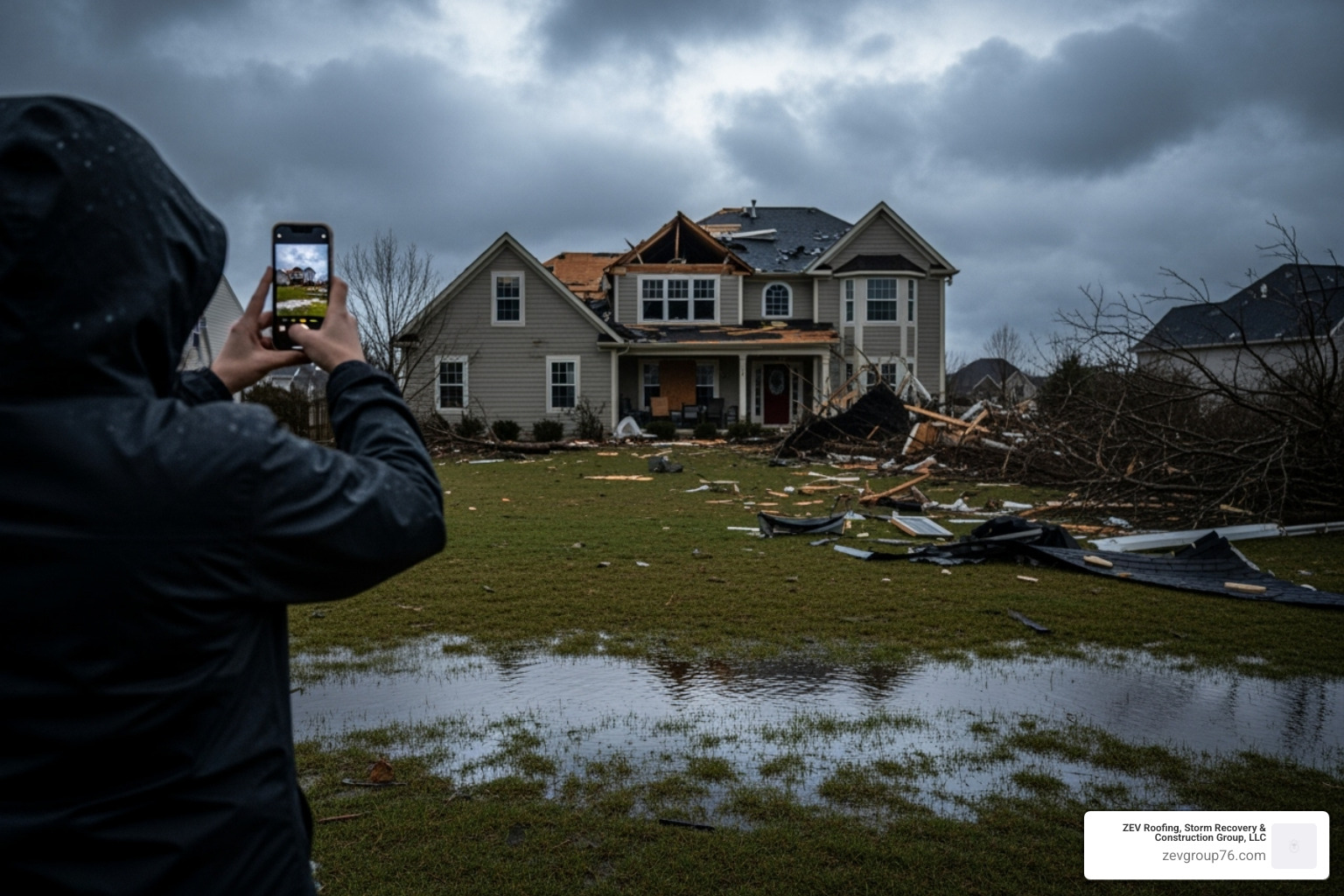
Your smartphone just became your most valuable tool in the recovery process. Comprehensive documentation is what separates successful insurance claims from months of headaches and disputes.
Start with photo evidence – and we mean lots of it. Take high-resolution photos from multiple angles, capturing both the big picture and the nitty-gritty details. Get wide shots that show the overall scope of damage, then zoom in on specific problems like broken windows, torn siding, water stains, or Damaged Shingles. Don’t forget to photograph your personal belongings that took a hit too.
Video walkthroughs add another layer of documentation that insurance adjusters find incredibly helpful. Walk through each affected area while narrating what you’re seeing. Point out damage as you go and explain how things looked before the storm. This creates a chronological record that photos alone can’t provide.
Create a written inventory of every damaged item you can identify. Include descriptions, how old items were, and what you think they were worth. If you’ve got receipts for major purchases tucked away somewhere, now’s the time to dig them out.
Here’s a tip that many homeowners miss: keep receipts for everything you buy during this period. That emergency tarp, the bottled water when your pipes are compromised, even hotel bills if you can’t stay in your home – your insurance company may reimburse these temporary expenses. Every receipt tells part of your recovery story.
Taking Initial Steps to Mitigate Further Harm
While you’re waiting for professional help to arrive, there are several immediate mitigation steps you can take to prevent your storm damage from getting worse. Think of these as first aid for your home.
Turning off utilities is your first priority if you have significant water intrusion or structural damage. Safely shut off electricity and gas to prevent electrical fires or gas leaks. When in doubt, call the utility companies – they’d rather help you turn things off safely than deal with a bigger emergency later.
Removing standing water needs to happen quickly, but use common sense. For small puddles, mop and blot away. For anything more serious, you need professional water extraction equipment. If you have wet upholstery, prop up the cushions so air can circulate around them, but don’t throw cushion covers in your washing machine – they may need special cleaning.
Boarding up windows and covering roof holes protects your home from the next weather system and unwanted visitors. Emergency tarping might look like a Band-Aid solution, but it’s actually crucial protection that prevents small problems from becoming major disasters. Our team provides 24/7 emergency tarping and board-up services when you need them most.
Protecting undamaged belongings is often overlooked in the chaos, but it’s smart thinking. Move important documents, electronics, family photos, and other valuables to dry, safe areas. This prevents secondary damage to items that made it through the storm unscathed.
These quick actions can save you thousands of dollars in additional damage. As soon as it’s safe, reach out to us at ZEV Roofing & Construction. We’re available 24/7 and ready to help homeowners throughout Lubbock, TX, Shallowater, TX, Plainview, TX, New Deal, TX, Wolfforth, TX, Slaton, TX, West Texas, and Eastern New Mexico get back on their feet.
The Professional Restoration Process: From Mitigation to Rebuilding
When the storm clouds clear and you’re left staring at damaged property, that’s when professional storm damage restoration service teams really shine. Think of us as your personal recovery orchestra – we coordinate every moving part to bring your property back to life, stronger than before.
The journey from storm-ravaged to fully restored isn’t just about fixing what’s broken. It’s about understanding the hidden damage, preventing future problems, and giving you back your peace of mind. At ZEV Roofing & Construction, we’ve refined this process into a seamless experience that takes the weight off your shoulders.
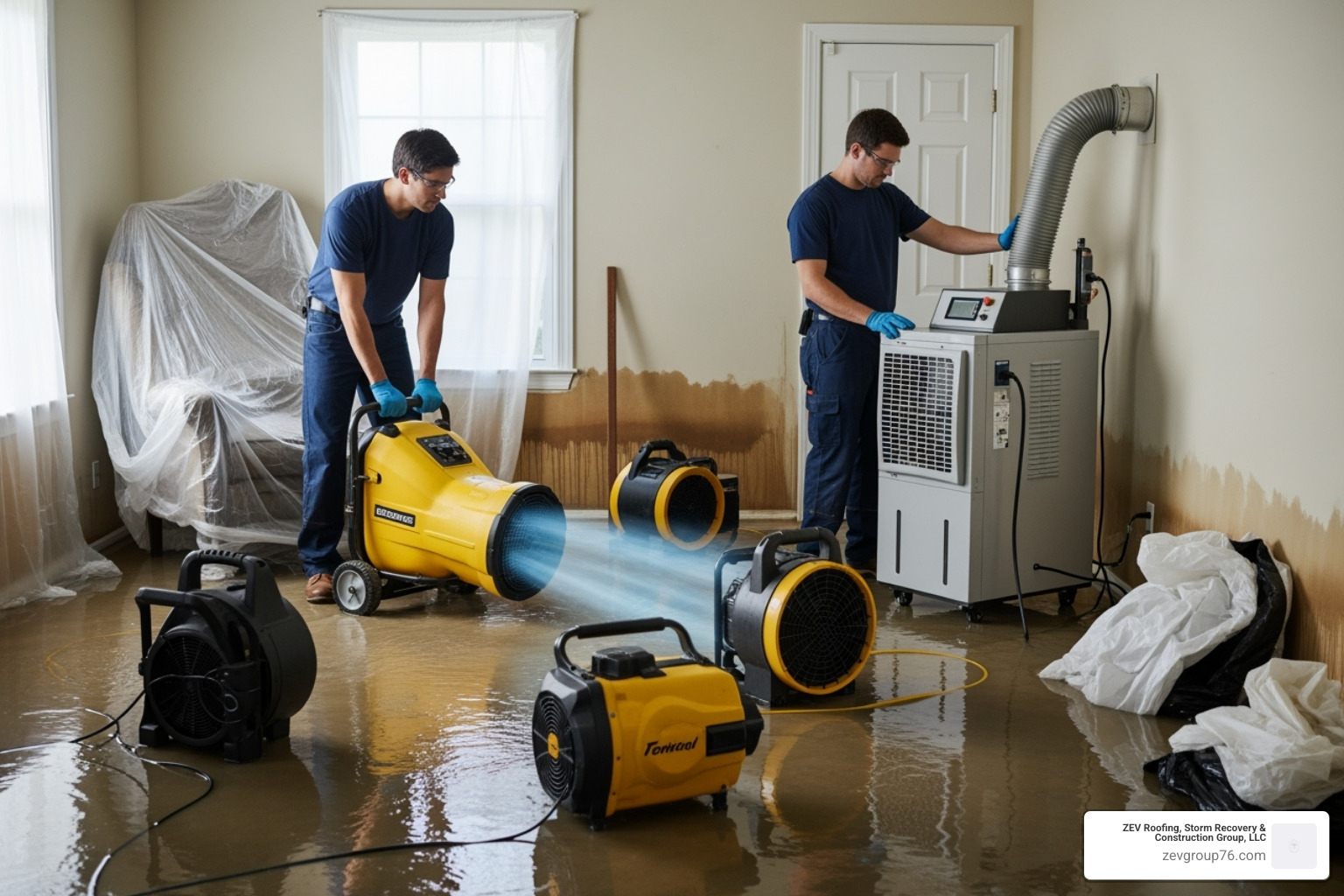
Water extraction is often our first priority after securing the property. Standing water isn’t just inconvenient – it’s actively destroying your home every minute it sits there. Our powerful pumps can remove thousands of gallons quickly, but the real magic happens with structural drying. We strategically place industrial equipment to pull moisture from places you’d never think to check.
Debris removal might sound straightforward, but it’s an art form. We’re not just hauling away broken pieces – we’re carefully sorting through what can be salvaged versus what needs to go. Many homeowners are amazed when we save items they thought were total losses.
The content pack-out process is where we become part moving company, part detective. We catalog every salvageable item, photograph it for insurance purposes, and transport it to our secure cleaning facility. Your grandmother’s china or your kids’ photo albums get the same careful attention as expensive electronics.
Finally comes the rebuilding phase – our favorite part. This is where years of craftsmanship experience really show. Whether we’re handling complex Roof Repair work or rebuilding entire room sections, every nail and shingle is placed with precision. We don’t just want your property functional – we want it better than it was before the storm hit.
You can explore the full range of Our Services to see how we handle every aspect of storm recovery, from emergency response through final walkthrough.
Specialized Equipment and Modern Restoration Technology
Here’s something most homeowners don’t realize: the difference between amateur cleanup and professional storm damage restoration service often comes down to the equipment. We bring tools to your property that you simply can’t rent at the local hardware store – and honestly, you wouldn’t want to learn how to use them during a crisis.
Industrial-grade dehumidifiers are the workhorses of water damage recovery. These aren’t the small units you might buy for a basement – we’re talking about machines that can pull 150+ pints of moisture from the air every day. They work around the clock, systematically drawing dampness from your walls, floors, and hidden spaces.
Air movers create strategic airflow patterns that speed up evaporation dramatically. We don’t just point fans randomly around a room. Our technicians calculate optimal placement to create circulation that reaches into wall cavities and under flooring where moisture loves to hide.
Thermal imaging cameras are like X-ray vision for water damage. These high-tech tools show us temperature differences that reveal moisture pockets completely invisible to the naked eye. We can spot problem areas behind walls before they turn into mold factories or structural damage.
Moisture meters give us precise readings so we know exactly when materials are dry enough for reconstruction. There’s no guessing – we have scientific proof that your property is ready for the next phase of restoration.
For air quality, HEPA air scrubbers work continuously to filter out mold spores, dust particles, and odors. You’ll notice the difference in how the air feels and smells almost immediately.
Our advanced cleaning solutions aren’t just stronger versions of household products. We use specialized formulas designed for specific types of damage – some so effective they can restore smoke-damaged clothing to better-than-new condition.
Residential vs. Commercial Restoration: Key Differences
While storm damage is storm damage, the approach to restoration varies significantly between homes and businesses. Understanding these differences helps explain why storm damage restoration service requires specialized expertise for each property type.
| Factor | Residential | Commercial |
|---|---|---|
| Scale | Single family focus, detailed personal attention | Large-scale operations, multiple systems affected |
| Urgency (Business Interruption) | Displacement inconvenience, temporary housing | Revenue loss, employee impact, customer obligations |
| Equipment | Standard industrial units, accessible placement | Heavy-duty machinery, complex logistics coordination |
| Compliance Requirements | Basic building codes, homeowner preferences | Strict regulations, ADA compliance, safety standards |
Residential restoration feels more personal because, well, it is. We’re working in someone’s home, around family photos and children’s toys. The timeline can be more flexible because the priority is getting every detail right. Homeowners want their sanctuary restored perfectly, and we have the luxury of time to make that happen.
Commercial restoration operates under intense time pressure. Every day a business stays closed means lost revenue and potentially lost customers. We often work nights and weekends to minimize disruption. The equipment needs are typically larger – what takes one dehumidifier in a home might require six units in an office building.
The compliance requirements for commercial properties are also much stricter. We’re dealing with fire codes, ADA accessibility requirements, and often industry-specific regulations. A restaurant has different needs than a medical office, and both require specialized knowledge.
At ZEV Roofing & Construction, we’ve handled everything from cozy family homes to large commercial complexes across Texas and New Mexico. Each project teaches us something new, but the core commitment remains the same: returning your property to its pre-loss condition as quickly and thoroughly as possible.
From Soot to Salvage: Cleaning and Restoring Your Property
The cleaning and restoration phase is where we really get to show off our skills. This isn’t your typical spring cleaning – we’re dealing with soot, smoke, water damage, and sometimes all three at once. Every surface tells a story, and our job is to rewrite that story with a happy ending.
Content cleaning techniques vary dramatically based on what we’re working with. Fabric items might get specialized dry cleaning treatments, while electronics require careful disassembly and component-by-component restoration. We’ve successfully restored everything from wedding dresses to vintage guitars, each requiring its own approach.
Soot and smoke removal is part science, part art. Different types of fires create different types of residue, and each requires specific cleaning solutions. Protein fires (like cooking accidents) leave behind a different signature than synthetic material fires. We test small areas first, then scale up with the techniques that work best.
Odor neutralization goes far beyond masking smells with air fresheners. We use advanced techniques that actually break down odor-causing molecules at the source. Sometimes this involves specialized equipment that generates ozone or hydroxyl radicals – fancy chemistry that gets real results.
Structural repairs bring everything together. This is where our construction expertise really shines. We’re not just cleaning – we’re rebuilding stronger than before. Whether it’s Roof Repair work or replacing damaged drywall, every repair is done with an eye toward preventing future problems.
The ultimate goal is simple: ensuring your property is returned to pre-loss condition. Actually, we often exceed that standard. Storm damage forces us to open up walls and access areas that haven’t been touched in years. We often find and fix underlying issues that existed long before the storm hit.
The satisfaction of handing keys back to a homeowner whose property looks better than it did before the storm – that’s what drives us every single day.