
Why Slab Leak Detection Matters for Your Home’s Foundation
Slab leak detection is a critical home maintenance skill that can save you thousands in foundation repairs. A slab leak occurs when water pipes beneath your concrete foundation crack or burst, creating hidden damage that threatens your home’s structural integrity.
Quick Answer: Signs You Need Slab Leak Detection
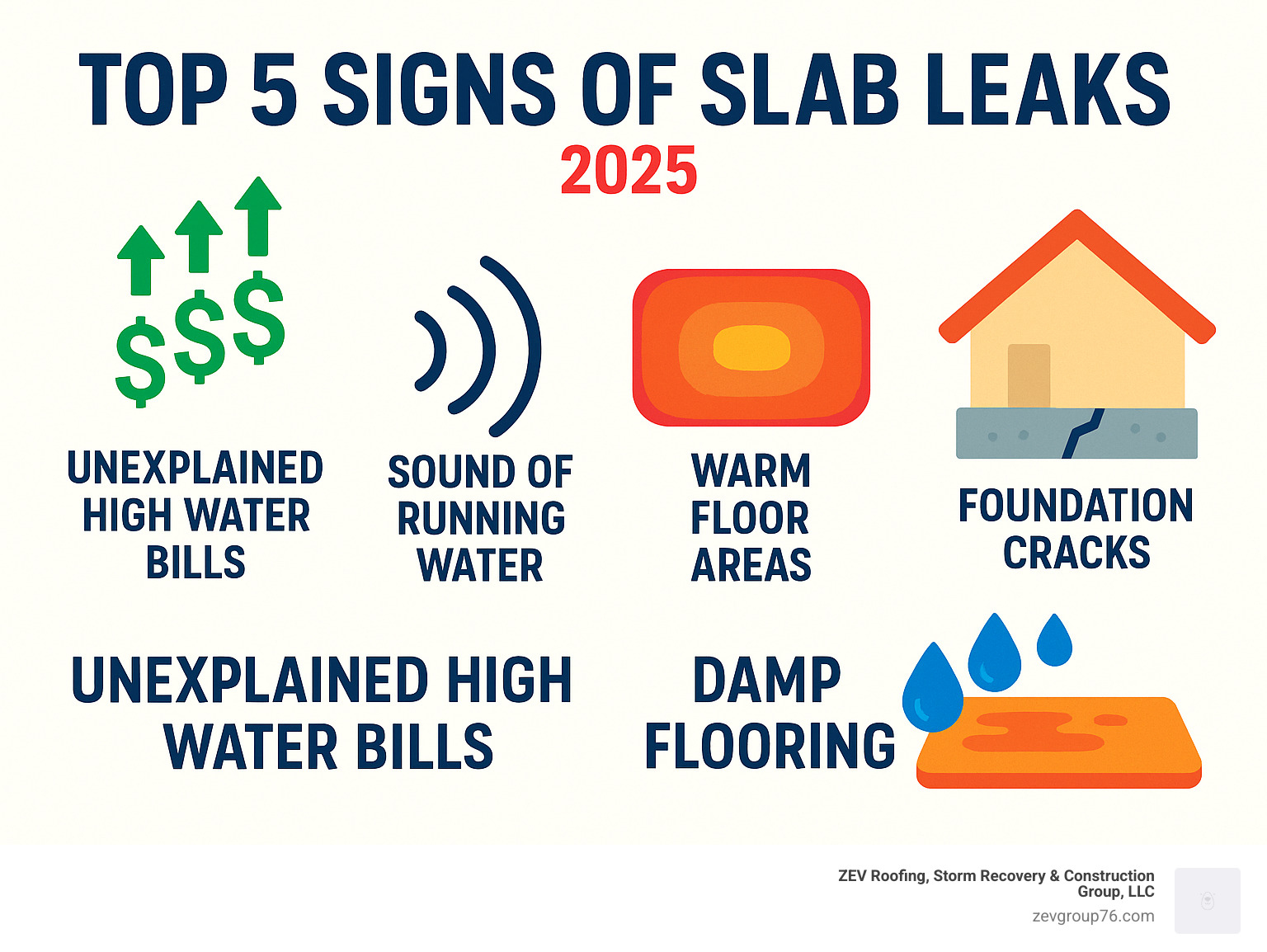
- Unexplained high water bills – sudden spikes without increased usage
- Sound of running water – when all fixtures are turned off
- Warm spots on floors – indicating hot water line leaks
- Damp or warped flooring – carpets, hardwood showing moisture damage
- Foundation cracks – new cracks or shifting in walls and floors
As one homeowner finded after hiring multiple services: “We tried another well known service who made a big song and dance with lots of fancy equipment and triumphantly identified the spot under the floor. Our plumbers dug furiously, jackhammers going like crazy. And? We found an electric pipe. Not a water pipe in sight.”
Slab leaks can be a nightmare for homeowners, leading to costly repairs and potential damage to the foundation of the house. Without early detection, these hidden leaks waste thousands of gallons of water monthly while compromising your home’s stability through soil erosion and concrete damage.
The good news? Modern leak detection technology can pinpoint these problems without destructive digging. Professional plumbers now use acoustic listening devices, thermal imaging, and pressure testing to locate leaks with surgical precision.
This guide will walk you through the warning signs, explain how professionals detect these hidden leaks, and help you understand your repair options before a small problem becomes a foundation catastrophe.
Spotting the Signs: Your First Line of Defense Against Slab Leaks
Think of yourself as a detective in your own home. Since there’s no alarm system to alert you when pipes start leaking beneath your concrete foundation, you need to become skilled at reading the clues your house gives you.
The good news? Your home will always tell you when something’s wrong—you just need to know what to listen for. Early slab leak detection can save you thousands of dollars and prevent your foundation from turning into an expensive nightmare.
Let’s start with the most obvious red flag: unexplained high water bills. When your monthly water bill suddenly jumps without any change in your family’s routine, that’s your wallet screaming for attention. We’ve seen homeowners shocked by leaks as small as 0.4 gallons per minute adding over $100 to their monthly bills. Even a tiny leak of just 0.02 gallons per minute wastes nearly 1,000 gallons monthly—that’s like filling up your bathtub 20 times for absolutely nothing.
Damp carpets or warped floors are another telltale sign that water is escaping where it shouldn’t. That mysterious wet spot on your kitchen floor or the hardwood that’s suddenly buckling? It could be hot water lines beneath your slab crying for help. And here’s something that makes many homeowners uncomfortable: this moisture creates the perfect breeding ground for mold and mildew, often appearing in corners or under carpets where you might not notice right away.
Foundation cracks or shifting should make you take immediate action. When water escapes under your slab, it doesn’t just disappear—it moves the soil around your foundation, creating settling and cracking. Those hairline cracks appearing on your walls? They might be your house’s way of waving a white flag.
Don’t ignore a persistent musty or moldy smell either. Even when you can’t see water damage, your nose often knows something’s wrong. This distinct odor usually means moisture is hiding somewhere it shouldn’t be.
Finally, a sudden drop in water pressure can signal that your water is taking a detour underground instead of reaching your fixtures where you need it.
DIY Checks: How to Confirm Your Suspicions
Before you call in the professionals, there are several detective moves you can make yourself. Think of these as your home inspection toolkit.
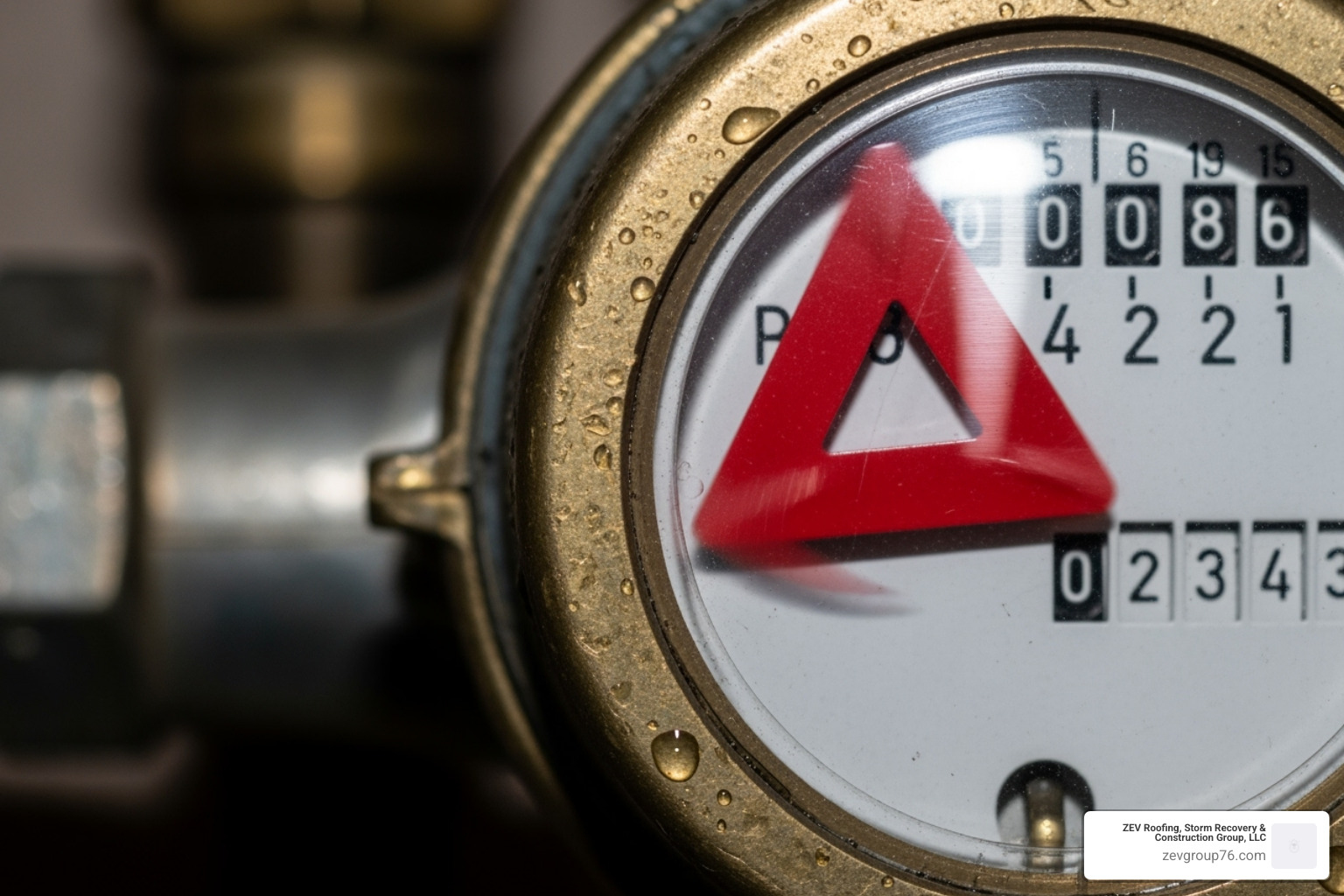
The water meter test is your most powerful weapon. Start by turning off every single water-using appliance and fixture in your home—and we mean everything. No dishwasher, no washing machine, no sprinkler systems, and definitely no toilet flushing. Then find your water meter, usually hiding under a metal or plastic cover near your driveway or property line.
Here’s where it gets interesting: lift that cover and watch the meter dial like a hawk. See that little red triangle or those numbers? If they’re moving even slightly with all your water turned off, you’ve just confirmed you have a leak somewhere in your system. It’s like catching a thief red-handed.
Listening for the sound of running water when everything should be silent is another powerful clue. After you’ve turned off all fixtures, take a quiet moment to listen carefully around your home. That subtle sound of water moving through pipes when nothing should be running? That’s not your imagination.
Checking your water heater can reveal important information too. If your water heater seems to be working overtime, constantly cycling on and off, it might be desperately trying to heat water that’s escaping under your slab faster than it can keep up.
Inspecting floors for unusual warm spots is particularly effective for detecting hot water line leaks. Walk around your home in bare feet or socks, paying attention to areas that feel warmer than they should. Hot water increases corrosion rates in pipes, making these leaks more common and easier to detect through temperature changes.
Differentiating Minor Plumbing Issues from a Serious Slab Leak
Here’s where your detective skills really matter. It’s easy to confuse a dripping faucet or running toilet with something more serious. Those minor issues can definitely increase your water bill, but they’re usually obvious and fixable.
A slab leak detection situation is different because the problem is hidden beneath your concrete foundation, making it capable of causing widespread damage before you even know it exists. If you’ve already checked all your visible fixtures and your water meter is still showing movement, or if you’re noticing damp flooring, foundation cracks, or mysterious odors, you’re likely dealing with something much more serious than a leaky faucet.
The key difference? Minor plumbing issues announce themselves clearly, while slab leaks are sneaky. They work quietly underground, causing damage that can compromise your entire home’s foundation if left untreated. When in doubt, trust your instincts—if something feels off about your water usage or your home’s behavior, it’s always better to investigate sooner rather than later.
The Professional’s Arsenal: Advanced Slab Leak Detection Technology
When your DIY investigation points to a potential slab leak, it’s time to bring in the professionals. The good news? Today’s slab leak detection specialists use sophisticated technology that would make a spy jealous – and more importantly, they can find your leak without turning your home into a construction zone.
The importance of non-invasive methods cannot be overstated. Picture this: a plumber shows up with a jackhammer, takes a wild guess, and starts breaking up your beautiful concrete floor. Hours later, they’ve created a crater in your living room only to find… an electrical conduit. This outdated guesswork approach is not just unacceptable – it’s completely unnecessary with today’s technology.
Modern slab leak detection focuses on pinpoint accuracy to minimize property damage. Professional technicians can locate leaks within inches of their actual position, ensuring that if any concrete needs to be opened, it happens in exactly the right spot. This precision saves you money, time, and the headache of unnecessary repairs to your flooring.
Acoustic Listening and Sound Amplification
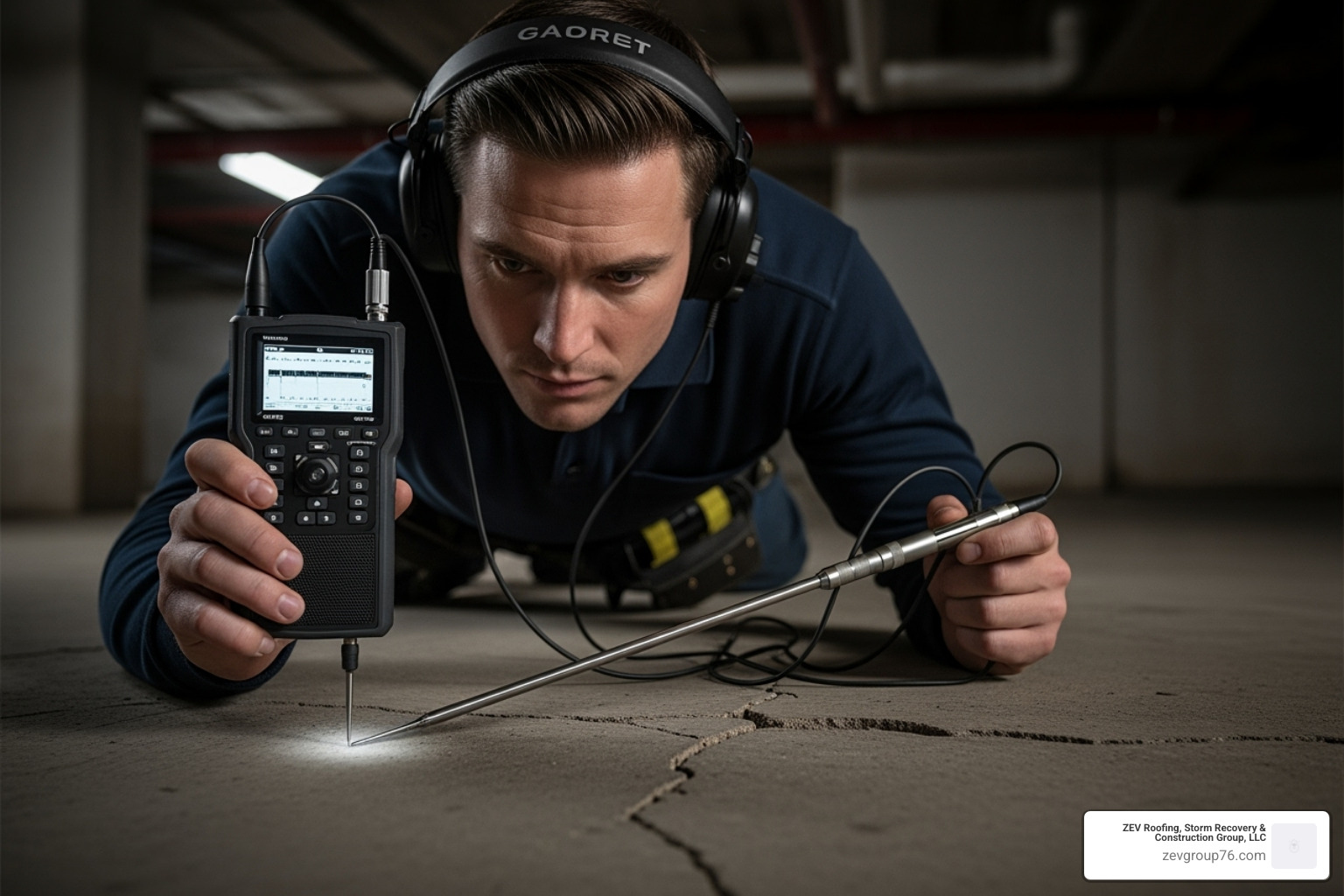
Think of this as giving your plumber superhero hearing. Electronic listening devices and highly sensitive ground microphones can detect the subtle sounds that water makes when it escapes from a pressurized pipe. Your home’s water system typically runs at 8-12 pounds of pressure, and when water finds even a tiny escape route, it creates a distinct acoustic signature.
These devices are incredibly sophisticated. The most advanced listening equipment can be three times more sensitive than standard tools, allowing technicians to distinguish between the sound of water flowing normally through pipes and water escaping where it shouldn’t be. It’s like having a stethoscope for your plumbing system.
Amplifying the distinct sound of water escaping a pressurized pipe requires different tools for different situations. For leaks under concrete slabs, technicians use specialized deck plates that transfer sound vibrations. When dealing with pipes buried under soil or hidden within walls, pipe probes help isolate the leak’s location.
Pinpointing the leak’s epicenter under concrete becomes even more precise when dealing with tricky plastic pipes. Sometimes technicians will inject small bursts of CO2 gas into the plumbing lines. This technique improves the sound signature, making it easier to locate exactly where water is escaping beneath your foundation.
Thermal Imaging and Infrared Cameras
Here’s where technology gets really cool – literally. Detecting subtle temperature differences in floors and walls allows professionals to “see” problems that are completely invisible to the naked eye. Thermal imaging cameras don’t actually see water, but they can detect the temperature changes that leaking water creates.
Especially effective for identifying hot water line leaks, thermal imaging shows up as warm spots on your floor or walls. When hot water escapes from a pipe under your slab, it heats the surrounding concrete and soil, creating a thermal fingerprint that infrared cameras can easily detect.
Creating a visual map of the water’s path without any destruction is perhaps the most valuable aspect of thermal imaging. This technology helps professionals understand not just where the leak is, but how far the water has traveled and what areas of your home might be affected. Assessing the full extent of moisture spread helps determine the scope of repairs needed and ensures nothing gets missed.
Pressure Testing and Electronic Line Tracing for Slab Leak Detection
The final piece of the detection puzzle involves proving that a leak exists and mapping exactly where your pipes run. Isolating specific sections of the plumbing system allows technicians to test one area at a time, narrowing down the search area methodically.
Pressurizing lines with air or water to monitor for a pressure drop works like inflating a balloon and watching to see if it deflates. If the pressure drops over time, it confirms that water is escaping somewhere in that section. This technique definitively proves a leak exists before any invasive work begins.
Using electromagnetic pipe locators to trace the exact path and depth of hidden water lines before any digging begins is the final step that ensures surgical precision. These devices can map your underground plumbing system, showing not just where pipes run, but how deep they are buried. This information is crucial because it means that if concrete does need to be opened, it happens in exactly the right spot at exactly the right depth.
The combination of these advanced techniques transforms slab leak detection from guesswork into a precise science, protecting your home and your wallet from unnecessary damage.
From Detection to Resolution: Repair Options and Consequences
Once you’ve identified a slab leak detection need, time becomes your enemy. That small leak beneath your foundation isn’t just a minor inconvenience – it’s actively undermining your home’s stability with every passing day. The high stakes of delaying repairs cannot be overstated, and here’s why immediate action matters so much.
Think of a slab leak like a slow-motion disaster movie. What starts as a tiny pinhole can quickly escalate into major structural issues through soil erosion under your foundation. The water doesn’t just disappear – it’s constantly washing away the soil that supports your entire house, creating voids that can cause your foundation to shift, crack, or even sink.
Consequences of Inaction
Ignoring a slab leak is like playing Russian roulette with your home’s foundation. We’ve seen too many homeowners learn this lesson the hard way. Foundation damage tops the list of consequences – that persistent moisture causes concrete slabs to crack, shift, and heave over time. Your entire house’s structural integrity depends on a stable foundation.
Mold growth follows close behind. The constant dampness creates a perfect breeding ground for mold and mildew, which spreads rapidly through your home. Beyond the unpleasant musty odors, this poses serious health risks to your family, especially those with respiratory issues or allergies.
Pest infestations love moisture too. Termites are particularly drawn to damp wooden structures, adding another expensive layer of damage to your growing repair bill. Meanwhile, even a small leak wastes thousands of gallons of water monthly, sending your utility bills through the roof.
If your home has suffered extensive water damage from a delayed repair, you might need comprehensive restoration services. That’s where our expertise in Storm Damage Repair becomes invaluable – water intrusion damage shares many similarities with storm-related flooding.
Common Slab Leak Repair Methods
Once professional slab leak detection pinpoints your problem, you’ll face three main repair options. Each has distinct advantages depending on your specific situation, budget, and long-term plans.
| Repair Method | Cost | Invasiveness | Longevity | Best-Use Scenarios |
|---|---|---|---|---|
| Spot Repair | Low-Medium | Moderate (requires opening slab at leak location) | 10-20 years depending on pipe condition | Single leak in newer pipes, accessible location, limited budget |
| Rerouting/Repiping | Medium-High | Low (new pipes run through walls/attic) | 50+ years with quality materials | Multiple leaks, older pipe systems, long-term investment, inaccessible leak locations |
| Epoxy Pipe Coating | Medium | Very Low (access through existing openings) | 20-30 years in most conditions | Multiple small leaks, pipes in good structural condition, minimal disruption needed |
Spot repair involves opening your slab at the precise leak location for a direct fix. It’s the most straightforward approach when you’re dealing with a single leak in otherwise healthy pipes. However, if your pipes are aging, fixing one leak often means others will follow soon.
Rerouting or repiping bypasses the problematic underground pipes entirely. New pipes get installed through walls, attics, or other accessible areas. While more expensive upfront, this approach eliminates future slab leak worries and often pays for itself through avoided future repairs.
Epoxy pipe coating works like applying a new liner inside your existing pipes. This method seals multiple small leaks simultaneously without any digging or slab penetration. It’s particularly effective for homes with widespread pinhole leaks in copper pipes.
How Pipe Materials Impact Your Slab Leak Detection and Repair
Your home’s pipe material significantly affects both detection methods and repair strategies. Copper pipes are prone to corrosion and pinhole leaks, especially in areas with acidic water. The good news? Their metal construction makes them easier to locate using acoustic equipment – the sound of escaping water travels well through copper.
PEX plastic pipes present different challenges. While the flexible plastic resists corrosion, fitting failures can occur at connection points. These leaks often run quieter than copper leaks, making acoustic detection more difficult and requiring pressure testing methods instead.
Older homes sometimes have polybutylene pipes, which are notorious for high failure rates. If your home has these gray plastic pipes installed between 1978 and 1995, complete repiping often makes more financial sense than repeated spot repairs. These pipes are essentially ticking time bombs that will continue failing throughout your home.
The material of your pipes also influences repair costs and methods. Copper repairs tend to be more expensive due to material costs, while PEX repiping often provides the most cost-effective long-term solution. Understanding your pipe material helps set realistic expectations for both detection time and repair recommendations.
Conclusion
Finding a suspected slab leak can feel overwhelming at first. We get it – finding that water might be escaping beneath your home’s foundation is enough to make anyone’s heart skip a beat. But here’s the good news: you’re not helpless in this situation.
With vigilance and a basic understanding of the warning signs, you can catch these problems early. Remember those key indicators we discussed – unexplained spikes in your water bill, that mysterious sound of running water when everything’s turned off, warm spots on your floors, or sudden foundation cracks. These aren’t just random house quirks; they’re your home’s way of asking for help.
The detection process has come a long way from the old “guess and jackhammer” approach. Today’s professionals use sophisticated acoustic equipment, thermal imaging, and pressure testing to pinpoint leaks with surgical precision. This means less disruption to your home and more accurate repairs.
Never delay when you suspect a leak. This isn’t just professional advice – it’s a hard truth we’ve learned from countless homeowners who wished they’d acted sooner. The cost of waiting almost always exceeds the cost of a swift inspection. A small leak that might cost a few hundred dollars to detect and repair today could turn into thousands of dollars in foundation damage, mold remediation, and structural repairs tomorrow.
Hidden leaks are silent destroyers. They waste precious water, inflate your utility bills, and quietly undermine your home’s foundation. Left unchecked, they create the perfect environment for mold growth and can even attract pests to the moisture.
As a general construction company focused on home integrity, ZEV Roofing, Storm Recovery & Construction Group, LLC knows that protecting your home requires vigilance from top to bottom. While we specialize in safeguarding your property through expert residential and commercial roofing and Storm Damage Repair services across Texas & New Mexico, we understand that water intrusion can threaten your home from any direction.
A solid foundation is just as crucial as a solid roof. Water damage doesn’t discriminate – whether it’s coming from above during a storm or seeping up from below through a slab leak, the results can be equally devastating.
Protect your entire home from water intrusion by exploring our comprehensive Leak Prevention strategies and services. Don’t let a hidden leak become a visible nightmare – act fast, detect accurately, and repair effectively. Your home’s integrity depends on it.