
Decoding Your Siding Replacement Cost
The siding replacement cost is a major concern for many homeowners. It’s a significant investment that protects your home, boosts its curb appeal, and can even improve energy efficiency. Knowing what to expect financially is key.
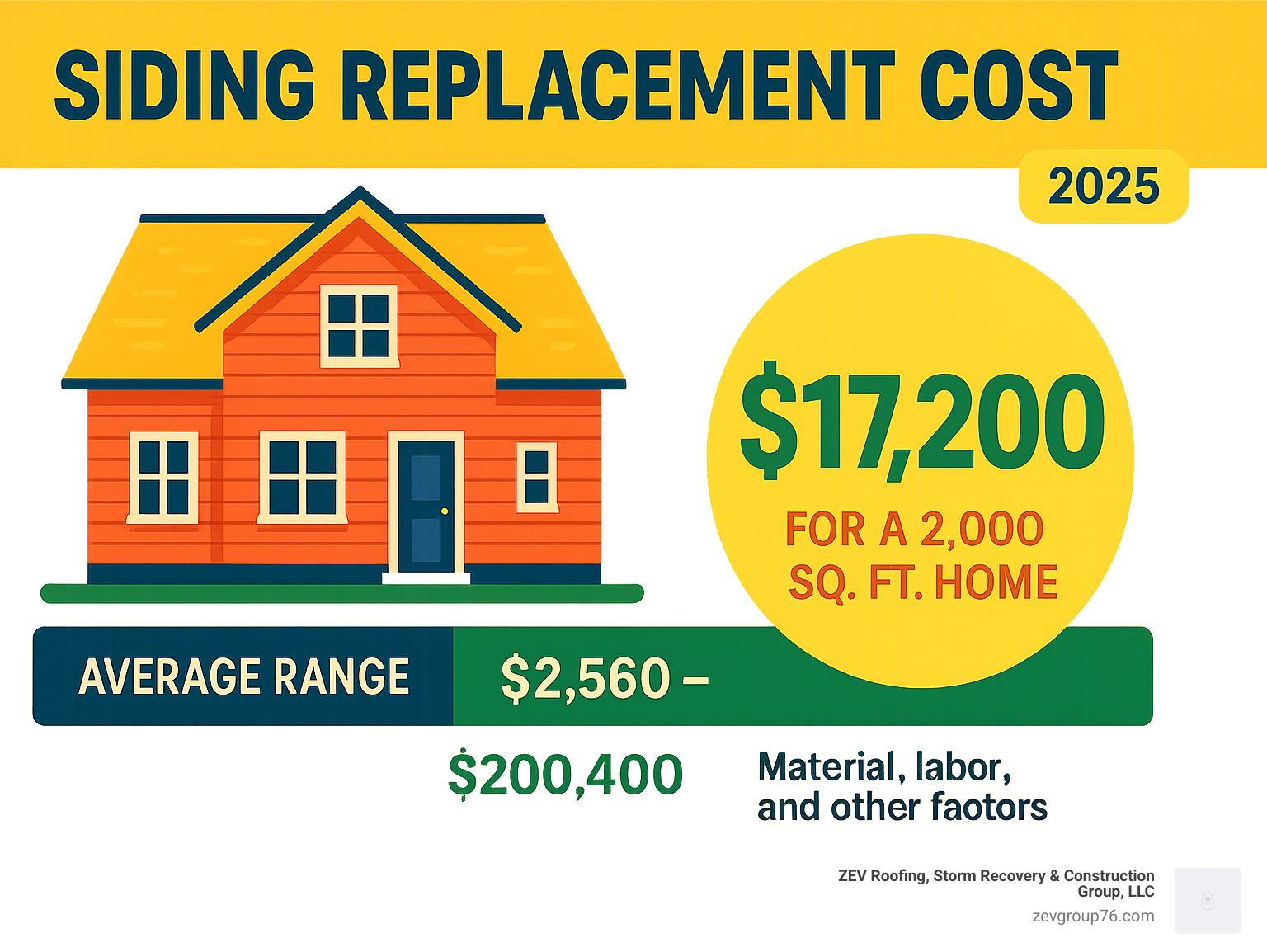
Here’s a quick look at average siding replacement costs:
- National Average Range: Between $2,560 and $20,400.
- For a 2,000 Square Foot Home: Approximately $17,200.
- Per Square Foot (Installed): Averages around $8.60, but can vary greatly from $3 to $48, depending on the material.
Replacing your home’s siding is a big project. It’s not just about the material; many factors play a role in the final price. This guide will help you understand all the pieces of this important home upgrade.
Understanding the Full Siding Replacement Cost Breakdown
Picture this: you’re planning a family vacation, and someone asks, “How much will it cost?” Your answer probably depends on where you’re going, how you’re traveling, where you’re staying, and what you want to do, right? The siding replacement cost works exactly the same way.
Your final price tag isn’t just one number pulled from thin air. It’s shaped by several key ingredients: your home’s size and complexity, the labor rates in your area, your geographic location, and even the season when you schedule the work. Each of these factors plays a starring role in your project’s total cost.
Want to understand exactly what goes into professional siding work? Check out more info about our services to see how we approach each project.
Key Factors Influencing Your Siding Replacement Cost
Let’s be honest – that first quote can feel like a punch to the gut if you’re not prepared. But once you understand what drives the numbers, everything makes much more sense.
Home square footage is the obvious starting point. More walls equal more materials and more work hours. It’s simple math – a cozy 1,200 square foot ranch will cost significantly less than a sprawling 3,000 square foot home.
But here’s where it gets interesting. Architectural style can completely change your siding replacement cost, even for homes of identical size. A basic rectangular house is like a straight highway for installers – smooth and efficient. But throw in some gables, dormers, bay windows, or decorative trim, and suddenly you’ve got a winding mountain road that requires careful navigation and specialized skills.
The number of stories matters more than you might think. Working on a single-story home means contractors can use ladders and work efficiently. Multi-story homes require scaffolding, safety equipment, and extra time to move materials up and down. All of this adds to your labor costs.
Speaking of labor, labor cost per hour typically ranges from $40 to $80, depending on your location and the complexity of your project. In Texas and New Mexico, where we work, rates can vary significantly between urban and rural areas. Experienced crews working with premium materials command higher rates, but their expertise often saves you money in the long run through quality workmanship.
Regional material availability plays a bigger role than most homeowners realize. If you’re in an area where certain materials are manufactured or warehoused nearby, you’ll likely pay less for shipping. In our Southwest markets, materials like stucco are readily available, which can affect pricing compared to regions where they’re less common.
Here’s a money-saving tip: off-season discounts can be substantial. Most siding contractors stay busy from late spring through early fall. Schedule your project during slower periods (late winter or early spring, weather permitting), and you might negotiate a better deal as contractors look to keep their crews working.
Estimating Your Siding Replacement Cost by Home Size
Let’s talk real numbers. While every project is unique, understanding typical cost ranges for different home sizes helps you budget realistically.
For a 1,500 square foot home, you’re looking at roughly $1,500 to $20,250 for standard materials like vinyl or engineered wood. If you’re dreaming of premium options like brick or stone, expect $13,500 to $75,000.
A 2,000 square foot home – the national average size – typically costs $2,000 to $27,000 for standard siding materials. Premium materials jump to $18,000 to $100,000. The national average for this size home sits around $17,200.
For larger 2,500 square foot homes, standard siding ranges from $2,500 to $33,750, while premium materials can reach $22,500 to $125,000. Vinyl siding specifically averages $13,325 to $24,300 for this size home.
Here’s something many homeowners don’t consider: a ranch versus two-story home of the same square footage can have dramatically different costs. The ranch might have more ground-level perimeter but less total wall area. The two-story home has more vertical surface area and often more complex installation challenges.
Your siding material choice also affects installation difficulty. Vinyl siding goes up relatively quickly and easily. Fiber cement requires more precision and time. Natural stone or brick involves completely different installation methods and specialized skills.
The bottom line? Your siding replacement cost depends on your home’s unique characteristics and your material preferences. Understanding these factors helps you make informed decisions and avoid sticker shock when those first quotes arrive.
Comparing Siding Materials: Upfront Cost vs. Long-Term Value
Choosing your siding material is like picking a car – there’s the initial purchase price, but then there’s also the gas mileage, maintenance, and how long it’ll last. The material you select will be the single biggest determinant of your siding replacement cost, both upfront and over its lifetime. We offer a variety of Exterior Siding options to fit your needs.
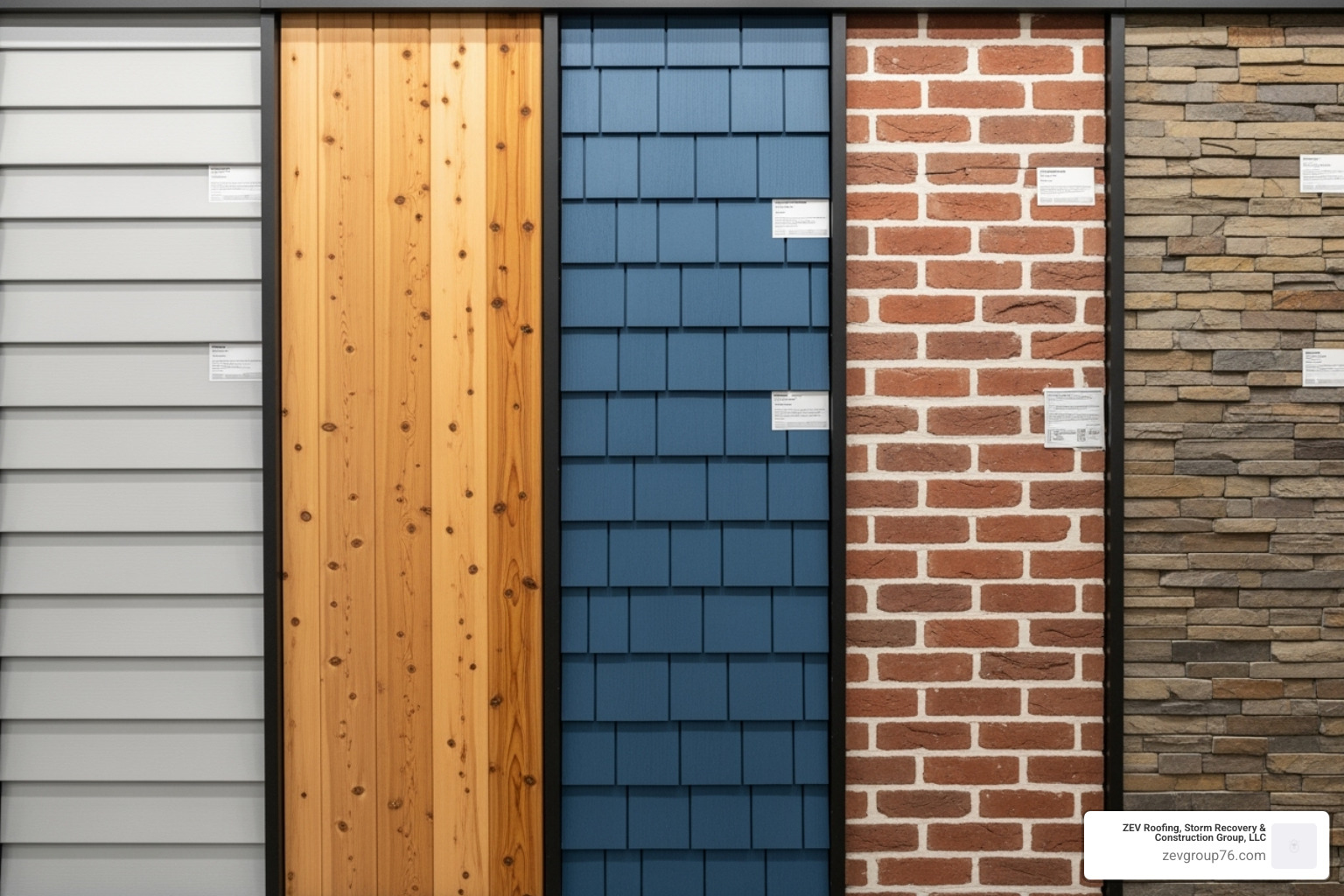
Think of it this way: you could buy the cheapest vinyl siding and save money today, but if you live in an area with harsh weather, you might find yourself replacing it sooner than expected. On the flip side, investing in fiber cement or metal siding might cost more upfront, but these materials can weather decades of storms while barely showing their age.
Material durability plays a huge role in your long-term costs. Some materials laugh in the face of hail storms, while others might need repairs after a particularly rough summer. Maintenance needs vary dramatically too – some siding practically takes care of itself, while others require regular attention to keep looking their best.
Climate suitability is especially important here in Texas and New Mexico, where we deal with everything from scorching heat to sudden hailstorms. What works beautifully in mild climates might not be the best choice for our challenging weather patterns.
Material Cost, Lifespan, and Maintenance
Here’s a comparison of some popular siding materials, helping you weigh the initial investment against long-term durability and maintenance needs:
| Material Type | Installed Cost/Sq. Ft. | Lifespan | Maintenance Requirements |
|---|---|---|---|
| Vinyl | $4.50 – $8.20 | 20-40 years | Minimal; regular cleaning with soap and water or power washing |
| Fiber Cement | $8.50 – $15.50 | 30-50 years | Periodic repainting every 10-15 years; occasional caulking |
| Wood | $7.00 – $23.00 | 20-40 years | Regular staining/painting every 3-7 years; pest inspection |
| Metal | $10.50 – $16.50 | 40-70 years | Minimal; occasional touch-up painting on scratches |
| Stucco | $9.00 – $16.50 | 50-80 years | Periodic cleaning; crack repair as needed |
Data referenced from Product and Supplies Data from HUD
Vinyl siding remains the most budget-friendly option, and modern vinyl has come a long way from the flimsy stuff of decades past. It’s practically maintenance-free and handles most weather reasonably well, making it a solid choice for cost-conscious homeowners.
Fiber cement sits in the sweet spot for many homeowners – it offers excellent durability and fire resistance while still being more affordable than premium materials. It can mimic the look of wood without the constant upkeep.
Wood siding brings best natural beauty and charm, but it demands respect and regular maintenance. If you love the classic look and don’t mind the upkeep, it can be absolutely stunning.
Metal siding, particularly steel or aluminum, offers incredible longevity and stands up beautifully to severe weather. It’s an investment that pays off over decades of reliable performance.
Stucco has been protecting homes in the Southwest for generations. It’s incredibly durable and fits perfectly with regional architectural styles, though repairs can be tricky if not done properly.
Choosing the Right Siding for Texas & New Mexico Climates
Living in Texas and New Mexico means your siding needs to be tough. Our climate throws curveballs that would make other regions nervous – think intense UV rays that can fade materials in just a few years, sudden temperature swings, and the occasional hailstorm that sounds like marbles hitting your roof.
Heat resistance is non-negotiable here. Materials that warp, fade, or become brittle under constant sun exposure will leave you disappointed and facing premature replacement costs. Vinyl has improved significantly in this area, while fiber cement and metal naturally handle heat well.
UV durability goes hand-in-hand with heat resistance. The sun in our region is relentless, and materials that aren’t UV-stable will show their age quickly through fading and chalking.
Moisture resistance might seem less important in our often-dry climate, but when rain does come, it can arrive with impressive intensity. Materials that handle moisture well prevent issues like rot, mold, and structural damage.
Pest resistance is another consideration unique to our region. Termites and other wood-boring insects are active here, making materials like fiber cement and metal attractive alternatives to traditional wood.
Local aesthetics matter too. Stucco feels right at home in Santa Fe, while board-and-batten might be perfect for a Texas ranch home. The best siding choice improves your home’s architectural style while standing up to our challenging climate.
For homeowners in our region, we often recommend considering the insights shared in our article about The Importance of Siding Replacement in Tampa, Florida, which discusses similar climate challenges and material considerations.