
Why Roof Leak Prevention Matters for Every Property Owner
Roof leak prevention is about stopping water damage before it starts—and it can save you thousands of dollars. Here’s what you need to know:
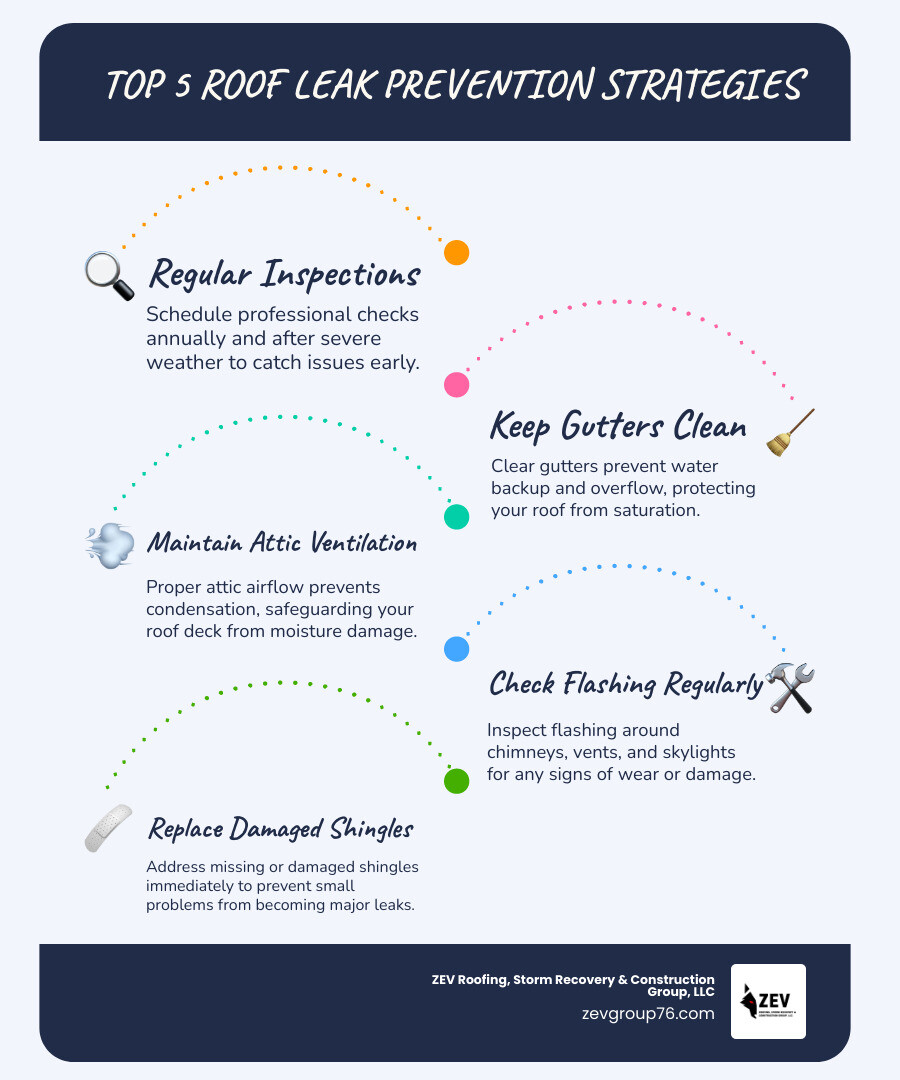
Top 5 Ways to Prevent Roof Leaks:
- Schedule regular inspections – At least once per year and after severe weather
- Keep gutters clean – Clogged gutters force water onto your roof
- Maintain attic ventilation – Prevents condensation that weakens your roof deck
- Check flashing regularly – Around chimneys, vents, and skylights
- Replace damaged shingles immediately – Don’t wait for small problems to become big ones
Finding a water stain on your ceiling is stressful. That drip means water has already penetrated your roof, and the visible damage is often just the tip of the iceberg.
Nearly 40% of homeowners face water damage, often from roof leaks. For commercial buildings, the number is even higher: studies show 85% have sustained water damage, with 45% having existing leaks. A single leak can lead to $2,000 to $5,000 in major repairs, not including interior damage.
The good news? Most roof leaks are preventable. Proactive maintenance, quality materials, and attention to detail can protect your property and extend your roof’s lifespan.
Ignoring prevention leads to severe consequences:
- Structural damage to roof decking and framing
- Mold and mildew growth in walls and attics
- Ruined insulation that increases energy costs
- Interior damage to ceilings, walls, and belongings
- Reduced property value and curb appeal
Roofs in West Texas and New Mexico face unique challenges. Hail, high winds, extreme temperature swings, and intense UV exposure accelerate wear, turning minor issues into major leaks faster than in milder climates. This guide will show you how to protect your investment by covering warning signs, common causes, and the specific steps you can take to prevent problems before they start.
I’m Eli Hita, Managing Partner of Zev Roofing, Storm Recovery, & Construction Group, LLC. With over 15 years of experience in West Texas’s challenging climate, I’ve helped hundreds of property owners implement effective roof leak prevention strategies. My team understands your roof is the first line of defense protecting your property.
Handy Roof leak prevention terms:
Understanding the Risks: Common Causes, Signs, and Costs of Roof Leaks
To stop leaks, it’s crucial to understand why they happen and what clues your property might be giving you. Recognizing early symptoms can save you significant expense down the road.
Common Causes of Roof Leaks
Roof leaks are often the result of combined factors, especially in West Texas and New Mexico where roofs face constant environmental challenges.
- Age of Materials: Roofing materials have a limited lifespan. Over 15-20 years, harsh weather and UV rays cause materials to crack, curl, or become brittle, creating openings for water.
- Poor Installation Quality: Improper installation is a major cause of leaks. Misaligned shingles, incorrect nailing, or poorly sealed flashing create immediate vulnerabilities that lead to costly future repairs.
- Weather Factors: Our region’s extreme weather is a major factor.
- Hail Damage: Hail can crack, dent, or dislodge roofing materials, creating direct entry points for water.
- Wind Damage: Strong winds can lift or remove shingles, leaving the roof deck exposed and pushing rain under loose flashing.
- UV Ray Degradation: Intense sun breaks down roofing materials, making them brittle and less waterproof over time.
- Temperature Changes: Drastic temperature swings cause materials to expand and contract, straining seals and loosening fasteners.
- Animal Damage: Animals chewing or burrowing into roofing can create holes and weaknesses.
- Blocked Gutters and Drains: Clogged gutters cause water to back up and pool on the roof. This standing water can seep under shingles, leading to leaks and rot.
- Damaged Flashing: Flashing is metal installed around chimneys, vents, and skylights to direct water away. If it’s cracked, loose, or improperly installed, it becomes a common entry point for leaks. We often see leaks from faulty chimney flashing repair.
- Cracked Vent Booting: Rubber boots around plumbing vents can crack from UV exposure, creating an opening for water.
Signs and Symptoms of a Hidden Leak
While some leaks are obvious, many are hidden and cause slow damage. Watch for these subtle signs to catch a leak before it becomes a disaster.
- Musty Odors: A persistent musty smell, especially in the attic, can indicate hidden moisture and mold.
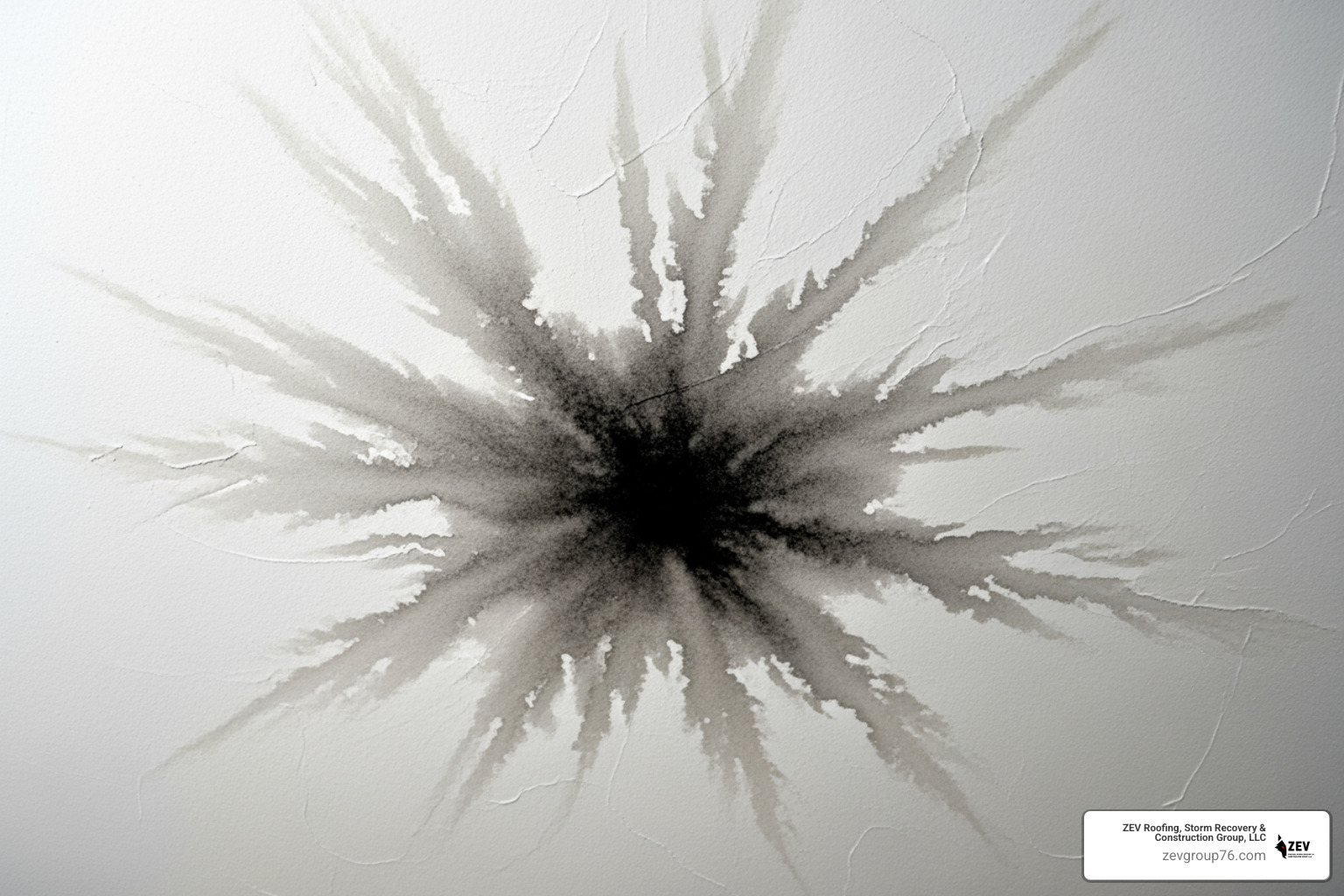
- Ceiling or Wall Discoloration: Brownish or yellowish stains on ceilings or walls are classic signs of water intrusion.
- Bubbling or Peeling Paint: Moisture trapped behind paint on ceilings or upper walls will cause it to bubble or peel.
- Visible Mold or Mildew: Any mold on interior surfaces is a clear sign of a moisture problem.
- Sagging Ceiling: A bulging ceiling is a serious red flag, indicating that water has accumulated and is rotting the structure.
- Dripping Sounds: The sound of dripping during or after rain means water is getting in, even if you can’t see it.
- Increased Energy Bills: Wet insulation loses its effectiveness, forcing your HVAC system to work harder and raising your energy bills.
For more detailed guidance, check out our guide on how to Detect Water Leaking.
The High Cost of Ignoring a Leak
Ignoring a small leak is a costly mistake. The expense of unaddressed leaks multiplies quickly, extending far beyond the initial roof repair.
- Structural Damage: Water rots wooden roof decking, trusses, and joists, compromising your home’s structural integrity. This can lead to expensive Roof Decking Repair.
- Mold Remediation: Hidden moisture is a breeding ground for mold, which can spread rapidly. Remediation is often a costly and complex process. Our team can help you prevent mold growth by addressing the moisture source.
- Damaged Insulation: Wet insulation loses its insulating capacity, leading to higher utility bills and providing a home for pests.
- Interior Damage: Water leaks can ruin paint, drywall, flooring, and furniture.
- Fire Hazard: Water intrusion near electrical wiring can create a dangerous short circuit and fire risk.
- Reduced Roof Lifespan: Even small leaks shorten your roof’s lifespan. An EPA report highlighted how common these issues are, finding 85% of commercial buildings had sustained water damage.
A leaking roof can cost at least $2,000 to $5,000 in major repairs if water damages your home’s interior. The total cost, including mold remediation, can far exceed the cost of a new roof. Prevention is always less expensive than repair.
Your Proactive Guide to Roof Leak Prevention
Most roof leaks are preventable. A proactive approach to roof leak prevention with regular checks, timely maintenance, and smart upgrades can save you significant money and stress.
Regular Maintenance and Inspections: Your First Line of Defense
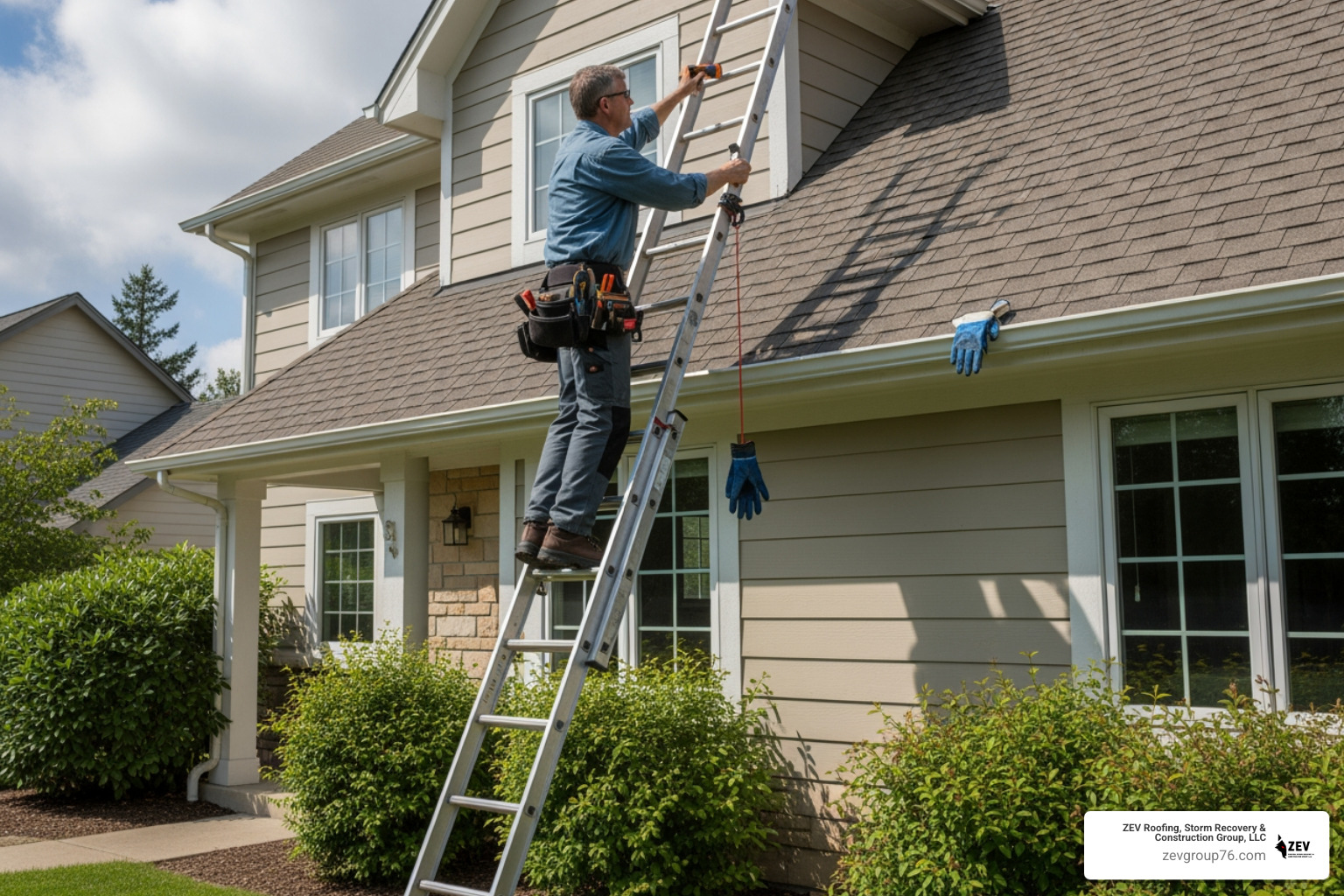
Proactive maintenance is always less costly than reactive repairs. We recommend a professional inspection at least once a year (and after major storms) and a homeowner visual check every spring and fall.
- Seasonal Roof Maintenance Checklist:
- Gutter Cleaning: Clogged gutters are a primary cause of leaks. When debris blocks drainage, water backs up and seeps under shingles. Clean gutters at least twice a year. For detailed guidance, see our Gutter System Maintenance guide.
- Debris Removal: Remove leaves and branches from your roof. Debris traps moisture, which can lead to mold and damage roofing materials.
- Tree Trimming: Trim branches overhanging your roof to prevent falling debris and storm damage.
- Shingle Inspection (from the ground): From a safe vantage point, look for missing, cracked, or damaged shingles and fix them immediately.
- Flashing Inspection: Visually inspect the metal flashing around chimneys, vents, and skylights for cracks, rust, or gaps.
Regular roof inspection is the best way to prevent leaks by identifying potential issues early.
The Critical Role of Attic Health in Roof Leak Prevention
Your attic’s health is surprisingly crucial for roof leak prevention. A dry, well-ventilated attic prevents moisture issues, extends your roof’s life, and lowers energy bills.
- Attic Ventilation: Proper ventilation allows hot, moist air to escape. Without it, heat and humidity get trapped, leading to condensation and material degradation.
- Condensation: In an unventilated attic, warm, moist air condenses on the cold roof deck. This moisture mimics a leak, soaking wood and insulation, leading to rot and mold.
- Material Degradation: Trapped attic heat, especially in our hot summers, can “cook” roofing materials from below, making them brittle and prone to cracking.
- Soffit and Ridge Vents: These systems create continuous airflow. Ensure soffit vents (under eaves) and ridge vents (at the peak) are clear and unobstructed.
- Attic Insulation: Adequate insulation creates a thermal barrier, preventing heat and moisture transfer from your living space. Wet insulation is ineffective and breeds mold.
- Moisture Control: Kitchen, bathroom, and dryer exhaust fans must vent outside, not into the attic, to prevent major moisture buildup.
For a deeper dive, consult the Guide to Durable Attics from the U.S. Department of Energy. Addressing attic health is a critical step to prevent mold growth.
Advanced Protection: Specialized Sealants and Underlayment
Beyond regular maintenance, advanced materials provide an extra layer of robust roof leak prevention.
- Waterproof Underlayment (Roof Deck Protection): Installed on the roof deck before shingles, this is a critical secondary barrier against water intrusion. For new roofs or major repairs, a quality underlayment like GAF DeckArmor is a small investment for significant long-term protection.
- Ice and Water Shield: In colder areas of New Mexico, this self-adhering membrane is applied to vulnerable areas like eaves and valleys to create a watertight seal against ice dams and heavy rain.
- High-Quality Sealants: Using durable, flexible, and UV-resistant sealants around all roof penetrations (vents, pipes, skylights) is essential.
- Flashing Reinforcement: Complex areas may need specialized flashing products to direct water away from vulnerabilities. For more, see our insights on chimney flashing repair.
- Quality Roofing Materials: Choosing quality materials is foundational. Investing in products like hail-resistant shingles ensures your roof is protected and often comes with better warranties.
Proper sealing also extends beyond the roof to walls, windows, and doors. You can learn more on sealing your home comprehensively.
Custom Tactics: Residential vs. Commercial Roofs
While the goal of roof leak prevention is universal, the strategies differ for sloped residential and flat commercial roofs. Each has unique challenges requiring custom solutions.
Preventing Leaks on Sloped Residential Roofs
Most homes in West Texas and New Mexico have sloped, shingled roofs that rely on gravity to shed water.
- Shingle Maintenance: Promptly replace any damaged, missing, or curling shingles. A single compromised shingle can cause a leak. Our shingle roof repair ultimate guide offers comprehensive advice.
- Flashing Around Chimneys: Chimneys are notorious leak points. Ensure the flashing is properly installed and free from cracks or deterioration.
- Skylight Sealing: Inspect skylights regularly for cracks and failing seals. When replacing your roof, consider upgrading older skylights to prevent future leaks. Our team specializes in skylight leak repair.
- Valley Protection: Roof valleys, where two roof planes meet, are high-flow areas for water and require proper underlayment and flashing.
- Proper Underlayment: A quality underlayment beneath your shingles provides a crucial secondary barrier against water infiltration from heavy rain and wind.
Preventing Leaks on Flat Commercial Roofs
Commercial properties often have flat roofs to house equipment. These roofs have distinct leak prevention needs, including issues with water pooling, sun exposure, and membrane damage.
- Ponding Water: Even with a slight slope, water can pool on flat roofs due to clogged drains or settlement. This “ponding water” can seep into the roof and cause leaks.
- Membrane Integrity: Flat roofs use materials like Built-Up Roofing (BUR) or single-ply membranes (TPO, EPDM). Regularly inspect the membrane for punctures, tears, or UV deterioration.
- Seam Inspection: On single-ply membranes, seams are a common entry point for water. Inspect them for separation or weakness.
- Drain Maintenance: Keep all roof drains, scuppers, and downspouts clear of debris to prevent ponding water.
- Foot Traffic Management: Foot traffic from service personnel can damage the roof membrane. We recommend installing designated walkways to minimize wear and tear.
For comprehensive care of your business’s roof, our team offers specialized commercial roofing services, including our TPO roof repair complete guide.
Here’s a quick comparison of strategies:
| Feature/Strategy | Sloped Residential Roofs | Flat Commercial Roofs |
|---|---|---|
| Primary Leak Cause | Shingle damage (cracks, missing), flashing failure, clogged gutters | Ponding water, membrane deterioration/punctures, seam failure, clogged drains |
| Material Types | Asphalt shingles, metal panels, tiles | Built-Up Roofing (BUR), TPO, EPDM, PVC membranes |
| Water Drainage | Gravity-driven runoff | Designed with slight slope for drainage, internal drains/scuppers |
| Key Inspection Areas | Shingles, flashing around penetrations, valleys, gutters, attic | Membrane surface, seams, drains, flashing, rooftop equipment penetrations |
| Maintenance Focus | Shingle repair/replacement, flashing seals, gutter cleaning, attic ventilation | Membrane repair, seam sealing, drain clearing, ponding water remediation, foot traffic control |
| Underlayment/Barrier | Waterproof underlayment, ice & water shield (if applicable) | Full membrane system, sometimes with additional coatings/ballast |
Frequently Asked Questions about Preventing Roof Leaks
Here are answers to common questions we get from property owners in West Texas and New Mexico about roof leak prevention.
When should I call a professional for a potential roof leak?
Knowing when to call an expert is key to minimizing damage. Contact a professional in these situations:
- After Severe Weather: After a major hailstorm or high winds, get a professional storm damage repair assessment, as damage isn’t always visible.
- For Leaks You Can’t Locate: Professionals have specialized tools to pinpoint a leak’s source, which can be far from where water appears inside.
- Visible Structural Damage: A sagging ceiling, large water stains, or visible mold are signs of advanced damage requiring immediate attention.
- If You’re Not Comfortable with Heights: Your safety is paramount. Roof work is dangerous without the right experience and equipment.
- When Dealing with Insurance: Navigating insurance claims is complex. We offer insurance claim assistance for roofs to ensure you get the coverage you deserve.
What’s the difference between proactive maintenance and reactive repairs?
- Proactive Maintenance involves scheduled actions taken before a problem occurs, like inspections and gutter cleaning. The goal is to fix small issues before they become major leaks, saving money, extending your roof’s life, and avoiding emergencies.
- Reactive Repairs address a problem after it happens. These are often more costly and disruptive emergency fixes that include interior restoration for issues like water damage and mold.
We strongly advocate for proactive maintenance as an investment that prevents the high costs and stress of reactive repairs.
How often should I have my roof inspected?
A professional roof inspection is recommended at least once a year and after any major storm. A visual self-inspection from the ground should be done twice a year (spring and fall). For commercial properties, inspections may be needed every six months due to the unique challenges of flat roofs.
Protect Your Investment with Proactive Care
Your roof is your property’s first line of defense. Ignoring its health can lead to costly damage and health risks, but a proactive approach to roof leak prevention safeguards your investment, provides peace of mind, and extends your roof’s life.
The key steps are:
- Regular professional inspections and diligent homeowner checks.
- Maintaining clear gutters and proper attic ventilation.
- Ensuring the integrity of flashing and using quality underlayment.
- Promptly addressing any signs of wear or damage.
At ZEV Roofing, Storm Recovery & Construction Group, LLC, we provide durable solutions for properties across West Texas and New Mexico, including Lubbock, Plainview, and surrounding areas. We’re here to help you implement roof leak prevention strategies custom to our region’s unique challenges.
Don’t wait for a drip to become a disaster. Contact us for comprehensive leak prevention services today, and let us help you protect what matters most.