
Understanding Texas Roof Insurance Claims: What Every Homeowner Needs to Know
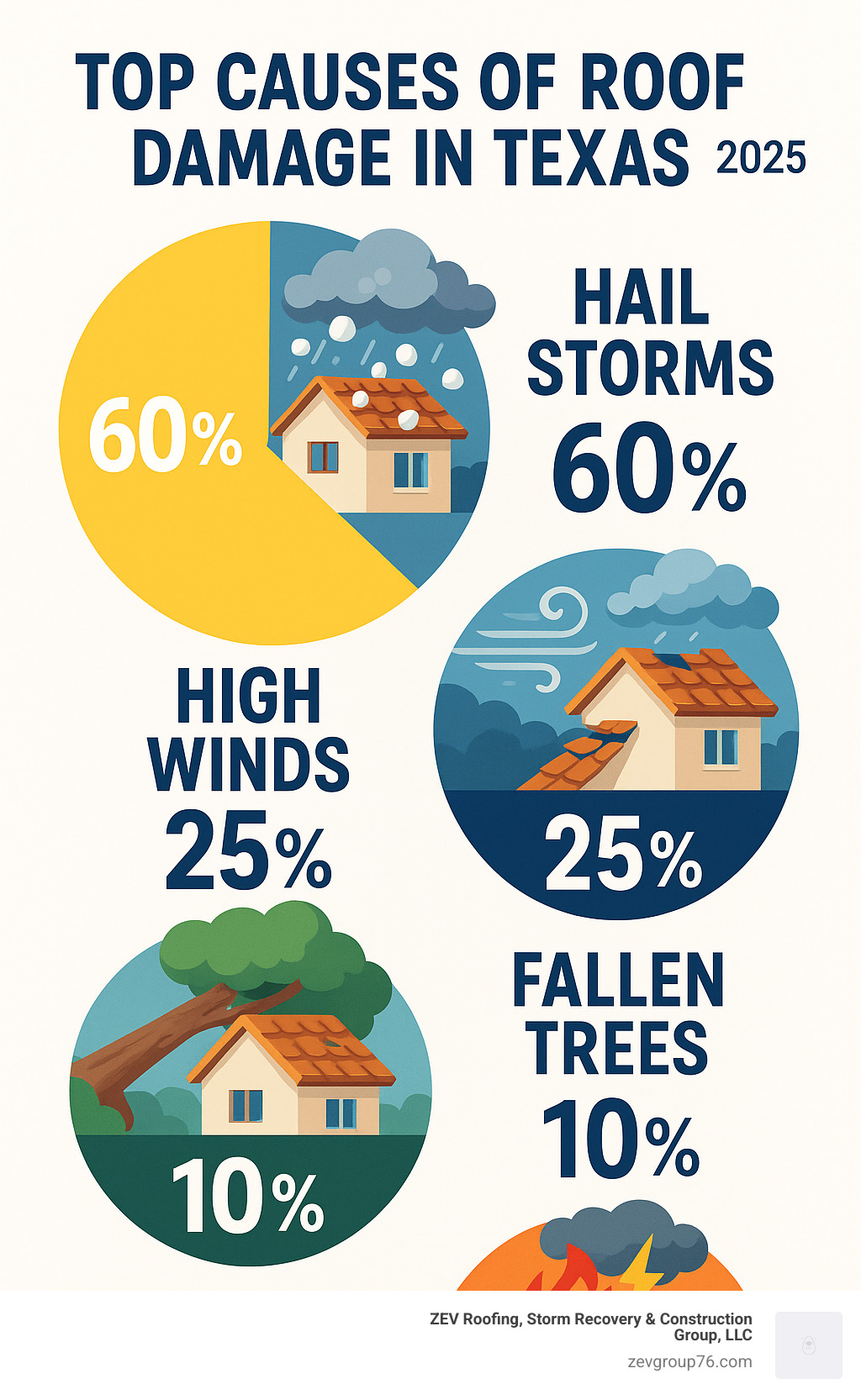
Filing a roof insurance claim Texas homeowners often find the process complex and overwhelming after storm damage. Texas weather is harsh on roofs, and hail is the most common culprit, causing over 60% of all roof-related insurance claims in the state.
Quick Overview of the Texas Roof Insurance Claim Process:
- Assess the damage – Inspect from the ground and document with photos.
- Contact your insurance company – Report the claim with your policy number and date of loss.
- Meet with the adjuster – Have your contractor present during the inspection.
- Review the settlement – Understand the scope of work and payment details.
- Complete repairs – Choose a licensed contractor and submit final documents.
- Receive final payment – Get recoverable depreciation after work is finished.
The average cost to replace a roof in Texas is $8,000 to $20,000, making insurance coverage essential. However, policies typically exclude normal wear and tear, neglect, and gradual deterioration.
Key Texas-Specific Considerations:
- It’s illegal for contractors to waive your deductible.
- Contractors cannot act as public adjusters if they are also performing the repairs.
- Gulf Coast residents may need separate windstorm coverage through TWIA.
- You have specific rights under Texas law if your claim is denied.
Understanding these basics can save you money and help you avoid common pitfalls that lead to claim denials or underpayments.
Understanding Your Texas Homeowners Policy Before You File
Your homeowners policy is a financial shield, but only if you understand its limits. Many homeowners find what is—and isn’t—covered only after filing a much-needed roof insurance claim Texas.
Your policy should cover sudden, unexpected damage from “covered perils.” Hail damage is the most common, as Texas leads the nation in hail claims. Large hailstones can crack shingles, dent gutters, and puncture your roof. Wind damage from severe storms is also a major issue, as high winds can strip shingles, tear away flashing, or lift entire roof sections.
Fire, lightning, falling trees, and vandalism are also typically covered. However, understanding what’s excluded is just as important.
Normal wear and tear is not covered. If your 20-year-old shingles are simply at the end of their life, replacement is your responsibility. The same applies to neglect; ignoring a small leak until it becomes a major problem will likely lead to a claim denial. Manufacturing defects and poor installation are the responsibility of the manufacturer or contractor, not your insurer.
For Gulf Coast residents, hurricane and windstorm damage often requires separate coverage through the Texas Windstorm Insurance Association (TWIA). To learn more, the Texas Department of Insurance offers a helpful TDI video on policy types. Regular maintenance is key to claim protection; see our guide on leak prevention for tips.
Replacement Cost Value (RCV) vs. Actual Cash Value (ACV)
This distinction can mean a difference of thousands of dollars in your settlement.
Replacement Cost Value (RCV) is the preferred coverage. It pays to replace your damaged roof with new materials at current prices, without deducting for your roof’s age. You receive the full replacement cost (minus your deductible) after repairs are complete.
Actual Cash Value (ACV) is cheaper but provides less coverage. ACV factors in depreciation, paying only what your aged roof was “worth” at the time of the storm. This leaves you to cover the difference between the depreciated value and the full replacement cost.
| Feature | Replacement Cost Value (RCV) | Actual Cash Value (ACV) |
|---|---|---|
| Payout Basis | Cost to replace with new, similar materials at current market prices | Replacement cost minus depreciation (age, wear, tear) |
| Depreciation | Not deducted initially; recoverable after repairs are complete | Deducted upfront |
| Initial Payout | ACV (minus deductible) + recoverable depreciation held back | ACV (minus deductible) |
| Final Payout | Full RCV (minus deductible) once repairs are verified | Only ACV (minus deductible) |
| Out-of-Pocket | Generally lower, as depreciation is reimbursed | Generally higher, as you cover the depreciated amount |
| Premium | Higher | Lower |
| Suitability | Newer roofs, homeowners wanting full replacement coverage | Older roofs, homeowners seeking lower premiums |
Even with RCV, insurers initially pay the ACV and hold back the depreciation. This “recoverable depreciation” is released once you prove the repairs have been completed.
Understanding Your Deductible
Your deductible is the amount you pay before your insurance coverage begins. In Texas, this can be complex.
Most policies have a standard deductible, a flat amount like $1,000. However, many Texas policies now use wind and hail deductibles, which are a percentage of your home’s insured value. A 2% deductible on a $300,000 home means you pay $6,000 out-of-pocket.
Paying your deductible is required by Texas law. Any contractor who offers to “waive” or “absorb” your deductible is breaking the law and putting your claim at risk.
The Step-by-Step Roof Insurance Claim Texas Process
Filing a roof insurance claim Texas is a manageable, step-by-step process. Knowing what to expect simplifies the journey from storm damage to a restored roof.
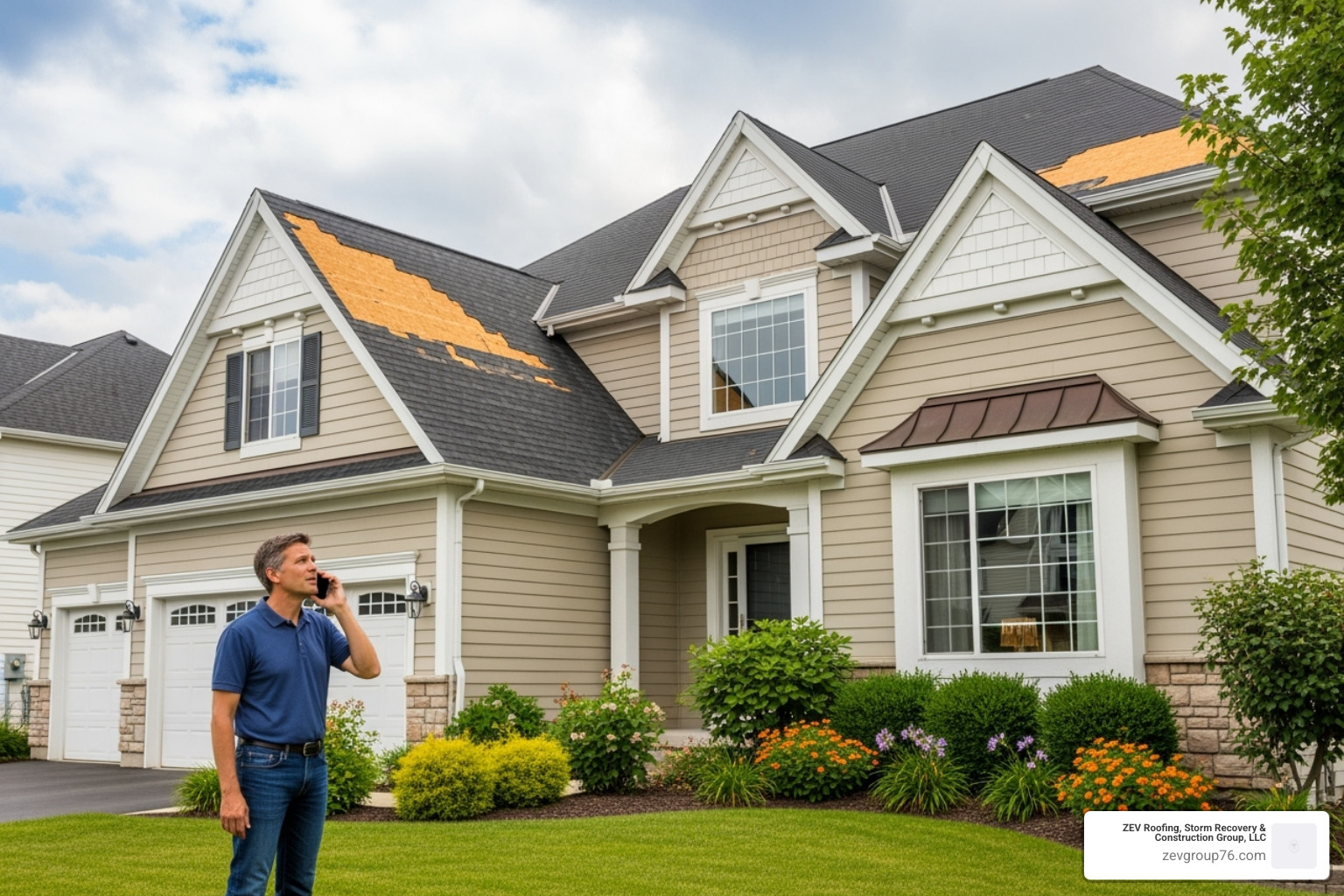
The process unfolds in three phases: assessing and documenting damage, filing and working with the adjuster, and reviewing the settlement and completing repairs.
Step 1: Initial Damage Assessment and Documentation
After a storm, resist the urge to climb on your roof for safety reasons. A damaged roof can be unstable.
Start with a ground-level inspection. Walk your property and look for missing shingles, dented gutters, or granules in your yard. Take photos and videos of everything, including wide shots and close-ups of damage. Also, document any interior water stains or leaks. Be sure to note the exact date of loss (when the storm occurred).
Next, get a professional roof inspection. An experienced roofer can spot subtle damage like hail bruising or wind-lifted shingles that are invisible from the ground. This professional report is powerful evidence for your claim.
Step 2: Filing the Claim and Preparing for the Adjuster
With your evidence gathered, it’s time to file your roof insurance claim Texas. Contact your insurance company promptly, as most policies require swift notification. Have your policy number and the date of loss ready.
Your insurer will assign an adjuster to inspect the property and determine the covered damage. Prepare for the adjuster’s visit by organizing your photos, videos, and professional inspection report.
A key tip is to have your contractor present during the adjuster’s inspection. This ensures a thorough assessment, as a roofing professional can point out damage that an adjuster might overlook. At ZEV Roofing & Construction, we know what to look for and can ensure nothing is missed.
When dealing with the adjuster, be polite and cooperative. Provide your documentation and walk them through the damage. If you don’t know an answer, say so. Ask questions to understand their findings and the next steps.
Step 3: Reviewing the Settlement and Getting Your Roof Repaired
After the inspection, you’ll receive a settlement offer and a scope of work, which details what the insurer will pay to repair. Review it carefully to ensure it matches your contractor’s findings.
If you have RCV coverage, you’ll get an initial payment based on Actual Cash Value (minus your deductible). The remaining amount, or recoverable depreciation, is held back until repairs are finished.
Choosing the right contractor is crucial. You need a specialist in storm damage who understands the insurance process. At ZEV Roofing & Construction, we guide homeowners through this process, working with insurers to ensure fair settlements.
Once we complete your repairs, we submit the final invoices to your insurer. This triggers the release of the recoverable depreciation, typically within a week. For more on this, see our guide on roof repair.
Navigating Texas Laws and Contractor Regulations
When filing a roof insurance claim Texas homeowners are protected by strict state laws. These regulations shield you from common contractor scams that appear after major storms.

After a hailstorm, you’ll see contractors offering deals that sound too good to be true—because they usually are. Understanding Texas law helps you spot red flags and choose a reputable contractor. The two biggest legal issues involve contractors offering to waive your deductible or acting as a public adjuster, both of which are illegal.
Why Contractors Can’t Waive Your Deductible
If a contractor offers a “free roof” or says they’ll cover your deductible, they are breaking the law and putting you at risk.
Texas law on deductibles explicitly prohibits contractors from waiving, rebating, or absorbing your deductible. Violating this law is considered insurance fraud.
The scam works when a contractor inflates their bill to your insurer to cover both the repair costs and your deductible. This overcharging is fraud. The penalties for contractors include fines up to $2,000 and jail time, and homeowners could also face consequences for being complicit.
By law, any contract over $1,000 involving an insurance settlement must include required contract language stating that you are responsible for paying your deductible. If this notice is missing, it’s a major red flag.
At ZEV Roofing & Construction, we follow Texas law strictly and will never offer to waive your deductible. We believe in transparent practices that protect you from legal issues.
Contractors Acting as Public Adjusters
In Texas, there is a clear legal line between a roofing contractor and a public adjuster.
The prohibitions under Texas Insurance Code Section 4102.163 state that a contractor performing repairs cannot also act as the public adjuster on the same claim. This means they cannot advertise that they will “handle your claim” or negotiate your settlement.
This law exists to prevent a conflict of interest. A public adjuster’s sole job is to negotiate the best settlement for you. A contractor’s job is to perform repairs. Mixing these roles can compromise both.
What contractors can and cannot do is clear. We can inspect your roof, provide detailed estimates, explain the necessary work, and meet with your adjuster to discuss the damage. We cannot, however, negotiate your settlement amount or formally represent you in claim discussions.
Protecting yourself means being wary of any contractor who promises to “handle everything.” If you need help negotiating your claim, you should hire a licensed public adjuster separately. We at ZEV Roofing & Construction stay in our lane as your roofing experts, protecting you legally while ensuring you get quality repairs.
What to Do If Your Roof Claim is Denied or Underpaid
Receiving a denial or a low settlement for your roof insurance claim Texas is frustrating. However, a denial is not the final word, and Texas law provides you with tools to fight back.
Common reasons for denial include claims of normal wear and tear, pre-existing conditions, or improper maintenance. Sometimes, adjusters simply miss damage or underestimate repair costs. Other times, claims are denied for late filing or specific policy exclusions.
Insurance companies are businesses, and paying out less on claims increases their profits. This doesn’t mean they are always wrong, but it does mean you should not automatically accept their first decision as final.
How to Dispute a Denied Roof Insurance Claim in Texas
When your roof insurance claim Texas is denied or underpaid, you have the right to challenge the decision. A systematic approach is key.
First, review your policy to understand your coverage, exclusions, and rights. Next, talk to your insurance agent to clarify the company’s reasoning and see if additional information could change the outcome.
Gathering stronger evidence is often a game-changer. A detailed inspection from an experienced storm damage contractor like ZEV Roofing & Construction can reveal issues the adjuster missed. Weather reports from the National Weather Service can also help by documenting the storm’s severity.
Submit a formal written appeal to your insurer. Clearly explain why you disagree with their decision, reference your policy, and include all supporting evidence. Keep copies of everything.
If your insurer offers mediation, consider it. A neutral third party helps you and the insurer reach a settlement, which is often faster and cheaper than court.
Finally, if these steps fail, file a complaint with the Texas Department of Insurance (TDI). The TDI can investigate your complaint and compel your insurer to comply with state laws.
Taking Legal Action for a Wrongful Denial
If your insurer refuses to pay a legitimate claim, you have the right to take them to court.
Time is critical. Under the Texas Civil Practice & Remedies Code, you generally have two years from the date of damage to file a lawsuit. Missing this deadline means you lose your right to sue.
Consider hiring an attorney for complex denials or if you suspect bad faith practices, such as unreasonable delays or misrepresentation of your policy. An attorney can level the playing field and knows how to negotiate with insurers.
If you win in court, you may recover money for repairs, legal fees, and potentially additional damages. Texas courts do not look kindly on insurers that wrongfully deny valid claims.
Frequently Asked Questions about Texas Roof Claims
Homeowners often feel overwhelmed by the roof insurance claim Texas process. Asking the right questions is a smart way to protect your investment. Here are answers to the most common concerns.
What documentation is crucial when filing a roof insurance claim in Texas?
Thorough documentation is critical for a successful roof insurance claim Texas. It can be the difference between a smooth approval and a denial. Be sure to gather:
- Photos and videos: Capture all damage from multiple angles, including interior leaks.
- Date of loss: Note the exact date the storm occurred.
- Professional inspection report: An expert assessment from a contractor like ZEV Roofing carries significant weight.
- Copy of your insurance policy: To understand your coverage and deductibles.
- Receipts for prior maintenance: This helps counter claims of neglect.
- Written contractor estimates: Multiple detailed bids help establish fair market pricing.
- All insurer correspondence: Keep logs of calls, emails, and letters.
How do I choose a reputable roofing contractor for storm damage?
Choosing the right contractor is vital for your roof insurance claim Texas experience. After a storm, be wary of “storm chasers.” Look for these qualities in a contractor:
- Local Experience: A contractor with deep local roots, like our team serving West Texas and Eastern New Mexico, has a reputation to protect and will be here long-term.
- Licensing and Insurance: Always verify that their license and insurance are current.
- Positive Online Reviews: Check Google and the Better Business Bureau. See how the company responds to any complaints.
- Detailed Written Estimates: Get multiple bids that detail materials, labor, and costs. Avoid contractors who pressure you to sign immediately.
- Insurance Process Knowledge: Your contractor should be able to meet with adjusters and handle the necessary paperwork. The principles in Why Hiring a Qualified Roofer is Essential apply perfectly here.
What are the time limits for filing a roof damage claim or lawsuit in Texas?
Time is of the essence with insurance claims. Don’t delay once you find roof damage.
For filing a claim, most policies require you to notify your insurer “promptly.” Waiting too long can jeopardize your claim, as the insurer may argue the delay worsened the damage or prevented a proper assessment.
If your claim is denied, you generally have two years from the date the damage occurred to file a lawsuit against your insurance company, according to Texas Civil Practice & Remedies Code Section 16.003. This is a strict deadline.
The bottom line: Act quickly to protect your rights and ensure a successful roof insurance claim Texas.
Your Partner in Texas Storm Recovery
Navigating a roof insurance claim Texas can be complex, but it’s manageable with the right knowledge and partner. Your home is your biggest investment, and you deserve fair treatment when disaster strikes.
Let’s recap the key takeaways. Understanding your policy (RCV vs. ACV and deductibles) is your foundation. Thorough documentation is your best evidence. And knowing that Texas law protects you from illegal practices gives you power.
Choosing the right contractor is the final, crucial piece. You need an expert who understands Texas weather, speaks the language of insurance adjusters, and has your back throughout the process.
At ZEV Roofing & Construction, we have been guiding homeowners through storm recovery for years. We serve residential and commercial properties across Texas and New Mexico, with deep roots in communities like Lubbock, Shallowater, Plainview, New Deal, Wolfforth, and Slaton. When West Texas weather hits, we are the local professionals you can count on.
What sets us apart is our customer-focused approach. We treat your claim as if it were for our own family’s home. We will be there with the adjuster to ensure all storm damage is documented and fairly assessed.
While proactive maintenance is the best defense, storms are a reality in Texas. Having a trusted professional who understands both roofing and insurance claims turns an overwhelming situation into a manageable one. We translate the jargon, guide you through the paperwork, and ensure your roof is restored to protect your family.
Don’t let storm damage and insurance headaches steal your peace of mind. Our experienced team is ready to help.
Ready to get started? Get help with your Storm Damage Repair today, and let’s work together to restore not just your roof, but your confidence that your home is protected.