
Why Your Roof Drainage System Deserves Your Attention
Roof drainage solutions are essential systems that protect your building from water damage by efficiently channeling rainwater away from your roof, walls, and foundation. Here’s what you need to know:
Main Types of Roof Drainage Solutions:
- Gutters and Downspouts – Best for sloped residential roofs
- Internal Roof Drains – Ideal for flat commercial roofs
- Scuppers – Overflow protection for low-slope roofs
- Siphonic Systems – High-capacity drainage for large buildings
Key Components:
- Drip edges and flashing
- Gutter channels (4″, 5″, or 6″ sizes)
- Downspouts (spaced every 20-50 feet)
- Catch basins or underground drainage
A few inches of rain falling on your roof can produce several thousand gallons of water runoff. Without proper drainage, this water saturates the soil around your building, seeps through your foundation, and creates moisture problems inside—leading to mold, rot, and expensive structural repairs.
The consequences of inadequate drainage are serious: foundation cracks, basement flooding, roof collapse from water weight, and accelerated wear on your roofing materials. In areas with expansive soils, water accumulation can put extreme pressure on your foundation. In cold climates, ice dams form when water can’t drain properly.
Your drainage system has one critical job: get water off your roof and away from your building as quickly as possible. The right solution depends on your roof type, climate, and building size.
I’m Eli Hita, and with over 15 years of experience in commercial construction and roofing, I’ve seen how proper roof drainage solutions protect buildings from West Texas’s severe weather. At ZEV Roofing, we specialize in designing and installing drainage systems that withstand harsh conditions and prevent costly water damage.
Related content about Roof drainage solutions:
Why Proper Roof Drainage is Non-Negotiable
The roof over your head does more than just keep the sun off; it’s your first line of defense against the elements. But even the sturdiest roof needs a reliable partner to handle the onslaught of rain, especially during the intense storms we see in Texas and New Mexico. That partner is a well-designed roof drainage system. Its primary functions are simple yet critical: divert water, protect your structure, and preserve your foundation. Ignoring this vital system is like inviting trouble to your doorstep, or rather, your foundation.
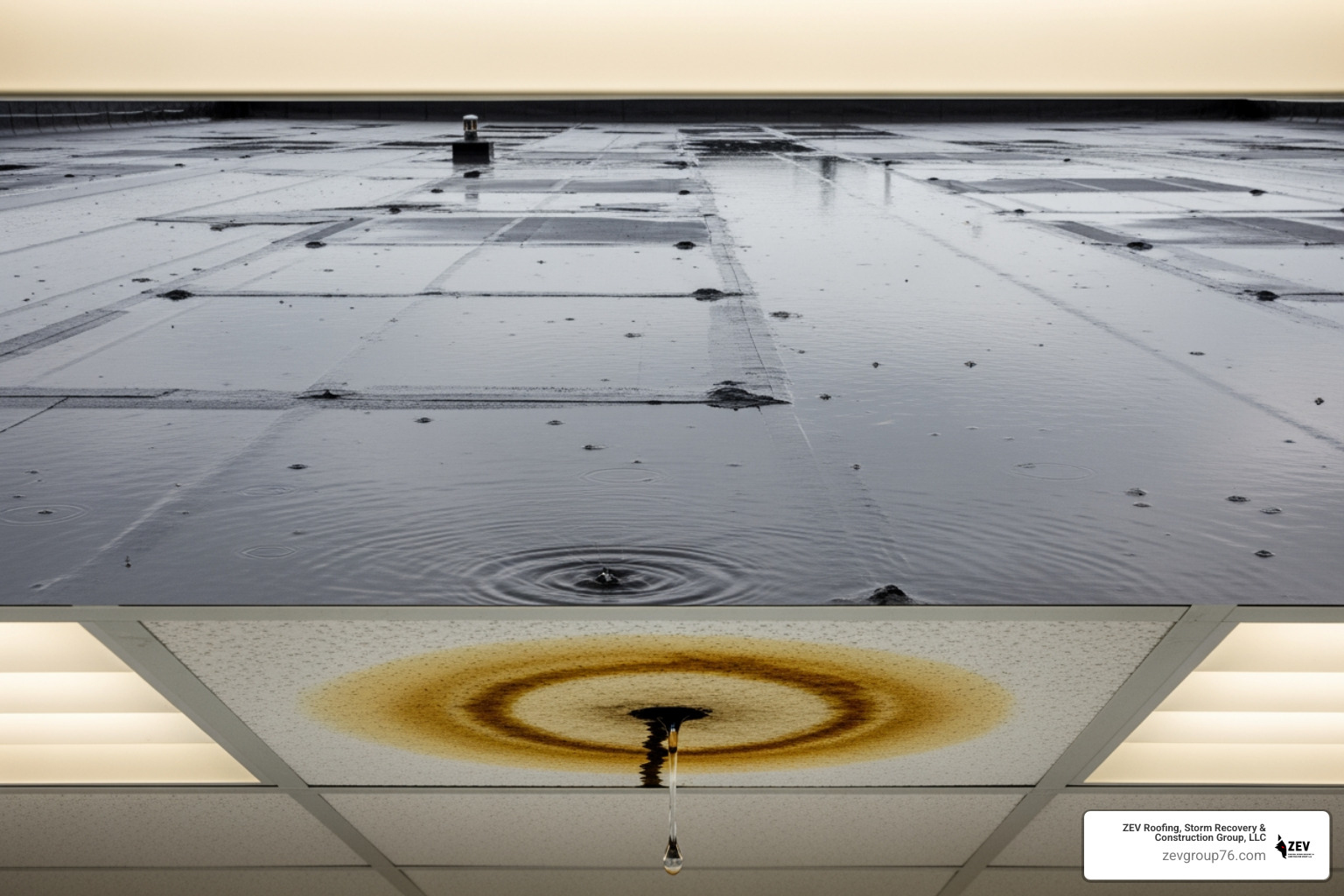
When water isn’t efficiently channeled away, it leads to a cascade of problems. Leaks can develop, turning your cozy living room into a drip-drop symphony. This moisture can quickly lead to mold growth, creating unhealthy indoor air quality, and rot, compromising the integrity of your building materials. In severe cases, especially on flat roofs, accumulated water can create an excess load that risks structural collapse. We’ve seen how crucial effective roof drainage solutions are to maintaining a safe, healthy, and long-lasting property.
The Dangers of Inadequate Drainage
Let’s get real about what happens when your roof drainage system isn’t up to snuff. Picture this: a heavy downpour, and instead of gracefully flowing away, water starts to puddle on your roof – we call this ponding water. For low-slope roofs, this is a particular concern, as ponding water can lead to accelerated wear, structural damage, and leaks. It’s like leaving a bathtub full on your roof; eventually, something’s going to give.
Beyond the roof itself, inadequate drainage sends water cascading down your building, saturating the soil around your foundation. In West Texas and New Mexico, where expansive soils are common, this is a recipe for disaster. Expansive soils swell dramatically when wet, exerting immense pressure on your foundation, which can lead to cracks and costly structural damage. Conversely, if soils dry out unevenly, they can shrink, causing foundations to settle and crack. This constant shifting is a homeowner’s nightmare.
Moreover, uncontrolled runoff can cause significant soil erosion around your property, washing away landscaping and even undermining sidewalks and driveways. While ice dams might seem like a distant problem for our warmer climate, specific areas in New Mexico can experience freezing temperatures. If gutters are not properly sloped or maintained, any water that collects and freezes can expand, causing damage to the gutters themselves and potentially forcing water back under shingles, leading to leaks. The bottom line is, an ineffective drainage system means more than just puddles; it means potential damage to your entire property. To learn more about preventing these issues, check out our guide on Water Leaks.
The Primary Functions of a Drainage System
So, what exactly does a top-notch roof drainage system do for us? Its role is multifaceted, all centered around safeguarding your building.
- Protecting the Building Envelope: The primary function is to prevent water from entering your building. This means directing rainwater away from walls, windows, and doors, maintaining the integrity of your exterior.
- Preventing Water Infiltration: By efficiently moving water off the roof, drainage systems prevent it from seeping into the roof assembly, where it can cause rot, mold, and compromise insulation.
- Managing Runoff Volume: During intense storms, roofs can shed thousands of gallons of water. A proper system is designed to handle this immense volume, ensuring it doesn’t overwhelm the roof or surrounding ground.
- Preserving Landscaping: By directing water to designated areas, drainage systems prevent soil erosion, protect gardens, and maintain the aesthetic appeal of your property. No one wants a muddy moat around their home!
- Ensuring Building Longevity: Effective roof drainage solutions extend the lifespan of your roof, foundation, and the entire structure by mitigating the destructive effects of water. It’s an investment in the long-term health of your property.
Key Types of Roof Drainage Solutions for Every Building
Just as every building has its unique charm, it also has unique drainage needs. What works for a steep-sloped residential roof in Lubbock, TX, might not be suitable for a sprawling commercial flat roof in Albuquerque, NM. Understanding the distinctions between these systems is crucial for effective water management.
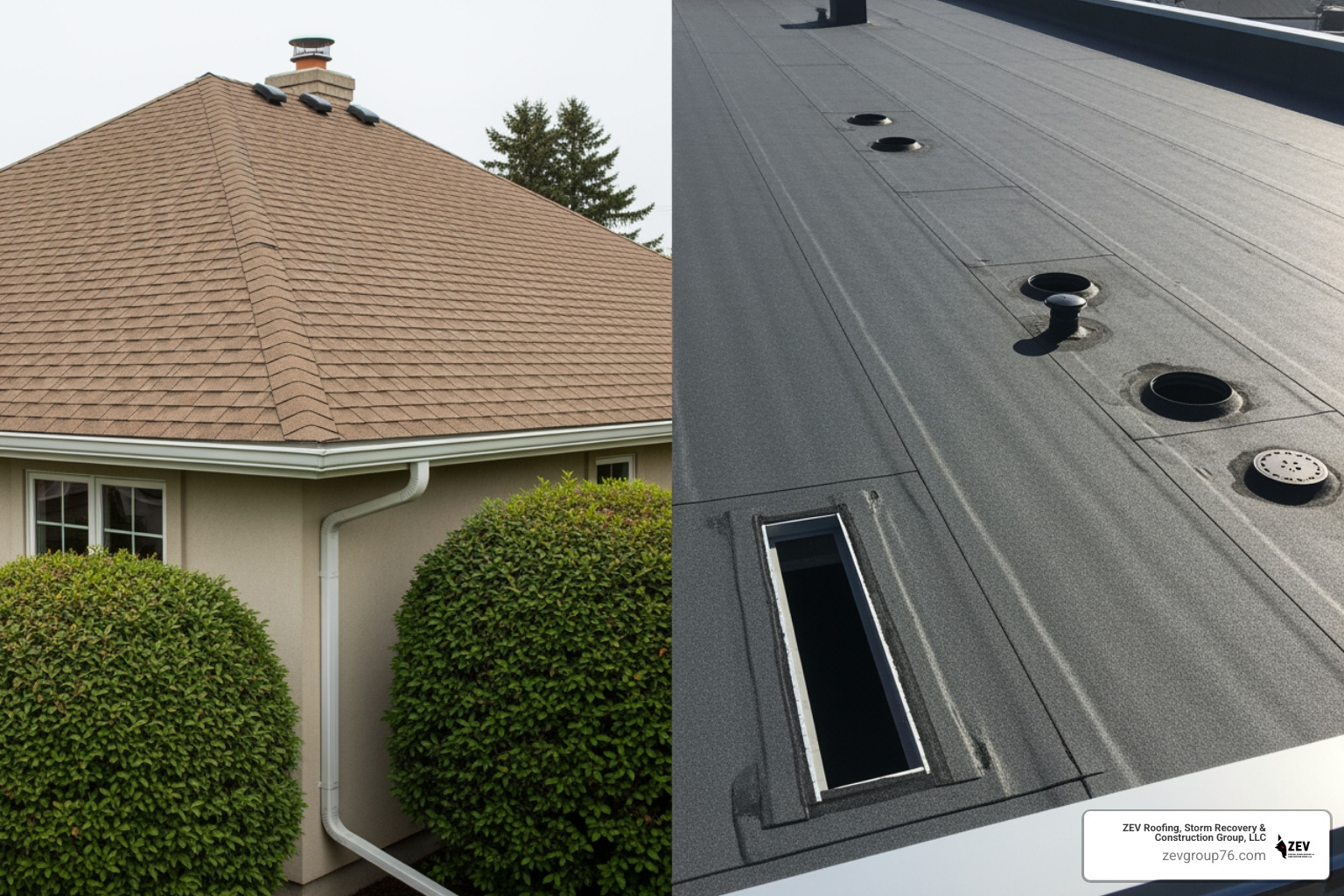
At ZEV Roofing, we know that the right roof drainage solutions depend on factors like roof slope, material, climate, and building type. Whether it’s a home in Shallowater, TX, or a business in Plainview, TX, we tailor our approach.
Essential Residential Roof Drainage Solutions
For most homes, especially those with sloped roofs, gravity is your best friend. Residential sloped roofs are designed to shed water quickly and efficiently.
Here’s how it works:
- Roof Slope and Gravity: The steeper the roof, the faster water flows off. This natural incline leverages gravity to move water downwards, preventing accumulation.
- Overlapping Shingles and Surface Tension: The materials used, like asphalt shingles common in residential roofing, are laid in an overlapping pattern. This creates a barrier that prevents water from infiltrating. Surface tension also plays a role, helping to guide water across the shingle surfaces and down the roof.
- Eaves: These are the edges of your roof that extend beyond the walls. They protect the exterior walls from water running directly down them, preventing staining and deterioration.
- Flashing: Think of flashing as the waterproofing hero for vulnerable areas. It’s thin material, usually metal, installed around chimneys, vents, skylights, and in valleys where different roof planes meet. Flashing creates a watertight seal, directing water away from these penetration points.
- Drip Edges: Installed along the outer edges of the roof, drip edges guide water into the gutters and away from the fascia board. This prevents water from running back under the shingles and damaging the roof decking or exterior trim.
- Gutters: These channels collect the water shed from the roof.
- Downspouts: Connected to the gutters, downspouts funnel the collected water from the roof to the ground level, directing it away from the foundation.
Together, these components form a robust system for residential water management. For more insights into these crucial components, explore our guide on Gutters and Downspouts and learn about professional Gutter Installation.
Advanced Commercial & Low-Slope Roof Drainage Solutions
Commercial buildings, especially those with flat or low-slope roofs common in urban areas like Lubbock or Albuquerque, face unique drainage challenges. Because these roofs lack a steep incline, water doesn’t naturally run off as quickly. This makes intentional design for roof drainage solutions even more critical to prevent ponding water, which can lead to structural damage and leaks.
Here are the key players for low-slope roofing systems:
- Scuppers: These are openings in the parapet walls (the low walls extending above the roofline) that allow water to drain off the roof. Scuppers typically direct water into external downspouts or decorative collector boxes. They’re particularly useful as secondary drains or overflow channels, ensuring water can escape if primary drains become blocked. In areas that experience freezing, scuppers can be a good backup as they are less prone to freezing solid compared to internal drains.
- Internal Roof Drains: Often installed at the lowest points of a low-slope roof, these drains collect water and channel it into a network of internal pipes that run through the building and direct water away from the foundation. They are highly effective for large commercial roofs.
- Overflow Drains: These are essential safety features, typically installed slightly higher than primary roof drains. Their function is to activate and remove water if the primary drainage system fails or becomes overwhelmed during extreme rainfall. This prevents excessive water accumulation and protects the roof’s structural integrity.
- Gravity vs. Siphonic Systems:
- Gravity Drainage Systems: These are the more traditional approach. Water flows into the roof drains and down the pipes purely by the force of gravity. They are effective for smaller roof areas or where lower flow rates are acceptable. In these systems, pipes typically need to be larger in diameter and have a continuous slope to ensure adequate flow.
- Siphonic Drainage Systems: This is where things get really efficient. Siphonic systems are designed to create a full-bore flow, drawing water into the drainage pipes at high velocity using negative pressure (a siphonic action). Imagine sucking water through a straw – that’s the principle. This allows for smaller pipe diameters, fewer downspouts, and faster drainage speeds, sometimes up to 100 times faster than gravity systems. Siphonic systems are particularly recommended for large roof areas, such as those found on warehouses, factories, or large retail centers in West Texas and New Mexico, where rapid water removal is paramount. They can be incredibly efficient; for instance, some siphonic outlets can handle up to 20 liters per second, surpassing standard siphonic systems by a significant margin.
Choosing between gravity and siphonic systems depends on the roof size, rainfall intensity, and budget.
A Closer Look at Drainage System Components and Materials
Beyond the major system types, the individual components and the materials they’re made from play a huge role in the effectiveness and longevity of your roof drainage solutions. From the edge of your roof to where the water finally disperses, every piece matters.
Gutters and Downspouts: The First Line of Defense
For most residential properties in Lubbock, New Deal, or Wolfforth, TX, gutters and downspouts are the unsung heroes of water management.
- Gutter Sizing: Gutters aren’t one-size-fits-all. They typically come in 4-, 5-, and 6-inch sizes. The right size depends on your roof’s area and the typical rainfall intensity in your region. Too small, and they’ll overflow during a heavy Texas storm; too large, and they might look out of place.
- K-Style vs. Half-Round: These are the two most common gutter profiles. K-style gutters, with their decorative front, are popular for their aesthetic appeal and ability to hold more water. Half-round gutters, as the name suggests, are semicircular and often chosen for their classic look. For a detailed guide on one popular type, see our Complete K-Style Gutter Installation Guide.
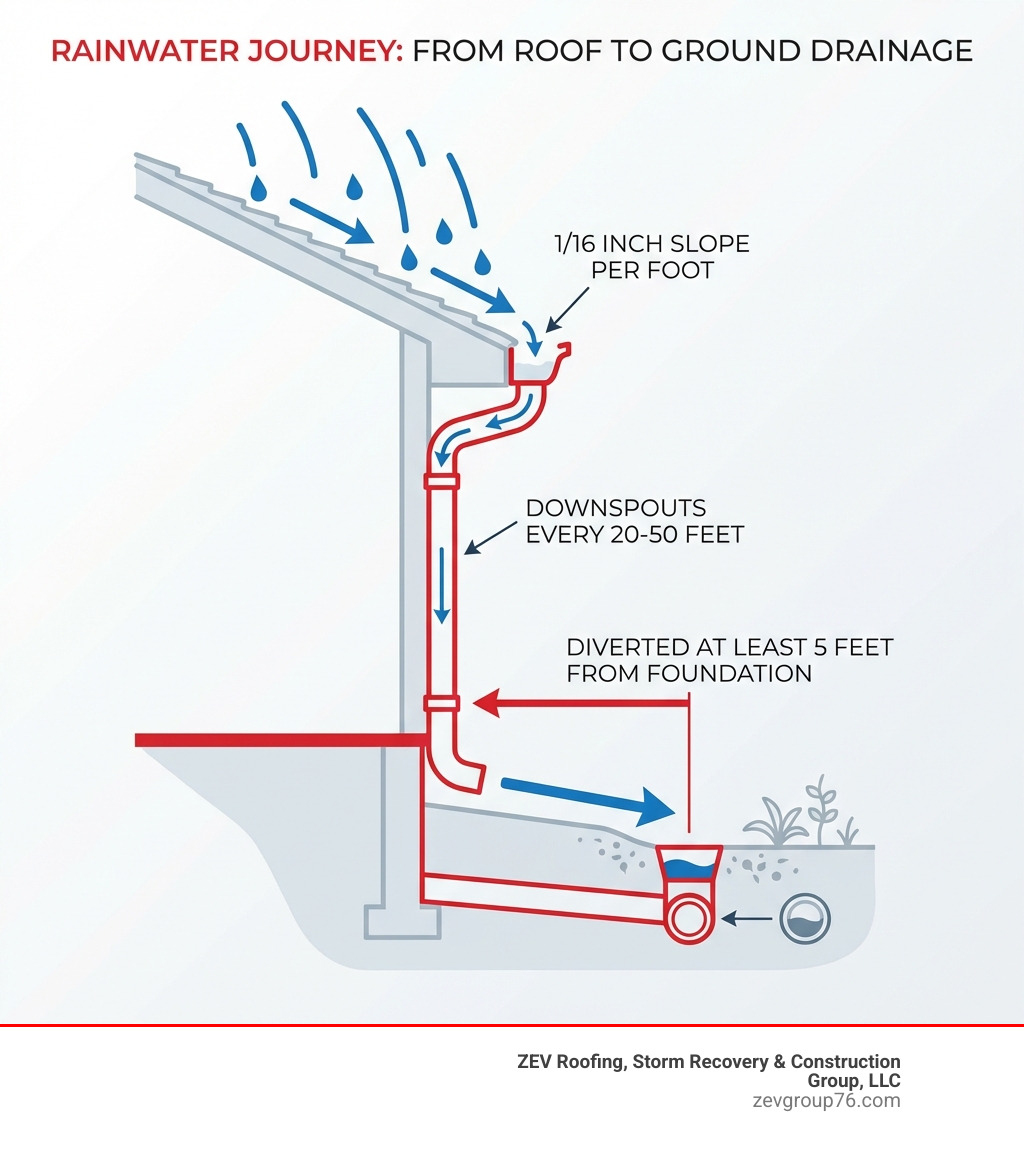
- Proper Slope: Gutters must be installed with a slight slope towards the downspouts to ensure water drains effectively. A minimum slope of 1/16 inch per foot of run is generally recommended for positive drainage. This prevents water from sitting in the gutters, which can lead to debris buildup and mosquito breeding grounds.
- Downspout Spacing: To ensure optimal water conduction, downspouts should be installed every 20 to 50 feet along the gutter. Proper spacing ensures that even during heavy downpours, water is efficiently moved away.
- Termination: Where downspouts end is just as important as where they begin. They should terminate at least 5 feet away from your foundation to prevent water from soaking the soil around your home. Ideally, they connect to an underground catchment system that directs water at least 10 feet away from the foundation, or to a storm sewer. Lateral piping for downspouts should be pitched away from the foundation at a minimum 5/8-inch per foot (a 5% slope).
For durable and aesthetically pleasing options, many homeowners choose Seamless Aluminum Gutters due to their custom fit and reduced leak points.
Siphonic vs. Gravity Systems for Flat Roofs
When we talk about flat or low-slope roofs, the choice between siphonic and gravity systems for roof drainage solutions becomes a critical design decision. Both aim to remove water, but they do so with different mechanics and efficiency levels.
How Siphonic Systems Work:
Unlike gravity systems where water flows freely down sloping pipes, siphonic systems use a specialized roof drain design that prevents air from entering the pipe network once a certain water depth is reached. This creates a full-bore flow within the pipes, generating negative pressure (the “siphonic” action). This suction literally pulls water off the roof at a very high velocity.
Key characteristics and benefits of Siphonic Systems:
- Negative Pressure: The system uses the difference in pressure between the roof level and the discharge point to create a powerful siphonic effect.
- High Flow Rates: This negative pressure allows for significantly higher flow rates compared to gravity systems. Some siphonic systems can achieve drainage speeds up to 100 times faster than traditional gravity-based systems, handling up to 20 l/s from a single outlet.
- Fewer Drains Needed: Because of their high capacity, siphonic systems require fewer roof drains and smaller diameter pipes, leading to simpler pipe layouts and potentially lower material and installation costs. One siphonic gully can effectively drain at least 150 m² of roof area.
- When to Choose Siphonic: Siphonic systems are highly recommended for large roof areas, such as those on commercial or industrial buildings in our service areas. They are particularly effective when rapid water removal is essential to prevent ponding and structural overloading, especially in regions prone to heavy rainfall.
- Long Service Life: Many siphonic systems are designed for a service life of at least 50 years, matching the expected lifetime of the building.
Here’s a quick list of the benefits of siphonic systems:
- Increased Drainage Speed: Up to 100 times faster than gravity systems.
- Reduced Pipe Size: Smaller diameter pipes are needed.
- Fewer Roof Penetrations: Less drains means less potential leak points.
- Faster Installation: Often involves pre-assembled components, increasing installation speed by 15-20%.
- Self-Cleaning: High velocity flow helps flush debris, reducing maintenance.
- Cost-Effective for Large Projects: Reduced materials and labor can lead to overall savings.
Installation, Maintenance, and Professional Design
Even the most advanced roof drainage solutions are only as good as their installation and ongoing care. From the initial setup to routine check-ups, best practices ensure your system functions optimally, protecting your investment for decades.
When we install a roof drainage system, we consider several factors:
- Climate: In areas like West Texas, we face intense, short-duration storms. This means systems must be designed for high-capacity runoff. In parts of New Mexico that see colder winters, we factor in potential freezing and ice, ensuring systems are robust enough or consider alternatives to traditional gutters where ice dams could be an issue.
- Building Type: Residential homes typically benefit from gutter and downspout systems, while large commercial buildings with flat roofs demand internal drains, scuppers, or advanced siphonic systems.
- Local Codes: We always ensure compliance with local building codes and regulations, which dictate everything from pipe sizing to termination points.
Maintenance Requirements for Longevity
Think of your roof drainage system as your home’s circulatory system; if it gets clogged, problems arise. Regular maintenance is key to preventing costly issues and ensuring the longevity of your roof drainage solutions.
- Inspection Frequency: We recommend inspecting your drainage system at least twice a year, typically in the spring and fall. After any major storm, it’s also wise to do a quick check for debris or damage.
- Clearing Debris: The most common culprit for drainage issues is debris – leaves, twigs, dirt, and even bird nests. Regularly clear gutters, downspouts, and roof drains to prevent blockages. This is especially important if your property is surrounded by trees. If left unchecked, clogged gutters can lead to water overflowing and damaging your fascia, siding, and foundation.
- Checking for Leaks and Damage: Look for signs of leaks, rust, or loose fasteners. Downspouts should be securely attached and direct water away from the foundation. Any damage should be addressed promptly to prevent it from escalating.
- Professional Maintenance Plans: For peace of mind, especially for complex commercial systems, consider a professional maintenance plan. Our team at ZEV Roofing can provide comprehensive inspections and cleaning, identifying potential issues before they become major problems. For tips on managing common issues, read our guide on Gutter System Maintenance.
Why Professional Design and Calculation Matters
Designing an effective roof drainage system is more than just slapping on some gutters. It requires expertise, precision, and a deep understanding of hydrological principles.
- Calculating Runoff: Professionals use historical rainfall data for your specific location (like Lubbock or Albuquerque) to calculate the maximum volume of water your roof will shed during a peak storm. This informs the entire system design.
- Sizing Drains and Pipes: Based on runoff calculations, we determine the appropriate size and number of gutters, downspouts, and internal drains needed. Undersized components will fail; oversized components might be an unnecessary expense.
- Complying with Local Codes: Building codes often have strict requirements for drainage systems, including minimum slopes, pipe materials, and discharge locations. Professional designers ensure your system meets all local regulations.
- Optimizing System Performance: From ensuring proper pitch to selecting the right materials and flow rates (especially for siphonic systems), professional design optimizes the entire system for maximum efficiency and longevity. This often involves detailed hydraulic calculations to ensure peak performance.
Don’t leave your property’s protection to chance. Consulting with experienced professionals like us at ZEV Roofing ensures your roof drainage solutions are custom to your specific needs, providing robust protection against the elements. For an idea of the process, consult our Gutter Installation Quotes Complete Guide.
Frequently Asked Questions about Roof Drainage
We get a lot of questions about how to best protect properties from water damage. Here are some of the most common ones we hear:
What is the best drainage system for a roof?
The “best” roof drainage solutions aren’t universal; they depend entirely on your roof type, building size, and local climate.
- For Sloped Residential Roofs: Gutters and downspouts are generally the most effective and common choice. They efficiently collect water from the eaves and direct it away from the foundation.
- For Flat or Low-Slope Commercial Roofs: Internal roof drains, scuppers, and advanced siphonic systems are typically employed. Siphonic systems are often preferred for large commercial buildings due to their high efficiency and ability to handle large volumes of water quickly.
- Key Considerations: When comparing roof drains and gutters for water management, consider the volume of water expected, the aesthetic impact, maintenance requirements, and the specific structural characteristics of your building. A professional assessment is always recommended to select the optimal system.
What are the consequences of inadequate roof drainage?
The consequences of inadequate roof drainage solutions can be severe and costly, impacting nearly every part of your property:
- Severe Water Damage: Leaks can develop, leading to damaged ceilings, walls, and insulation.
- Foundation Cracks and Movement: Uncontrolled water saturating the soil around your foundation can cause it to crack, shift, or settle, especially with expansive soils common in Texas.
- Basement or Crawl Space Flooding: Water seeping through the foundation can lead to chronic dampness or outright flooding, creating expensive clean-up and repair needs.
- Mold and Mildew Growth: Persistent moisture creates an ideal environment for mold and mildew, posing health risks and requiring extensive remediation.
- Roof Collapse from Water Weight: On flat roofs, ponding water can accumulate to dangerous levels, exceeding the roof’s structural capacity and leading to collapse.
- Accelerated Roof Wear: Constant exposure to standing water or uncontrolled runoff can prematurely degrade roofing materials, shortening your roof’s lifespan.
- Soil Erosion and Landscaping Damage: Water rushing off the roof without proper direction can erode soil, damage plants, and create unsightly trenches around your property.
How often should I clean my gutters?
For homes and businesses in Texas and New Mexico, we recommend cleaning your gutters at least twice a year. The ideal times are typically in the late fall after most leaves have fallen and again in the spring to clear out any winter debris and prepare for spring rains.
However, if your property is surrounded by numerous trees, especially deciduous ones, you might need to clean them more frequently. After any major storm or high wind event, it’s also a good practice to check your gutters and downspouts for blockages or damage. Clogged gutters are a primary cause of water overflow and can lead to significant water damage to your roof, fascia, siding, and foundation. Don’t let a simple blockage turn into a major headache! For solutions to common issues, see our guide on Clogged Gutter Solutions.
Secure Your Property with the Right Drainage System
We’ve covered a lot of ground today, from the fundamental functions of roof drainage solutions to the advanced mechanics of siphonic systems and the critical importance of maintenance. The key takeaway is clear: a well-designed and properly maintained roof drainage system is indispensable for protecting your property from the relentless forces of nature.
Whether you own a home in New Deal, TX, or manage a large commercial facility in Eastern New Mexico, a custom solution custom to your specific roof type, climate, and building characteristics is paramount. Proactive maintenance isn’t just a recommendation; it’s a necessity that ensures the longevity and effectiveness of your drainage system, safeguarding your investment for years to come.
At ZEV Roofing, we bring our expertise in residential and commercial roofing, storm recovery, and general construction to every project. We understand the unique challenges posed by the weather patterns in Texas and New Mexico, and we’re committed to providing durable, customer-focused roof drainage solutions. For a comprehensive strategy to protect your home from water damage, explore our guide on leak prevention.