
Why Your Roof is Your Home’s Most Critical Investment
Roofing for homes is more than just the structure on top of your house—it’s your first line of defense against weather, a major factor in your home’s value, and one of the biggest investments you’ll make as a property owner. When severe weather strikes, understanding your roofing options and knowing when repairs or replacement are needed can save you thousands of dollars and protect your family.
For a broader overview of how roofing systems protect your home, you can also review the basics of roof construction alongside this guide.
Quick Answer: Essential Home Roofing Facts
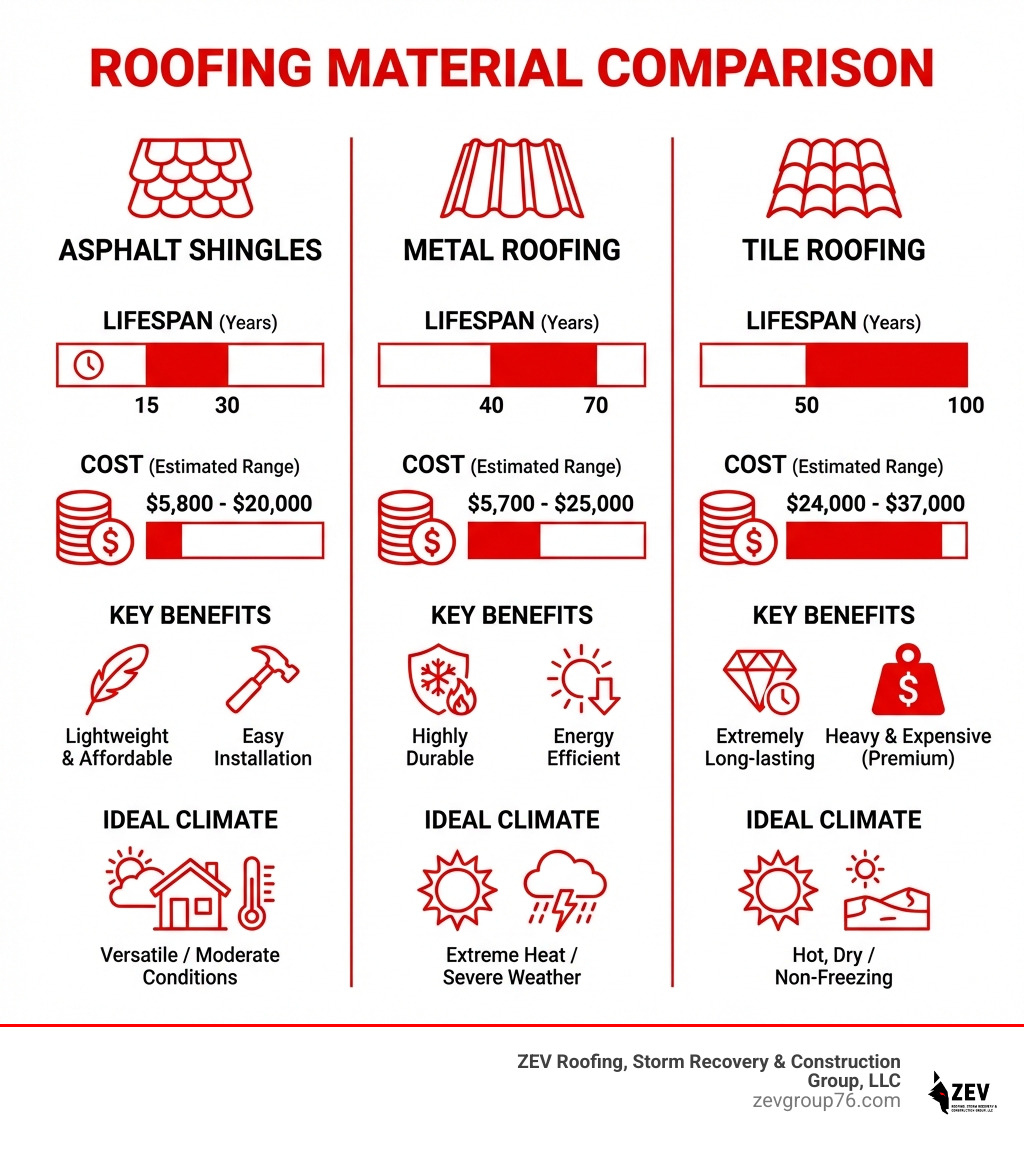
- Most Common Material: Asphalt shingles (affordable, 15-30 year lifespan, $5,800-$20,000 average cost)
- Most Durable: Metal roofing (40-70 years), Slate (100+ years), Tile (50-100 years)
- Average Replacement Cost: $9,515 nationwide (typical range: $5,867-$13,212)
- Key Factors to Consider: Climate, budget, roof shape, material weight, energy efficiency
- When to Replace: Missing shingles, granules in gutters, water stains, sagging, or age over 20 years
Your roof does more than keep rain out. It protects your home’s structural integrity, impacts your energy bills (cool roofs can reduce cooling costs by 15%), and significantly affects your property’s curb appeal and resale value. Different materials—from budget-friendly asphalt shingles to long-lasting metal and slate—offer distinct advantages depending on your climate, budget, and home style.
The right roofing choice depends on several factors: your local weather conditions (hail, wind, heat), your budget for both installation and long-term maintenance, the weight your roof structure can support, and how long you plan to stay in your home.
I’m Eli Hita, Managing Partner of ZEV Roofing, Storm Recovery & Construction Group, and I’ve spent over 15 years working with roofing systems in West Texas’s challenging climate. My experience with roofing for homes in storm-prone regions has taught me that the right material and proper installation make all the difference in protecting your property and your peace of mind. Let’s walk through everything you need to know to make the best roofing decision for your home.
Basic Roofing for homes glossary:
Understanding Your Roof: Components and Materials
When we talk about roofing for homes, it’s easy to think only about the shingles or tiles you see from the street. But a roof is a complex system, a lot more than just its visible outer layer! It’s a carefully engineered assembly of components working together to keep your home safe and dry, especially crucial in areas like West Texas and Eastern New Mexico where we face diverse and sometimes harsh weather.
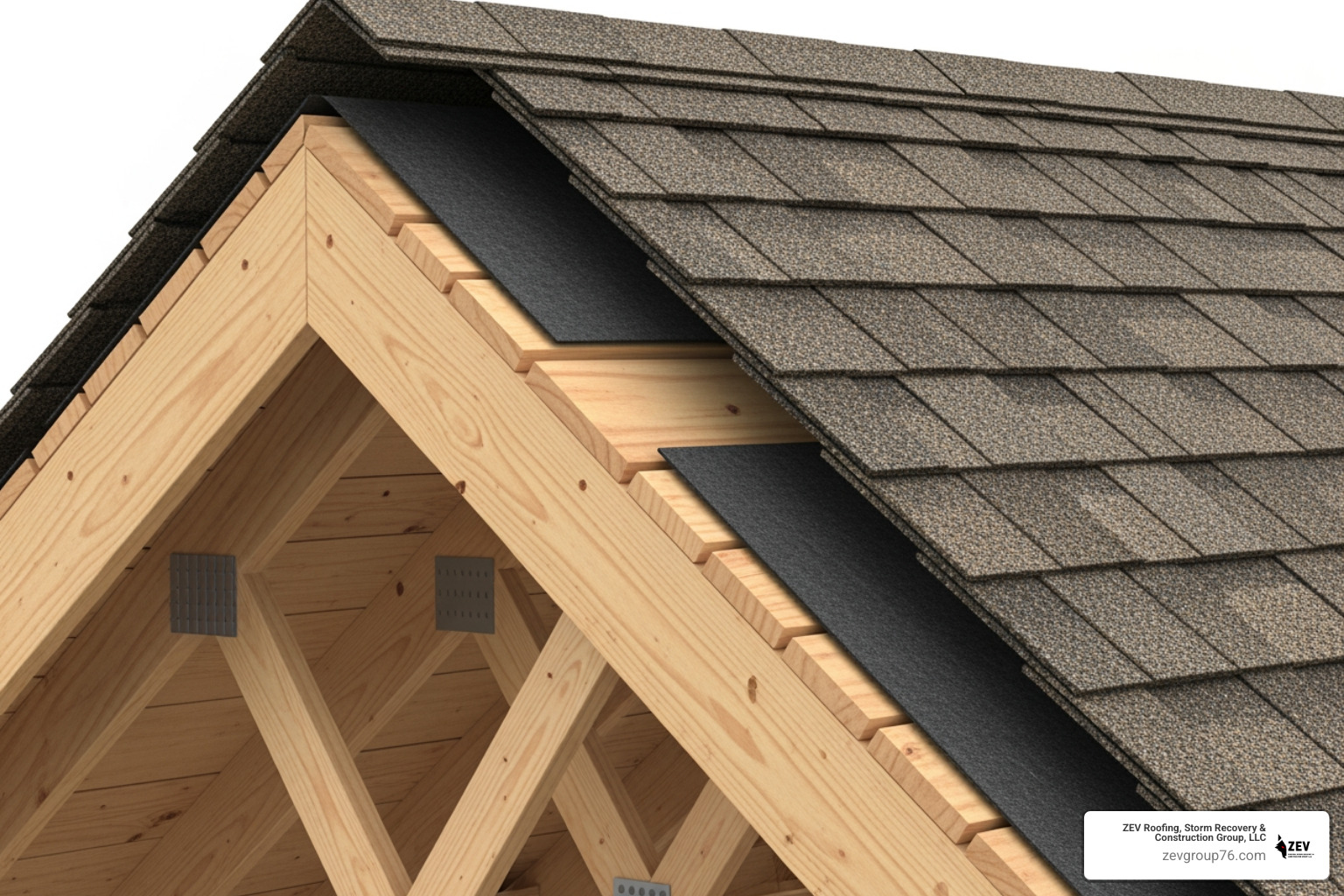
Key Components of a Complete Roofing System
Think of your roof as a sturdy shield, built layer by layer. Each component has a vital role in protecting your home:
- Roof Decking: This is the foundation of your roof system, typically made from plywood or OSB (Oriented Strand Board). It’s directly attached to your home’s rafters or trusses and provides the structural base for everything else. If you need more info about roof decking repair, we’ve got you covered.
- Underlayment: Applied directly over the roof decking, this water-resistant barrier acts as a secondary defense against moisture. Traditionally, it was asphalt-impregnated felt, often called tarpaper, but synthetic underlayments (woven polyethylene) are becoming popular for their superior protection, especially in high-end jobs.
- Ice and Water Shield: This self-adhering membrane is a specialized form of underlayment installed at vulnerable areas, like eaves, valleys, and around penetrations. It’s designed to prevent water penetration from ice dams or wind-driven rain, extending at least 3 feet beyond the inside of the wall. Given the potential for freezing weather in our region, this is a critical component for many homes.
- Flashing: These are thin pieces of metal (zinc, copper, lead, or aluminum) installed at critical junctures where the roof meets walls, chimneys, skylights, or vents. Flashing diverts water away from these vulnerable areas, preventing leaks. Proper flashing installation is paramount for a watertight roof.
- Shingles or Surface Material: This is the outermost layer, the part everyone sees. It’s your primary weather barrier and contributes significantly to your home’s aesthetic. We’ll dive into the different types shortly!
- Vents: Proper attic ventilation is essential for a healthy roof and energy-efficient home. Ridge vents, soffit vents, and other types of static or active vents (like attic fans) allow hot, moist air to escape the attic, preventing heat buildup in summer and moisture condensation in winter. This is particularly important for managing the intense heat we experience in West Texas.
- Ridge Cap: These are specially designed shingles or material that cover the ridge (the peak) of your roof and often the ridge vent, providing a finished look and crucial protection to this exposed area.
Common Types of Roofing Materials
Choosing the right material for your home’s roof is a big decision, influenced by budget, climate, and desired aesthetics. Here in West Texas and Eastern New Mexico, we often recommend materials known for their durability and resistance to harsh weather. Let’s explore the most common options:
Asphalt Shingles: Still the most common type of residential roofing for homes in the U.S., asphalt shingles are a popular choice due to their affordability and ease of installation.
- Architectural vs. 3-Tab:
- Three-tab shingles are the most basic and economical. They are uniform, flat, and typically last 15-20 years.
- Architectural shingles (also called dimensional or laminate shingles) are thicker, more durable, and offer a more dimensional, textured look, often mimicking the appearance of natural slate or wood shakes. They generally last 30 years or longer, with some boasting 50-year or “lifetime” warranties. Fiberglass shingles (20-30 years) and composite shingles (30-50 years), which combine materials like asphalt and fiberglass, fall into this category and offer increased durability.
- Pros: Affordable (costing $1.50-$5 per square foot), easy to install, wide range of colors and styles, good fire resistance (most fiberglass shingles are Class A rated).
- Cons: Shorter lifespan compared to other materials, can be vulnerable to extreme weather like high winds and hail, which we certainly see in our service areas.
Metal Roofing: Gaining significant popularity, metal roofing is an excellent choice for durability and energy efficiency. We’ve seen metal roofs grow in demand due to their resistance to leaks, wind uplift, and durability against the elements—perfect for our storm-prone regions.
- Types:
- Steel: The most common and affordable type of metal roofing, often available in corrugated or stone-coated styles. Stone-coated steel offers a blend of strength and style, mimicking tiles or shingles.
- Aluminum: Lightweight, corrosion-resistant (great for areas with salt air, though less of a concern inland), and highly reflective, making it an energy-efficient option.
- Copper: Extremely durable and can last centuries with proper maintenance. It develops a beautiful patina over time, offering a unique aesthetic, but comes with a higher price tag.
- Standing-seam metal roofing is a premium option, often lasting 40 to 70 years, with no exposed fasteners for superior leak protection.
- Pros: Exceptional longevity (40-70 years), highly resistant to fire, rot, pests, and severe weather, energy-efficient (reflects solar heat), often made from recyclable materials.
- Cons: Higher upfront cost ($7-$15 per square foot), can be louder during rain or hail without proper insulation.
Tile Roofing: Clay and concrete tiles offer a distinct aesthetic, especially popular in the Southwest and Florida for Mission and Spanish-style homes.
- Clay Tiles: Offer a timeless elegance and excellent longevity, typically lasting 50-100 years. They are fire-resistant and durable.
- Concrete Tiles: Similar to clay but less expensive, with a lifespan of 30-50 years. They offer versatility in color and shape.
- Pros: Extremely durable, fire-resistant, long lifespan, aesthetically appealing.
- Cons: Very heavy, requiring professional inspection to ensure the roof structure can support the weight, higher initial cost.
Slate Roofing: Considered the “crown jewel” of roofing materials, slate is renowned for its natural beauty and incredible longevity.
- Pros: Exceptional lifespan (75-150 years or more), fire-resistant, weather-resilient (withstanding freezing, thawing, and heavy rainfall), adds significant aesthetic appeal and value.
- Cons: Very high initial cost ($10-$30 per square foot), extremely heavy (800-1,500 lbs per square), requiring substantial structural reinforcement, and specialized installation skills.
Wood Shakes and Shingles: These offer a natural, rustic appearance that complements many architectural styles. Cedar is a popular choice due to its natural resistance to decay and insects.
- Pros: Aesthetic appeal, natural insulation, environmentally friendly (renewable resource).
- Cons: Requires high maintenance (regular treatment against rot, mold, and insects), poses a fire risk (unless treated to achieve Class A ratings), and has a shorter lifespan (25-40 years) than metal or tile.
Synthetic & Composite Materials: These modern materials are engineered to mimic the look of natural slate, wood, or tile, but with improved durability and reduced maintenance. They are often made from engineered polymers or recycled materials.
- Pros: Mimic premium looks without the high cost or weight, durable (30-50 years lifespan), lightweight, versatile in design, often eco-friendly.
- Cons: Durability can vary by brand and quality, some synthetics are less recyclable at the end of their lifespan than metal.
Here’s a quick comparison of some popular options:
| Material Type | Lifespan (Years) | Average Cost (per sq ft) | Key Pros | | | | Asphalt Sh shingles | 15-30 | $1.50-$5 | Affordable, easy to install, wide range of styles/colors, Class A fire rating.