
Your Business’s Lifeline After Disaster
When disaster strikes your commercial property, an insurance restoration contractor is your lifeline. These specialists manage everything from emergency mitigation to full reconstruction, collaborating with your insurer to restore your property to its pre-loss condition.
Quick Answer for Insurance Restoration Contractor:
- What they do: Repair and restore commercial properties damaged by water, fire, storms, or other disasters
- Key services: Emergency response, damage assessment, insurance claim assistance, and complete reconstruction
- Why you need them: Professional expertise, specialized equipment, and direct insurance billing capabilities
- How they help: Work with insurance adjusters using industry-standard software like Xactimate to ensure proper claim handling
Property damage disrupts your entire business. Whether it’s from water, fire, or storms, the clock starts ticking immediately.
The restoration industry handles billions in claims annually, with water damage being a top commercial loss. Contractors face significant risks, making proper licensing and insurance (starting around $3,500 annually) essential for legitimate professionals.
“When disaster hits… it damages more than a structure. It disrupts your life,” notes one restoration professional. The same is true for your business—every day of closure means lost revenue and operational stress.
The first 24-48 hours after property damage are critical. Mold can grow quickly, and secondary damage often surpasses the initial loss without an immediate emergency response.
Understanding the Role of a Commercial Restoration Specialist
When your business suffers major damage, an insurance restoration contractor is the specialist you need. They combine construction expertise with insurance know-how, acting as your property’s emergency response and reconstruction team to get your business back on its feet.
What is Insurance Restoration Contracting?
Insurance restoration contracting is a specialized field focused on returning damaged commercial properties to their pre-loss condition. When disaster strikes, these contractors step in to manage the repair process from start to finish.
What makes an insurance restoration contractor different from a regular builder? Their expertise in navigating insurance claims. While our general contractor services handle new builds or renovations, restoration contractors are fluent in insurance policy language and documentation. They use industry-standard software and processes that adjusters recognize, ensuring your claim is handled correctly. Their goal is to rebuild your reality after a disaster, ensuring every detail meets building codes and your insurance policy requirements.
Common Types of Commercial Property Damage
A skilled insurance restoration contractor is prepared for any challenge. Water damage is a leading issue, from burst pipes to roof leaks that can cause major mold problems if not addressed quickly.
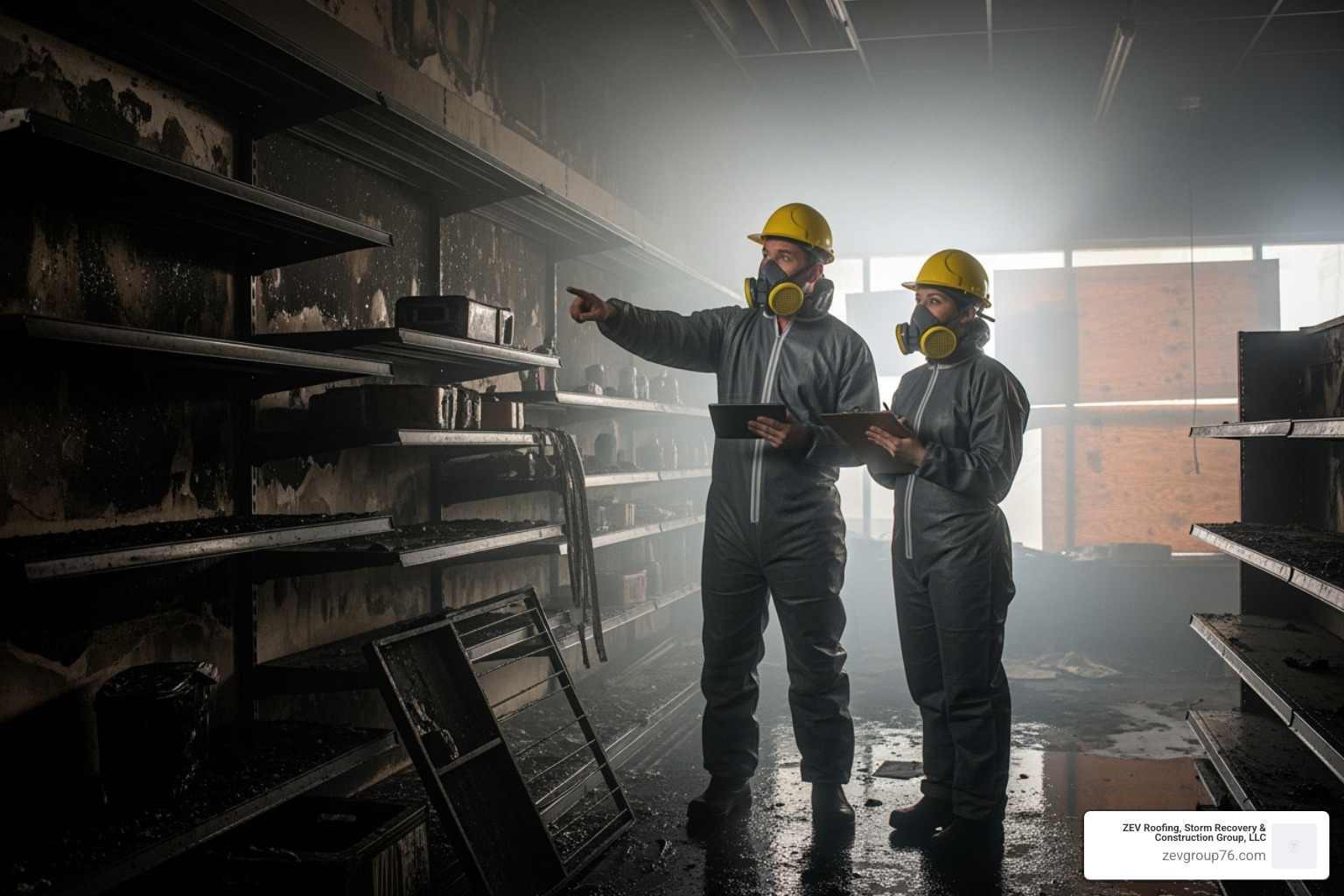
Fire and smoke damage presents unique challenges, as corrosive soot and stubborn odors can spread far beyond the burn area. Different types of fires require specific cleanup techniques.
Storm damage is common in Texas and New Mexico, where high winds and hail can compromise a building’s roof, windows, and structural integrity. Our Storm Damage Repair services help businesses recover from these events.
Mold remediation is often necessary after water damage. This silent destroyer can spread through HVAC systems, creating serious health concerns.
Other incidents like vandalism or vehicle impacts also require specialized expertise to handle the cleanup and repairs properly.
Key Services of an Insurance Restoration Contractor
An insurance restoration contractor provides a full suite of disaster recovery services. The process typically includes:
- Emergency board-up services to secure your property immediately and prevent further damage or theft.
- Water extraction and structural drying using industrial-grade equipment to remove water and prevent mold growth.
- Soot and odor removal for fire damage, which requires specialized cleaning techniques and professional-grade technology.
- Debris removal to clear the site and prepare the space for rebuilding.
- Full reconstruction, which covers everything from structural repairs and Exterior Siding to Interior Exterior Painting and Flooring Installation.
Throughout this process, your contractor acts as your advocate with the insurance company, ensuring a smooth and comprehensive restoration.
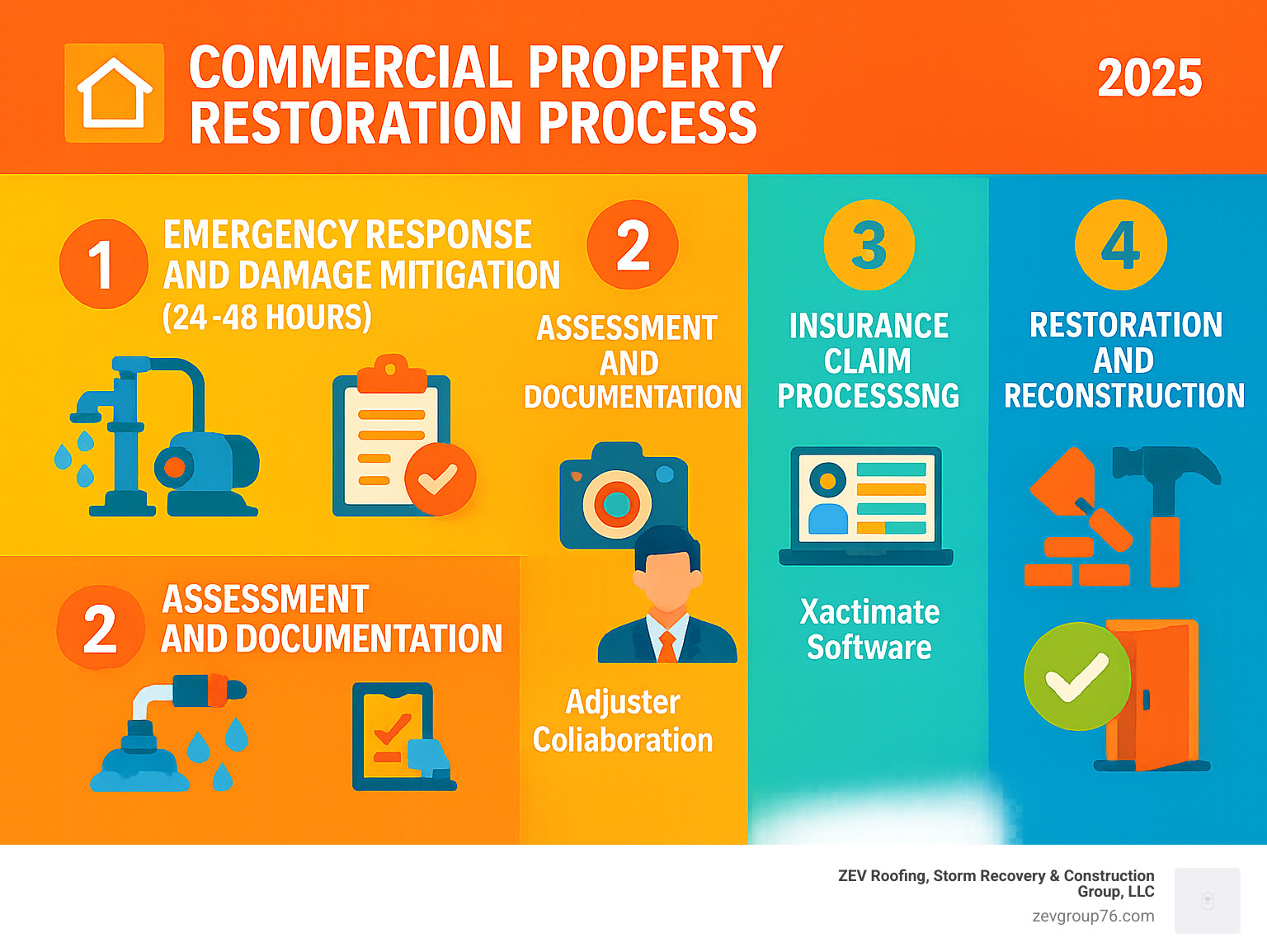
The Restoration Roadmap: Navigating the Process from Damage to Done
When disaster strikes, the path forward can seem chaotic. A professional insurance restoration contractor brings order to the chaos with a clear, manageable process.

Step 1: Emergency Contact and Damage Mitigation
Disasters don’t wait for business hours, which is why top insurance restoration contractors offer 24/7 emergency response. Your first call should be to a trusted restoration professional to stabilize the situation.
Our immediate focus is on a thorough safety assessment, preventing further damage, and securing your property. For water damage, water extraction begins immediately, as mold can grow within 24-48 hours. For storm damage, this may involve tarping roofs or boarding up windows. Quick action in this phase can be the difference between a minor repair and a major reconstruction project.
Step 2: Assessment, Documentation, and Claim Initiation
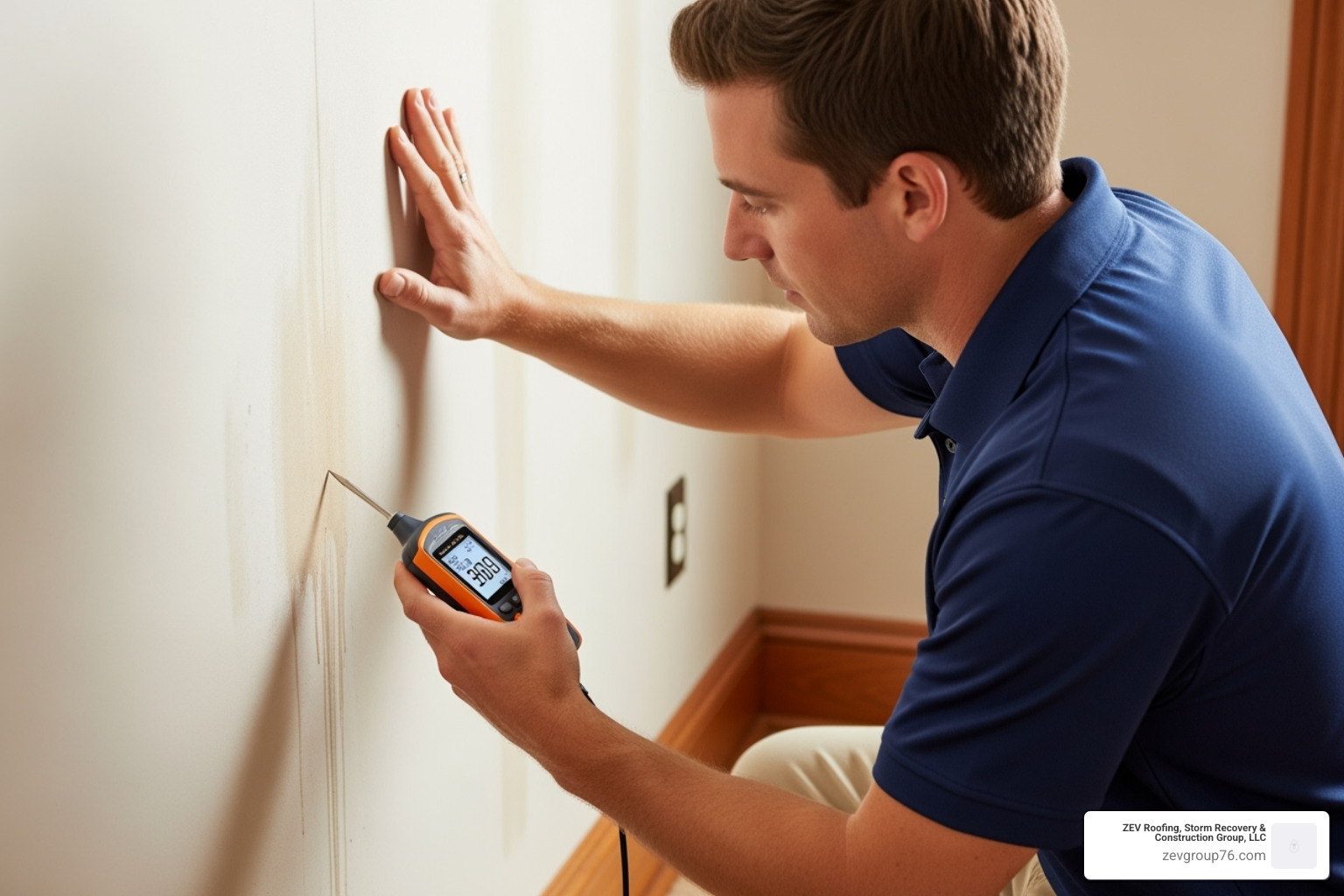
After mitigation, detailed assessment and documentation begin. This step is crucial for your insurance claim. We conduct a detailed inspection using tools like moisture meters to uncover hidden damage that might not be visible.
Photo and video evidence is carefully collected to document the initial damage and mitigation efforts. This visual record tells your property’s story to the insurance company. We also help you create an inventory of losses, cataloging damaged contents and structural elements to ensure nothing is overlooked.
While you should notify your insurance provider immediately, involving a restoration contractor early ensures the claim starts correctly. We speak their language and know what information they need.
Step 3: Working with Your Insurer and Adjuster
Navigating the insurance process can be confusing, but it’s our area of expertise. We work directly with your insurance company and their adjusters, creating a partnership focused on restoring your property.
Most insurers use Xactimate software for estimates, and so do we. This shared language eliminates confusion and speeds up the process. Our detailed, line-item estimates leave no room for guesswork. If initial assessments miss something, our advocacy role is crucial. We negotiate the scope of work to ensure a complete restoration, as our loyalty is to you, the property owner. We can also often handle direct billing with your insurer to reduce your out-of-pocket stress.
Step 4: The Restoration and Reconstruction Phase
The reconstruction phase turns plans into progress. It begins with demolition of damaged materials to make way for the rebuild. Structural repairs address any compromised elements, ensuring your building is solid.
Exterior work, like exterior siding or roof repair, makes the building weatherproof before we move inside. Interior finishing brings the space back to life with new drywall, paint, and flooring. We coordinate all trades to ensure a smooth workflow.
The final walkthrough is where we ensure your complete satisfaction. We don’t consider the job done until you are ready to get back to business.
Why Professional Restoration is Non-Negotiable
Tempted to DIY your commercial property restoration? It’s a risky approach that can lead to more significant problems. Professional restoration is about understanding invisible dangers and navigating the complex world of insurance claims.
Professional Expertise vs. DIY Risks
What you see is often just the tip of the iceberg. A professional insurance restoration contractor has the expertise and tools to address what lies beneath.
- Hidden Moisture: Professionals use thermal cameras and moisture meters to find moisture that DIY efforts miss, preventing future mold and structural issues.
- Health Hazards: Mold is a serious health hazard. Professionals are also trained to identify and handle materials like asbestos, which can be dangerous if disturbed during demolition.
- Specialized Equipment: Restoration requires industrial-grade equipment like high-volume air movers, dehumidifiers, and air scrubbers that are far more effective than household tools.
- Insurance Claim Denial: Insurers have strict requirements for restoration work. If DIY efforts worsen the damage or fail to meet industry standards, your claim could be denied.
These principles apply to all restoration work, including roofing. As noted in Why Hiring a Qualified Roofer is Essential for Your Full Roof Replacement in Tampa, FL, professional expertise is critical for properties in Texas and New Mexico as well.
Challenges and Risks in the Restoration Industry
Understanding the challenges of the restoration industry highlights why choosing the right contractor is so important.
- Hazardous Conditions: Restoration work often involves unstable structures and harmful contaminants. Legitimate contractors carry comprehensive insurance and follow strict safety protocols to manage these risks.
- Unlicensed “Storm Chasers”: Disasters attract predatory, unlicensed operators who perform substandard work or disappear with your money. Always vet your contractor thoroughly.
- Insurance Disputes: Disagreements over the scope of work or costs can arise. An experienced insurance restoration contractor advocates on your behalf to ensure a fair settlement.
- Project Delays: Hidden damage or material backorders can cause delays. A professional contractor communicates transparently and works to minimize disruptions.
- Pollution Liability: Improper cleanup of mold or hazardous materials can create environmental or health risks. Reputable contractors carry specialized pollution liability insurance for your protection.
How to Find and Choose a Reputable Insurance Restoration Contractor
When disaster hits, choosing the right insurance restoration contractor is critical for your recovery. The cheapest option is rarely the best when your business’s future is at stake.
| Key Qualification | Top-Tier Insurance Restoration Contractor | Questionable Contractor |
|---|---|---|
| Licensing | Fully licensed in TX & NM; provides license numbers readily. | Unlicensed, or licensed for a different trade (e.g., residential only). |
| Insurance | Comprehensive (CGL, Pollution, E&O, Workers’ Comp); provides certificates. | Minimal or no insurance; cannot provide proof of adequate coverage. |
| Certifications | IICRC Certified technicians; other industry-specific training. | No recognized industry certifications. |
| Experience | Decades of experience in commercial restoration; strong portfolio. | Limited experience; primarily residential or general construction. |
| Estimating | Uses Xactimate; provides detailed, transparent line-item estimates. | Handwritten, vague estimates; may demand large upfront payments. |
| Communication | Proactive, responsive, clear communication with you and insurer. | Poor communication; difficult to reach; evasive about process. |
| Reputation | Excellent BBB rating, strong local references, positive online reviews. | Poor or no BBB rating; negative reviews; no verifiable references. |
| Advocacy | Advocates for your best interests with the insurance company. | Prioritizes insurer’s interests or their own profit margin. |
Why You Need a Licensed and Insured Insurance Restoration Contractor
Hiring a licensed and insured insurance restoration contractor is non-negotiable. It’s your business’s safety net. Key coverages include:
- Commercial General Liability (CGL): Protects you from accidental property damage during restoration. Reputable contractors carry policies up to $10,000,000.
- Workers’ Compensation: Protects you from liability if a worker is injured on your property.
- Errors & Omissions (E&O): Covers professional mistakes, such as missing hidden mold. Coverage is often around $250,000.
- Pollution Liability: Crucial for handling hazardous materials like mold, this coverage can be up to $5,000,000.
- Bonding: For larger projects, a bond provides a financial guarantee that the work will be completed as promised.
Contractors who invest in comprehensive coverage (starting around $3,500 annually) are serious about protecting their clients.
Certifications and Qualifications to Look For
The best contractors invest in ongoing education and certifications.
- IICRC Certification: The Institute of Inspection Cleaning and Restoration Certification is the industry’s gold standard, ensuring technicians are trained in best practices.
- State Licensing: Verify your contractor holds the proper licenses for commercial work in Texas and New Mexico.
- Years of Experience: Decades of experience in commercial restoration means a contractor has refined their process and can handle complex situations.
- Local Reputation: A contractor with deep roots in communities like Lubbock, Texas, or Eastern New Mexico has a reputation to uphold. You can check a business’s rating with the BBB for an independent assessment.
A Checklist for Vetting Potential Contractors
Think of this as a job interview for your business’s recovery.
- Ask for local references and call them to inquire about communication, timelines, and problem-solving.
- Review their portfolio to see if they have experience with your type of property and damage. See examples of our work in the Our Work section.
- Verify insurance and licenses by requesting current certificates directly from their provider.
- Get a detailed written contract that outlines the scope of work, timeline, and payment schedule.
- Understand payment terms. Be wary of contractors demanding large upfront payments.
- Assess their communication style. Responsiveness and clarity during the vetting process are good indicators of how they’ll be during the project.
Frequently Asked Questions about Commercial Restoration
When your business faces property damage, you’ll have questions. The uncertainty can be overwhelming, so let’s tackle the most common concerns.
Can I choose my own restoration contractor?
Yes. While your insurer may have a “preferred vendor list,” you have the right to choose your own contractor. You are not obligated to use their recommendations. Choosing a contractor you trust is crucial for ensuring your interests are prioritized. Select a professional who answers your questions, explains the process, and makes you feel confident about the restoration.
How long does the commercial restoration process take?
Restoration timelines vary widely. A small water leak might be resolved in days, while a major fire could take months. Key factors that influence the timeline include:
- Type and severity of damage: This is the primary driver of the project’s length.
- Emergency mitigation speed: The faster we can begin, the shorter the overall restoration period.
- Insurance claim processing: We use industry-standard Xactimate software to speed up approvals, but adjuster and carrier timelines can vary.
- Permits and material availability: Major reconstructions may require local permits, and supply chain issues can cause delays, especially after widespread disasters.
A reputable insurance restoration contractor will provide a realistic timeline after a thorough assessment.
What factors influence the cost of insurance restoration services?
Understanding cost factors helps you make informed decisions. The primary drivers of restoration costs are:
- Type and severity of damage: Water, fire, and storm damage each require different techniques and equipment, affecting the price.
- Size of the affected area: More square footage means more labor, materials, and equipment.
- Material costs: The price of roofing, flooring, and other construction materials directly impacts the final bill.
- Labor rates: Rates in Texas and New Mexico reflect local market conditions and the specialized skills required for restoration.
- Specialized services: Needs like mold remediation or asbestos abatement require certified technicians and add to the cost.
- Emergency services: 24/7 response carries premium pricing but almost always saves money by preventing more extensive secondary damage.
We provide transparent estimates using Xactimate software, the same system your adjuster uses, to ensure clarity and prevent disputes over costs.
Conclusion: Rebuilding Your Business with the Right Partner
When disaster strikes your commercial property, the aftermath is overwhelming. But you don’t have to steer the recovery alone.
This guide has highlighted the essential role of an insurance restoration contractor. These specialists manage the entire process, from emergency response to full reconstruction, while working with your insurer to restore your property to its pre-loss condition.
The restoration roadmap is complex, involving proper documentation, expert negotiation with adjusters, and adherence to industry standards. Acting quickly makes all the difference, as mold can grow within 24-48 hours, and secondary damage often exceeds the initial loss without an immediate response.
Choosing the right partner—a licensed, insured, and certified insurance restoration contractor—protects your business from hidden dangers, claim denials, and costly mistakes. When you work with a reputable contractor like ZEV Roofing, Storm Recovery & Construction Group, you gain an advocate who understands the challenges commercial properties face in Texas and New Mexico.
Our commitment is to restore your peace of mind and get your business back to serving your community. Don’t let property damage define your future. The sooner you act, the better the outcome.
Get expert help with your commercial storm damage repair and let us help you turn this challenge into a comeback story.