
Why Professional Insurance Claim Assistance for Roofs Makes the Difference
Insurance claim assistance for roofs can save homeowners thousands of dollars and countless hours of frustration. When dealing with storm damage, most homeowners don’t realize that insurance adjusters work for the insurance company, not for them. This makes professional advocacy crucial for getting fair compensation.
Quick Guide to Roof Insurance Claim Assistance:
- Professional Documentation – Experts identify and document all damage, including hidden issues.
- Accurate Estimates – Detailed repair costs ensure you receive proper compensation.
- Adjuster Negotiations – Experienced contractors speak the insurance company’s language.
- Claim Maximization – Professional assistance helps you get what your policy actually covers.
- Stress Reduction – Let experts handle the complex paperwork and phone calls.
The cost of roof repair after a storm can range from $1,000 to over $10,000. Without proper assistance, many claims are denied due to inadequate documentation. While filing for minor damage might not be cost-effective if your deductible is high (claims can stay on your record for up to 7 years), professional assistance is essential for significant storm damage.
Insurance companies are businesses focused on minimizing payouts. Homeowners need an advocate who understands both roofing and insurance processes. A professional contractor can spot damage that untrained eyes miss, ensure repairs meet code, and negotiate with adjusters to secure a fair settlement.
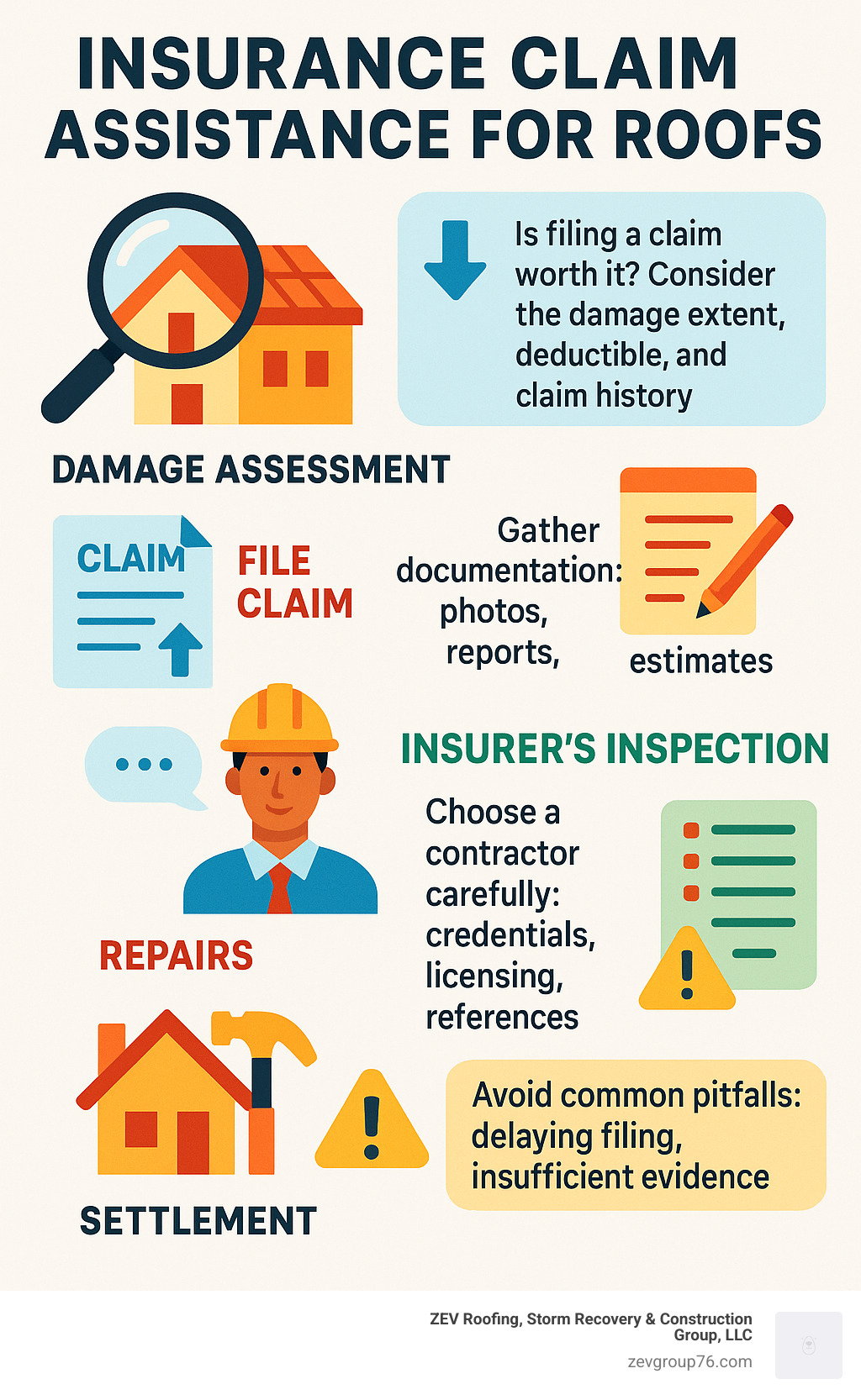
Is It Worth Filing? Assessing Your Roof Damage
After a storm in Texas or New Mexico, you might wonder if the damage to your roof is worth an insurance claim. The answer isn’t always simple.
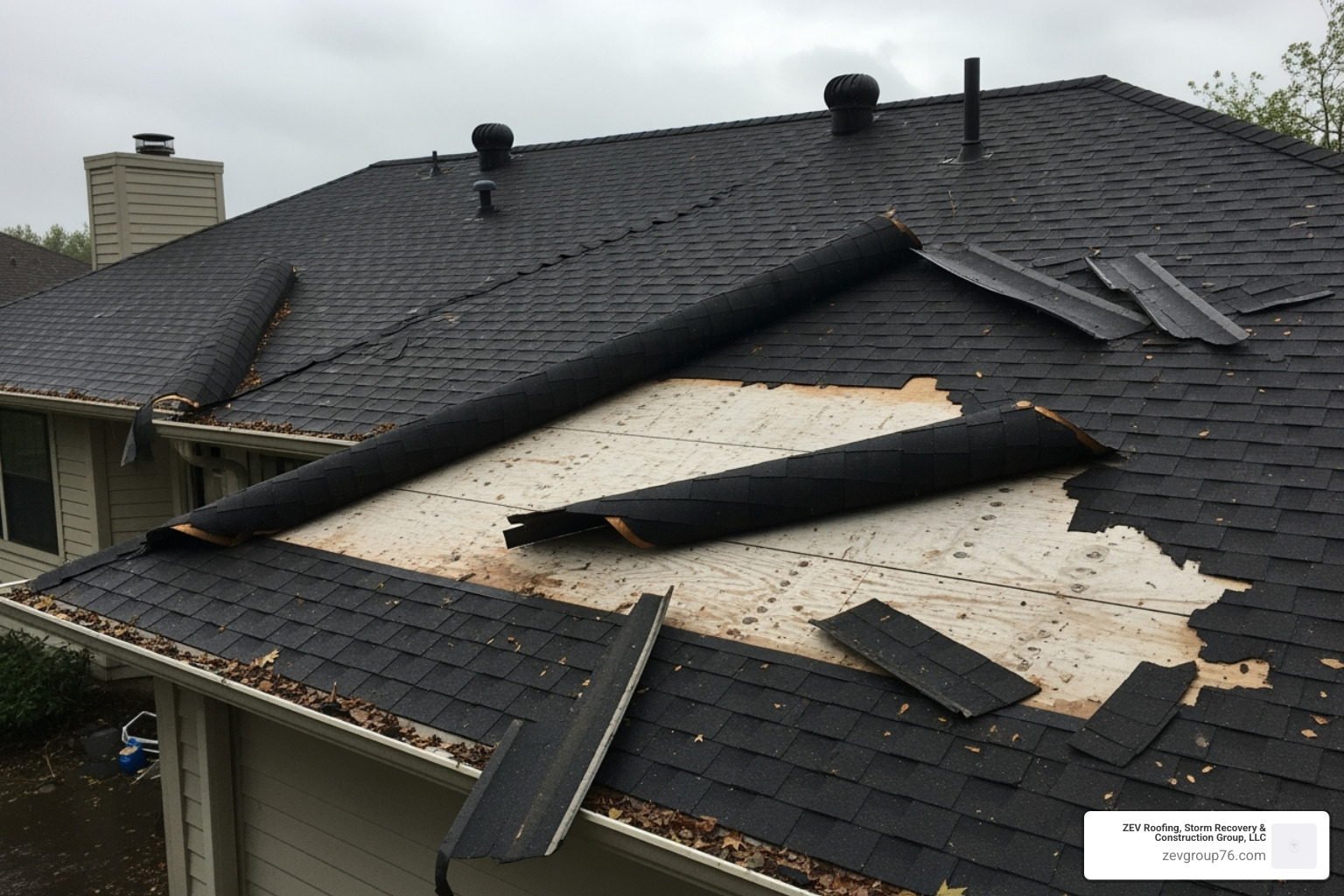
The first step is a thorough damage assessment. You might see obvious issues like missing shingles or hail dents, but some of the costliest damage is hidden. A small leak can lead to water damage, mold, or rotted decking over time. That’s why we recommend a professional roof inspection after any major weather event.
Your homeowner’s insurance policy typically covers “covered perils” like hail, wind, and falling debris—often called “Acts of God.” However, it’s crucial to weigh the repair costs against your deductible. If repairs cost $2,000 and your deductible is $1,500, filing a claim for a $500 payout might not be wise, as claims can stay on your record for up to seven years.
Knowing What Your Insurance Covers
Your policy is a promise to cover specific types of damage. Storm damage, including heavy rain, strong winds, and hail, is usually covered. Wind can lift or remove shingles, while falling debris from trees or power lines is also typically included.
However, policies have wear and tear exclusions. An old, deteriorating roof isn’t covered. But if a storm damages that same old roof, it may fall under your coverage. A policy review with an expert who understands both insurance and roofing can help you identify coverage you might have missed. For more details, see our guide on damaged shingles.
To File or Not to File: The Deductible Dilemma
Your deductible is the amount you pay before insurance kicks in and is the biggest factor in your decision. A high deductible means lower premiums but more out-of-pocket costs. A low deductible means higher premiums but less to pay when disaster strikes.
Your claim history also matters. While “Act of God” claims are less likely to raise your rates than liability claims, insurers track them. Multiple claims could affect future premiums or coverage options. If the repair cost is only slightly more than your deductible, paying out of pocket might be smarter. Insurance claim assistance for roofs is most valuable for significant damage that far exceeds your deductible, ensuring you get the full compensation you deserve.
The 5-Step Process for Filing Your Roof Insurance Claim
Filing a roof insurance claim after a storm can feel daunting, but it follows a predictable path. Knowing the steps makes the process much smoother. We’ve guided hundreds of homeowners through this, and our job is to ensure nothing falls through the cracks.

The process unfolds in five key stages: documenting damage, contacting your insurer, the adjuster’s inspection, reviewing the estimate, and receiving payment. The quality of your initial documentation and how quickly you act are critical to your claim’s success.
Step 1: Document Everything and Mitigate Damage
This first step is crucial. Use your phone to take extensive photos and videos of the damage from every possible angle. Get close-ups of missing shingles or dents, and wide shots for overall context. “Before” photos are incredibly valuable if you have them.
Narrate a video walkthrough, noting the date, time, and weather conditions. This context helps build a strong timeline. Most importantly, take steps to prevent further damage, like emergency tarping for leaks. This shows your insurer you’re being responsible. Save all receipts for temporary repairs. We can assist with these measures while your claim is processed. For more on protecting your home, see our guide on leak prevention.
Step 2: Contact Your Insurer and Start the Claim
Once you have evidence, contact your insurance company promptly. Most policies require “prompt notification.” Have your policy number ready to speed things up. You can file online, through a mobile app, or by calling your agent or the company’s claims department.
You’ll receive a unique claim number—keep it safe, as it’s your reference for all future communication. Be prepared to provide the date of the damage, the cause, and a brief description. Texas residents can find additional resources from the Texas Department of Insurance.
Step 3: The Adjuster’s Inspection
Your insurer will assign an adjuster to evaluate the damage. The adjuster works for the insurance company. This is where professional insurance claim assistance for roofs is invaluable. We strongly recommend having your contractor present during the inspection. We speak the adjuster’s language and can point out subtle hail or wind damage an untrained eye might miss. Our presence ensures all legitimate storm-related damage is documented, leading to more comprehensive assessments and fairer settlements.
Your Advocate: How a Contractor Provides Insurance Claim Assistance for Roofs
When your roof is damaged, you could try to steer the insurance maze alone, or you could have a professional guide. That’s where insurance claim assistance for roofs becomes your lifeline. We act as your advocate in what can be an uphill battle with your insurance company.
Insurance adjusters work for the insurance company, not you. Their goal is to settle claims efficiently for their employer, which can lead to overlooked or undervalued damage.
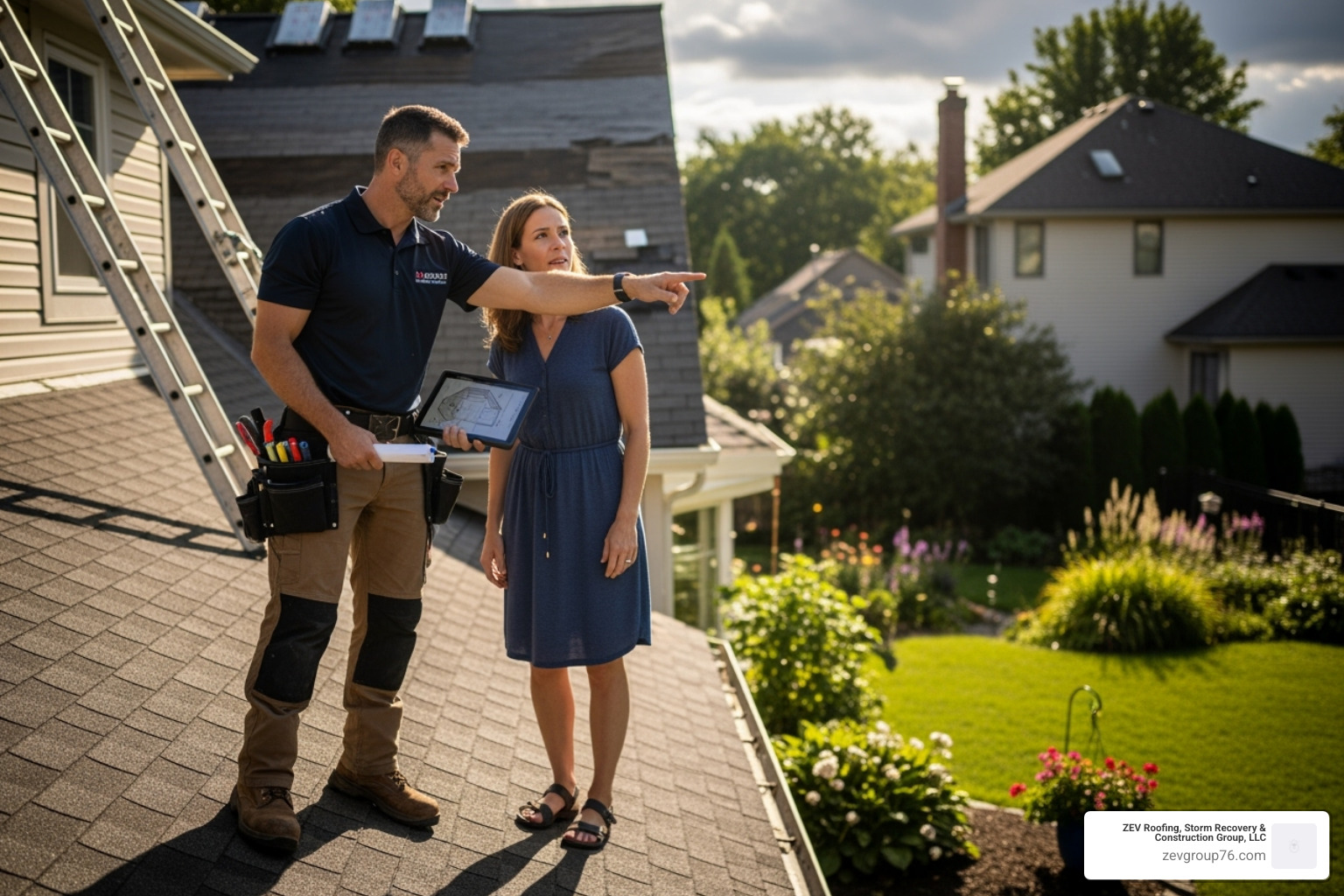
That’s where we step in. We conduct thorough inspections to find hidden damage, from subtle granule loss to compromised underlayment. We document everything carefully, knowing that inadequate documentation is a common reason for claim denial. Our role is to ensure you get exactly what your policy covers. For more on our approach, visit our More info about Storm Damage Repair page.
Choosing the Right Contractor for the Job
Not all roofing contractors are equipped for insurance work. Choosing the right partner is critical.
- Licensed and Insured: This is non-negotiable. We are fully licensed in Texas and New Mexico and carry liability and workers’ compensation insurance. Ask to see current certificates.
- Local Reputation: We have served our communities for years. Check our references and reviews. Avoid “storm chasers” who disappear after the work is done.
- Insurance Claim Experience: We understand how to document damage, communicate with adjusters, and ensure nothing is missed. This experience can save you thousands.
You have the right to choose your own contractor. Be wary of anyone offering to “waive your deductible,” as this is often considered insurance fraud. We operate with complete transparency and integrity.
Why You Need Professional Insurance Claim Assistance for Roofs
Professional assistance levels the playing field. Our expert damage identification catches details that can mean the difference between a partial repair and a full replacement. We provide accurate documentation and estimates to support your claim. When disputes arise, our negotiation and advocacy are crucial for challenging low estimates. The stress reduction is invaluable, as we handle the process so you can get your life back to normal. Our goal is quality restoration that protects your home for years. Learn more with our More info about our General Contractor services.
Navigating Payouts, Pitfalls, and Denials
Once your claim is filed, the waiting game begins. Understanding how your insurance company calculates your payout can save you from surprises. The Insurance Information Institute offers helpful insights into this process.
Insurance claim assistance for roofs becomes especially crucial during this phase. We’ve seen too many homeowners accept settlements that don’t fully cover repair costs because they didn’t understand their policy or know they could negotiate.
| Feature | Actual Cash Value (ACV) | Replacement Cost Value (RCV) |
|---|---|---|
| Definition | Cost to replace damaged property minus depreciation | Cost to replace with new materials without depreciation deduction |
| Depreciation | Deducted from replacement cost | Not deducted initially; recoverable upon completion |
| Payout Method | Single payment based on depreciated value | Two payments: initial ACV, then remaining depreciation |
| Common Use For | Older roofs, personal property | Newer roofs, building structures |
| What You Get | Less money upfront, reflects current value | More money overall, covers full replacement cost |
The difference between these two coverage types can mean thousands of dollars.
Understanding Your Settlement: ACV vs. RCV
Actual Cash Value (ACV) pays you what your roof is worth today, not what it costs to replace. If your 15-year-old roof with a 20-year lifespan is damaged, the insurer may consider it 75% depreciated and only pay 25% of the replacement cost.
Replacement Cost Value (RCV) is usually better. It covers the full cost to replace your roof with new materials. Typically, you get two payments: first, the ACV amount, and then the remaining “recoverable depreciation” after you complete the repairs and provide receipts.
Your deductible is subtracted from the total settlement in either case. If your mortgage company is listed on your policy, they may need to endorse the settlement check. We can help steer this process to ensure funds are released promptly.
What to Do If Your Claim is Denied or Underpaid
A denial letter isn’t always the final word. Read it to understand the reason, such as claims of wear and tear. Requesting a re-inspection is a good first step, where we can point out clear evidence of storm damage. We can also provide additional evidence, like weather reports, to support your claim.
If your settlement is too low, we help supplement your claim by documenting missed damage or incorrect cost estimates. You have the right to appeal the decision, and we have successfully helped homeowners overturn denials with compelling evidence. For immediate needs, visit our Roof Repair page to protect your home while the claim is processed.
Frequently Asked Questions about Roof Insurance Claims
Dealing with insurance claims can be stressful. Here are answers to the three most common questions we hear from homeowners in Texas and New Mexico.
Will filing a claim for storm damage raise my insurance premium?
Generally, no. Filing a single claim for storm damage, which is considered an “Act of God,” typically won’t directly increase your individual premium. You didn’t cause the storm, so you aren’t considered a higher risk.
However, widespread storm damage in your area can lead to regional rate increases for everyone. Also, a pattern of multiple claims over a short period could cause an insurer to view you as higher risk. It’s always best to confirm with your specific provider about their policies. Don’t let fear stop you from filing a legitimate claim for significant damage—that’s what insurance is for.
How long does the roof insurance claim process typically take?
The timeline varies, but most claims take anywhere from a few weeks to several months. Factors include the extent of the damage, your insurer’s workload (especially after a major storm), and the quality of your documentation.
Clear and thorough documentation dramatically expedites the process. When we provide detailed photos, damage assessments, and professional reports from the start, there is less back-and-forth, leading to a faster resolution. Our job is to keep your claim moving and keep you informed every step of the way.
Can I choose my own roofing contractor?
Yes, absolutely! You have the right to choose your own contractor. Your insurance company may provide a list of “preferred vendors,” but you are not obligated to use them.
The danger of using an insurer-preferred vendor is that their priority may be keeping the insurance company happy, not necessarily doing what’s best for your home. When you choose an independent, local contractor like us, you’re hiring an advocate who works for you. We focus on quality repairs that will protect your family for years, not on cutting corners to please an adjuster. We’re a local company that will be here long after the storm, standing behind our work.
Get Your Roof Restored and Your Life Back to Normal
After weathering the storm, you’re ready to see your home whole again. With the right insurance claim assistance for roofs, the confusing claims process becomes a clear path forward. We’ve seen the relief in homeowners’ eyes when they realize they don’t have to fight the insurance company alone.
You don’t have to be an expert in insurance policies or roofing—that’s our job. Your job is to lean on our expertise.
- Smart Assessment: We help you weigh repair costs against your deductible to decide if filing a claim is the right move.
- Thorough Documentation: Our professional assessments create an unshakeable foundation for your claim.
- Professional Advocacy: We work for you, not the insurance company, ensuring a level playing field during inspections and negotiations.
- Policy Expertise: We help you understand your coverage (ACV vs. RCV) to ensure you receive the full payout you’re entitled to.
- Persistence: A denial isn’t always final. We have a track record of successfully appealing claims with additional evidence.
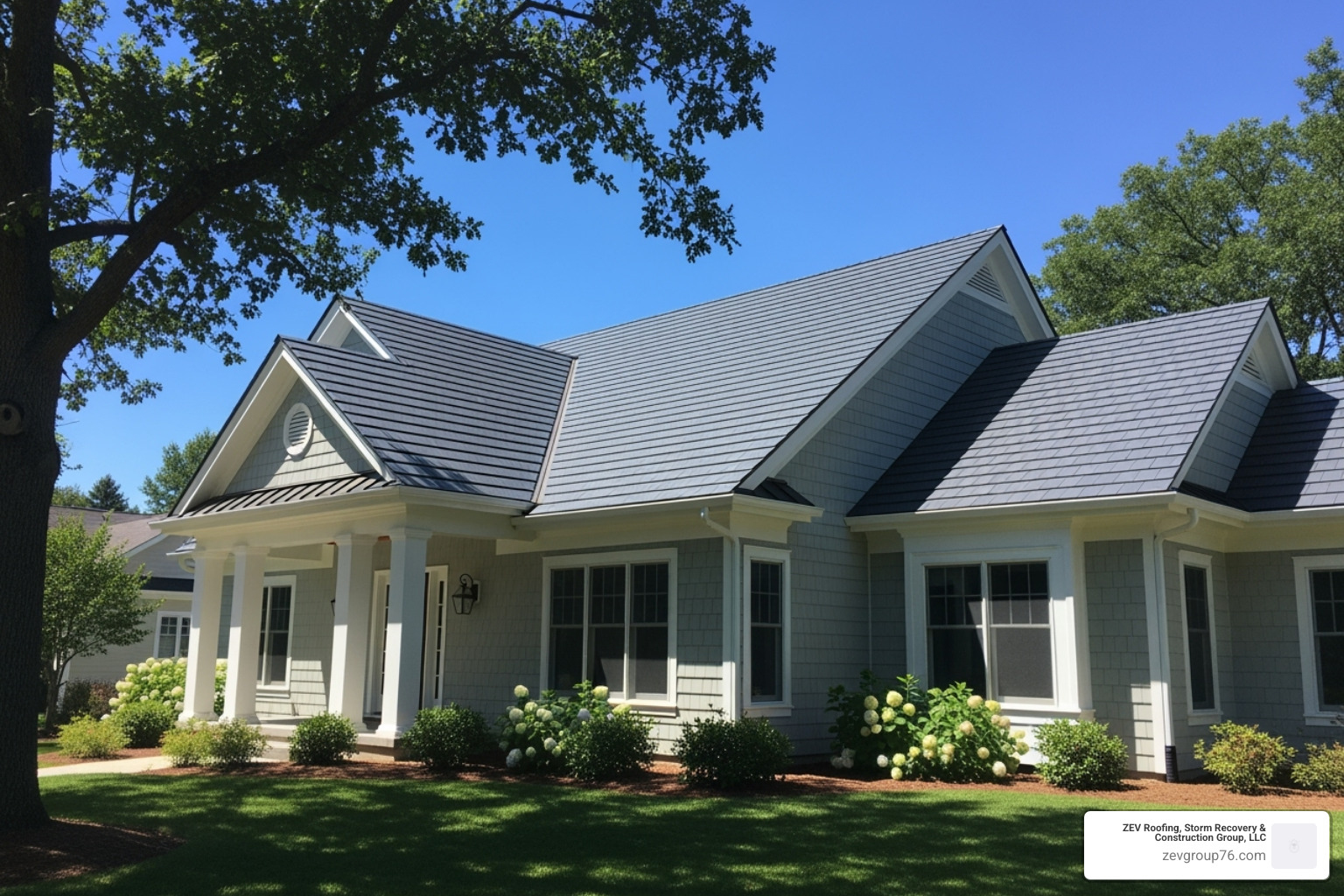
From Lubbock and Plainview to Wolfforth and Eastern New Mexico, we’ve built our reputation on transparency and integrity. We don’t take shortcuts or engage in questionable practices like “waiving” deductibles. Our customer-focused approach means clear communication and a final inspection to guarantee your satisfaction.
If recent storms have damaged your roof, you deserve fair compensation, quality repairs, and peace of mind. Let’s get your roof—and your life—back on track.