
Why Shower Curtain Leaks Are More Than Just a Nuisance
How to prevent water from leaking outside a shower curtain is a common concern for homeowners dealing with wet bathroom floors, potential water damage, and safety hazards. Here are the most effective solutions:
Quick Prevention Methods:
- Adjust shower head angle – Aim downward and away from curtain
- Check curtain placement – Tuck inside tub, ensure full coverage
- Install a quality liner – Use water-repellent materials inside the tub
- Add weighted curtains – Choose long, heavy materials for better seal
- Use suction cups or clips – Secure curtain to walls for tighter seal
- Install splash guards – Add physical barriers at tub corners
Stepping out of the shower onto a soaking wet bathroom floor is a common issue that can lead to serious problems. Escaping water creates slip hazards and promotes mold and mildew growth, which damages surfaces and affects air quality. In severe cases, persistent leakage can cause structural damage to floors and walls, requiring professional intervention.
The good news? Most shower curtain leaks stem from simple placement issues, incorrect shower head angles, or inadequate sealing. Research shows that problems like pointing your shower head toward the curtain, using curtains that are too short, or failing to tuck the liner inside the tub are the primary culprits.
Whether you’re dealing with occasional drips or significant water escape, the solutions range from quick adjustments you can make today to more permanent upgrades that will solve the problem for years to come.
First Line of Defense: Simple Adjustments and Checks
Many shower curtain leaks can be stopped with simple adjustments and routine checks. Often, small changes make the biggest difference in keeping bathroom floors dry and safe.
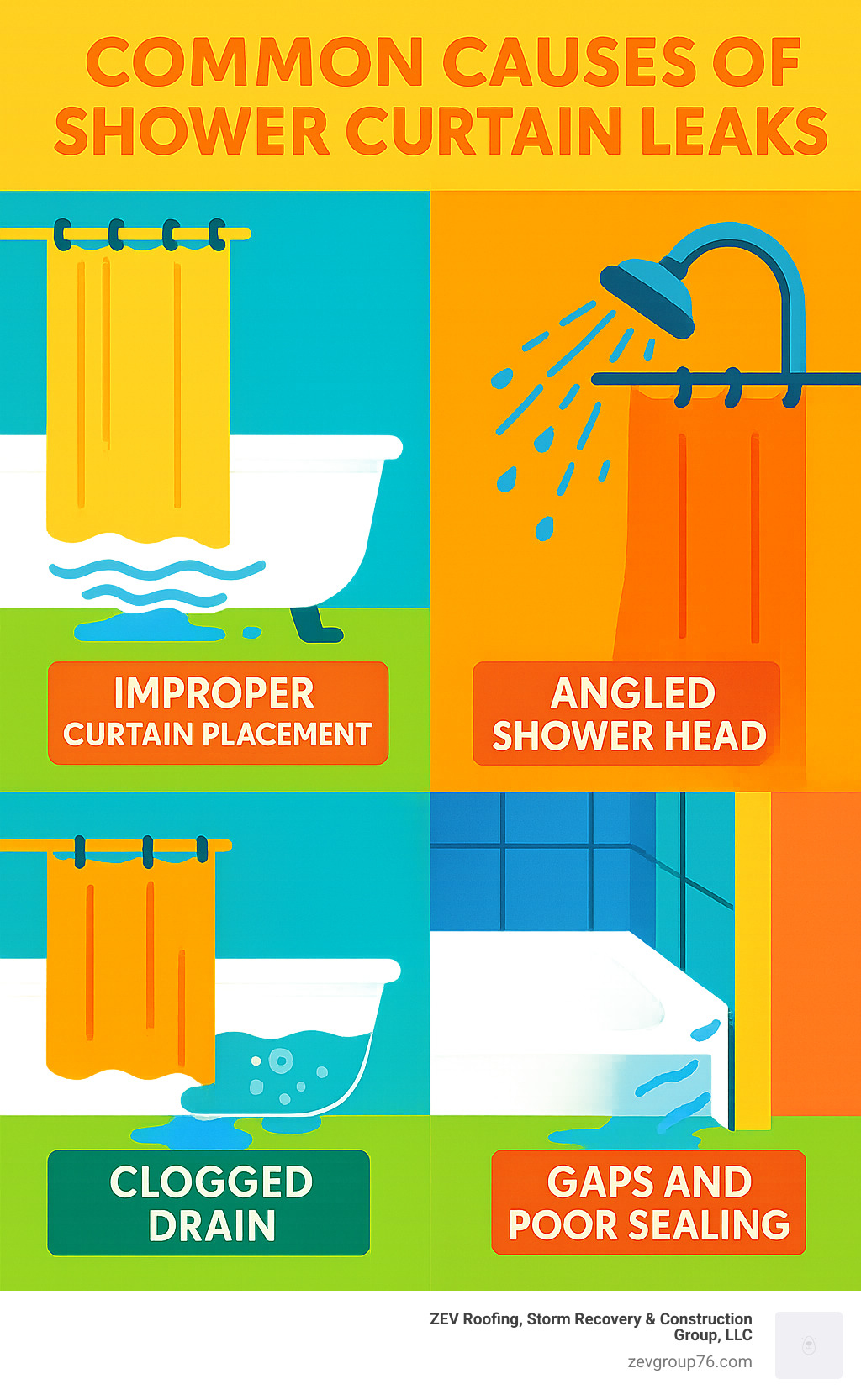
The common reasons water leaks outside a shower curtain often boil down to human error or lack of maintenance. These include placing the shower head incorrectly, a missing or improperly installed shower liner, cracks or gaps in grout lines, and even blocked drains. Addressing these fundamental issues is our first step in preventing water from making an unwelcome escape.
Check Your Shower Curtain and Liner Placement
The most basic, yet frequently overlooked, step in preventing shower leaks is ensuring your shower curtain and liner are correctly positioned. Think of your shower curtain as a barrier, and for any barrier to work, it needs to be properly set up.
First, let’s talk about curtain size. Your shower curtain should be wide and long enough to cover the entire opening of your shower space. If it’s too short or too narrow, water will inevitably find a way out. We want ample coverage to contain all those splashes.
Next, the golden rule: tuck the shower curtain liner inside the tub or shower stall. When the liner is inside the tub, any water that hits it will drip directly back into the tub and down the drain, instead of onto your bathroom floor. The main decorative shower curtain, however, typically hangs outside the tub to prevent it from getting wet and to maintain its aesthetic appeal. Ensuring the liner hangs slightly lower than the curtain also helps stop escaping water. It acts as the primary waterproof barrier.
Adjust Your Shower Head Angle
The angle of your shower head plays a huge role in preventing leaks. If your shower head is pointing straight out, or worse, directly towards the curtain, you’re essentially aiming water at the weakest point of your water containment system.
The key is to aim your shower head downwards and slightly inward, away from the curtain and towards the drain. This ensures that the water flow is directed where it needs to go – into the tub and down the drain – rather than splashing against the curtain and finding its way onto the floor. This small adjustment can significantly reduce the amount of water spray hitting the curtain, minimizing splashes and drips outside the shower area. It’s a quick fix that costs nothing but can save you a lot of hassle.
Unclog Your Shower Drain
Sometimes, the problem isn’t the curtain at all, but rather what’s happening beneath our feet. A blocked or clogged drain can contribute significantly to water leakage issues. When your drain is clogged, water can’t flow down quickly enough. This causes water to pool in the tub or shower pan, raising the water level. If the water rises high enough, it can easily spill over the edge of the tub or flow underneath the shower curtain, leading to a wet floor.
Standing in ankle-deep water during a shower is a clear sign that your drain needs attention. Regularly cleaning your shower drain to remove hair, soap scum, and other debris is crucial. This ensures proper drainage, prevents water backup, and keeps the water where it belongs: inside the tub.
Upgrade Your Setup: Choosing the Right Gear
If basic adjustments aren’t enough to stop leaks, it may be time to invest in better equipment. Upgrading your gear can make a remarkable difference.
The truth is, not all shower curtains and accessories are designed with leak prevention in mind. Some are purely decorative, while others are engineered to keep every drop of water exactly where it belongs. Let’s explore how the right materials and smart design choices can transform your shower experience.
How to select the best shower curtain to prevent water from leaking outside a shower curtain
Many shower curtains are chosen for looks over performance, which can lead to wet floors. They often aren’t designed to be the primary barrier against water.
Waterproof materials are your best friend when it comes to how to prevent water from leaking outside a shower curtain. Vinyl, nylon, and polyester curtains don’t just look water-resistant – they actually repel water instead of absorbing it like fabric curtains do. While that beautiful fabric shower curtain might match your bathroom décor perfectly, it’s often more of a decorative piece than a functional barrier.
Weight matters more than you might think. A heavy shower curtain with weighted hems or magnets along the bottom edge stays put during your shower. Light, flimsy curtains have a tendency to dance around with the air currents, creating gaps where water can sneak through.
Length is equally important – your curtain should be long enough to hang well inside the tub without pooling on the tub floor. This creates a proper barrier that directs water back where it belongs instead of letting it splash over the edge.
The Importance of a Quality Shower Liner
If your main shower curtain is more about style than substance, don’t worry – this is where a quality shower liner becomes your secret weapon. Think of it as the hardworking partner that handles all the heavy lifting while your decorative curtain gets to look pretty.
A good shower liner creates a water-repellent barrier that serves as your primary defense against leaks. This double-layer protection approach works beautifully: the liner does the serious work of containing water, while your main curtain adds style and protects the liner from wear and tear.
The installation trick that many people miss is this: liner inside the tub, curtain outside the tub. This simple rule ensures that every drop hitting the liner flows directly back into the tub and down the drain. When both pieces are on the same side, you lose that crucial water-directing advantage.
Consider a Curved Shower Curtain Rod
A curved shower curtain rod offers more than just extra elbow room; it’s a clever solution to common leak problems.
Ever notice how your shower curtain seems to have a mind of its own, billowing inward during your shower? That’s not just annoying – it’s creating gaps where water can escape. The curved design prevents curtain billowing by pushing the curtain outward, away from the shower spray.
This extra space also means the curtain is less likely to stick to you during your shower, which keeps it in proper position throughout your entire routine. It’s one of those simple solutions that makes you wonder why all shower rods aren’t curved!
How to prevent water from leaking outside a shower curtain with Add-Ons
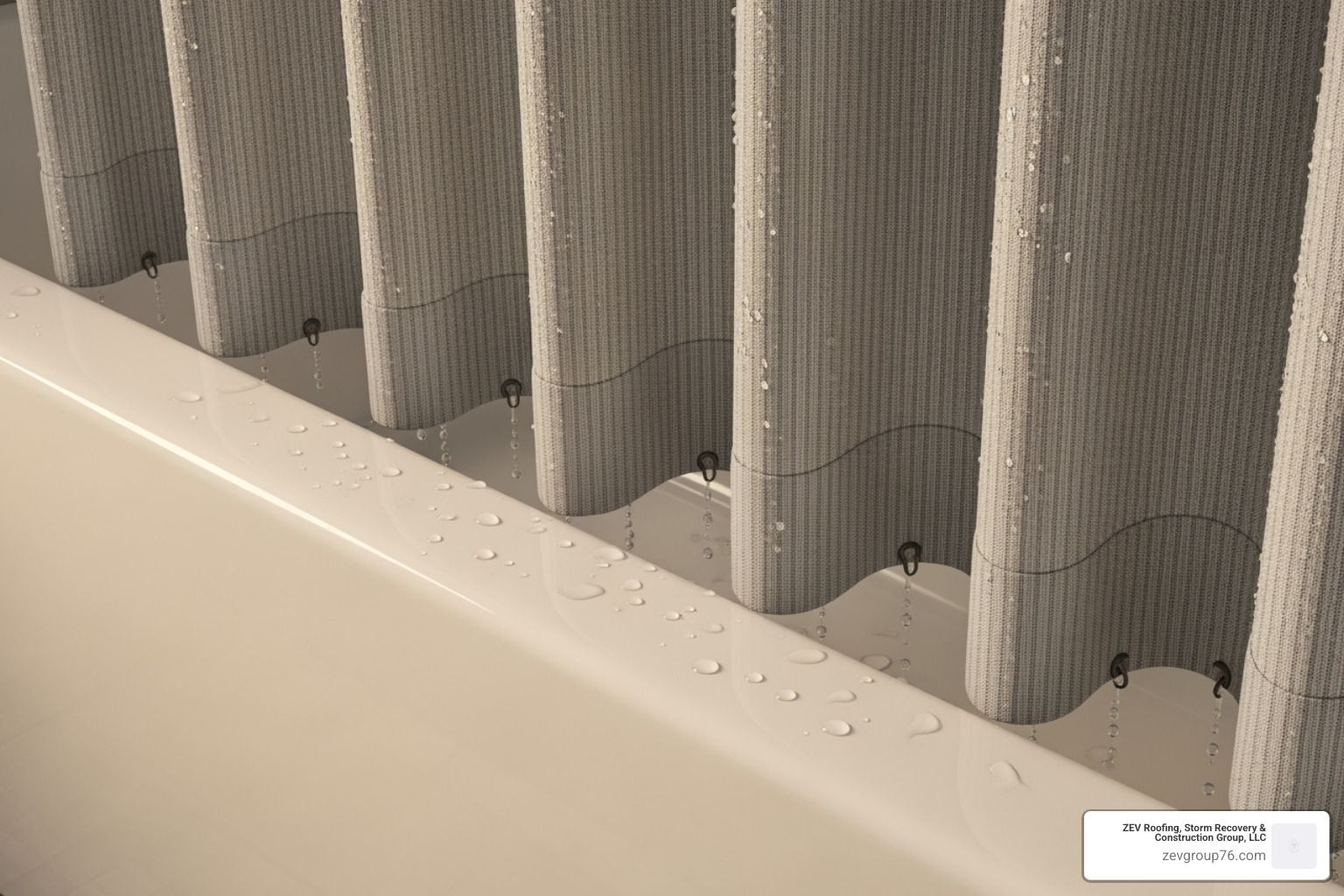
Sometimes, even with the right curtain, liner, and rod, water finds a way. That’s where clever add-ons come into play. These accessories provide extra layers of defense, creating tighter seals and physical barriers against escaping water.
Use Clips and Suction Cups for a Tighter Seal
For those persistent drips and splashes that sneak past the edges of your curtain, suction cups and shower clips are incredibly effective. These small but mighty accessories are designed to keep your shower curtain securely in place, creating a tighter seal between the curtain and the wall or tub.
Suction cups can be installed directly on the shower wall or tiles, or even glued to the bottom of your shower liner. By pressing them into place, they help hold the curtain or liner against the wall, preventing it from moving or blowing inwards. The water from your shower can even help hold them in place!
Similarly, shower clips can help keep the curtain in place, preventing water from seeping around its edges. These often clip the curtain to the wall or shower rod, creating a more secure barrier. Some clips are designed specifically to be “windproof,” preventing the curtain from billowing inwards. By using these accessories, you can significantly reduce the gaps through which water might escape. You can find various options like suction cups and shower clips online.
Install Physical Barriers like Splash Guards and Water Dams
For areas where water consistently escapes, even with proper curtain and liner placement, physical barriers can provide the ultimate containment. These include water dams and shower splash guards.
A water dam, also known as a collapsible rubber threshold, is a flexible barrier placed along the bottom edge of the shower entrance. Its purpose is to create a strong seal and prevent water from flowing out onto the bathroom floor. These are particularly useful for showers without a traditional curb or for bathtubs where water tends to escape at the front. The design allows for easy entry and exit, as the rubber collapses underfoot and then springs back into shape.
Similarly, a shower splash guard is a barrier that can be attached to the bathroom floor or shower wall, often in the corners of the tub. These L-shaped plastic pieces reinforce the corners, which are common points for water to splash out. They help create an effective seal, ensuring water stays inside. Before installing, always ensure the area is clean and dry. While many are peel-and-stick, applying caulk around the edges can make the seal even stronger and more permanent.
For a more integrated solution that works directly with your existing shower curtain, consider a Shower Curtain Sealer kit. This innovative product includes a 72-inch rubber tube with a shower ring and self-adhesive wall channels. The tube hangs from your shower rod just behind your curtain. You then press the sealer and the edge of your curtain into the wall channel to create a tight, reusable seal. If your walls have extreme irregularities or certain surfaces, you might need to use caulking for a secure installation of the wall channels. And if you’re moving, these wall channels can be gently pried off with a butter knife without damaging your shower walls. If your bathtub isn’t properly installed and slants outward, a small rubber dam on top of the tub near the wall channel can help divert water back into the tub.
Beyond the Curtain: Structural and Long-Term Solutions
Sometimes, despite our best efforts with curtains, liners, and clever add-ons, water still finds its way onto the bathroom floor. When this happens repeatedly, it’s time to look beyond quick fixes and consider the bigger picture. The issue might be structural, or you might simply be ready for a more permanent solution that eliminates the guesswork entirely.
These deeper solutions address the root causes of persistent leaks and can save you from the ongoing frustration of mopping up water after every shower. While they require more investment upfront, they often pay for themselves in prevented water damage and peace of mind.
How to inspect and maintain grout to prevent water from leaking outside a shower curtain
If you have a tiled shower, the real culprit behind your water leaks might not be your curtain at all. Over time, the grout and caulk that seal your shower tiles can crack, shrink, or simply wear away. These tiny gaps might look harmless, but they’re like secret highways for water to travel behind your walls or under your floor.
The scary part? You might not even notice this water seepage until it’s caused serious damage. Water that gets behind tiles can rot wooden studs, damage drywall, and create the perfect environment for mold growth in places you can’t see or clean.
Cracked grout is usually easy to spot if you know what to look for. Run your finger along the grout lines, especially in corners and where the wall meets the tub. Look for any lines that seem darker, have gaps, or feel soft or crumbly. Gaps in caulk around the tub edge or shower fixtures are another red flag.
The good news is that resealing your shower is often a straightforward fix. This involves scraping out the old, damaged caulk and applying fresh, waterproof caulk in its place. For grout issues, you might need to remove the damaged sections and apply new grout. This kind of preventive maintenance is much cheaper than dealing with structural water damage later.
If you’re seeing persistent water damage or suspect the problem goes deeper than surface sealing, professional assessment becomes crucial. Sometimes what looks like a simple shower leak can indicate larger structural issues that require the expertise of professionals who handle Storm Damage Repair and comprehensive water damage restoration.
Shower Curtain vs. Glass Door: A Comparison
When you’re tired of constantly adjusting curtains and dealing with occasional leaks, it might be time to consider whether a glass enclosure would better serve your needs. This decision involves weighing several factors, from your budget to your long-term goals for the space.
| Feature | Shower Curtain | Glass Enclosure |
|---|---|---|
| Cost | Budget-friendly option | Higher upfront investment |
| Effectiveness | Requires proper maintenance and placement | Superior water containment |
| Maintenance | Regular cleaning, replacement needed | Easy to clean, long-lasting |
| Installation | Simple DIY project | Professional installation recommended |
Shower curtains remain the most budget-friendly option for most homeowners. They’re incredibly versatile – you can change your bathroom’s entire look for under $30. Installation takes minutes, and if something goes wrong, replacement is simple and inexpensive. However, as we’ve discussed throughout this guide, how to prevent water from leaking outside a shower curtain requires ongoing attention to placement, maintenance, and the right combination of accessories.
Glass shower doors offer what many consider the ultimate long-term solution. Frameless glass doors create a sleek, modern look while providing superior water containment. There are no fabric barriers to billow inward, no liners to replace, and no gaps for water to sneak through. The seamless design makes cleaning easier and eliminates the mold and mildew concerns that come with fabric curtains.
The trade-off is cost and complexity. Glass enclosures require professional installation and represent a significant investment. However, they can add value to your home and provide years of worry-free showering. For homeowners who are renovating their bathrooms or dealing with persistent leak issues despite following all the curtain-based solutions, glass doors often prove to be worth the investment.
The choice ultimately depends on your situation. If you’re renting, dealing with a temporary bathroom setup, or working with a tight budget, mastering the art of curtain leak prevention makes perfect sense. But if you’re planning to stay in your home long-term and want to eliminate water leakage concerns permanently, a glass enclosure might be the way to go.

Frequently Asked Questions about Shower Leak Prevention
We know that figuring out how to prevent water from leaking outside a shower curtain can feel overwhelming with all the different tips and tricks out there. Let’s tackle some of the most common questions we hear from homeowners who are tired of stepping onto soggy bathroom floors.
How often should I clean my shower curtain and liner?
Shower curtains work hard in a humid environment. Regular cleaning isn’t just about looks; it’s about keeping your leak prevention system working properly.
When mold and mildew start building up on your curtain and liner, they don’t just create an unpleasant smell or unsightly stains. They actually compromise the material’s ability to repel water effectively. A moldy, grimy curtain becomes less waterproof over time, which means more water finds its way onto your bathroom floor.
We recommend giving your shower curtain and liner a good cleaning at least once a month. If you notice any dark spots, musty odors, or soap buildup happening sooner, don’t wait – tackle it right away.
Most fabric curtains can go right in your washing machine on a gentle cycle with regular detergent plus a cup of white vinegar or baking soda to fight any mildew. For vinyl or plastic liners, you can either wipe them down with a bleach-and-water solution or toss them in the washer with a few towels to help scrub away the grime. Just be sure to check the manufacturer’s care instructions first.
Can a heavy shower curtain alone stop all leaks?
Investing in a quality, heavy shower curtain is a smart move. A heavy curtain provides much better coverage and is less likely to blow around, which helps contain water.
However, even the best heavy curtain isn’t a complete solution on its own. You’ll still need to make sure your liner is properly placed inside the tub, your shower head is angled correctly, and you might need some additional help from suction cups or clips to seal any stubborn gaps. A heavy curtain is like having a strong foundation for a house – essential, but you still need walls and a roof to keep everything dry.
The good news is that when you combine a heavy curtain with proper placement and the other methods we’ve discussed, you’ll have a much more effective water containment system.
What’s the most common reason for a shower curtain leak?
Shower curtain leaks rarely have a single cause. Usually, it’s a combination of small problems that lead to a puddle on your floor.
The biggest culprit we see is incorrect shower head angle – when it’s pointed right at the curtain or toward the edges of the tub, you’re basically spraying water exactly where you don’t want it to go. This simple fix can solve a surprising number of leak problems.
Close behind that is improper curtain and liner placement. We can’t tell you how many times we’ve seen liners hanging outside the tub instead of inside, or curtains that are too short to create proper coverage. Sometimes the curtain isn’t even fully extended across the entire opening!
Curtain billowing is another sneaky problem. When hot air and steam create air currents in your shower, lighter curtains get sucked inward, creating gaps at the sides. This is especially common with straight shower rods and lightweight materials.
Finally, many people try to rely on just a fabric shower curtain without a proper water-repellent liner. While that decorative curtain might look great, it’s not designed to be your primary defense against water escape.
The encouraging news? These are all relatively easy problems to fix with the simple adjustments we’ve covered. Most shower curtain leaks can be solved without spending a fortune or calling in professionals.
Conclusion
We’ve covered a lot of ground together in our quest to keep bathroom floors dry and safe! How to prevent water from leaking outside a shower curtain doesn’t have to be a mystery anymore. With the right combination of simple adjustments and smart upgrades, you can transform your daily shower from a potential flooding event into the relaxing experience it should be.
It all starts with the fundamentals. Proper curtain and liner placement – with that liner tucked safely inside the tub – is your first line of defense. Add in a correctly angled shower head pointing away from the curtain and toward the drain, plus keeping those drains clear and flowing freely, and you’re already ahead of most water escape issues.
From there, the upgrades we’ve discussed can take your leak prevention to the next level. A heavy, waterproof curtain with a quality liner provides better coverage and stays put during your shower. A curved shower rod gives you more elbow room while preventing that annoying curtain billowing that lets water sneak out. And for those stubborn problem spots, suction cups, clips, splash guards, and water dams create the extra sealing power you need.
Don’t forget about the bigger picture either. Regular maintenance of grout and caulk protects against water seepage that can cause serious damage behind your walls. And if you’re ready for a more permanent solution, glass shower enclosures offer superior water containment with a sleek, modern look that can increase your home’s value.
The beauty of these solutions is that you can mix and match them based on your specific situation and budget. Maybe you start with adjusting your shower head and adding some clips, then upgrade to a curved rod and heavier curtain later. Every small improvement builds on the others to create a comprehensive defense system.
But here’s the thing – sometimes water finds a way despite our best efforts, especially if there have been persistent leaks over time. Water damage can hide behind walls and under floors, creating problems that go far beyond a wet bathroom mat. If you suspect your home has suffered structural damage from ongoing leaks, don’t wait to address it.
At ZEV Roofing & Construction, we understand that water issues can escalate quickly from minor inconveniences to major structural problems. Our experienced team provides comprehensive water damage assessment and repair services throughout Texas communities including Lubbock, Shallowater, Plainview, New Deal, Wolfforth, and Slaton, as well as Eastern New Mexico. We combine expert craftsmanship with a customer-focused approach to protect your most important investment – your home.
Taking action now to prevent shower leaks protects not just your bathroom floor, but your entire home’s structural integrity. Start with the simple fixes we’ve outlined, upgrade your setup as needed, and don’t hesitate to call in professionals when the situation calls for it. Learn more about comprehensive Leak Prevention and find how we can help keep your home safe, dry, and protected for years to come.