
Why Gas Leak Prevention is Critical for Home Safety
Learning how to prevent gas leaks is essential for protecting your family and property from deadly hazards like fires, explosions, and carbon monoxide poisoning. These dangers affect the millions of Americans who use natural gas in their homes.
Quick Prevention Checklist:
- Schedule annual inspections of all gas appliances by certified professionals
- Perform monthly soapy water tests on visible gas connections
- Keep gas meters clear of debris, snow, and vegetation
- Install gas and carbon monoxide detectors in your home
- Know your gas shutoff valve location and how to operate it
- Call 811 before digging to locate underground gas lines
Gas leaks are a serious threat. If you smell gas in your home right now, stop reading, leave immediately, and call your gas company.
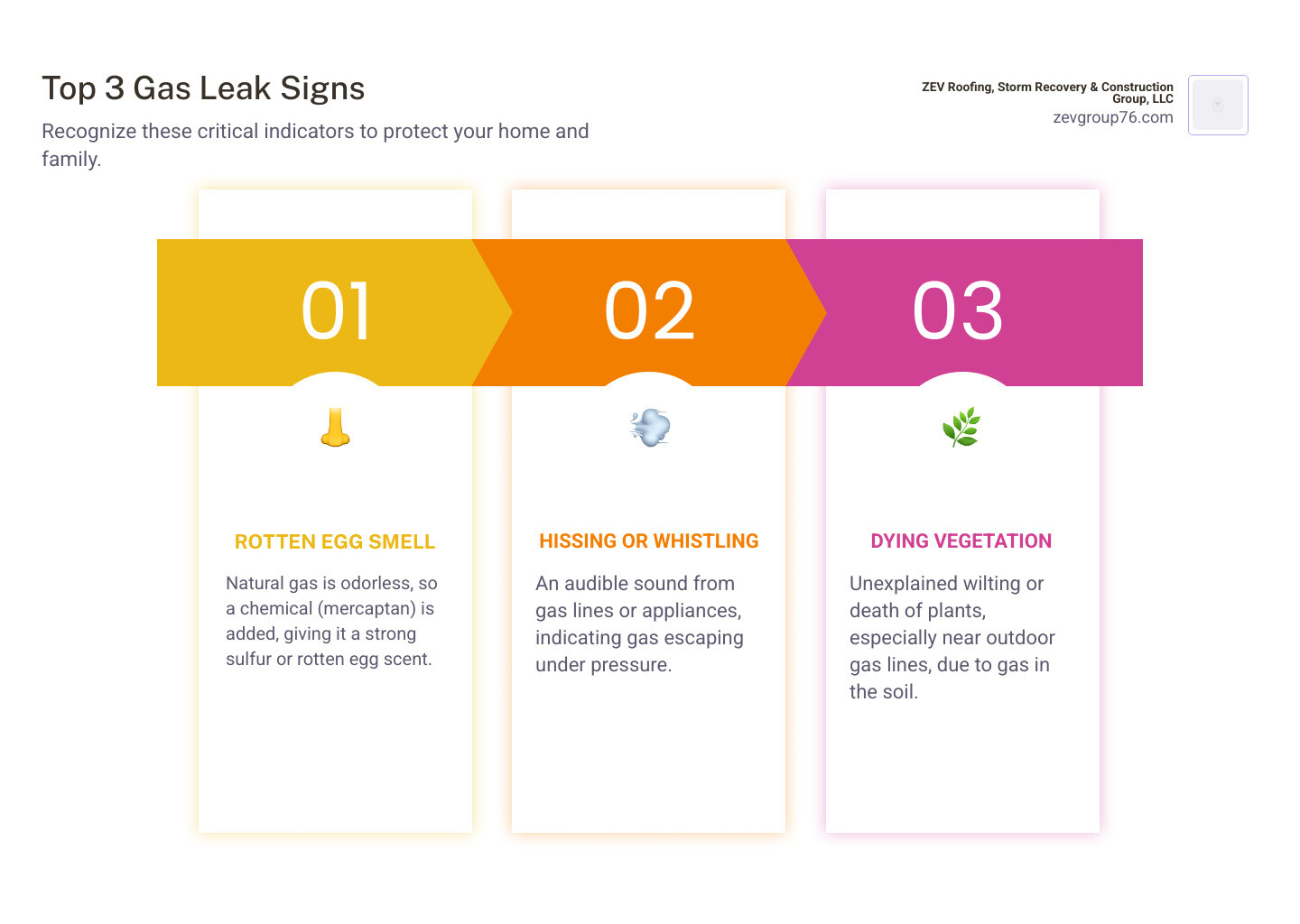
Gas companies add a chemical called mercaptan to give gas its distinctive rotten egg smell, making most leaks detectable. However, leaks in ventilated areas like attics may not be noticeable by smell, which makes regular inspections crucial.
Even small, slow leaks can allow hazardous gas levels to build up, leading to explosions, fires, or carbon monoxide poisoning. Fortunately, most gas leaks are preventable with simple upkeep and awareness.
Understanding the Dangers and Common Causes of Gas Leaks
Understanding the dangers of gas leaks is the first step in learning how to prevent gas leaks in your home.
Why Gas Leaks Are So Dangerous
The biggest threat from gas leaks comes from fire hazards and explosion risks. Natural gas and propane are highly flammable. When they leak into your home, a simple spark from a light switch, phone, or even static electricity can ignite the gas, causing a devastating fire or explosion.
Gas leaks also pose serious health risks. Natural gas can displace oxygen, making it hard to breathe and causing dizziness, headaches, or nausea. These symptoms are often mistaken for fatigue or stress.
Even more concerning is the risk of carbon monoxide poisoning%2C%20an,surveillance%20data%20in%20the%20U.S.). If a leak affects how appliances burn fuel, they can produce carbon monoxide (CO)—a colorless, odorless, and deadly gas. CO poisoning symptoms mimic the flu, so many people don’t realize the danger until it’s too late.
What Actually Causes Gas Leaks in Your Home
Most leaks develop slowly over time. Understanding these common causes is key to prevention.
Faulty appliances are a frequent culprit. Connections and components in furnaces, water heaters, stoves, and dryers can wear out, corrode, or get damaged. A loose connection or pilot light issue can let gas escape, a risk that increases with older appliances.
Damaged gas lines are another major risk. Pipes can corrode, crack, or have loose fittings. The flexible connectors linking appliances to pipes are especially vulnerable to wear and cracking over time.
Improper installation can lead to future leaks. Cutting corners by using wrong connectors, poor seals, or rushing the job creates hazards. Always use qualified professionals for gas work.
Corrosion is a sneaky danger. Underground and exposed pipes can corrode from age, moisture, or soil conditions, eventually creating holes for gas to escape.
External factors like ground shifting, construction, or severe weather common in Texas and New Mexico can stress and damage gas lines. After a major storm, have your gas system checked. Our team at ZEV Roofing, Storm Recovery & Construction Group often assesses utility system damage as part of our storm recovery services.
Understanding whether your home uses natural gas or propane also matters for prevention, since these gases behave differently when they leak.
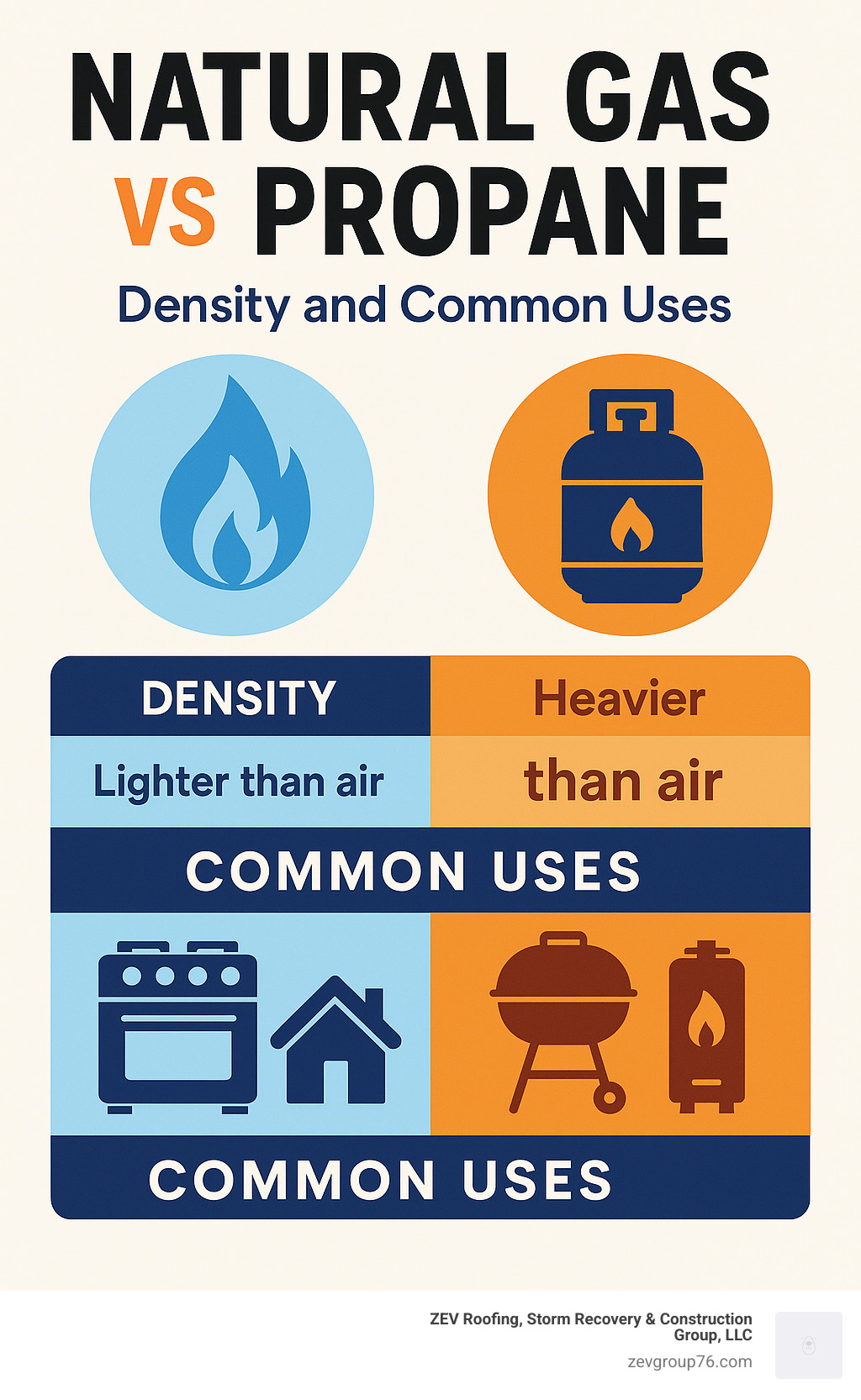
| Feature | Natural Gas (Methane) | Propane (LPG) |
|---|---|---|
| Composition | Primarily methane | Byproduct of natural gas processing/crude oil refining |
| Density | Lighter than air | Heavier than air |
| Leak Behavior | Tends to rise and dissipate | Tends to sink and pool in low areas |
| Odor | Odorless, but mercaptan added for rotten egg smell | Odorless, but mercaptan added for rotten egg smell |
| Common Uses | Furnaces, water heaters, stoves, fireplaces, clothes dryers | Grills, outdoor appliances, some home heating/cooking |
| Flammability | Highly flammable | Highly flammable |
The key difference? Natural gas is lighter than air, so it tends to rise and dissipate, while propane is heavier than air and will sink and pool in basements, crawl spaces, and low-lying areas. This affects where leaks might accumulate and how dangerous they become – but both are equally flammable and require the same level of caution.
Recognizing the Telltale Signs of a Gas Leak
Knowing how to spot gas leaks early is key to preventing disasters. Your senses are the best tools for detecting these dangerous situations before they escalate. Gas companies add a distinctive smell to natural gas, but there are other signs to watch for besides odor.
Smell
Your sense of smell is your first and most reliable warning system.
The telltale rotten egg odor is unmistakable. Natural gas companies add mercaptan, a chemical that creates this distinctive rotten egg smell or sulfur smell. If you catch even a whiff of this odor, don’t ignore it. Trust your nose and act immediately—it could save your life.
Sound
Sometimes gas leaks create audible noises, especially under pressure.
Listen for a hissing noise like air escaping a tire, or a whistling sound near gas appliances or lines. These sounds can indicate gas escaping. These sounds might be subtle, so if you hear something odd, it’s worth investigating.
Sight
Your eyes can catch clues that your other senses might miss, both inside and outside your home.
Watch for bubbles in water on your property. Bubbles in puddles or standing water near gas lines indicate gas escaping through the soil.
Dead or dying plants can be another red flag. Gas can deprive plant roots of oxygen, so look for unexplained dying vegetation near gas lines or sickly indoor plants.
Look out for white mist or fog around your property, particularly near gas lines, which can indicate a significant leak.
Keep an eye on your gas connections too. Damaged connections, corroded pipes, or anything that looks out of place around your gas appliances should be an alert.
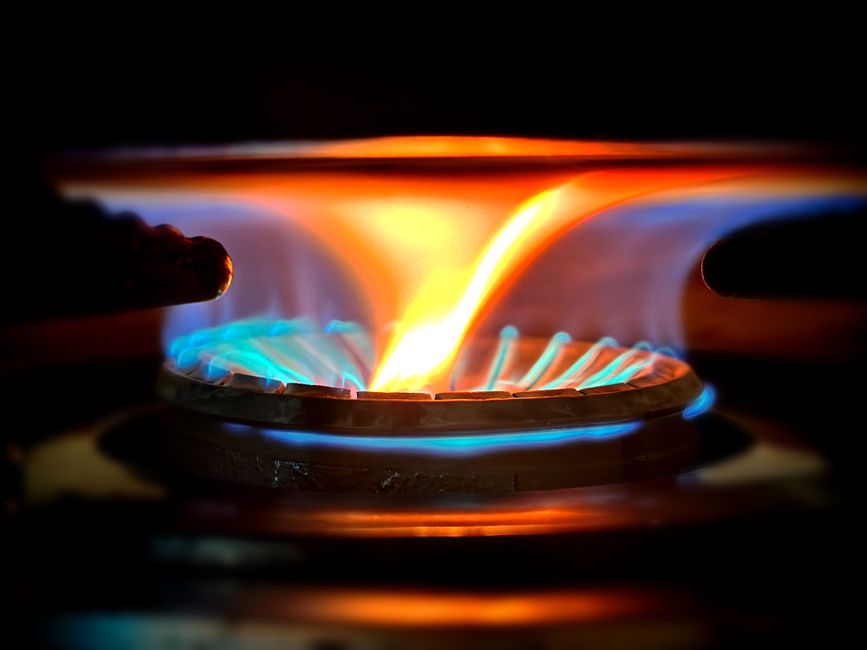
Your stove flames can tell a story. Healthy gas flames are blue, clean, and steady. If you see orange or red flames, something is wrong. This could indicate incomplete combustion, often caused by a malfunctioning appliance that might be producing carbon monoxide.
Physical Symptoms
Gas exposure, particularly when it leads to carbon monoxide poisoning%2C%20an,surveillance%20data%20in%20the%20U.S.), can cause symptoms that are easily mistaken for common ailments.
Dizziness, nausea, and headaches are often the first signs. If these symptoms appear suddenly or worsen when you’re at home, gas exposure could be the culprit.
Breathing problems can develop with continued exposure, along with chest discomfort. Some people experience unusual fatigue, confusion, or irritability.
In severe cases, you might experience ringing in your ears, nosebleeds, or loss of consciousness. These are serious red flags requiring immediate action.
Because these symptoms mimic common illnesses, it’s crucial to act. If you or your family experience these issues and suspect a gas leak, don’t wait. Your safety is more important than a false alarm.
What to Do Immediately If You Suspect a Gas Leak
When you detect any warning sign of a gas leak, every second counts. Your quick, proper response can be the difference between life and death.
If you detect any sign of a gas leak, trust your instincts and act immediately. Do not investigate.
Get everyone out right now. Evacuate every person and pet immediately. Do not stop to grab belongings or assess the situation. Just get out.
As you leave, open doors and windows only if it doesn’t delay your exit. Your priority is getting to safety.
Here’s where things get really important: avoid anything that could create a spark. Gas is incredibly flammable, and the tiniest spark can trigger an explosion. This means:
- Don’t use your cell phone inside.
- Don’t flip any light switches (on or off).
- Don’t unplug appliances.
- Never light a match, candle, or cigarette.
- Don’t start your car if it’s in an attached garage.
Don’t try to be a hero by locating or fixing the leak yourself. This is a job for trained professionals.
Once you’re at least 300 feet away from the building, use your phone. Call 911 immediately or your gas company’s emergency line.
The hardest part is waiting. Don’t go back inside for any reason until emergency responders declare it safe. They are trained to handle the situation.
Learning how to prevent gas leaks is important, but knowing how to respond when prevention fails can save lives. Let the professionals do their job while you stay safe.
A Homeowner’s Guide on How to Prevent Gas Leaks
Preventing gas leaks is like any regular maintenance—it avoids bigger problems. The good news is that how to prevent gas leaks is straightforward. Most can be avoided with simple, consistent care. Gas leaks usually develop slowly from wear, weather, or neglect, giving you opportunities to catch problems early.
How to Prevent Gas Leaks Through Regular Maintenance
Your gas appliances need regular check-ups. Professional maintenance isn’t just for performance—it’s for your family’s safety.
Annual professional inspections are your best defense. A certified technician should examine all your gas-powered equipment once a year, including:
- HVAC systems and gas furnaces: Leaks often happen on the incoming gas line. Technicians test for gas and CO leaks and check line integrity.
- Water heaters, gas stoves, ovens, and dryers: All have connections that can loosen over time.
- Gas fireplaces: These also need annual attention, especially with regular use.
Pilot light inspection is crucial for older appliances. A healthy pilot light is small and blue. Orange or red flames indicate incomplete combustion and a potential carbon monoxide risk. Call a professional immediately if you see this.
Living in Texas and New Mexico means dealing with severe weather. Storm damage can affect gas lines. If your property has sustained storm damage, especially to the roof or exterior, have our team at ZEV Roofing, Storm Recovery & Construction Group assess it. We can spot issues that might compromise gas lines and provide expert Storm Damage Repair to keep your home safe.
How to Prevent Gas Leaks with Simple DIY Safety Checks
Between professional visits, you can perform simple DIY checks that take just a few minutes each month.
The soapy water test is your best friend. Mix a teaspoon of dish soap with a cup of water and apply it to visible gas connections, valves, or joints. If bubbles form, you’ve found a leak.
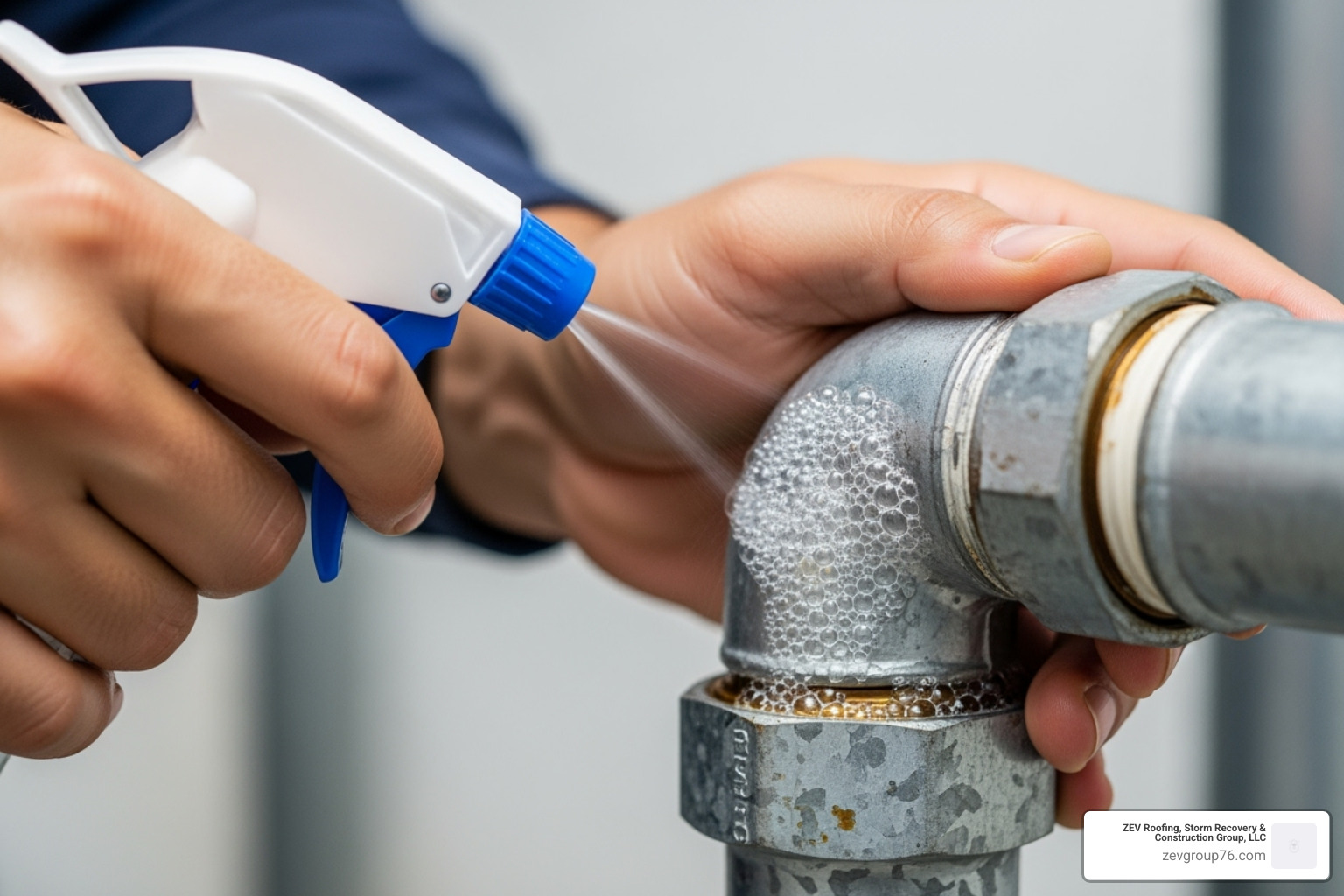
Visual inspections of pipes and connections should be routine. Look for corrosion, rust, dents, cracks, or loose fittings. Pay special attention to flexible connectors, as these can wear out or crack.
Here’s a clever gas meter check: Turn off all gas appliances (including pilot lights). Watch your gas meter. If the dial still moves or the digital reading increases, gas is flowing somewhere it shouldn’t be. Evacuate immediately and call your gas company.
Practice Safe Habits Around Your Home and Property
Prevention also involves creating a culture of safety. These simple habits prevent most gas-related accidents.
Call 811 before you dig. This is not optional. Whether planting a tree or installing a fence, you must locate underground utility lines first. This free service marks them to prevent a dangerous rupture.
Keep your gas meter clear of debris, plants, snow, and ice. Your meter and appliance exhaust vents need clear space to work safely. A blocked vent can cause dangerous gas buildups.
Proper ventilation for all gas appliances is essential to prevent carbon monoxide poisoning. Ensure vents are never blocked.
If you use propane for grills, store tanks properly. Never bring cylinders indoors or store them in garages or basements. Keep them upright in a well-ventilated outdoor area, at least ten feet from any ignition source.
Frequently Asked Questions about Gas Leak Safety
Let’s clear up some common questions and misconceptions about gas safety.
Can a carbon monoxide detector detect a natural gas leak?
No, a carbon monoxide detector cannot detect a natural gas leak. They are different gases and require different detectors. Carbon monoxide (CO) is a byproduct of incomplete combustion (the “exhaust”), while natural gas is the fuel itself (methane). A CO detector won’t sense a fuel leak.
Carbon monoxide detectors are absolutely essential for alerting you to malfunctioning appliances producing dangerous CO. For comprehensive protection, you need both types of detectors: natural gas detectors for fuel leaks and CO detectors for dangerous combustion byproducts.
What is the safest way to check for a gas leak?
The safest way to check for a gas leak combines your senses with simple methods, always prioritizing safety.
- Your nose is your best first detector. The rotten egg smell is a clear warning. If you smell it, act immediately.
- The soapy water test is the gold standard for DIY checks. Mix dish soap and water, apply to connections, and watch for bubbles.
- Electronic gas leak detectors are affordable handheld devices that can pinpoint leaks.
- When in doubt, call a professional. They have specialized equipment to safely find and repair leaks.
What you should never do is use an open flame, like a match or lighter, to check for leaks. This is extremely dangerous and can cause an explosion.
What is the main safety difference between natural gas and propane?
While both are flammable and have an added rotten egg smell, natural gas and propane behave very differently when they leak, a crucial safety distinction.
Natural gas is lighter than air, so it tends to rise and dissipate, like helium. Indoor leaks can still accumulate near ceilings.
Propane is heavier than air and sinks, pooling in basements, crawl spaces, and other low-lying areas. This makes propane leaks particularly dangerous, as the gas can build up to explosive levels in confined spaces.
This is why you must never store propane tanks indoors, in basements, or in enclosed garages. Both gases pose serious fire and explosion risks and require immediate action if a leak is suspected.
Conclusion
Understanding how to prevent gas leaks is vital for your family’s safety. Knowing the signs, like the rotten egg smell, and how to respond in an emergency are life-saving skills.
The good news is that most leaks are preventable. Annual professional inspections, monthly soapy water tests, and safe habits like calling 811 before digging and keeping your gas meter clear are simple, effective routines.
If you ever suspect a gas leak, safety first means evacuating everyone immediately. Don’t use phones, check anything, or grab belongings. Get out, get to a safe distance, then call for help. Your life is your most valuable possession.
Here in Texas and New Mexico, severe weather can create unexpected challenges. When storms damage your property, they can compromise utility lines and gas systems. That’s where our expertise at ZEV Roofing, Storm Recovery & Construction Group comes in.
For major repairs after an incident, especially related to Storm Damage Repair affecting your home’s utility lines, trust experienced professionals who understand how all your home’s systems work together.
Emergency preparedness means having a plan and knowing who to call. Stay vigilant, stay safe, and remember that when it comes to gas safety, you can never be too careful. To learn more about protecting your home from all types of potential hazards, explore our comprehensive Leak Prevention guide.