
Why Getting Help with Homeowners Insurance Claims is Critical After Storm Damage
When disaster strikes your home, help with homeowners insurance claims is your lifeline to recovery. The path from damage to repair involves complex procedures and strict deadlines that can cost you thousands if handled incorrectly.
Here’s what you need to know immediately:
- File your claim within 24-48 hours – Most companies require claims within one year, but faster filing means faster help.
- Document everything – Photos, videos, and detailed lists before cleanup begins.
- Make temporary repairs – Prevent further damage but save all receipts.
- Prepare for the adjuster – Get contractor quotes beforehand to compare with their assessment.
- Understand your settlement – Know the difference between Actual Cash Value and Replacement Cost Value.
- Know when to get professional help – Complex claims may need a public adjuster or attorney.
The stakes are high. According to the Insurance Information Institute, one in 35 insured homes files a wind or hail claim each year. Yet many homeowners leave money on the table or face claim denials because they don’t understand the process.
With the right knowledge and approach, you can maximize your settlement and get your home restored properly. This guide walks you through every step, from the first 24 hours after damage through final payout and repairs.
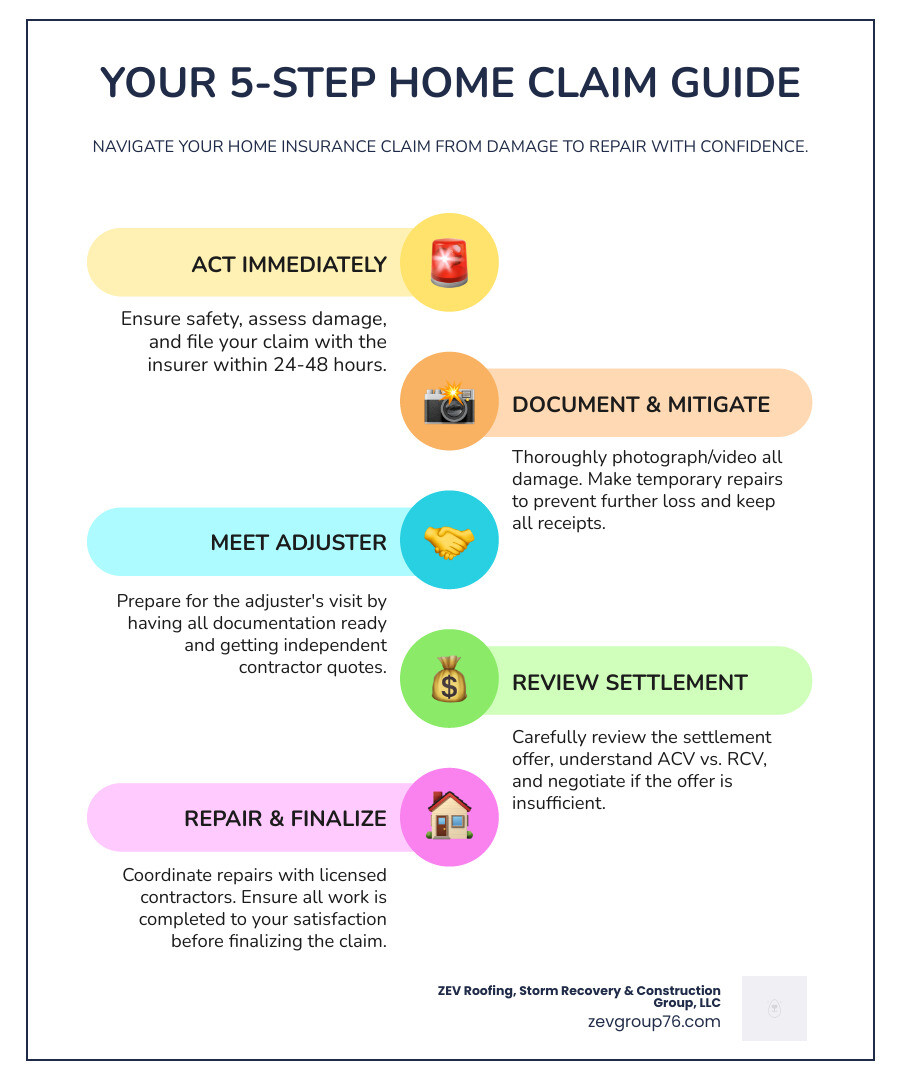
First 24 Hours: Your Immediate Action Plan After Damage
The clock starts ticking the moment disaster strikes. Whether it’s a tree crashing through your roof or a burst pipe, those first 24 hours can make or break your insurance claim success.
Safety comes first. If your home seems unstable, wait for emergency personnel to give the all-clear before entering. Your family’s wellbeing is the top priority.
Once safe, call your insurance company immediately. Most insurers have 24/7 claim hotlines. The faster you report damage, especially during widespread events like hailstorms, the quicker you’ll get help with homeowners insurance claims when adjusters are swamped.
Have your policy number and a brief description of the damage ready. Write down your claim number and the representative’s name; this is crucial for all future conversations.
If theft or vandalism occurred, call the police first. Your insurer will require a police report before considering your claim.
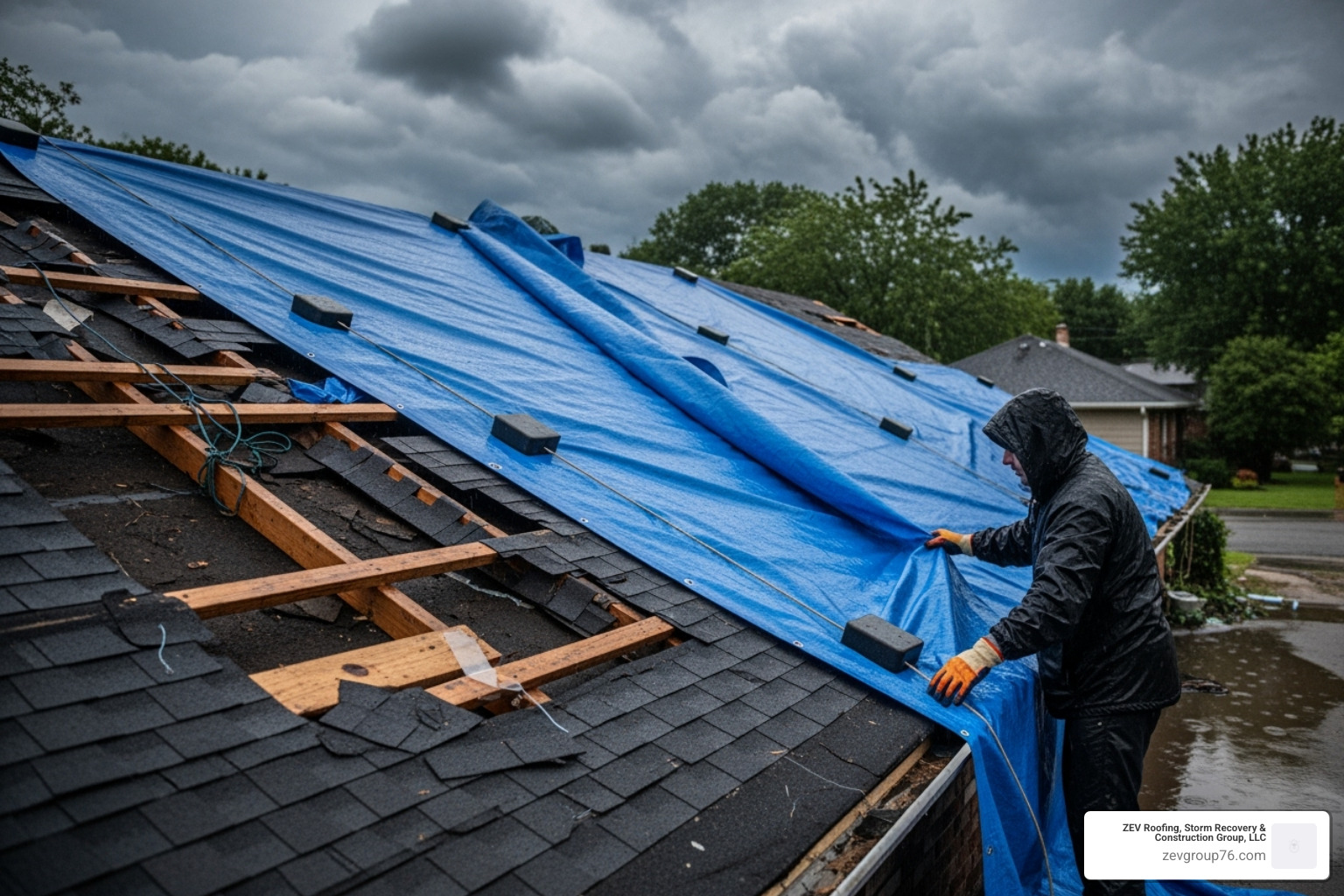
Next, you must stop further damage. Your policy requires this, and failing to act can jeopardize your claim. Tarp a hole in the roof, board up a broken window, or shut off the main water valve for a burst pipe. These temporary repairs prevent a small problem from becoming a catastrophe. Save every receipt for materials and emergency services, as your insurer should reimburse these costs with proof.
At ZEV Roofing & Construction, we’ve seen homeowners lose coverage because water kept pouring in. Our team provides immediate Leak Prevention to secure your property while you steer the claims process. You’re buying time; major repairs wait until after the adjuster’s inspection.
When to File a Claim
Not every incident warrants a claim. Filing carelessly can cost you more than paying for the fix yourself.
Start with simple math: repair cost versus your deductible. If a $2,200 repair costs more than your $2,000 deductible, you’re only getting $200 from your insurer. Meanwhile, that claim stays on your record for seven years, potentially raising your rates.
Your claims history follows you through a CLUE report (Comprehensive Loss Underwriting Exchange). Too many small claims can lead to higher rates or non-renewal.
Good news for Texas homeowners: state laws protect you from rate increases on weather-related claims. Hail and wind damage typically won’t trigger premium hikes here, but always check your state’s specific rules.
Don’t wait too long to decide. Most insurers give you up to one year to file, but filing deadlines are important. The longer you wait, the harder it is to prove the storm caused the damage, not gradual wear and tear.
When in doubt, file the claim. You can withdraw it later, but you can’t miss a deadline. The Insurance Information Institute offers more guidance on How to file a homeowners claim.
Building Your Case: The Power of Perfect Documentation
Your smartphone is your most powerful tool after a disaster. Before any cleanup, start documenting everything. Think of yourself as a detective gathering evidence for your help with homeowners insurance claims.
Take photos and videos of all damaged areas, inside and out. Capture wide-angle views for scope and close-ups for detail. A small water stain in a wide shot might reveal extensive damage up close. Also, photograph undamaged areas for comparison to show your home’s pre-incident condition.

Do not throw anything away yet. Your adjuster needs to see damaged items to verify your claim. If you must remove items for safety, photograph them extensively from multiple angles first. The rule is simple: when in doubt, document it.
The Proactive Advantage of a Home Inventory
Homeowners who prepare a home inventory before a disaster have a much smoother claims process. This inventory is a detailed record of your belongings, which simplifies filing a claim.
Your inventory should include:
- A specific description (e.g., “Samsung 65-inch QLED Smart TV Model QN65Q80A,” not just “big TV”)
- Purchase date and price
- Photos of the item in your home
- Serial numbers for electronics and appliances
The National Association of Insurance Commissioners offers a free Home Inventory App to help. You can download it from the App Store or Google Play. The app lets you organize everything by room, making it easy to build your inventory over time.
Store your inventory somewhere safe and off-site, like a cloud service or with a relative. An inventory stored in a damaged home is useless. Update it annually and after major purchases.
If you don’t have an inventory, don’t panic. Work from memory, look through old photos, and check online retailers to estimate replacement costs. Some documentation is always better than none.
Navigating the Claims Process: From Adjuster to Payout
After reporting your claim and documenting the damage, you enter the core of the insurance process. Your approach here can mean a difference of thousands of dollars in your settlement.
The insurance adjuster’s job is to determine what happened, the extent of the damage, and what your insurer owes you. They will inspect your home and interview you about the incident.
Preparation is everything. Before the adjuster arrives, gather all your documentation: photos, videos, and your home inventory. Walk them through every damaged area, pointing out all your findings. Don’t assume they’ll see every detail.
A smart move is to get contractor quotes before the adjuster’s visit. This gives you real-world repair costs to compare against their assessment. At ZEV Roofing & Construction, we provide expert Roof Inspection services and detailed estimates that strengthen your position.

If you find more damage later, report it. Claims can remain open for months. The timeline varies: simple claims may take weeks, while major losses can extend for months or even years.
Understanding Your Settlement Offer
When the settlement offer arrives, you need to understand how the number was calculated to get the help with homeowners insurance claims you need. The two main valuation methods are Actual Cash Value (ACV) and Replacement Cost Value (RCV).
| Feature | Actual Cash Value (ACV) | Replacement Cost Value (RCV) |
|---|---|---|
| Payment Basis | Cost minus depreciation (age, wear and tear) | Current cost to replace or repair with new materials/items |
| Initial Payout | Lower, reflecting depreciated value | Often paid in two stages: ACV first, then depreciation upon proof of replacement |
| Goal | Compensate for item’s value at time of loss | Restore property/items to their pre-loss condition with new equivalents |
- Actual Cash Value (ACV) pays for your property’s value at the time of loss, minus depreciation. It’s a faster payout but usually not enough for a full replacement.
- Replacement Cost Value (RCV) pays to repair or replace your property with new materials at today’s prices. You typically get the ACV first, then the rest after submitting receipts for the completed work.
Don’t forget Additional Living Expenses (ALE). If your home is uninhabitable, ALE covers temporary housing, meals, and other extra costs. Keep every receipt.
If you have a mortgage, the insurance check will likely include your mortgage servicer’s name. Both parties must endorse it. Contact your servicer early to understand their process, as they often hold funds in escrow and release them as work is completed.
Communicating Effectively for Help with Homeowners Insurance Claims
Effective communication is critical. Document every phone call (date, time, person, topic) and keep notes from all meetings. Save copies of all correspondence.
After important calls, send a brief follow-up email to create a written record. Be polite but persistent. Ask questions if anything is unclear. The adjuster works for the insurance company, so you must advocate for yourself. For more tips, Nolo offers guidance on Handling Homeowners’ Insurance Claims.
When You Need Professional Help with Homeowners Insurance Claims
Sometimes, you need extra help with homeowners insurance claims. This isn’t failure; it’s recognizing when a situation requires specialized expertise.
You might need professional help for:
- Large or complex claims: When damage is extensive (e.g., a full roof replacement or multi-room fire damage), the documentation and negotiation can be overwhelming.
- Disagreements with your insurer: If the adjuster’s estimate seems too low or they’ve missed obvious damage, you have the right to challenge their assessment.
- Low settlement offers: An offer that won’t cover your repairs is a clear sign you need an advocate.
- Claim denials: A denial isn’t always the final word. There may be valid grounds for an appeal.
- Bad faith tactics: Unreasonable delays, excessive documentation requests, or refusal to investigate are serious issues that require intervention.
Insurance companies have teams of experts protecting their interests. You deserve the same level of expertise. This is especially true for complex roof damage claims. Having professionals like ZEV Roofing & Construction handle technical aspects, from a Why Hiring a Qualified Roofer is Essential for Your Full Roof Replacement in Tampa, FL to projects across Texas and New Mexico, can significantly improve your outcome.
Deciding When to Get Professional Help with Homeowners Insurance Claims
Your two main options are public adjusters and attorneys.
A public adjuster is your personal claims advocate who works exclusively for you, not the insurance company. They handle documentation, estimate preparation, and negotiation to maximize your settlement. Their fee is typically a percentage of your final settlement (from 5% to 20%), so they are motivated to get you the best possible result. They are especially valuable for claims involving extensive damage, like widespread Damaged Shingles, where technical expertise is crucial.
An insurance attorney is necessary when your claim is wrongfully denied, negotiations have stalled, or you suspect bad faith. Lawyers can interpret complex policy language, challenge unfair practices, and file a lawsuit if needed. Be aware of policy deadlines for legal action, which can be as short as one year from the date of loss.
To find reputable help, do your homework. Look for professionals with specific experience in homeowners claims. Ask for references, check their state license, and review any complaints. Always understand the fee structure before signing any agreement.
Frequently Asked Questions About Home Insurance Claims
Homeowners facing the claims process often have the same pressing questions. Here are the answers to the most common concerns.
Will filing a claim increase my insurance rates?
It might, but it’s not automatic. Insurers look at your claim history. A single property claim is less likely to impact your rates than multiple small claims in a short period. All claims are tracked for seven years on a CLUE report (Comprehensive Loss Underwriting Exchange), which insurers use to assess risk.
However, some states have natural disaster exceptions. Texas law, for example, prevents insurers from raising rates for claims from natural causes like wind or hail. The type of claim also matters; liability claims (involving injuries to others) typically have a greater impact than property damage claims.
Before filing, compare the repair cost to your deductible. If the payout is small, it may not be worth a potential rate hike.
How long does a claim stay on my record?
A claim stays on your CLUE report for seven years. Insurers will see it when you apply for or renew a policy during that time. It’s important to know that property claim history can also be tied to the house itself, potentially affecting a new owner’s rates even if you were not involved in the previous claims.
Can I keep leftover money from an insurance claim?
Generally, yes, but there are important caveats. The payout is meant to cover repairs. If you complete all necessary repairs and have money left, it’s usually yours to keep.
However, if you have a mortgage, your mortgage company will likely be on the check and will control the funds in an escrow account, releasing them as work is completed and inspected. This prevents you from pocketing the cash without making repairs.
Also, with a Replacement Cost Value (RCV) policy, you get the final portion of your payout only after providing proof of replacement. If you don’t make the repair or replacement, you won’t receive that final payment. Always check your policy stipulations for specific language on this topic. Getting help with homeowners insurance claims means understanding these rules from the start.
Your Partner in Recovery: From Claim to Completion
Navigating a homeowners insurance claim is challenging, but with the right knowledge and a trusted partner, you can master the process. We’ve covered the crucial steps: immediate action, meticulous documentation, understanding your policy, and knowing when to seek professional help with homeowners insurance claims.
By understanding your rights and responsibilities, you can maximize your settlement and ensure your home is restored to its pre-loss condition.
At ZEV Roofing & Construction, we understand the challenges homeowners face after unexpected damage. Serving Texas and New Mexico, including communities like Lubbock, Shallowater, Plainview, and Wolfforth, we are experts in residential and commercial roofing and storm recovery. We offer not just expert craftsmanship but also dedicated insurance claim assistance, from initial assessments to detailed estimates that align with your insurer’s requirements.
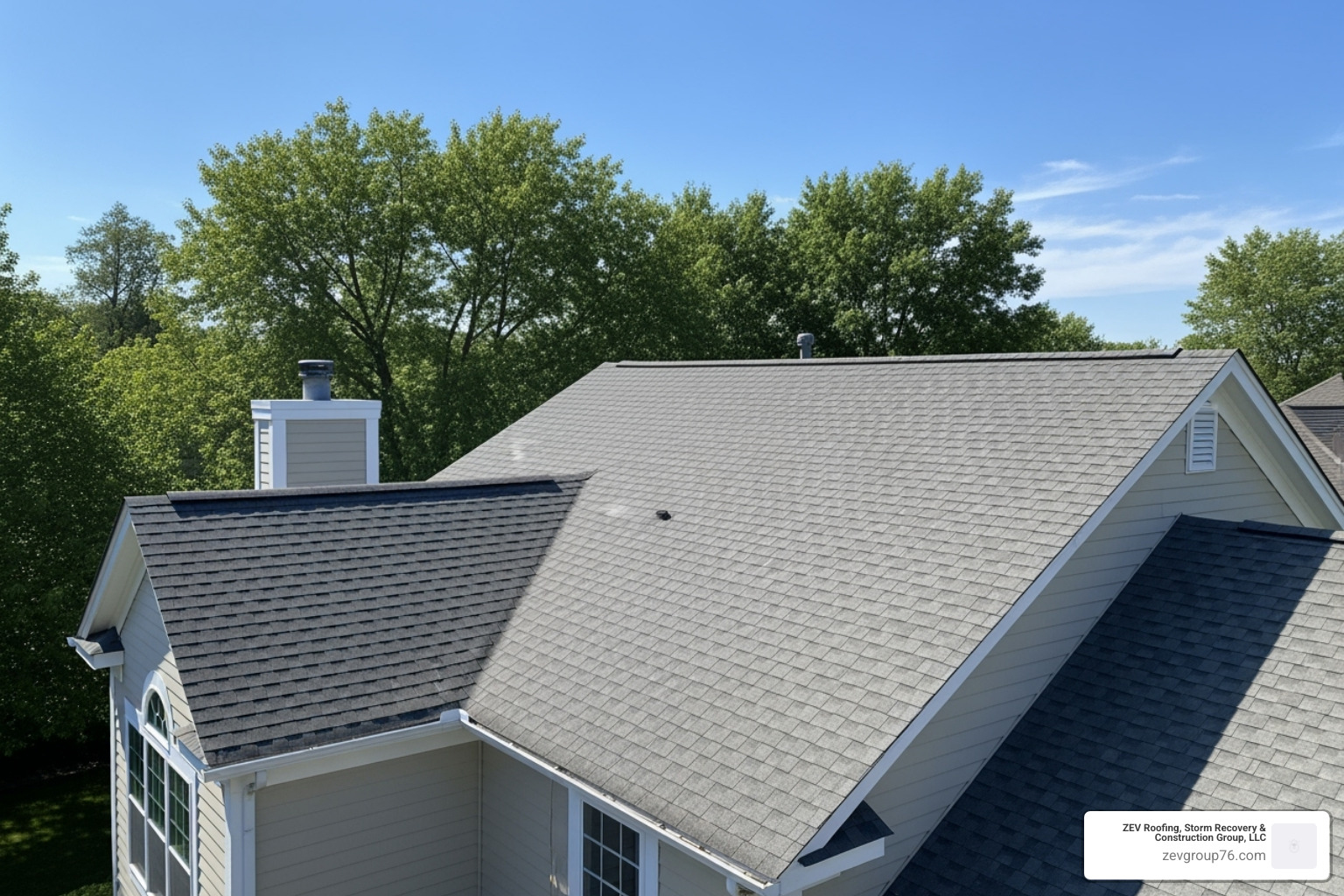
Whether you need a Roof Repair or a complete Roof Replacement, our team is committed to guiding you seamlessly through reconstruction. Don’t face the insurance maze alone. Get expert assistance with your Storm Damage Repair and let us help you turn a stressful situation into a successful recovery. Contact us today to learn more about Our Roofing Services and how we can be your partner in restoring your home.