
Why Proper Gutter System Maintenance Protects Your Home Investment
Gutter system maintenance is the regular cleaning, inspection, and repair of your home’s gutters and downspouts to prevent water damage and protect your property’s foundation, siding, and structural integrity.
Quick Maintenance Checklist:
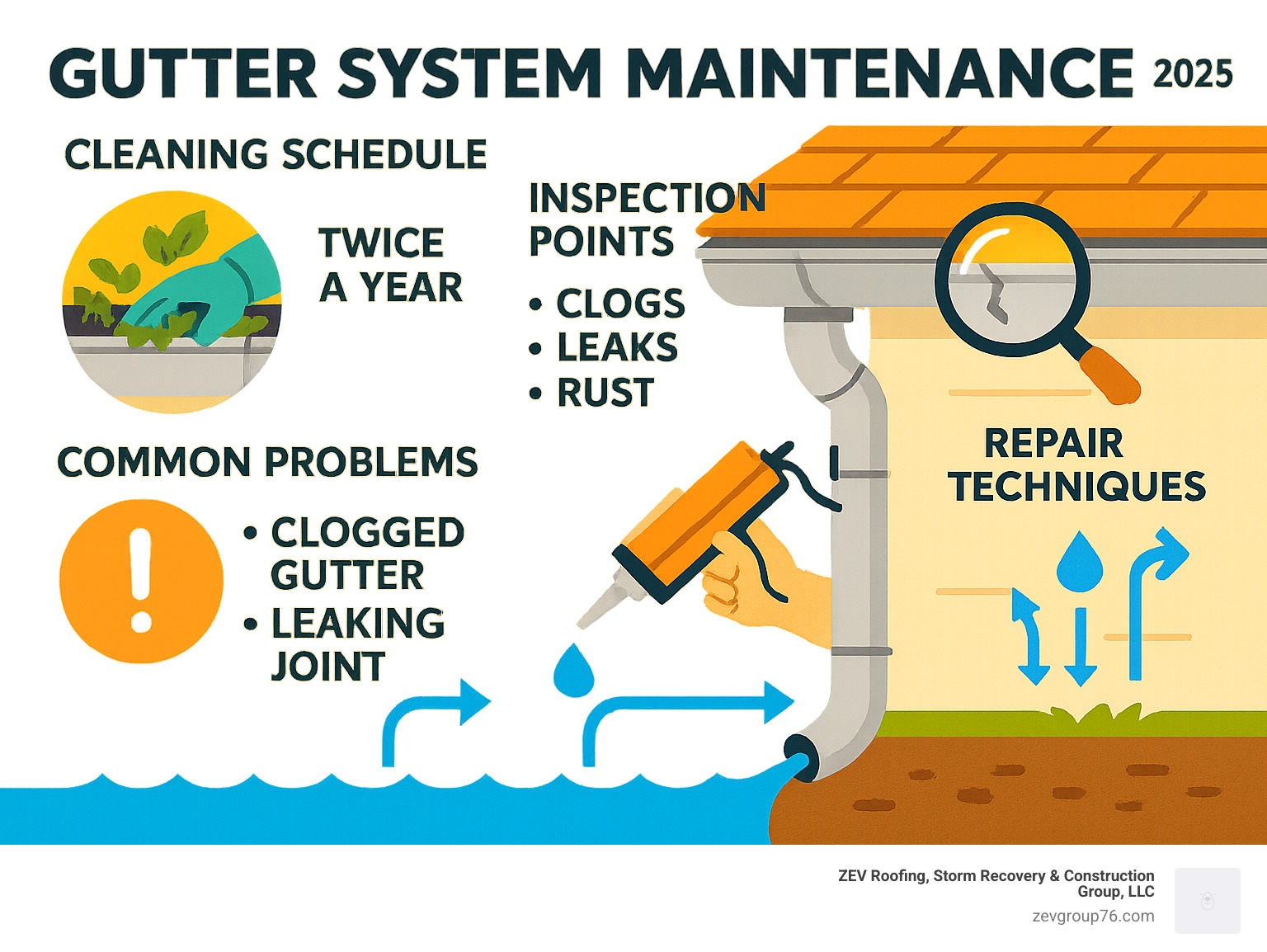
- Clean gutters at least twice yearly (spring and fall)
- Inspect for damage including cracks, rust, and sagging
- Clear downspouts to ensure proper water flow
- Check gutter pitch (1/4-inch slope per 10 feet)
- Extend downspouts 5-10 feet from foundation
- Repair leaks immediately with sealant or patches
Neglected gutters can lead to thousands of dollars in damage to your roof, foundation, and home’s structure. Without proper maintenance, clogged or damaged gutters can cause:
- Foundation erosion and basement flooding
- Roof leaks from backed-up water
- Siding damage from overflowing water
- Ice dams in colder months
- Pest infestations in standing water
Regular maintenance prevents most gutter problems. With proper care, aluminum gutters last 20-30 years and copper gutters can last 50+ years. Without maintenance, even high-end systems can fail in half that time.
Whether you’re dealing with storm damage in Texas or New Mexico’s intense seasonal weather, understanding your gutter system is crucial for protecting your home investment.
Understanding Your Gutter System: Materials and Function
Your gutters work to divert water away from your foundation, protecting your siding and keeping your basement dry. During West Texas thunderstorms or intense New Mexico downpours, they are the first line of defense against water damage.
The primary job of any gutter system is to collect rainwater from your roof and channel it safely away from your home. Without this protection, water would saturate the soil around your foundation, potentially causing thousands of dollars in structural damage.
Modern gutters come in two main styles. K-style gutters mimic the look of crown molding and can handle more water volume, while half-round gutters offer a classic, smooth appearance that’s easier to clean. Both serve the same essential purpose of foundation protection and siding preservation.
| Material | Lifespan (Years) | Cost (Relative) | Pros | Cons |
|---|---|---|---|---|
| Aluminum | 20-30 | Low-Moderate | Lightweight, rust-resistant, relatively inexpensive, wide color selection. | Can dent easily, may not withstand heavy snowfall well. |
| Copper | 50+ | High | Extremely durable, develops attractive patina, resistant to rust/corrosion, high aesthetic value. | Very expensive, requires professional installation, limited color options. |
| Galvanized Steel | 20-30 | Moderate | Strong, durable, good for heavy snow/ice, zinc coating prevents rust. | Heavy, prone to rust if coating is scratched, fewer color options, can be noisy in heavy rain. |
| Vinyl/PVC | 10-20 | Low | Inexpensive, easy to DIY install, lightweight. | Less durable, can become brittle in cold, may sag in heat, limited aesthetic appeal. |
Gutter Materials and Their Lifespan
The material you choose affects how much gutter system maintenance you’ll need. The estimated life expectancy of gutters depends on the material, so let’s break down your options.
Aluminum gutters are a popular choice in Texas and New Mexico. They are lightweight, rust-proof, and come in many colors. They last 20-30 years with proper care but can dent from hail or falling branches.
Copper gutters are a luxury option that develops a beautiful patina and can last 50+ years. While a significant upfront investment, they are ideal for long-term homeowners seeking durability and aesthetic value.
Galvanized steel gutters are strong and durable, ideal for heavy snow and wind. Their zinc coating offers excellent rust resistance for 20-30 years. They are heavier than aluminum and require stronger mounting.
Vinyl or PVC gutters are a budget-friendly, DIY option. They have a shorter lifespan (10-20 years) and can become brittle or sag in extreme temperatures like the Texas heat.
Seamless vs. Sectional Gutters
Your installation choice—sectional or seamless—also affects performance and maintenance needs.
Sectional gutters come in pre-cut pieces that connect with joints and sealants. They’re available at most home improvement stores, making them popular with DIY enthusiasts. However, every joint is a potential leak point where debris can collect.
Seamless gutters are custom-made on-site to fit your home’s exact measurements. They’re formed from one continuous piece of material with no joints along the straight runs. This custom-fit installation means fewer leak points, better water flow, and a cleaner appearance.
The maintenance differences are significant. Seamless systems require less frequent sealing and have fewer spots where clogs typically form. While they need professional installation, the reduced maintenance often makes up for the higher upfront cost.
At ZEV Roofing, we install both types across our service areas like Lubbock and Plainview. We often recommend seamless systems for the best long-term value and lowest maintenance. For more information, explore our Gutter Installation services.
The Ultimate Guide to Gutter System Maintenance
Proper gutter system maintenance is about more than avoiding waterfalls during Texas thunderstorms; it’s about protecting your home investment from the ground up.
Waiting for a problem can lead to costly foundation issues, basement flooding, or damaged siding. Spring cleaning and fall cleaning are your gutter system’s best friends. We recommend cleaning at least twice a year, or more if you’re surrounded by trees.
Proper gutter pitch is also crucial—a gentle 1/4-inch slope for every 10 feet of gutter length directs water toward your downspouts. Without this slope, water stagnates, creating a breeding ground for rust, mold, and mosquitoes. Downspout function is equally critical, with downspouts positioned every 30 to 40 feet to handle water volume effectively.
A Step-by-Step Guide to Gutter System Maintenance
With the right approach and safety precautions, you can keep your gutter system running smoothly.
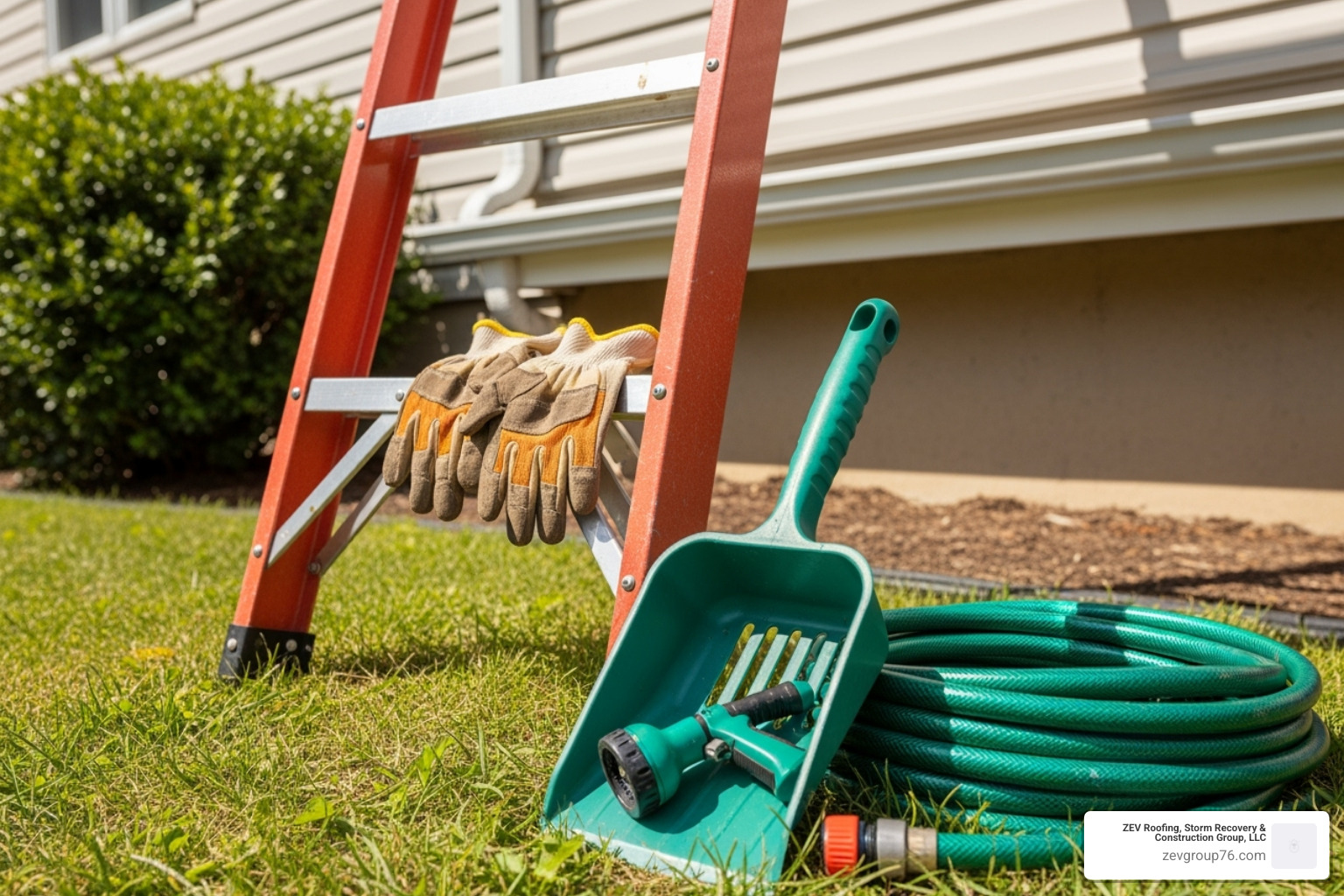
Safety first: Use a sturdy ladder, waterproof gloves, safety goggles, and a gutter scoop. Always have someone spot your ladder.
Debris removal: Systematically scoop out leaves, twigs, and shingle grit from one end to the other.
Flushing gutters: Use a garden hose to flush the gutters. This cleans them and tests the system. Look for proper flow, pooling water, or leaks, which indicate further issues.
Inspecting for damage: As you clean, keep an eye out for cracks, holes, rust spots, or sections pulling away from the house. Checking hangers and brackets is crucial, as loose hardware often causes sagging.
The water flow test is your final check. Run water through the system to ensure it exits downspouts with good flow. Weak flow indicates a blockage.
Essential Downspout and Gutter System Maintenance Tips
Clearing downspout clogs is crucial. Since it’s a vertical system, it can be tricky. Flush from the top with a hose. If water backs up, you have a clog. Try using a plumber’s snake from the bottom elbow, but don’t force the clog deeper.
Downspout extensions make a huge difference. Your water needs to travel at least 5-10 feet away from your foundation. We’ve seen many foundation problems that a simple extension could have prevented.
Splash blocks are simple concrete or plastic blocks that disperse water energy, preventing erosion that can undermine your home’s stability.
The golden rule of ensuring water drains 5-10 feet from foundation is your home’s insurance policy against water damage. In areas like Lubbock and Roswell, proper drainage can mean the difference between a dry basement and a costly cleanup.
Consistent gutter system maintenance is about catching small problems before they become big headaches. For professional guidance, explore our Leak Prevention resources.
Recognizing and Solving Common Gutter Problems
Even with regular gutter system maintenance, problems can arise. The key is to catch them early to prevent a small issue from becoming costly foundation damage. Most gutter issues provide warning signs before they become disasters.
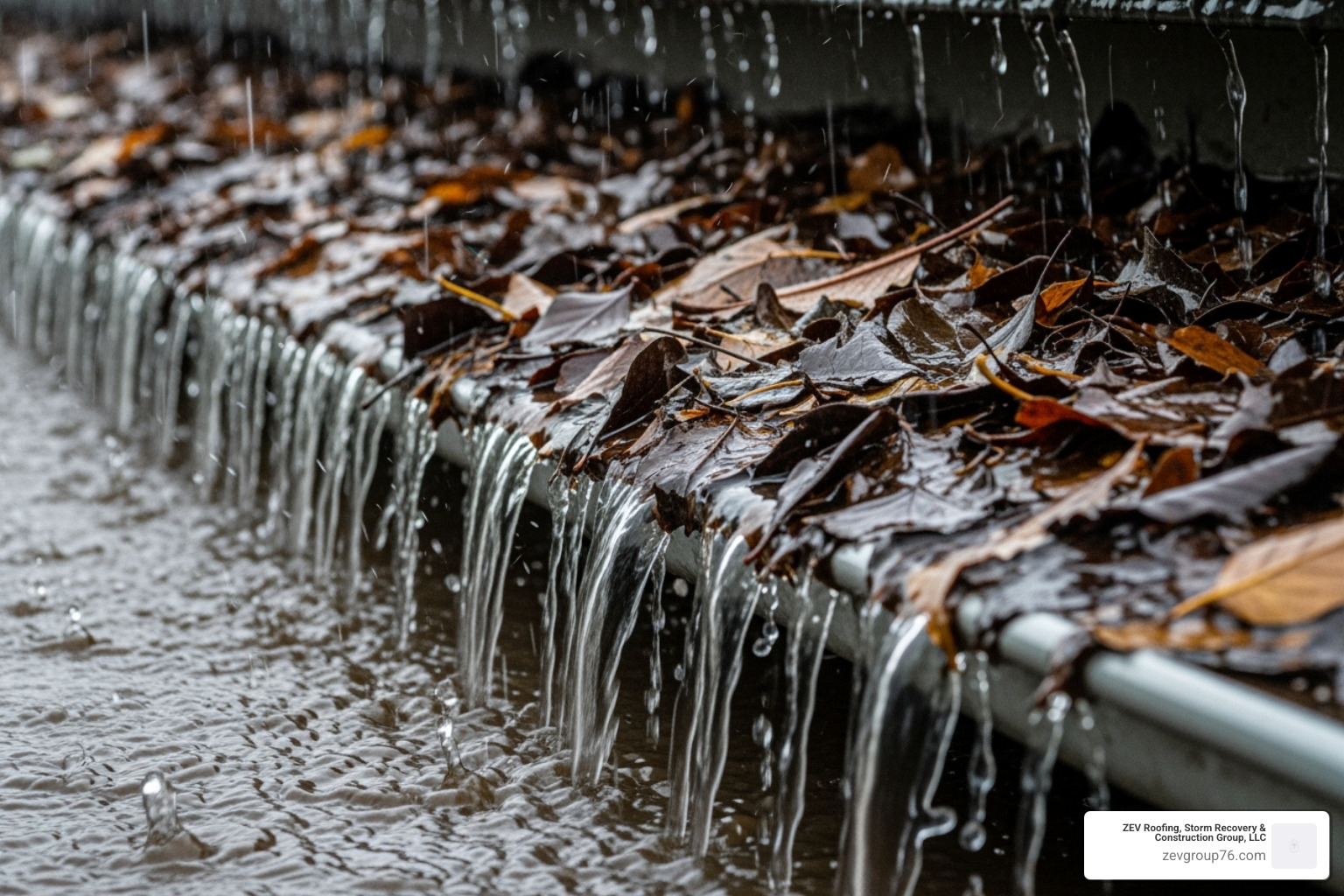
Clogged gutters are the most common issue. Blockages from leaves, pine needles, and shingle granules cause water to spill over, damaging siding and pooling around your foundation.
Leaky seams are frequent, especially in sectional gutters. The sealant at joints can break down over time, turning a small drip into a significant leak during heavy rains.
Sagging gutters happen when the weight of debris or water becomes too much for the hangers. This disrupts the gutter’s pitch, causing water to pool instead of drain.
Damaged downspouts from dents or clogs can stop your entire drainage system. In colder areas, backed-up water can freeze, creating ice dams and a cascade of other problems.
Pest infestations are also a concern. The standing water and debris in clogged gutters attract pests like mosquitoes, birds, and rodents.
Signs Your Gutters Need Repair or Replacement
Your home will tell you when something’s wrong. Look for these warning signs to prevent major water damage.
Visible cracks or holes: Small cracks can be sealed, but multiple or large splits may signal it’s time for replacement.
Peeling paint or rust spots: These indicate water is escaping, often where a galvanized steel gutter’s protective coating has worn away.
Water stains on your siding: Dark streaks mean water is overflowing and running down your walls.
Mold or mildew near your foundation: This serious warning sign means water is consistently pooling where it shouldn’t be.
Pooling water around your foundation: This is the most critical sign. It can lead to foundation cracks and basement flooding. Address it immediately.
Sagging or pulling away: If your gutters are visibly drooping or have gaps between them and the roofline, they are no longer functioning correctly.
If you notice these signs, it’s worth getting a professional opinion. Sometimes a gutter problem is related to roof issues. Consider scheduling a Roof Inspection to get the full picture.
When to DIY vs. When to Call a Professional
Some gutter system maintenance tasks are fine for DIY, but others require a professional for safety and lasting results.
You can probably handle minor leak sealing at a joint or tightening loose fasteners, provided you can reach the area safely and the fascia board is solid. Basic cleaning and clog clearing is also a manageable DIY task for most single-story homes.
Call in the professionals for extensive damage like multiple cracks, large rust sections, or severe warping. They can assess if repair or replacement is more cost-effective.
High or steep roofs are absolutely professional territory. Crews have the right safety equipment, training, and insurance for dangerous heights.
Persistent problems that return despite maintenance may indicate an underlying installation, sizing, or pitch issue requiring expert diagnosis.
Storm damage also needs professional assessment. After severe weather in areas like Wolfforth or New Deal, damage from hail or wind isn’t always obvious. Our team specializes in storm-related repairs and can help with insurance claims. If severe weather has hit, reach out for Storm Damage Repair services.
Advanced Gutter Solutions and Environmental Factors
If basic gutter system maintenance isn’t enough, especially for homes on tree-lined streets, advanced solutions can help.

Beyond standard cleaning, innovative solutions can make your gutters more efficient. Gutter guards are a popular upgrade, acting as a filter to let water in while keeping debris out. Other options include rain chains as an attractive alternative to downspouts, rainwater harvesting systems, and French drains to handle excess runoff.
Living in Texas and New Mexico means dealing with unique weather challenges that demand smart solutions and durable materials.
The Role of Gutter Guards
If you’re tired of scooping soggy leaves, gutter guards are a great solution. These systems filter water while blocking debris.
Types include mesh screens, reverse curve systems, foam inserts, and brush inserts. All excel at debris prevention, which means significantly reduced cleaning frequency. Gutter guards are not a magic solution that eliminates all maintenance, as small particles can still get through, but cleaning becomes much easier and less frequent.
Installation benefits go beyond convenience. By preventing heavy debris buildup, guards maintain proper water flow and reduce stress on hangers, which can extend your gutter system’s lifespan. For homeowners looking to minimize gutter system maintenance, guards are a smart long-term investment. For detailed maintenance strategies, The Essential Guide to Gutter Guard Maintenance offers excellent insights.
How Climate Affects Your Gutters
The Texas and New Mexico climate, with its flash floods and intense heat, puts significant stress on gutters.
Intense rainfall can overwhelm undersized or improperly pitched gutters, causing overflows.
The relentless sun exposure can be brutal. Vinyl gutters can become brittle and crack under high UV rays and temperatures, which is why many clients upgrade to more durable aluminum or steel.
Storm debris from high winds can quickly clog your system, especially without guards.
Hail damage is common and can dent aluminum gutters, creating low spots where water pools. It’s wise to have gutters inspected after a major hail storm.
These environmental factors make durable materials essential. While vinyl is cheaper upfront, aluminum, steel, or copper are often more cost-effective over time in our harsh climate. Understanding these factors helps us recommend the right materials and maintenance schedules for each home.
Frequently Asked Questions about Gutter Maintenance
Over the years, we’ve helped countless homeowners across Lubbock, Shallowater, and the surrounding Texas and New Mexico communities. The same questions come up again and again, which tells us these are the real concerns on people’s minds when it comes to gutter system maintenance. Let’s explore the answers that matter most to you.
How often should gutters be cleaned?
Here’s the straightforward answer: at least twice a year. We recommend tackling this task in both spring and fall for most homes. Spring cleaning gets rid of winter debris and prepares your gutters for those intense Texas thunderstorms we know so well. Fall cleaning clears out all those leaves and gets everything ready for whatever winter might bring.
But here’s where it gets personal to your property. If you’ve got a lot of trees around your home – especially those beautiful but messy cottonwoods or pine trees – you might find yourself cleaning gutters more frequently. Some of our clients with heavily wooded lots need to clean their gutters three or even four times a year.
Signs your gutters need attention include water spilling over the edges during rain, visible piles of leaves or debris, or sections that are starting to sag from the weight. Don’t wait until you see these warning signs during a downpour – by then, you’re already behind on maintenance.
Are gutter guards a worthwhile investment?
This is honestly one of our most popular questions, and the answer is usually yes! Gutter guards offer significant benefits that make them worth considering for most homeowners. They act like a filter, keeping the big stuff out while letting water flow through freely.
The biggest advantage? Reduced cleaning frequency. Instead of climbing that ladder twice a year, you might only need to do it once – or even less often. That’s fewer weekends spent on gutter duty and more time enjoying your home.
Now, let’s be honest here – gutter guards aren’t a magic solution. They’re not entirely maintenance-free. Small debris can still accumulate on top of the guards, and tiny particles might sneak through over time. But the amount of work required drops dramatically.
When you factor in the cost versus long-term savings – fewer professional cleaning services, reduced risk of water damage, and less wear and tear on your gutters – most homeowners find guards pay for themselves over time.
What is the correct pitch for gutters?
Getting the pitch right is crucial for proper drainage, and there’s a specific formula we follow. The standard pitch is 1/4-inch per 10 feet of gutter length. This might not sound like much, but this gentle slope makes all the difference.
Proper pitch ensures drainage by guiding water toward the downspouts instead of letting it sit in the gutters. When gutters don’t have enough slope, water pools and sits stagnant. This creates a perfect breeding ground for mosquitoes, leads to rust on metal gutters, and can even cause your gutters to sag from the weight.
Standing water prevention is key to extending your gutter system’s life. We’ve seen gutters fail prematurely simply because they weren’t installed with the right pitch from the start. When we install or repair gutters, we always double-check this measurement because getting it right the first time saves you headaches down the road.
Protect Your Investment with Proper Gutter Care
Your home is likely your biggest investment, and gutter system maintenance plays a crucial role in protecting that investment for years to come. Think of it this way: spending a few hours twice a year on gutter care can save you thousands of dollars in potential water damage, foundation repairs, and structural issues down the road.
The value of preventative maintenance really can’t be overstated. When your gutters function properly, they’re quietly protecting your structural integrity every single day. They’re preventing water from pooling around your foundation, keeping moisture away from your siding, and ensuring your basement stays dry. All of these factors directly contribute to maintaining and even enhancing your home value.
We’ve seen how neglected gutters can turn a small maintenance task into a major headache. Water damage doesn’t discriminate – it can affect million-dollar homes just as easily as starter homes. But here’s the good news: it’s entirely preventable with consistent care.
Living in West Texas and Eastern New Mexico means dealing with some pretty intense weather patterns. From sudden downpours to scorching sun that can make vinyl gutters brittle, our climate demands that we stay on top of gutter care. That’s exactly why we’re so passionate about helping homeowners understand the importance of regular gutter system maintenance.
At ZEV Roofing’s, we’re not just about fixing problems after they happen – though we’re certainly here when you need us. We believe in helping our customers get ahead of issues before they become costly repairs. Our commitment to quality means we use durable materials and proven installation techniques that stand up to whatever Mother Nature throws our way.
Whether you’re dealing with aging gutters that need replacement, storm damage from a recent weather event, or you simply want to upgrade to a more efficient system, we’re here to help. Don’t wait until you’re dealing with water stains on your siding or foundation problems.
For expert assessment and installation that you can count on, explore our Gutter Installation services and let us help you protect your home investment the right way.