
Why Flat Roof Replacement Matters for Your Property
Flat roof replacement is a critical investment that protects your home or business from water damage, energy loss, and costly structural repairs. Whether you’re dealing with storm damage or an aging roof system, understanding the replacement process can save you thousands of dollars and months of headaches.
Here’s what you need to know about flat roof replacement:
- Average lifespan: Most flat roofs last 20-25 years with proper maintenance
- Cost range: $3,000 to $20,000 depending on size, material, and complexity
- Best materials: EPDM (40-50 years), TPO (15-30 years), PVC (20-30 years), Modified Bitumen (15-25 years)
- Timeline: Most residential replacements take 3-5 days to complete
- Signs you need replacement: Persistent leaks, pooling water, visible cracks, rising energy bills
Flat roofs are popular in Texas and New Mexico because they’re cost-effective and work well in our dry climates. But they face unique challenges from intense UV rays, temperature swings, and severe weather events that can dramatically shorten their lifespan.
The key to a successful flat roof replacement is choosing the right material for your climate and working with experienced contractors who understand local building codes and weather patterns. Professional installation ensures proper drainage, prevents future leaks, and maximizes your warranty protection.
Is It Time for a Replacement? 5 Key Warning Signs
Nobody wants to think about replacing their roof, but ignoring the warning signs of a failing flat roof is like ignoring that weird noise your car makes – it’s only going to get worse (and more expensive) if you wait! Recognizing when it’s time for a flat roof replacement can save you from dealing with major water damage, sky-high energy bills, and emergency repairs.

Let’s walk through the five key warning signs that your flat roof is trying to tell you it needs help.
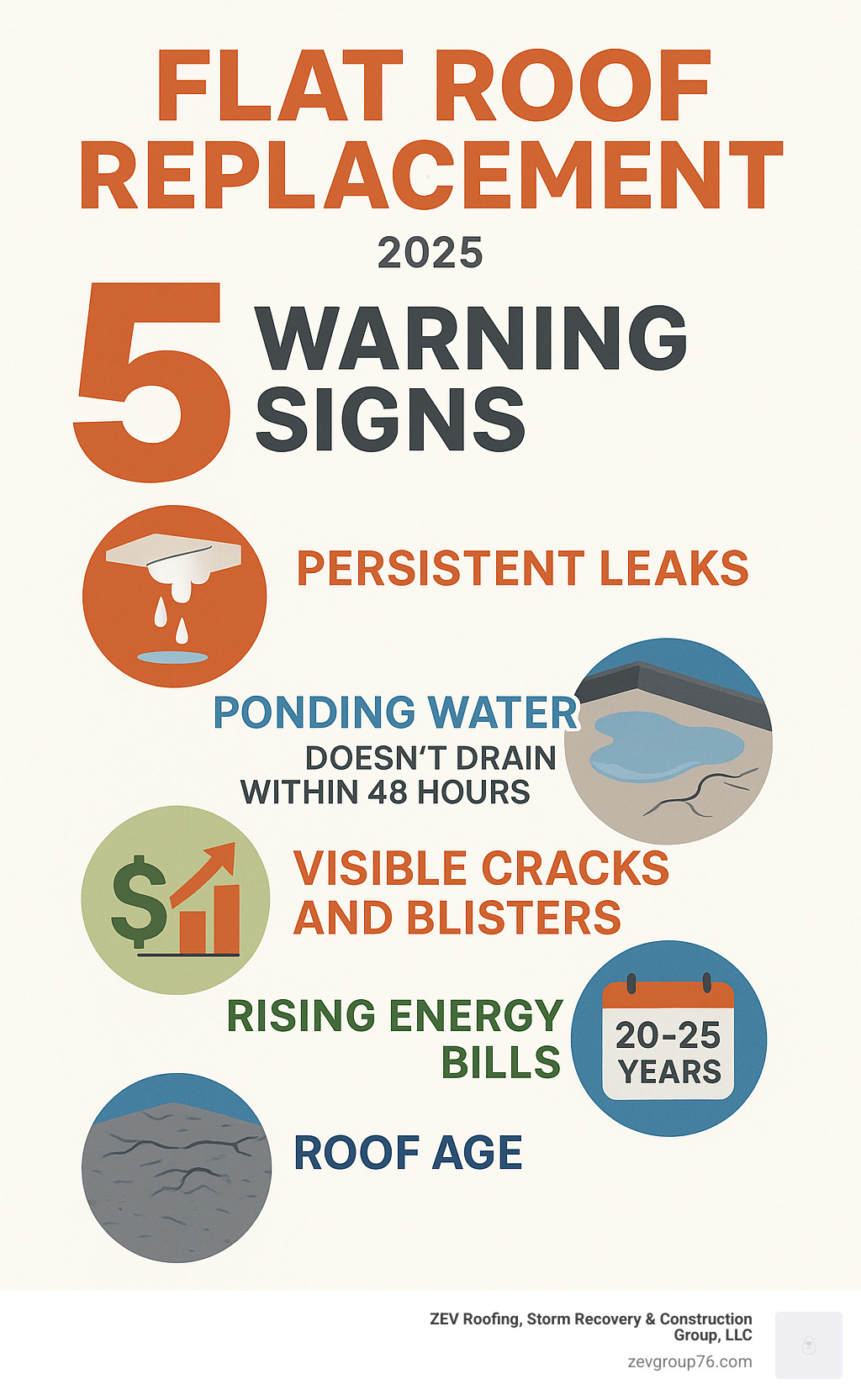
Persistent Leaks
This one’s pretty obvious, but it’s worth talking about because it’s often the first sign homeowners notice. If you’re constantly finding water spots on your ceilings, dealing with drips during rainstorms, or noticing that musty smell that suggests hidden moisture, your roof’s waterproofing has failed.
Here’s the thing about persistent leaks – they rarely get better on their own. You might patch one spot only to find water coming through somewhere else next month. When leaks become a regular occurrence, it usually means the roofing membrane has reached the end of its life.
Ponding Water
Even though they’re called “flat” roofs, they should actually have a slight slope to help water drain off. If you notice standing water on your roof that’s still there 24 to 48 hours after it rains, that’s what we call ponding.
Think of ponding water like a persistent house guest – it overstays its welcome and causes problems. That standing water puts constant pressure on your roofing material, speeds up deterioration, and creates the perfect conditions for leaks to develop. Over time, the weight of the water can also lead to structural sagging, a much more serious and expensive problem to fix.
Visible Damage
Sometimes your roof will show you exactly what’s wrong. Cracks, tears, and splits in the membrane are clear signs that the material is breaking down. You might also notice blisters – those bubble-like areas where the roofing material has separated from what’s underneath.
Blistering is particularly telling because it often happens when heat and moisture get trapped in the roof system. It’s your roof’s way of saying “I’ve been working hard in this Texas heat, and I’m getting tired!”
Rising Energy Bills
Here’s a sneaky sign that many homeowners miss – when your energy bills start climbing without any obvious reason. A failing flat roof often means failing insulation, which forces your air conditioning system to work overtime during our hot summers.
If you’ve noticed your HVAC system running more often or your monthly bills creeping up, your roof might not be providing the energy efficiency it once did. A new roof with proper insulation can actually pay for itself over time through energy savings.
Roof Age
Even if everything looks fine from the ground, age matters. Most flat roofs have a lifespan of 20 to 25 years, though some materials like EPDM can last much longer with excellent care. If your roof is approaching or has passed this age range, it’s smart to start planning for replacement.
Being proactive about an aging roof is like getting regular check-ups at the doctor – it’s much better to address things before they become emergencies.
If you’re seeing any of these warning signs, don’t wait for the problem to get worse. A professional inspection can give you a clear picture of your roof’s condition and help you make informed decisions about repairs versus replacement. More info about roof inspections can help you get started with a thorough assessment from our experienced team.
Choosing the Right Material for Your Texas or New Mexico Home
Living in Texas and New Mexico means dealing with some pretty intense weather conditions – scorching summers, sudden temperature swings, and the occasional severe storm. When it comes to flat roof replacement, picking the right material isn’t just about cost; it’s about finding something that can handle our unique climate challenges while keeping your home comfortable and protected.
Climate Considerations
Our region puts roofing materials through the wringer. UV resistance is absolutely critical here – that relentless Texas and New Mexico sun can break down inferior materials in just a few years. You want materials with reflective surfaces or built-in UV protection that won’t fade, crack, or become brittle under constant sun exposure.
Durability is equally important. We might have beautiful, sunny days most of the year, but when storms hit, they can be fierce. Your roof needs to withstand extreme temperature fluctuations, high winds, and potential hail damage. A material that performs well in a cooler, northern climate may fail prematurely under the intense sun and heat common in West Texas and Eastern New Mexico. The last thing you want is to replace your roof again in just a few years because you chose a material that couldn’t handle our climate.
Here’s how the most popular flat roofing materials stack up for our region:
| Material | Lifespan (Years) | Cost per Sq. Ft. (Avg.) | Key Pros | Key Cons |
|---|---|---|---|---|
| EPDM | 40-50 | $4-8 | Excellent durability, UV resistant, low maintenance | Higher upfront cost, fewer color options |
| TPO | 15-30 | $3-7 | Energy efficient, heat-reflective, moderate cost | Shorter lifespan, can be punctured more easily |
| PVC | 20-30 | $5-10 | Chemical resistant, very durable, fire resistant | Most expensive option, requires skilled installation |
| Modified Bitumen | 15-25 | $3-6 | Proven performance, easy repairs, cost-effective | Less energy efficient, shorter lifespan in hot climates |
Single-Ply Membrane Roofing (EPDM, TPO, PVC)
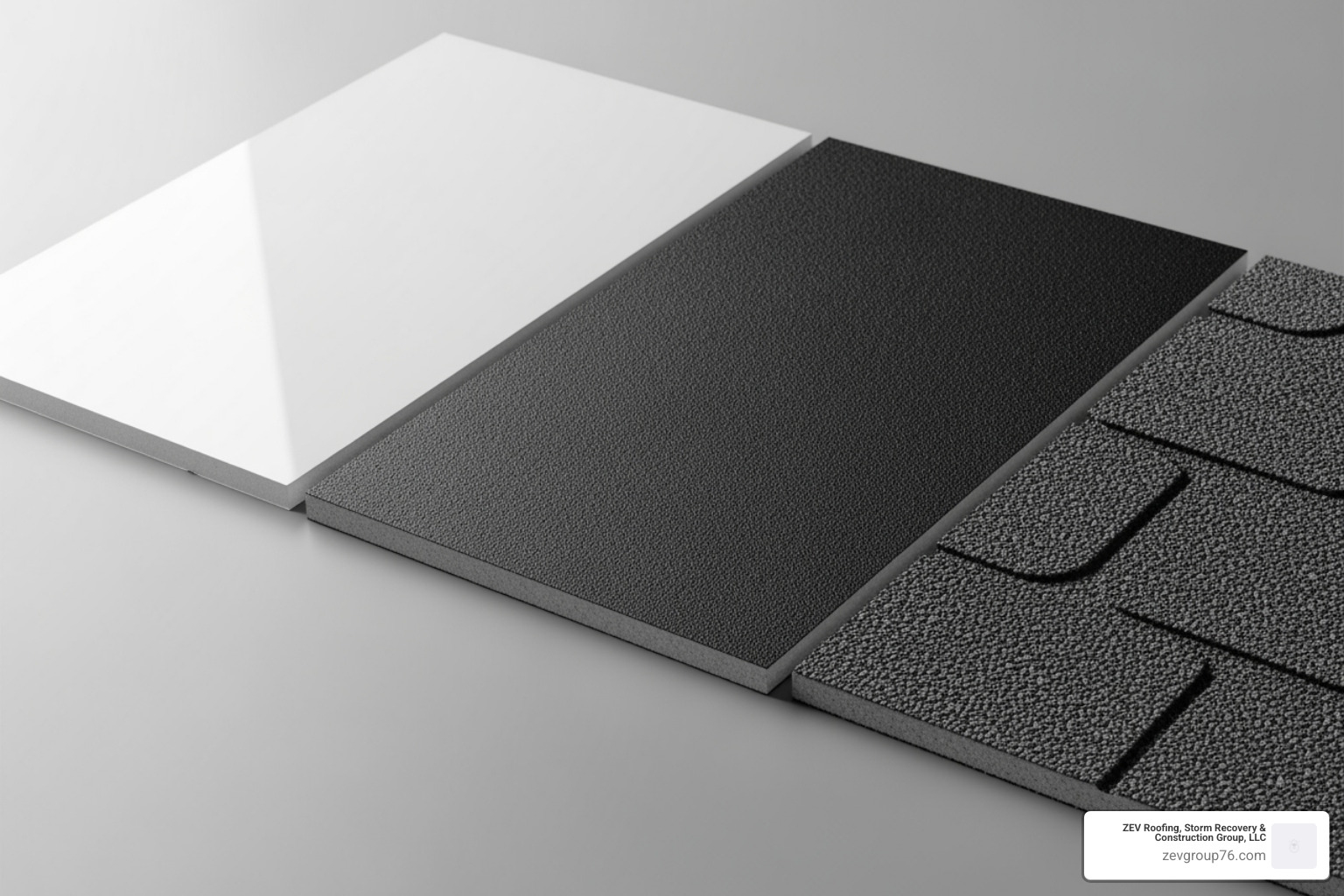
EPDM rubber is like the workhorse of flat roofing materials. It’s been around for decades and has proven itself in our harsh climate. This black rubber membrane is incredibly durable and can last up to 50 years with proper care. Learn more about EPDM roofing to understand why it’s such a popular choice for commercial and residential properties.
TPO roofing has become increasingly popular because of its energy efficiency. The white, reflective surface bounces heat away from your building, which can significantly reduce cooling costs during our brutal summers. Thermoplastic polyolefin (TPO) is lighter weight than some alternatives and offers good performance at a moderate price point.
PVC roofing is the premium option, offering excellent chemical resistance and fire resistance. If you have equipment on your roof or live in an area prone to wildfires, PVC’s superior fire resistance can provide extra peace of mind. It’s also extremely durable, though it requires experienced installers to get the best results.
Asphalt-Based Roofing (Modified Bitumen & BUR)
Modified Bitumen offers multi-layer protection that’s been tested in our climate for many years. The torch-down application creates a seamless, waterproof barrier that handles temperature extremes well. It’s also one of the more budget-friendly options, making it attractive for homeowners who need reliable protection without breaking the bank.
Built-Up Roofing (BUR), the traditional tar and gravel system, has a proven track record spanning decades. While it’s not as energy-efficient as newer materials, BUR systems are incredibly durable and can be cost-effective for larger flat roofs. The multiple layers provide excellent protection, and repairs are typically straightforward when needed.
The key is matching your material choice to your specific needs, budget, and long-term plans for your property. Each option has its sweet spot, and we can help you determine which makes the most sense for your situation and our challenging climate.