
Why Recognizing Wind Damage Early Can Save Your Home
Wind damage to roof systems is a common but often overlooked problem for homeowners in Texas and New Mexico. While you might think major roof damage would be obvious, wind damage often starts small and hidden, growing into a major issue over time.
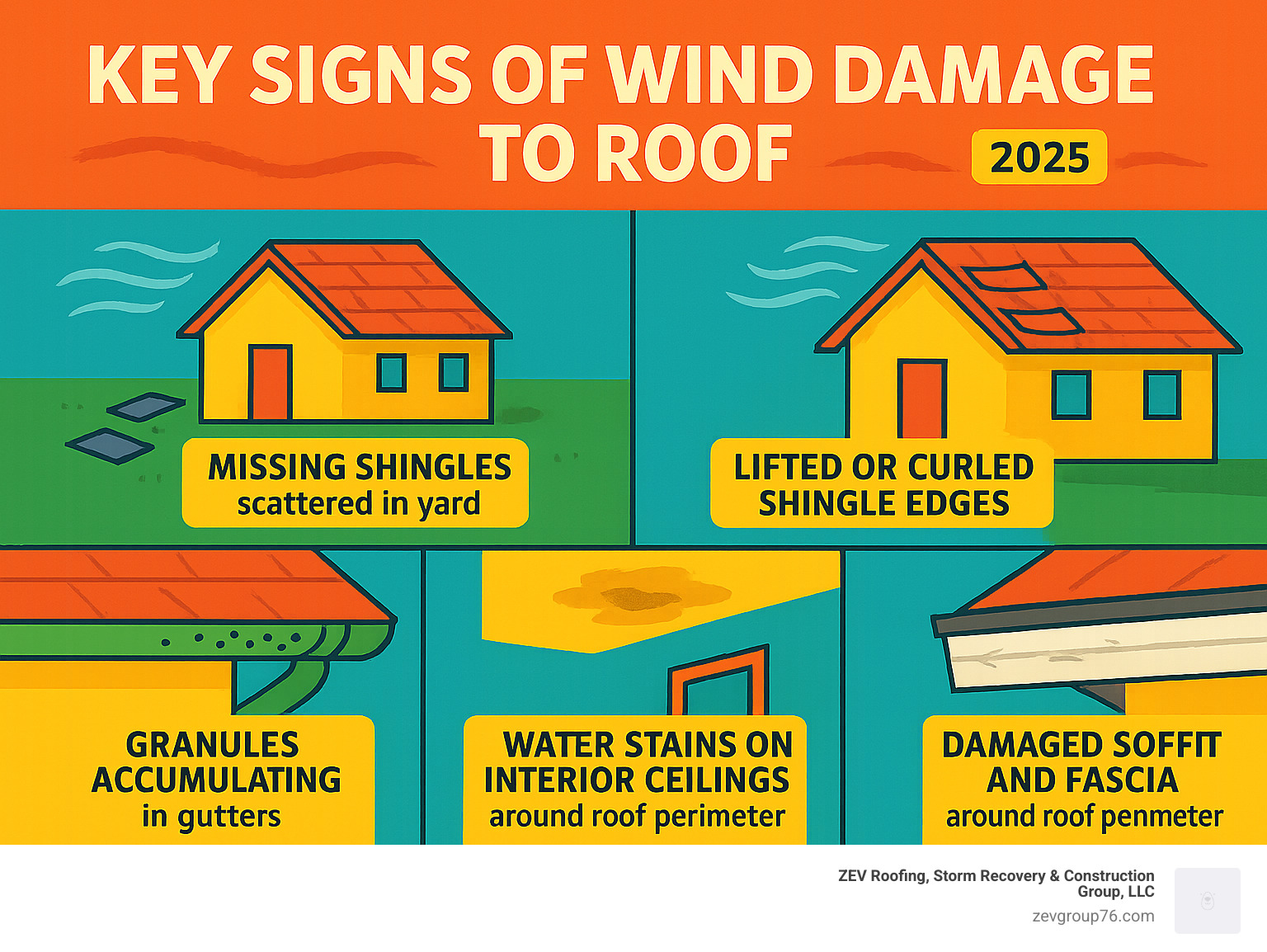
Key Signs of Wind Damage to Look For:
- Missing or lifted shingles, especially around roof edges
- Granules in gutters, indicating shingle deterioration
- Curled or creased shingles from wind stress
- Water stains on ceilings, showing interior leaks
- Damaged soffit and fascia around roof perimeters
The National Weather Service reports that winds as low as 45 mph can cause slight damage, while winds of 58-74 mph can cause significant structural issues. The tricky part is that this damage isn’t always dramatic or visible from the ground.
The real concern is often the damage you can’t see—lifted seals, loosened flashing, and compromised shingle integrity that creates a domino effect across your roof. Unlike the obvious dents from hail, wind damage appears as linear patterns of lifting, tearing, and granule loss. It typically starts at roof edges and spreads as wind gets underneath the material.
Knowing what to look for and acting quickly is crucial. Delaying repairs can lead to water intrusion, mold growth, and much higher costs. Insurance claims for wind damage also have time limits, so prompt action is key.
Identifying the Telltale Signs of Wind Damage
After a storm rolls through our communities in Lubbock, Plainview, and the surrounding areas, your first step should be a safe inspection. Always start with a ground-level exterior inspection, then check inside for clues of hidden damage. Never climb on a potentially damaged or wet roof.
Wind damage to roof systems isn’t always obvious. While finding shingles on your lawn is a clear sign, much of the damage can be subtle and easily missed. Think of it like an iceberg: what you see from the ground may only be a fraction of the problem. For a thorough assessment, a professional roof inspection is recommended to catch what the naked eye might miss.
Common Signs of Wind Damage to a Roof
From the safety of your yard, you can spot several key indicators of wind damage. Binoculars or a camera with a zoom lens can be helpful.
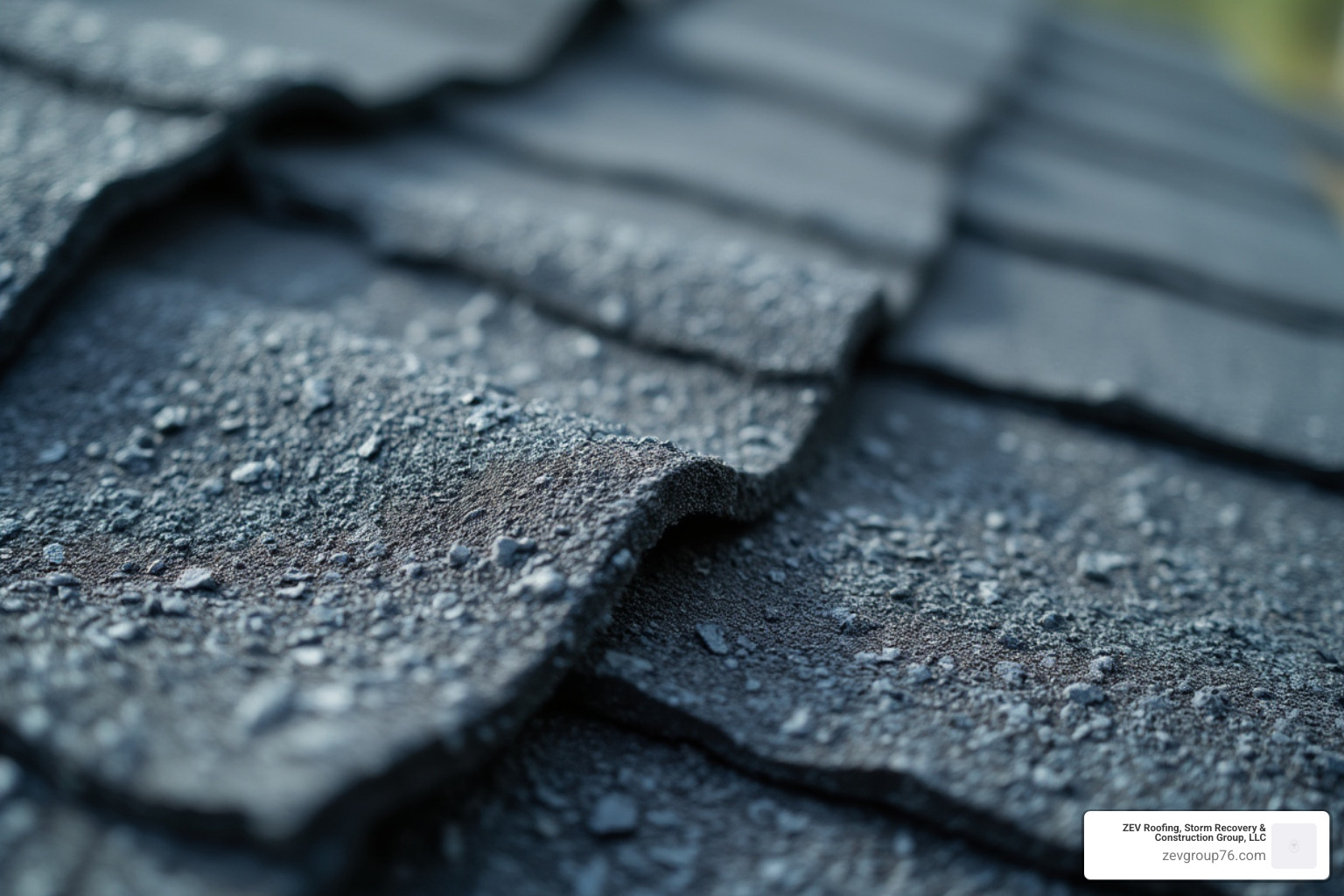
Missing shingles are the most obvious sign. You may find them in your yard or a neighbor’s. Wind often starts at the roof’s edges or where shingles are already loose, creating a domino effect as it peels back more material.
Lifted or curled shingles indicate that the adhesive seals have been broken by strong winds. This constant fluttering weakens the shingle, leading to cracks or tears. Even if the shingle remains, a broken seal leaves your roof vulnerable to water.
Granule loss in your gutters is another red flag. These ceramic particles protect shingles from UV rays. Finding a large accumulation, like coarse sand, after a storm means your shingles have been significantly worn down.
Damaged soffit and fascia, the boards along your roof’s edge, can be ripped, bent, or loosened by wind. This compromises ventilation and creates entry points for water and pests.
Chimney damage can occur when strong winds shift or lean the structure, especially on older homes. Look for a crooked appearance or torn flashing around the base.
For more details on shingle issues, see our guide on damaged shingles.
Interior Clues You Can’t Ignore
Sometimes the first sign of wind damage to roof systems appears inside your home, often days or weeks after a storm.

Ceiling water spots are a clear warning. These discolored rings or wet patches may start small but indicate a significant leak above.
Peeling paint near ceiling corners or where walls meet the ceiling often signals a roof leak, as water can travel along beams before becoming visible.
Attic inspections can reveal direct evidence of leaks, such as wet insulation, drips from the roof deck, or damp spots. Musty odors also point to moisture problems and potential mold growth.
Catching these issues early is vital. Our guide on leak prevention offers strategies to protect your home.
Wind vs. Hail Damage: Telling the Difference
Wind and hail are common in Texas and New Mexico, but they leave different types of damage. Knowing the difference helps when filing an insurance claim.
| Feature | Wind Damage | Hail Damage |
|---|---|---|
| Appearance | Lifting, tearing, creasing, or missing shingles with linear or directional patterns | Dents, divots, circular impact marks, or bruising on shingles and soft metals |
| Pattern | Concentrated on roof edges, ridges, and wind-facing slopes with domino-effect spreading | Randomly distributed across the entire roof surface from vertical impact |
| Shingle Impact | Shingles bent, lifted, creased, or torn with broken seals exposing undersides | Granules dislodged at impact points, leaving black asphalt spots and soft/spongy areas |
| Collateral Evidence | Damaged soffit, fascia, chimney caps, or scattered loose outdoor items | Dents on gutters, downspouts, siding, window screens, or outdoor AC units |
| Granule Loss | From abrasive wind action and debris, often collecting in gutters | Direct impact dislodging, leaving visible “bruises” on shingle surfaces |
The pattern of damage is key. Wind damage is typically directional, following the storm’s path, while hail damage is random. Both cause granule loss, but wind does so through abrasion, while hail punches granules out on impact. Understanding these differences ensures an accurate assessment and proper repairs.
Understanding the Impact: Wind Speeds and Material Vulnerability
During a storm, your roof acts like an airplane wing. Wind racing over the roof creates a low-pressure zone above it, while higher pressure remains inside your home. This pressure differential generates roof uplift, literally trying to suck your roof upward. This force, combined with direct wind pressure, puts tremendous stress on your roof.
The danger is the chain reaction of damage this uplift can cause. Once wind gets under a single shingle and breaks its seal, it can peel back more and more material, quickly turning minor lifting into widespread damage across your roof system.
How Wind Speed Affects Your Roof
Wind damage to roof systems occurs on a spectrum. Damage can begin at surprisingly low speeds and intensifies as winds increase.
At 45 mph, these non-severe winds can break tree branches and start to lift any loose or aging shingles. This is often where the domino effect begins.
Between 58-74 mph, these severe winds can snap larger limbs and cause significant shingle and siding damage. The structural integrity of your roof is seriously tested at these speeds.
At 75+ mph and beyond, we enter widespread damage territory. These are hurricane-force winds (starting at 74 mph) or EF1 tornado winds (73-112 mph) that can peel the surface right off a roof.
These are general guidelines; a roof’s age, condition, and installation quality are critical factors. For more details, you can consult the National Weather Service wind guide and the National Hurricane Center Saffir-Simpson Scale.
Which Roofing Materials Are Most at Risk?
Not all roofing materials perform equally in a storm. The material type, its age, and installation quality determine its resilience.
Asphalt shingles are the most common, but their wind resistance varies. 3-tab shingles are a budget option, often rated for only 60 mph winds, and their seals break easily. Architectural shingles are heavier and multi-layered, offering much better protection with wind ratings up to 110 mph.
Metal roofing is excellent for wind resistance. Many systems can withstand winds over 150 mph, making them a popular choice in hurricane-prone areas.
Concrete tiles also perform very well, with many systems tested to handle winds up to 125 mph due to their weight and interlocking design.
Wood shakes can be vulnerable, especially as they age and become brittle. Wind can splinter, crack, or lift them, creating entry points for water.
Crucially, roof age and condition often matter more than the material itself. Adhesives weaken and materials become brittle over time. A well-maintained 20-year-old roof will outperform a neglected 10-year-old roof. This is why regular inspections are so important, as even 45 mph winds can exploit age-related weaknesses and turn minor issues into major repairs.
Your Post-Storm Action Plan: Safety, Documentation, and Insurance
After a storm, seeing potential damage to your home can be overwhelming. While wind damage to roof systems can look serious, most of it is repairable. The key is to have a clear action plan that prioritizes safety, documentation, and communication with your insurance company.
Immediate Steps to Take After a Storm
Your first instinct may be to climb on the roof, but this is dangerous. A wet, damaged roof is a major safety hazard. Follow these safer steps instead.
- Prioritize Safety: Before going outside, check for downed power lines or other electrical hazards. If you see any, call your utility company and stay inside. Be cautious of debris and slippery surfaces.
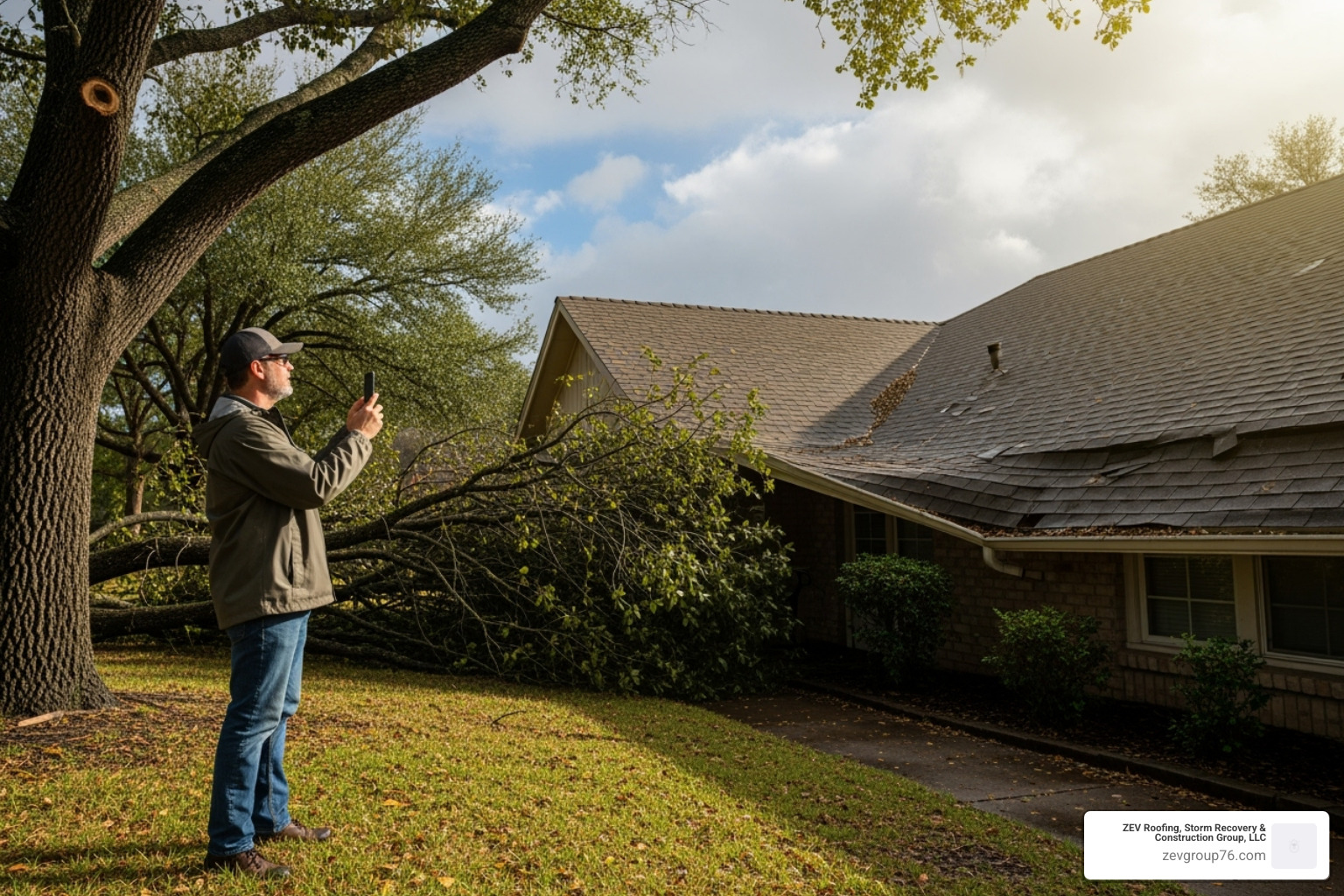
- Conduct a Ground-Level Assessment: Walk around your property and look for obvious signs of damage like missing shingles, damaged gutters, or gaps in your roofline.
- Document Everything: Use your phone to take photos and videos. Get wide shots of the roof and close-ups of any visible damage. Photograph any debris you find in the yard, as this is evidence that it came from your roof.
- Get Emergency Tarping for Severe Damage: If you see large holes or missing sections, your roof needs immediate protection from water. Professional emergency tarping can prevent thousands in additional water damage while you arrange repairs.
- Contact a Professional Roofer: The most important step is to get a thorough, professional inspection. We can use technology like drones to safely examine your entire roof and provide the detailed documentation needed for insurance claims.
For more guidance, see our resources on Storm Damage Repair.
Filing an Insurance Claim for Wind Damage to a Roof
Most homeowner’s insurance policies cover wind damage. Understanding your policy and following the claims process methodically is key.
- Review Your Policy: Before calling, check your deductible, coverage limits, and the timeframe for reporting damage (often 12-24 months).
- Contact Your Agent Promptly: Report potential damage as soon as possible. Provide the storm date and a description of what you’ve observed.
- Provide Thorough Documentation: Your photos and videos are your most valuable assets. Organize them and provide them to your insurer to support your claim.
- Schedule the Adjuster Meeting: Your insurance company will send an adjuster. We highly recommend having a professional roofer present for this meeting. We can point out subtle wind damage to roof systems that an adjuster might miss, ensuring a more accurate assessment.
- Follow Up: Stay in communication with your insurance company. We can help you understand the adjuster’s report and what is covered.
Working with a roofer who understands the insurance process can make a significant difference. The principles in this guide on Why Hiring a Qualified Roofer is Essential for Your Full Roof Replacement in Tampa, FL apply everywhere.
Repair or Replace? Making the Right Decision
Deciding whether to repair or replace your roof depends on several factors. An honest, professional assessment is crucial.
- Extent of Damage: Minor, isolated damage may only require a repair. However, if damage is widespread, replacement is often the more practical and long-term solution.
- Roof’s Age: If your asphalt shingle roof is already 15-20 years old, replacement is often the smarter investment, as repairing an aging roof can be a temporary fix.
- Cost-Benefit Analysis: When repair costs approach the price of a replacement, a new roof provides a new warranty, better wind resistance, and long-term peace of mind.
- Local Building Codes: In some cases, if a certain percentage of your roof is damaged, local codes may require a full replacement to meet current standards.
Whether you need targeted Roof Repair or a full Roof Replacement, we can guide you to the best solution for your home.
Proactive Prevention: How to Fortify Your Roof Against Wind
While we can’t control the weather, we can take proactive steps to give our roofs the best fighting chance against strong winds. Most wind damage to roof systems can be prevented or significantly reduced with regular maintenance and smart choices.
Best Practices for Wind Damage Prevention
The best defense against wind damage is built over time through consistent care.
Annual Roof Inspections: This is your most effective tool. A professional inspection can spot minor issues like a loose shingle or a worn seal before a 60 mph gust turns them into a major problem.
Securing Loose Objects: Patio furniture, grills, and even toys can become dangerous projectiles in high winds, capable of puncturing shingles. Secure these items before a storm.
Trimming Overhanging Trees: Dead or overhanging branches can break off and fall on your roof during a storm. Even healthy branches can scrape against shingles over time, creating weak spots that wind can exploit.
Installing Hurricane Clips or Straps: For homes in high-wind regions like Texas and New Mexico, these metal connectors are a game-changer. They anchor your roof structure to your walls, helping to resist wind uplift forces.
Choosing High-Wind Rated Shingles: When it’s time for a replacement, investing in better materials pays off. Basic 3-tab shingles are often rated for only 60 mph winds, while premium architectural shingles can handle up to 110 mph. The upfront cost is often offset by avoiding future repairs.
Ensuring Proper Installation: Even the best materials will fail if not installed correctly. This means using the right nail patterns and adhesives according to manufacturer specifications for high-wind areas. Choosing an experienced, reputable contractor is critical to ensure your roof performs as designed during a storm.
A little prevention goes a long way. Regular maintenance and quality installation create layers of protection that provide priceless peace of mind when the winds pick up.
Conclusion: Secure Your Home with an Expert Partner
Now that you can identify the signs of wind damage to roof systems—from granule deposits in your gutters to missing shingles—you can act before small problems become major headaches. Even 45 mph winds can start a damaging process that, if ignored, can lead to significant structural issues.
The most important takeaway is not to wait. A water stain on the ceiling or a curled shingle is a clear signal that your roof needs attention. Prompt action saves money and protects your family and home from extensive, disruptive damage.
Proactive measures like annual inspections and choosing quality materials dramatically reduce your risk. When storms do hit our communities in Texas and New Mexico, having a trusted professional partner makes all the difference.
At ZEV Roofing, Storm Recovery & Construction Group, LLC, we’ve seen how preparation and a quick response can save homeowners thousands. Whether you’re in Lubbock, Plainview, or anywhere in our service area, we understand the unique challenges of our region’s weather.
Your roof is your home’s first line of defense. Don’t leave its integrity to chance. If you’ve spotted any warning signs or it’s been a while since your last inspection, we’re here to help.
Get professional help with your storm damage repair – because your peace of mind is worth the call.