
Why Commercial Roof Replacement is Critical for Your Business
A commercial roof replacement is a significant investment, but it’s essential for protecting your building, assets, and business operations. When a roof nears the end of its typical 20-year lifespan or sustains severe damage, replacement is crucial to maintain structural integrity and prevent costly interior damage from water, mold, and other hazards.
A failing roof can severely impact your business, leading to compromised inventory and safety risks for employees and customers. When frequent repairs become more expensive than a long-term solution, a full replacement offers better value and peace of mind.
This guide covers every aspect of commercial roof replacement, from identifying warning signs and choosing materials to understanding the installation process and budgeting for the project. Our goal is to help you make an informed decision that protects your investment and ensures business continuity.
When to Replace vs. Repair Your Commercial Roof
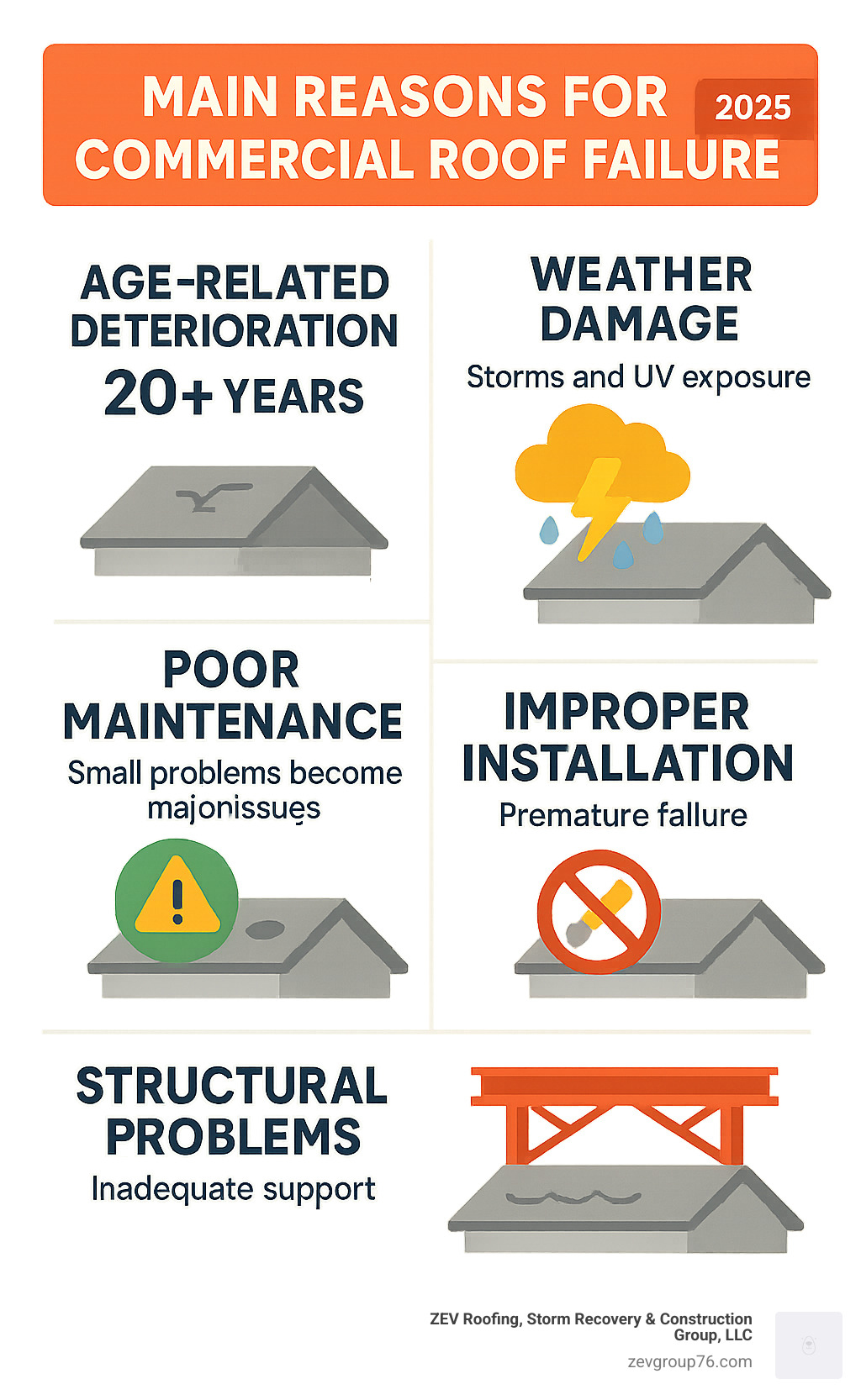
Deciding between repairing or replacing your commercial roof is a critical choice for your building’s future. The age of your roof is a major factor; most last around 20 years, but this varies with material and maintenance. A well-kept roof might last 30 years, while a neglected one could fail in 10.
When repairs become a frequent, costly ritual, a commercial roof replacement is often the smarter financial move. Constant patching can be a sign of systemic failure, and investing in a new, reliable roof provides long-term peace of mind and protection from emergency leaks.
Key Signs Your Roof Needs Replacement
Look for these telltale signs that indicate a replacement is likely needed over another repair:
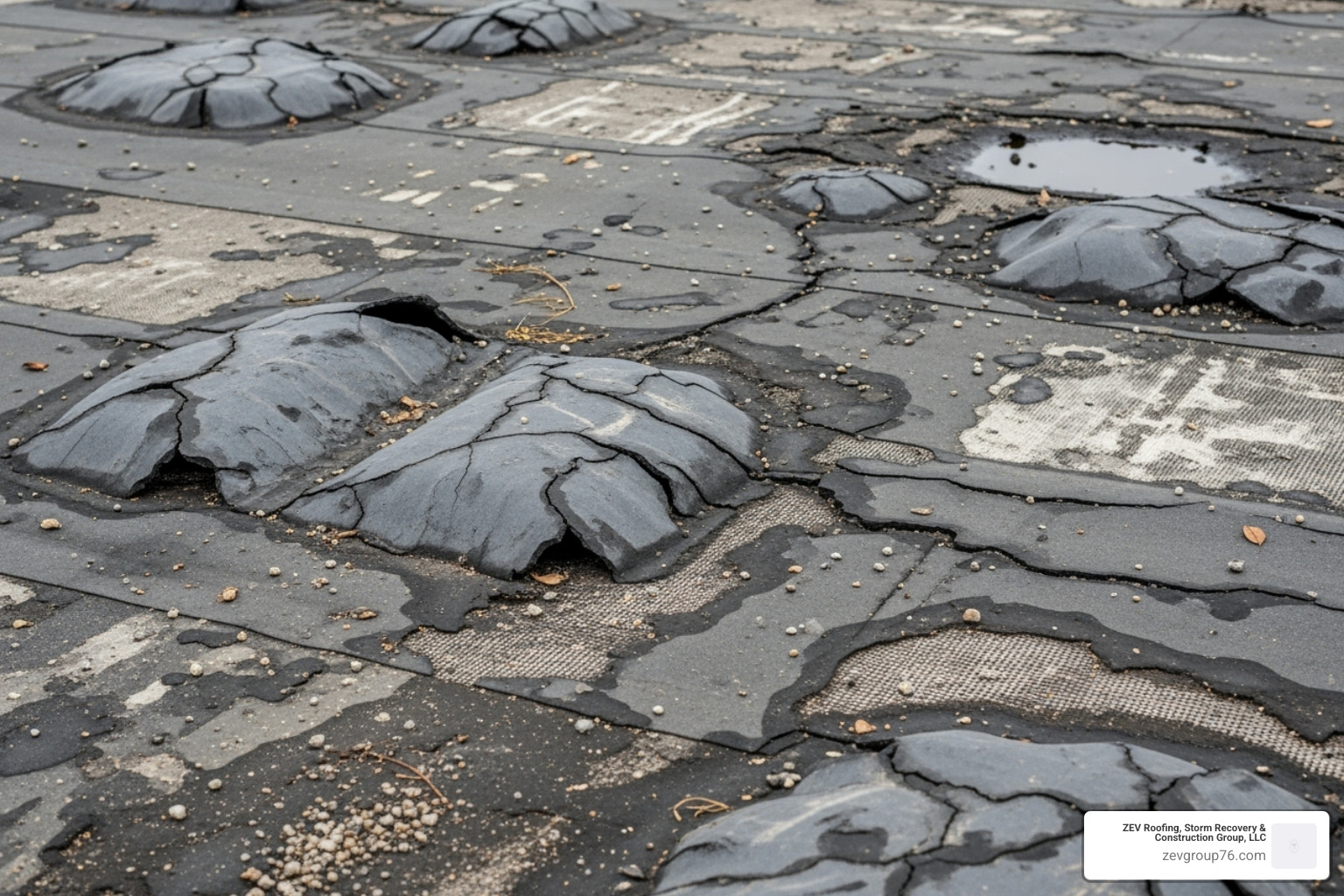
- Persistent leaks: If you’re constantly dealing with water infiltration, your roof’s primary function has failed.
- Water stains on ceilings or walls: These point to ongoing moisture issues that can cause hidden damage far from the initial leak.
- Bubbling or blistering: Trapped moisture or air under the roof membrane is a sign that the material is breaking down.
- A sagging deck: This is a major red flag for water saturation and structural damage, demanding immediate attention and likely replacement.
- Increased energy bills: A deteriorating roof loses its insulating properties, forcing your HVAC system to work harder and driving up costs.
- Visible material damage: Widespread cracks, splits, or deterioration mean the roof’s protective barrier is compromised beyond simple patching.
Roof Restoration vs. Full Replacement
Understanding the difference between these options can save you time and money.
Roof restoration involves applying a protective coating or membrane over your existing roof. It’s a great option when the underlying structure is sound but the surface is worn. Restoration is less expensive, causes minimal business disruption, and can extend your roof’s life by 10-15 years. Additionally, light-colored coatings create a reflective surface that can lower roof temperatures and reduce cooling costs.
Full replacement means removing the old system down to the deck and installing a new one. While it’s a larger investment, it provides the maximum lifespan, resolves any underlying structural issues, and allows for upgrades to modern, more efficient materials.
- Choose restoration if: Your roof’s structure is sound, issues are superficial, and you want a budget-friendly solution to extend its life.
- Choose replacement if: You have significant structural damage, widespread leaks, or the roof has reached the end of its service life.
If you’re facing minor issues, our roof repair services can help you maintain your current roof while you plan for the future.
A Deep Dive into Commercial Roofing Materials and Structures
Understanding your roof’s structure is the first step in a successful commercial roof replacement, as it dictates which materials are suitable.
- Flat Roofs: Common on warehouses and retail centers, these have a slight slope (around 1/4 inch per foot) for drainage. They are practical but require excellent waterproofing to prevent ponding water.
- Low-Slope Roofs: With a pitch up to a 3:12 ratio, they drain more effectively than flat roofs while offering similar material options.
- Steep-Slope Roofs: Found on buildings where aesthetics are important, their steep pitch (greater than 3:12) sheds water efficiently and often uses materials like metal panels or shingles.
The structure determines the best material for your commercial roof replacement. A heavy system like Built-Up Roofing requires a strong structure, while lightweight membranes are more versatile.
Common Commercial Roofing Materials
Choosing the right material is key to your roof’s performance and longevity. Each has its own strengths and weaknesses.
| Material Type | Typical Lifespan | Avg. Cost/Sq. Ft. | Key Pro | Key Con |
|---|---|---|---|---|
| TPO (Thermoplastic Polyolefin) | 20-25 years | $7.50 – $13.50 | Energy-efficient (cool roof), durable, lightweight, chemical resistant | Vulnerable to punctures, quality can vary by manufacturer |
| EPDM (Ethylene Propylene Diene Monomer) | 20-25 years | $7.50 – $13.50 | Highly durable, weather-resistant, flexible, cost-effective | Dark color absorbs heat (unless white), prone to punctures |
| Modified Bitumen (Mod Bit) | 15-20 years | $9.50 – $15.75 | Multi-layered durability, good for high foot traffic, various installation methods | Shorter lifespan than some, seams can degrade, more labor-intensive |
| Metal Roofing | 30-50+ years | $12.50 – $18.75 | Extremely durable, long lifespan, fire-resistant, recyclable, low maintenance | Higher initial cost, can be noisy, expansion/contraction issues |
| Built-Up Roofing (BUR) | 20-30 years | $12.50 – $22.25 | Excellent waterproofing, long history of proven performance, fire retardant | Heavy, messy installation, potential for moisture retention, higher cost |
| Asphalt Shingles | 15-30 years | $4.50 – $8.50 | Cost-effective, wide color variety, easy to install and repair | Shorter lifespan on low slopes, not ideal for flat roofs, less durable for commercial traffic |
TPO is a popular choice for its energy-efficient white surface that reflects heat. EPDM is a durable synthetic rubber membrane known for its flexibility in fluctuating temperatures. Modified Bitumen offers multi-layered toughness, ideal for roofs with high foot traffic. Metal roofing provides exceptional longevity and durability, lasting 50 years or more with minimal maintenance. For more details, see our More info about Commercial Roofing page or consult industry resources like the Single Ply Roofing Industry (SPRI).
How Climate and Maintenance Affect Lifespan
Even the best material won’t last without proper care, especially in the harsh climates of Texas and New Mexico. Intense UV radiation, hail, high winds, and temperature swings all accelerate roof aging.
Installation quality is paramount. Poor workmanship can cause a premium roof to fail prematurely. Choosing an experienced, reputable contractor is essential to protect your investment.
Ongoing maintenance is non-negotiable. Regular inspections, at least twice a year and after major storms, can prevent small issues from becoming costly disasters. Our More info about Roof Inspection services help property owners catch problems early, ensuring their roofs reach or exceed their expected lifespan.
Your Step-by-Step Guide to the Commercial Roof Replacement Process
A commercial roof replacement is a structured process. With a professional team, it can be managed with minimal disruption to your business. We prioritize safety and clear communication from start to finish, ensuring every detail is handled with precision.
Step 1: Initial Assessment and Contractor Selection
The process begins with a thorough inspection of your existing roof to assess damage and determine if a full replacement is necessary. We examine every detail to identify both obvious and subtle issues.
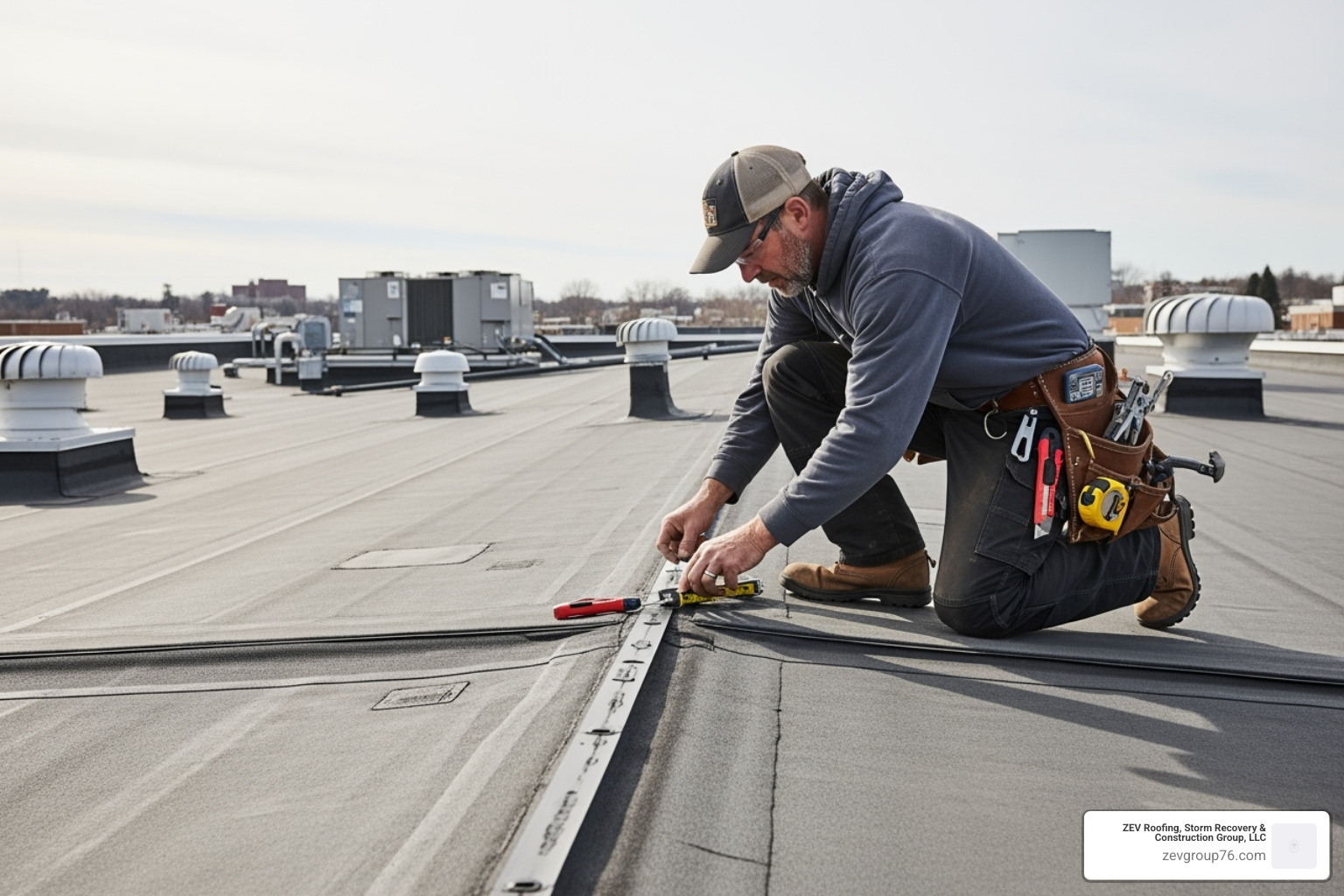
Choosing the right contractor is the most critical decision you’ll make. Look for a licensed roofing contractor or inspector with proven commercial experience. Key steps include:
- Verifying they are fully licensed and insured.
- Asking for references and examples of past projects.
- Obtaining detailed, written estimates that clearly outline the scope of work and materials.
Step 2: Planning, Permitting, and Material Selection
Once you’ve selected a contractor, we create a detailed project plan. This includes establishing a realistic timeline, confirming the budget, and finalizing your material selection based on climate, energy goals, and desired lifespan. We handle the complex permitting process, ensuring compliance with all local building codes in Texas and New Mexico to avoid delays.
Step 3: Site Preparation and Old Roof Removal
Before work begins, we protect your property by covering landscaping and setting up safety barriers. We manage debris removal efficiently to minimize impact on your operations. The tear-off process involves systematically removing old roofing materials to expose the underlying roof deck. We then conduct a crucial deck inspection to identify any hidden rot, water damage, or structural issues. Any necessary structural repairs are addressed at this stage to ensure a solid foundation for the new roof.
Step 4: Installation of the New Roofing System
This is where your new roof takes shape. The installation is a multi-step process designed to create a seamless, watertight barrier.
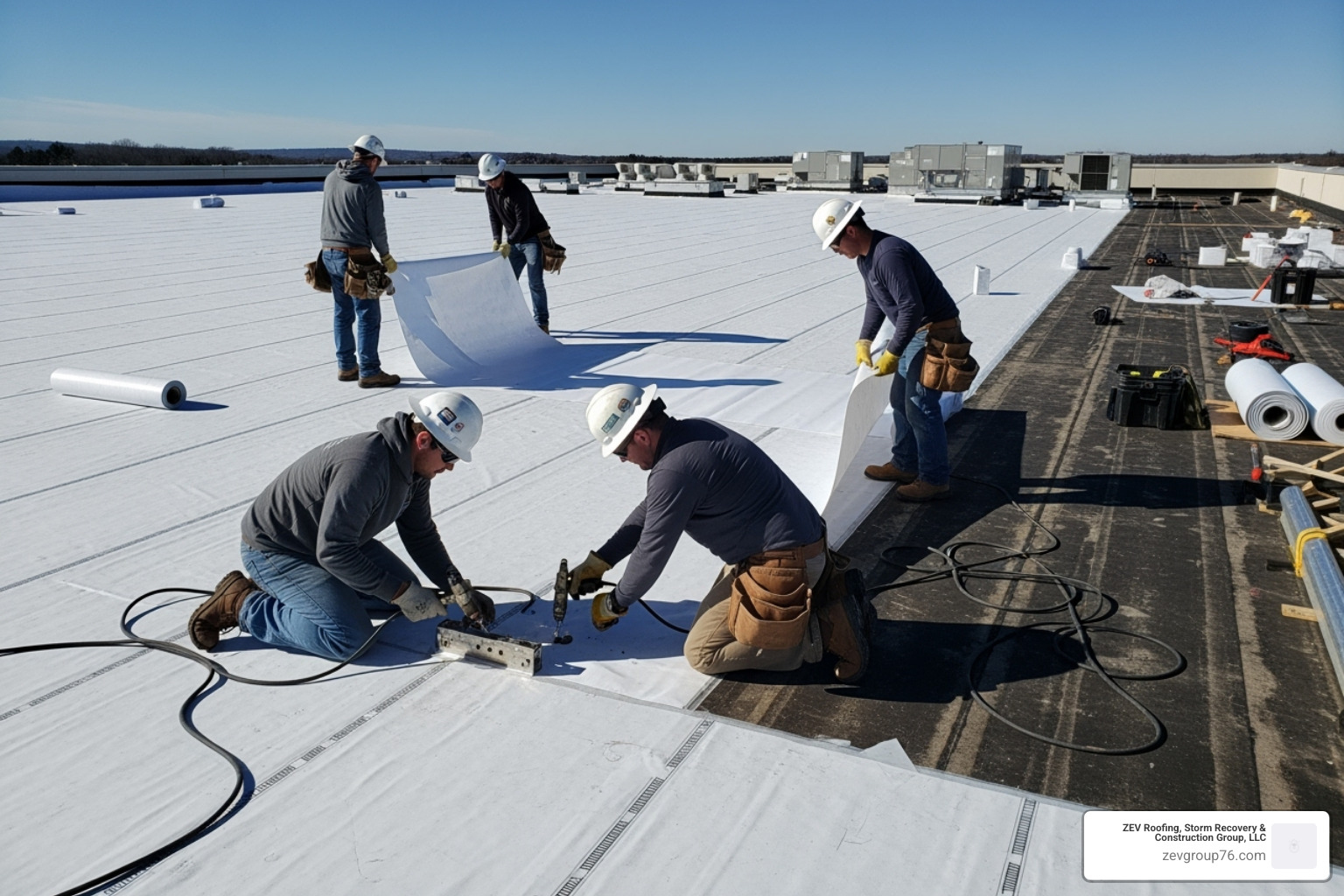
- Underlayment and Insulation: A protective underlayment is installed, followed by new insulation to improve energy efficiency.
- Membrane Installation: The primary roofing material (e.g., TPO, EPDM, metal) is installed according to manufacturer specifications. This often includes heat-welding seams to create a monolithic surface.
- Flashing and Detailing: We carefully seal vulnerable areas around vents, HVAC units, and roof edges where leaks commonly occur.
Throughout the installation, we perform quality control checks to ensure the work meets our high standards and qualifies for manufacturer warranties, protecting your commercial roof replacement investment for years to come.
Strategic Planning: Budgeting, Upgrades, and Long-Term Value
A commercial roof replacement is a strategic investment in your property’s future. Smart financial planning and considering upgrades are key to maximizing your return. We also guide clients through the insurance claim process after storm damage to ensure a smooth experience.
Key Cost Implications of a Commercial Roof Replacement
The total cost of a commercial roof replacement depends on several factors. Understanding these helps in effective budgeting. Costs typically range from $7.50 to over $22.00 per square foot.
Key cost drivers include:
- Roof Size and Complexity: Larger or more complex roofs with multiple levels and penetrations cost more.
- Material Type: Costs vary significantly between materials like TPO, metal, or modified bitumen.
- Labor Costs: These are influenced by roof accessibility, complexity, and regional wages.
- Tear-Off and Disposal: Removing and disposing of the old roof adds to the total cost.
- Permit Fees: These vary by municipality.
- Warranty Options: Improved warranties may increase the initial cost but offer better long-term protection.
For a deeper look at project costs, see our information on More info about Roof Replacement.
Benefits of Upgrading During a Commercial Roof Replacement
A replacement is the perfect opportunity to improve your building’s performance and value.
- Improved Energy Efficiency: Installing a right roofing material like a reflective TPO membrane or adding insulation can significantly lower heating and cooling costs.
- Improved Safety Features: It’s an ideal time to add modern guardrails, walkways, or fall protection systems to meet current safety codes.
- Increased Property Value: A new, high-quality roof is a major selling point for potential buyers or tenants, signaling a well-maintained property.
- Code Compliance: A full replacement ensures your roof meets the latest building codes for safety, energy, and structural integrity.
- Superior Leak Prevention: A new, professionally installed system offers far better protection against water damage than an old, patched roof. This protects your assets and prevents business interruptions. Learn more on our More info about Leak Prevention page.
Frequently Asked Questions about Commercial Roof Replacement
Here are answers to some of the most common questions we receive about commercial roof replacement.
What is the typical lifespan of a commercial roof?
The average lifespan is about 20 years, but this can vary significantly. High-quality materials with expert installation and regular maintenance can last 30 years or more. Conversely, poor installation or neglect in harsh climates can lead to failure in as little as 10 years.
How much does a commercial roof replacement cost?
Costs vary widely based on several factors. As a general guide, expect to pay per square foot:
- Single-ply (TPO/EPDM): $7.50 – $13.50
- Modified Bitumen: $9.50 – $15.75
- Metal Roofing: $12.50 – $18.75
- Built-Up Roofing: $12.50 – $22.25
Key factors influencing the final price include roof size, material choice, accessibility, labor, and permit fees. Always get a detailed, written estimate for an accurate quote.
How do I choose the right contractor for my project?
Selecting the right contractor is crucial for a successful outcome. Here’s what to look for:
- License and Insurance: Verify they have proper licensing, liability insurance, and workers’ compensation.
- Proven Experience: Ask for references from recent commercial clients and look at examples of their completed projects.
- Detailed Estimates: A reputable contractor provides a comprehensive written estimate that breaks down all costs for materials, labor, and permits.
- Strong Warranties: Inquire about both the manufacturer’s material warranty and the contractor’s workmanship warranty.
Our guide on Why Hiring a Qualified Roofer is Essential for Your Full Roof Replacement in Tampa, FL offers more insights, with principles that apply everywhere.
Protect Your Investment with Professional Roofing Services
Your commercial roof replacement is a critical project, but it doesn’t have to be a stressful one. By understanding the signs of failure, material options, and replacement process, you can make a confident decision that protects your business for decades.
Water damage doesn’t wait, and delaying a necessary replacement can lead to emergency repairs, business disruptions, and higher costs. The quality of the installation and materials is paramount, often determining whether a roof lasts 15 years or 30.
At ZEV Roofing & Construction, we deliver expert craftsmanship designed to withstand the harsh weather of Texas and New Mexico. We specialize in More info about Storm Damage Repair and work directly with insurance companies to streamline your claim, handling the documentation to ensure you receive a fair settlement.
Your business deserves reliable protection. Whether you’re in Lubbock, Plainview, or anywhere across West Texas and Eastern New Mexico, we are here to provide a roofing solution that performs. Contact us today for a thorough assessment and a clear plan that fits your budget and timeline.