
Why Commercial Building Waterproofing is Critical for Your Property Investment
Commercial building waterproofing is the process of applying protective systems to prevent water intrusion into commercial structures, safeguarding everything from foundations to roofs against moisture damage that can cost hundreds of thousands in repairs.
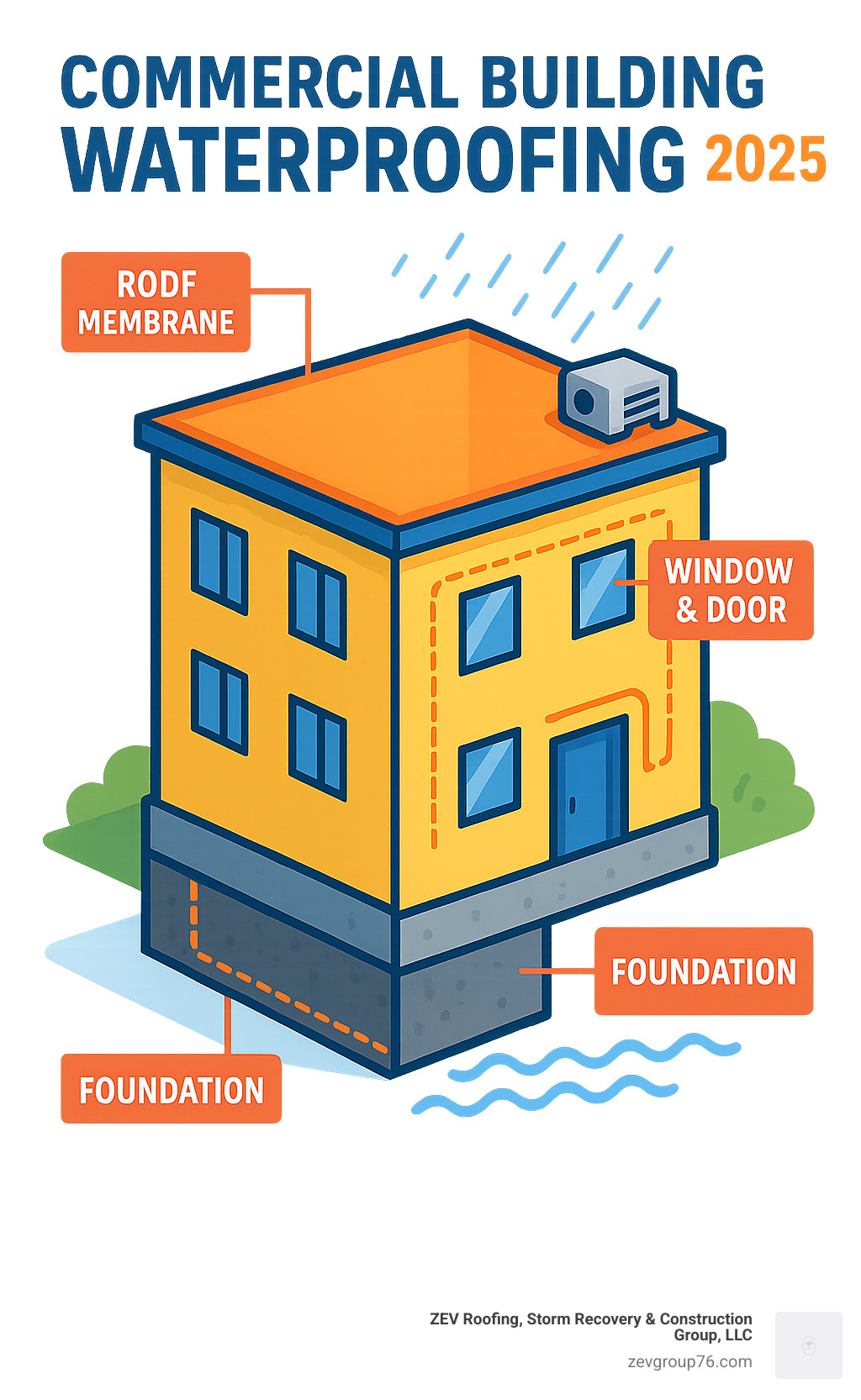
Key components of commercial waterproofing include:
- Foundation systems – Below-grade membranes and drainage to prevent groundwater infiltration
- Roof waterproofing – Liquid or sheet membranes protecting against precipitation
- Wall systems – Exterior coatings and sealants preventing façade penetration
- Deck and plaza protection – Specialized membranes for pedestrian and vehicular surfaces
- Window and door sealing – Preventing leaks at building envelope penetrations
Water damage ranks among the most common and costly property issues facing commercial buildings today. A single waterproofing failure can lead to structural deterioration, mold growth, and business disruption that far exceeds the cost of preventative measures.
Major investments deserve the best protection available. Unlike residential properties, commercial buildings house multiple businesses and tenants, making waterproofing failures exponentially more disruptive and expensive.
The stakes are particularly high in regions like Texas and New Mexico, where extreme weather patterns – from intense downpours to freeze-thaw cycles – constantly test building envelopes. Proper waterproofing isn’t just maintenance; it’s essential risk management that preserves property value, ensures occupant safety, and maintains business continuity.
Why Waterproofing is a Non-Negotiable Investment for Your Commercial Property
When it comes to commercial building waterproofing, we’re not talking about an optional upgrade or a nice-to-have feature. This is about protecting one of your most significant investments from an enemy that never sleeps: water.
Think about it this way – you wouldn’t leave your car windows down during a storm, right? Yet many property owners unknowingly leave their buildings vulnerable to water damage every single day. Water is persistent, patient, and incredibly destructive. It finds the tiniest cracks, exploits the smallest weaknesses, and can turn a minor issue into a financial nightmare faster than you can say “emergency repair.”
The numbers don’t lie. Water damage consistently ranks as one of the most expensive property disasters, with commercial buildings often facing repair bills that make even seasoned property managers wince. But here’s the thing – it’s almost entirely preventable.

Proper waterproofing delivers benefits that reach every corner of your operation. Your property value stays protected, your business continuity remains uninterrupted, and your risk exposure drops dramatically. Plus, there’s an often-overlooked bonus: energy efficiency improvements. When water infiltrates your building envelope, it compromises insulation and creates air leaks. Your HVAC system ends up working overtime, driving up energy costs while creating uncomfortable conditions for tenants and clients.
Protecting Structural Integrity and Longevity
Your building’s structure is like the skeleton of a body – once it’s compromised, everything else suffers. Water infiltration doesn’t just cause surface damage; it attacks the very foundation of your investment.
Foundation damage starts small but grows into massive problems. When water penetrates concrete, it begins a destructive process that can literally tear your building apart from the inside. Concrete spalling – that flaking and chipping you might notice on concrete surfaces – isn’t just cosmetic. It’s a warning sign that water has reached the steel reinforcement bars inside.
Here’s where things get scary: when those rebar components start corroding, they expand. This creates something called rust jacking – imagine tiny explosions happening inside your concrete, creating cracks and weakening the entire structure. The building envelope that protects everything inside begins to fail.
In Texas and New Mexico, we deal with particularly harsh conditions. Those freeze-thaw cycles we experience can turn minor cracks into major structural headaches. Water freezes, expands, and literally pushes concrete apart. Without proper waterproofing, these natural cycles become your building’s worst enemy.
The good news? Professional waterproofing stops this destruction before it starts, preserving your building’s strength for decades. More on our structural repair services can help if damage has already occurred, and understanding concrete spalling helps you spot problems early.
Safeguarding Occupant Health and Safety
Water problems don’t just threaten your building – they threaten the people inside it. Mold growth can begin within 24-48 hours of water exposure, and once it takes hold, it becomes a serious health hazard.
Mildew and mold release spores into the air, creating poor indoor air quality that can trigger respiratory health risks. We’re talking about everything from minor irritation to serious breathing problems, especially for people with allergies or asthma. The impact of moisture on indoor air quality shows just how serious these issues can become.
But the dangers aren’t just in the air. Water creates immediate slip hazards when it leaks onto floors or creates pooling areas. Worse yet, prolonged water exposure can cause structural weakness that puts everyone in the building at risk.
Nobody wants to work or visit a building that feels stuffy, smells musty, or poses safety risks. Proper commercial building waterproofing creates a healthy, safe environment that protects both your tenants and your liability exposure.
Preserving Property Value and Preventing Costly Repairs
Let’s talk dollars and cents. Water damage restoration is expensive – really expensive. We’re talking about costs that can easily reach six figures for commercial properties. But that’s just the beginning.
Avoiding expensive restoration is only part of the equation. Water damage also destroys your asset value by damaging equipment, interiors, and finishes. Warped flooring, stained ceilings, damaged furniture – these problems don’t just cost money to fix, they make your property less attractive to current and potential tenants.
Smart waterproofing lowers maintenance costs by preventing recurring problems. Instead of constantly patching and repairing water damage, you invest once in a comprehensive solution. You’ll also reduce energy loss by maintaining a tight building envelope that keeps conditioned air where it belongs.
Most importantly, proper waterproofing improves tenant and client comfort. Happy tenants stay longer, pay on time, and take better care of your property. That’s the kind of return on investment that makes perfect business sense.
Ready to protect your investment? Explore our comprehensive services and find how ZEV Roofing can safeguard your commercial property from water damage.
Key Methods and Materials for Commercial Building Waterproofing
Getting commercial building waterproofing right means choosing the perfect combination of systems and materials for each unique area of your property. Think of it like assembling a custom-custom suit of armor for your building – every piece needs to fit perfectly and work together to create an unbreakable shield against water intrusion.
The world of waterproofing can seem overwhelming with all its technical terms and material options, but the key is understanding that different parts of your building face different challenges and need different solutions. Let’s break down the main approaches and materials we use to keep your commercial property bone dry.

Below-Grade vs. Above-Grade Systems
Water attacks buildings from two main directions: from below ground and from above. Each requires a completely different defense strategy.
Below-grade waterproofing protects everything that’s underground or in contact with soil. This includes your building’s foundation, basement walls, tunnels, and any buried structural elements. The big challenge here is hydrostatic pressure – essentially, water in the soil pushing against your foundation like it’s trying to squeeze its way in.
When we’re working on below-grade systems, we have three main approaches depending on your building’s situation. Positive-side waterproofing is our preferred method when we can access the exterior walls easily. We apply the waterproof barrier directly to the side facing the water source, essentially putting up a “keep out” sign for moisture.
Sometimes exterior access isn’t possible, especially in tight urban settings. That’s when we use negative-side waterproofing, applied to the interior surface. This method manages water that’s already penetrated the substrate and directs it safely to drainage systems.
For new construction projects, we often use blindside waterproofing, where we install the waterproofing system before the foundation walls go up. This is perfect for deep foundations or zero-lot-line buildings where you won’t be able to reach the exterior once construction is complete. An overview of below-grade systems provides more technical details about these approaches.
Above-grade waterproofing handles everything from ground level up – your exterior walls, balconies, plaza decks, and roofs. These areas face different challenges like wind-driven rain, UV exposure, and temperature fluctuations. The focus here is on creating seamless barriers that can flex with the building’s natural movement while keeping water out.
Common Waterproofing Membranes and Coatings
The materials we choose depend on factors like flexibility needs, application method, and the specific challenges each area faces. Liquid-applied membranes are incredibly versatile because they cure in place to form a seamless, monolithic barrier. They’re perfect for complex shapes and areas with lots of penetrations. These include polyurethane systems that offer excellent flexibility and elastomeric coatings that can stretch and move with your building.
Sheet-based membranes come pre-manufactured and are rolled or placed into position. PVC and EPDM systems fall into this category, offering consistent thickness and proven performance. They’re particularly effective on large, relatively simple surfaces like flat roofs where their seams can be properly welded or adhered.
Bituminous membranes have been protecting buildings for decades and continue to be reliable workhorses in the waterproofing world. They handle temperature extremes well and provide excellent waterproofing performance when properly installed.
Cementitious coatings are unique because they actually become part of the concrete substrate. They’re particularly useful in areas where the waterproofing system needs to handle both positive and negative water pressure, like basement walls or water treatment facilities.
Each material has its sweet spot in terms of flexibility, application method, and best use cases. The key is matching the right material to the specific demands of each area of your building.
The Critical Role of Drainage in a Waterproofing Strategy
Here’s something many people don’t realize: waterproofing isn’t just about keeping water out – it’s also about managing the water that does get through. Even the best waterproofing systems need backup plans, and that’s where drainage comes in.
Hydrostatic pressure relief is crucial for below-grade applications. When water builds up against your foundation, it needs somewhere to go. French drains and composite drainage mats create pathways for water to flow away from your building rather than pushing against your waterproof barriers.
Sump pumps provide active water removal when passive drainage isn’t enough. In areas with high water tables or heavy rainfall, these systems work around the clock to keep water levels manageable.
The secret to long-term success is system integration – making sure your waterproofing membranes, drainage systems, and structural elements all work together as one cohesive defense system. When properly designed and installed, these systems prevent water accumulation and ensure that any moisture that does penetrate has a clear path out of your building envelope.
Water will always find the path of least resistance. Our job is to make sure that path leads away from your building, not into it.