
Why Clogged Gutters Demand Immediate Action
Clogged gutter solutions are essential for protecting your home from costly water damage. When gutters fail to channel water away from your property, the resulting problems can affect everything from your roof to your foundation.
Quick Solutions for Clogged Gutters:
- Remove debris by hand with a garden trowel and bucket.
- Flush with high-pressure water from a garden hose to clear remaining blockages.
- Clear downspout clogs using a plumber’s snake or by disassembling sections.
- Check underground drains to ensure water flows freely.
- Install gutter guards to prevent future clogs.
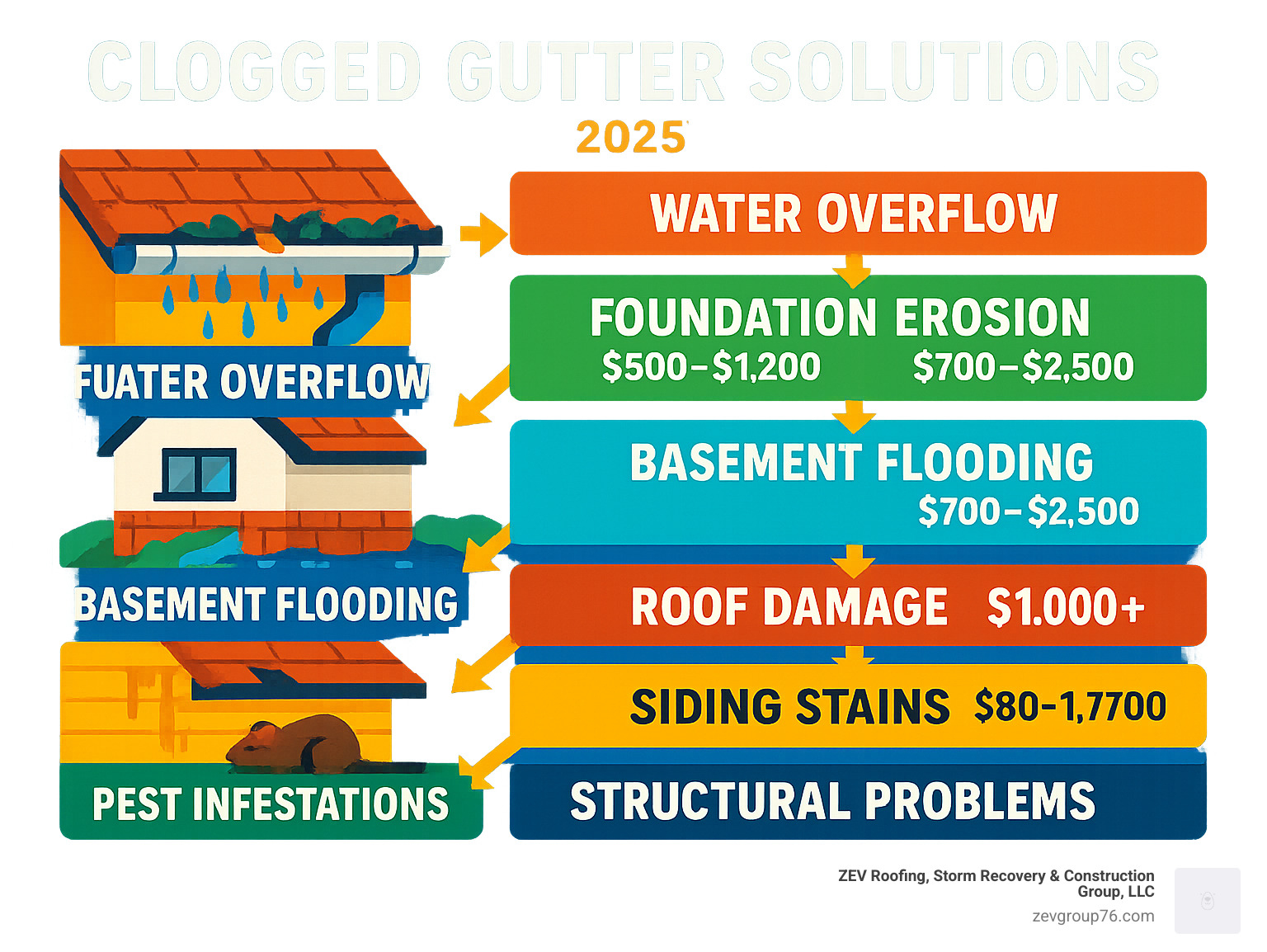
With the average water damage repair bill in 2022 at $3,600, gutter maintenance is a critical investment. Clogged gutters don’t just overflow; they create breeding grounds for mosquitoes, attract pests, and can cause foundation erosion, basement flooding, and damage to your roof and siding.
The CDC warns that stagnant water in gutters is a breeding site for disease-carrying mosquitoes. Furthermore, the US Department of Housing and Urban Development identifies improper drainage as a health hazard due to mold growth. Addressing gutter problems quickly prevents this domino effect of water damage.
First, Spot the Problem: Signs and Causes of Clogged Gutters
Your gutters are your home’s first line of defense against rain. When they’re working, you barely notice them. When they’re clogged, your house feels the effects everywhere. Fortunately, gutters usually provide clear warning signs before serious damage occurs.
The Tell-Tale Signs of a Gutter in Distress
Water overflow is the most obvious red flag. If water cascades over your gutters during a moderate rain, the blockage is so severe that water has nowhere else to go.
Sagging gutters indicate they are overburdened. Gutters aren’t designed to hold the weight of standing water and soggy debris. When you see sections pulling away from the house, it’s a sign of accumulated weight taking its toll.
Look for siding stains and peeling paint near your roofline. When water consistently overflows, it runs down your exterior walls, creating streaks and causing paint to bubble and peel, especially on the fascia boards.
A miniature garden sprouting from your gutters is a definitive sign of a clog. Seeds thrive in the mix of debris and standing water, creating a small ecosystem that signals your gutters need immediate attention.
Pest infestations are another unwelcome side effect. Stagnant water is a prime breeding ground for mosquitoes, and the CDC warns that clogged gutters can become mosquito breeding sites. Birds and squirrels also build nests in the debris, worsening the clog.
The most serious signs appear at ground level. Foundation erosion and basement moisture occur when overflowing water pools around your home’s base. This can lead to foundation cracks and water seeping into your basement, resulting in costly damage.
A quick test: tap your downspouts with a screwdriver. A dull thud instead of a hollow sound indicates a clog. If you can’t remember the last time you cleaned your gutters, that’s also a sign. Poor drainage can also create health hazards like mold and mildew.
Common Culprits Behind Gutter Blockages
Gutter blockages are usually caused by a mix of nature and normal wear.
Leaves and twigs are the classic culprits, especially in the fall. They clump together when wet, forming a dense barrier.
Pine needles are particularly troublesome. They are small enough to slip past some guards but pack together tightly, creating stubborn clogs in downspouts.
Shingle grit from aging asphalt shingles washes into gutters, mixing with other debris to create a heavy, cement-like sludge that is difficult to remove.
Animal nests from birds or squirrels can quickly block your gutters. We’ve also seen tennis balls and children’s toys create surprise obstructions.
In colder climates, ice dams form when partially clogged gutters prevent melting snow and ice from draining. The water backs up and refreezes, creating a dam that can force water under your roof shingles.
Understanding these signs and causes is the first step in finding effective clogged gutter solutions and preventing small issues from becoming expensive problems.
Your Guide to Effective Clogged Gutter Solutions
Now that you can spot the problem, it’s time to tackle those clogged gutter solutions. With the right approach and a focus on safety, cleaning gutters is a manageable task.
Safety is non-negotiable, as falls from ladders are a leading cause of home injury deaths. Always use a sturdy extension ladder on firm, level ground. Never clean gutters alone; have someone hold the ladder’s base.
Protective gear is essential. Wear thick work gloves to protect your hands from sharp debris and rusty metal, and use eye protection to keep debris from splashing into your eyes. To prevent dangerous overreaching, keep your belt buckle between the ladder rails and move the ladder frequently. Only work on clear, dry days.
DIY Clogged Gutter Solutions: Step-by-Step Cleaning
Once you’re geared up, it’s time to clean. Start near a downspout so any dislodged debris flows out of the system.
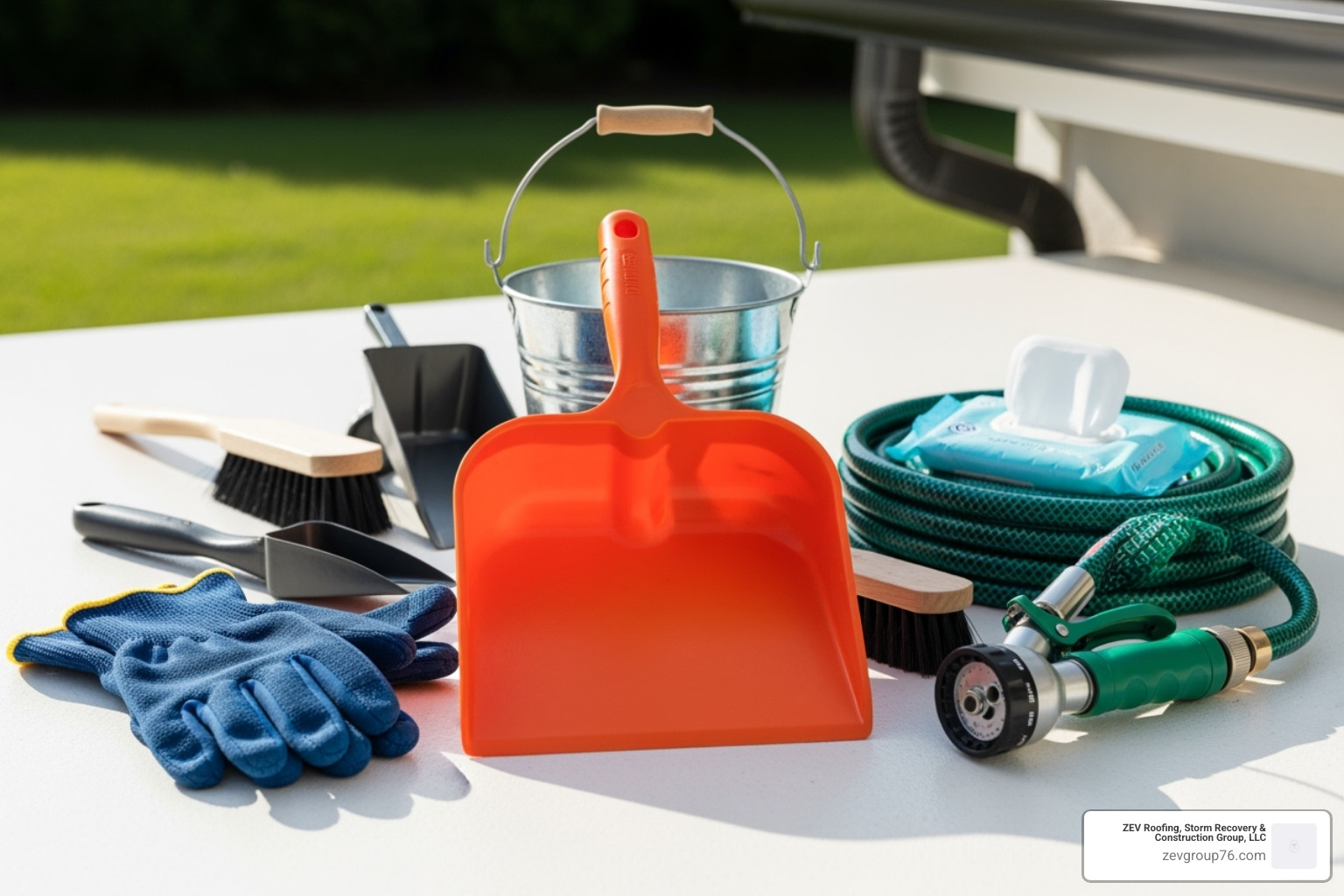
Essential tools include a gutter scoop or garden trowel for removing mucky debris, a bucket attached to your ladder with a hook, and a garden hose with a high-pressure nozzle for flushing. For single-story homes, a wet/dry vacuum or leaf blower with gutter attachments can allow you to work from the ground.
First, remove the large debris like leaves, twigs, and sludge, placing it in your bucket. Don’t be surprised to find toys or even small plants.
Next, flush the gutters with water, spraying toward the downspout. Water should flow freely. If it backs up, you have a downspout clog. While flushing, check for leaks in seams or joints. Small leaks can be fixed with gutter sealant, but larger gaps may need professional repair. If you notice roofing issues, consider our Roof Repair services for a complete solution.
Clearing Stubborn Downspout Clogs
Downspouts are magnets for stubborn clogs due to their narrow design.
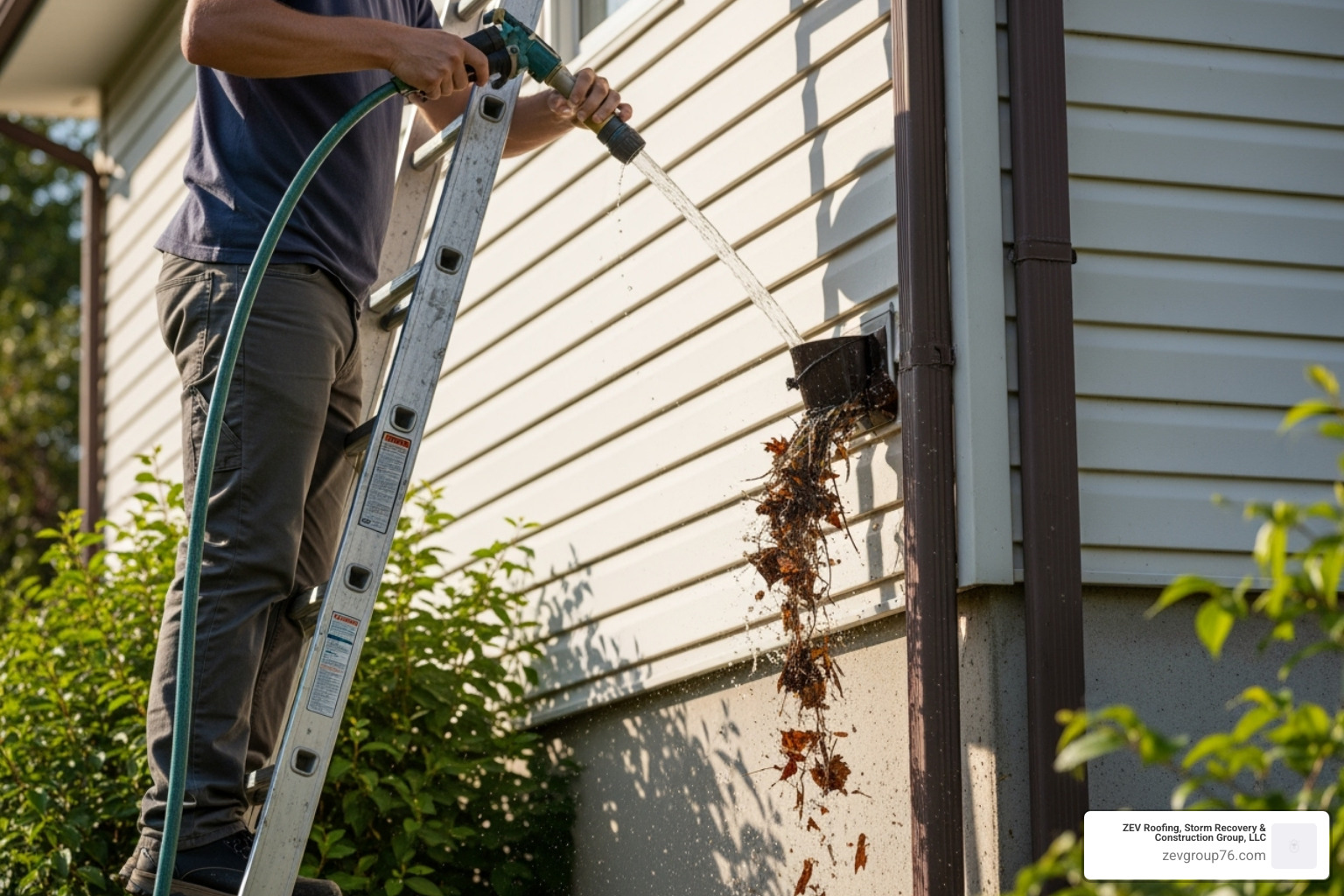
Start by removing any downspout extensions or strainers. The clog may be right at the entrance. Try gentle tapping on the downspout’s sides to dislodge minor clogs.
Insert your garden hose into the top and turn on high pressure, using a towel to create a seal. This often forces the clog out. If that fails, a plumber’s snake (handheld auger) is your best tool. Feed the flexible cable through the bends to break up the blockage.
For the toughest clogs, you may need to disassemble downspout sections by unscrewing fasteners to remove the blockage manually. If your downspouts lead to underground drains, check that they are clear by feeding a hose or auger from the exit end if possible.
Effective clogged gutter solutions restore proper water flow to protect your home from expensive damage.
Beyond Cleaning: How to Prevent Future Clogs
Climbing a ladder to clean gutters is a chore nobody enjoys. Fortunately, with the right prevention strategies, you can dramatically reduce how often you need to do it. Smart clogged gutter solutions are about stopping problems before they start.
Smart Maintenance for Healthy Gutters
Think of gutter maintenance like brushing your teeth—a little regular effort prevents bigger problems. Regular inspections and cleaning are the foundation of prevention. We recommend cleaning your gutters at least twice a year: in the spring to prepare for heavy rains, and in the fall to remove leaves before winter. If you have many nearby trees, especially pines, you may need to clean them quarterly.
After major storms, walk around your house to check for obvious issues like sagging sections or visible debris. Trimming overhanging trees also makes a huge difference, as it reduces the amount of leaves and twigs falling directly into your gutters.
Proper gutter slope is also crucial. Gutters need a slight downward angle toward the downspouts (about 1/8 to 1/4 inch per 10 feet) so water flows smoothly instead of pooling. If you notice standing water, the slope may need adjustment. This is a drainage issue our Leak Prevention services can address.
Long-Term Clogged Gutter Solutions: Are Gutter Guards Worth It?
Can you install something to eliminate gutter cleaning? Mostly, yes—but it depends on the type of guard you choose.
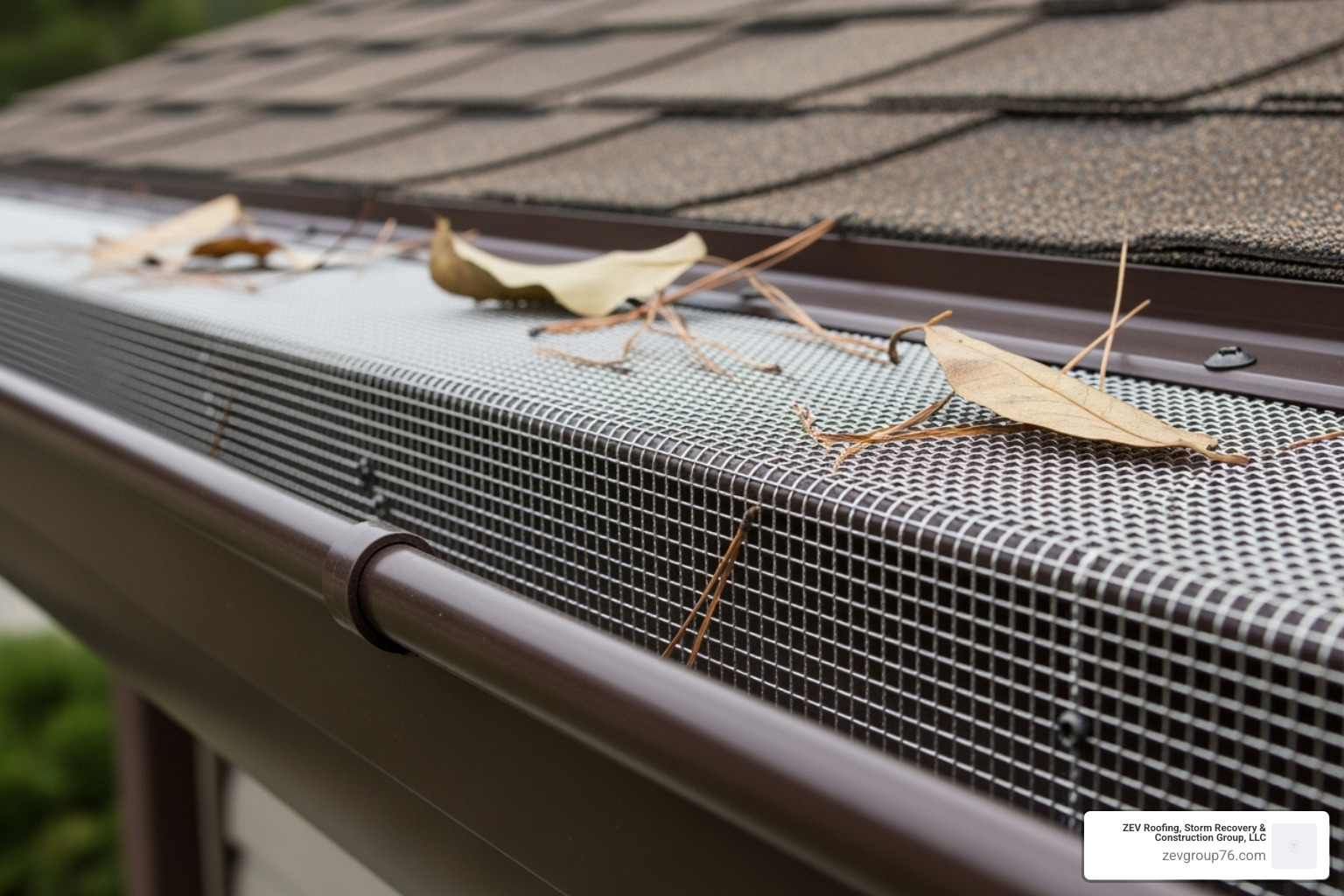
Micro-mesh guards are the gold standard. They use a fine stainless steel mesh to block everything from leaves to shingle granules and pine needles. While they are the most expensive option, they are also the most effective, requiring only occasional brushing.
Screen guards are a budget-friendly option that stops large debris like leaves but allows smaller particles like pine needles and grit to pass through.
Brush guards are bristles that sit in your gutter, catching debris while letting water flow. However, cleaning debris from the bristles can be as tedious as cleaning the gutter itself.
Foam inserts fill the gutter channel, blocking debris while letting water soak through. They are simple to install but can break down over time and may impede water flow in heavy rain.
Reverse curve guards use surface tension to direct water into the gutter while debris falls off the edge. They are durable but can be overwhelmed in torrential downpours and are more visible from the ground.
No gutter guard is completely maintenance-free, but a quality system can reduce your cleaning from a seasonal chore to an occasional check-up, a trade-off most homeowners find worthwhile.
When to Call a Professional for Gutter Issues
While many clogged gutter solutions are DIY-friendly, some situations require a professional. Expertise and specialized equipment can make all the difference in safety and effectiveness.

Multi-story homes and steep roof pitches present significant safety risks. Professional gutter technicians have the proper safety equipment, including harnesses and sturdy ladders, along with the experience to work safely at dangerous heights. No clean gutter is worth a trip to the emergency room.
Extensive damage is another clear signal to call an expert. Large cracks, multiple sagging sections, or gutters pulling away from the house indicate more than a simple clog. A professional can assess if you need repairs or a full replacement and check for related issues like fascia board rot.
If you’re dealing with foundation cracks or basement moisture, your gutters could be the hidden culprit. A professional can evaluate your entire drainage system to address both the immediate clog and the long-term water management problem.
Sometimes, the decision is practical. If you lack the time or proper tools, like a sturdy ladder, hiring a professional is a wise investment. Professional cleaning typically costs between $119 and $227, a small price compared to potential water damage repairs.
Recurring clogs, despite your best efforts, often point to underlying issues like poor gutter slope or undersized downspouts that require a professional diagnosis. If you’re uncomfortable on ladders, trust your instincts and call for service.
After severe weather, damage can go beyond simple debris. Our Storm Damage Repair services can address the full scope of weather-related gutter problems.
Frequently Asked Questions about Gutter Maintenance
Gutter maintenance isn’t exciting, but it can save you thousands in home repairs. Here are answers to common questions we hear from homeowners.
How often should I clean my gutters?
Most homeowners should clean their gutters twice a year: once in the spring and once in the fall. The fall cleaning is critical to remove leaves and debris before winter storms arrive. Spring cleaning clears out any remaining winter debris and prepares your system for heavy rains.
Your specific situation may require more frequent cleaning. If your home is surrounded by trees, especially pines or oaks, you might need to clean your gutters quarterly or after major storms. In areas like Texas and New Mexico, a single storm can deposit a season’s worth of debris. Even with gutter guards, fine debris can accumulate on top, so periodic checks are still necessary.
Can clogged gutters really damage my home’s foundation?
The answer is a resounding yes, and the damage can be devastating. When gutters are clogged, water overflows and pools around your foundation. This saturates the soil, creating hydrostatic pressure that can cause foundation cracks and compromise your home’s structural integrity.
This overflowing water also causes soil erosion, washing away the support for your foundation. The average water damage repair bill of $3,600 can seem small compared to foundation repairs, which often run into tens of thousands of dollars. This makes clogged gutter solutions one of the smartest investments for your home.
Can I repair a sagging gutter myself?
For minor sags, yes. This is often a manageable DIY repair. Sagging usually occurs when the weight of debris and water causes hangers to loosen.
Start by checking your hangers and spikes. You can often re-secure them with longer screws or replace them with stronger hardware. Always clear any clogs first, as the weight of trapped debris is often the root cause.
However, for major damage—such as extensive sagging, a damaged gutter section, or rot in the fascia board behind it—it’s time to call professionals. A DIY fix that doesn’t address underlying structural issues can end up costing more in the long run. Know your limits and prioritize safety.
Protect Your Home with Proper Gutter Care
Your gutters work tirelessly to protect your home by channeling thousands of gallons of water away each year. When they fail, the damage can be swift and expensive. Fortunately, you now have the knowledge to spot problems early and take action.
Remember the key warning signs: water cascading over the edges, sagging sections, siding stains, or a “gutter garden.” These are your home’s signals for help before small issues become major headaches.
Regular maintenance is your best defense. A simple twice-yearly cleaning schedule can prevent most disasters. For those looking for long-term clogged gutter solutions, quality gutter guards, especially micro-mesh systems, can dramatically reduce your maintenance workload.
However, not every gutter issue is a DIY project. For multi-story homes, extensive damage, or for safety reasons, calling a professional is the smart choice. There’s no shame in calling an expert when the alternative could be injury or costly water damage.
At ZEV Roofing & Construction, we understand the challenges our Texas and Eastern New Mexico climate poses to gutter systems. We proudly serve communities like Lubbock, Shallowater, Plainview, New Deal, Wolfforth, and Slaton with expert craftsmanship and durable solutions.
Don’t wait for an overflow to signal trouble. Taking action today protects your home’s foundation, siding, and your wallet tomorrow.
Ready to give your gutters the attention they deserve? Explore our professional Gutter Installation services to learn how we can help. For more home maintenance insights, Read more on our Blogs.