
Why Understanding Backflow Preventer Drips Matters for Your Water Safety
Are backflow preventers supposed to leak? The short answer is that some dripping is normal, but a constant leak is a problem. Here’s the difference:
- Normal: Brief dripping when the system shuts down or for the first 5 minutes after installation.
- Problem: Constant dripping, steady streams, gushing water, or water pooling around the device.
If you see constant dripping from your backflow preventer, it’s a serious issue that puts your drinking water at risk. These devices protect your home’s clean water from contaminants like fertilizers, pesticides, and sewage.
A backflow preventer allows water to flow in only one direction. A constant leak signals that internal parts are failing or debris is preventing a proper seal, compromising its ability to protect your water supply.
The stakes are high. A malfunctioning backflow preventer can allow contaminated water into your drinking water, potentially exposing your family to harmful chemicals and bacteria.
Understanding Your Backflow Preventer: Purpose and Normal Operation
A backflow preventer is your home’s guardian against water contamination. At ZEV Roofing & Construction, we know how vital these devices are for protecting families across Texas and New Mexico.
What is a Backflow Preventer?
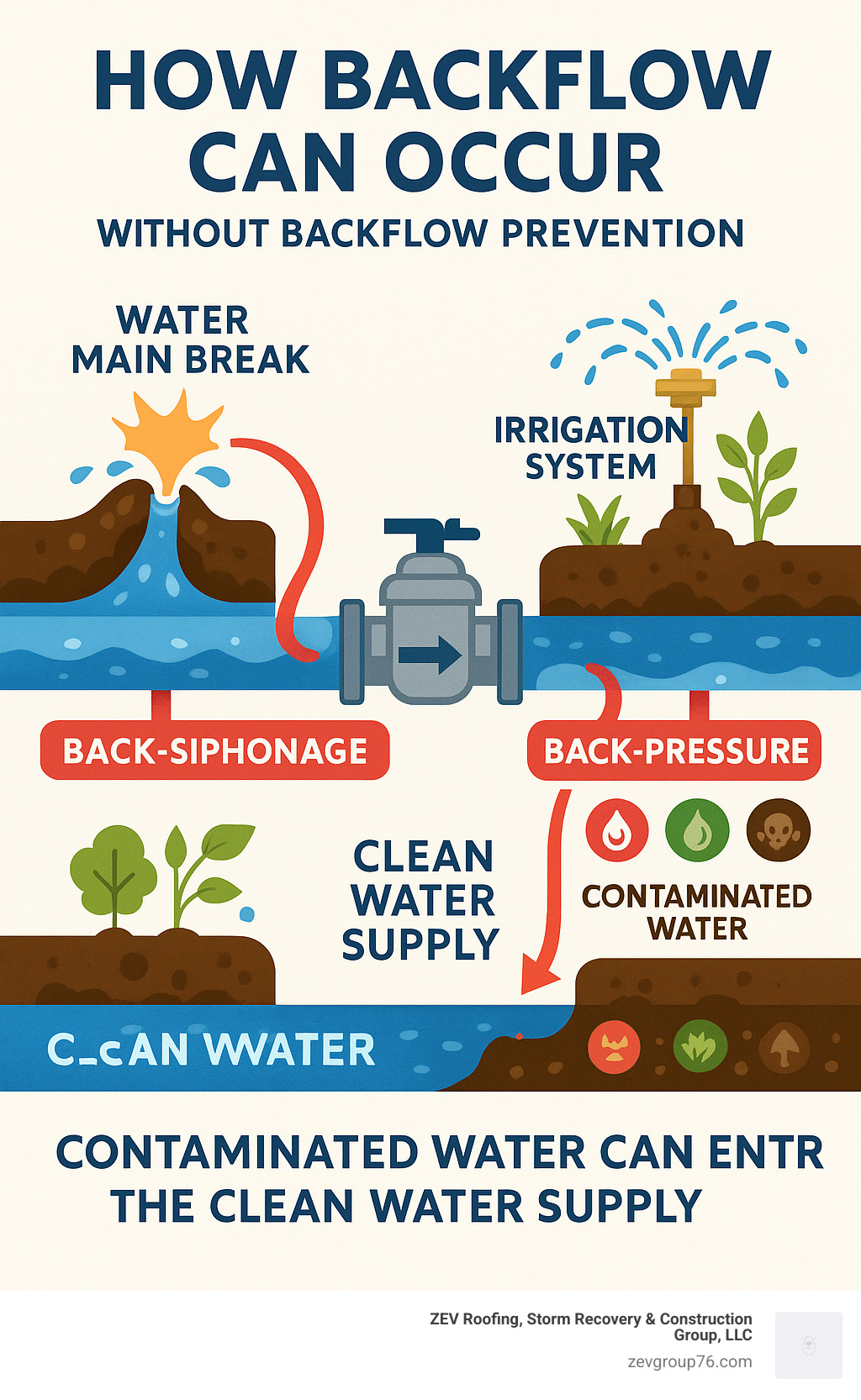
Think of it as a one-way gate for water. Its crucial job is to keep contaminated water from flowing backward into your clean drinking water supply through a process called cross-connection control.
This prevents two main problems:
- Back-siphonage: Occurs when a drop in city water pressure (like from a water main break) sucks water from your property back into the public system. This water could contain fertilizers or pesticides.
- Back-pressure: Happens when your home’s system pressure (from a boiler or pump) exceeds the city’s pressure, pushing contaminated water into clean lines.
Most cities in our service areas, including Lubbock and Plainview, require these devices to protect the community’s water supply, a mission we support in all of Our Work. The EPA information on cross-connection control highlights how critical this protection is.
When a Drip is Normal
So, are backflow preventers supposed to leak? Some brief dripping is perfectly normal and expected in a few situations:
- System Shutdown: When an irrigation system turns off, the device releases built-up pressure, causing a brief drip. This is the device working as designed.
- Initial Installation/Startup: After installation or seasonal startup, you may see drips for a few minutes as internal parts seal and pressure balances. This should stop within five minutes.
As long as the dripping is brief and stops quickly, it’s normal. A constant stream or steady dripping, however, signals a problem.
Different Types and Their Behaviors
![IMAGE showing different types of backflow preventers like RPZ, DCVA, and PVB]
Leaking behavior varies by the type of backflow preventer you have.
- Reduced Pressure Zone (RPZ) Assemblies: Used in high-risk situations, these have a relief valve designed to open and discharge water if there’s a problem. Occasional “spitting” can be normal, but constant discharge means something is wrong.
- Double Check Valve Assemblies (DCVA): These don’t have a relief valve for normal discharge. If a DCVA is leaking, it almost always indicates internal component failure.
- Pressure Vacuum Breakers (PVB): Common on residential irrigation systems, a PVB may drip briefly at shutdown. Constant leaking from its vent usually points to a faulty float or worn seals.
Knowing your device type helps you distinguish a normal drip from a red flag.
So, Are Backflow Preventers Supposed to Leak Constantly? Uncovering the Causes
Let’s be clear: backflow preventers are not supposed to leak constantly. A steady stream, gushing water, or constant pooling indicates a serious problem. A failing backflow preventer puts your family’s drinking water at risk of contamination from fertilizers, pesticides, and even sewage, which can lead to severe health issues.
Common Culprits Behind a Persistent Leak
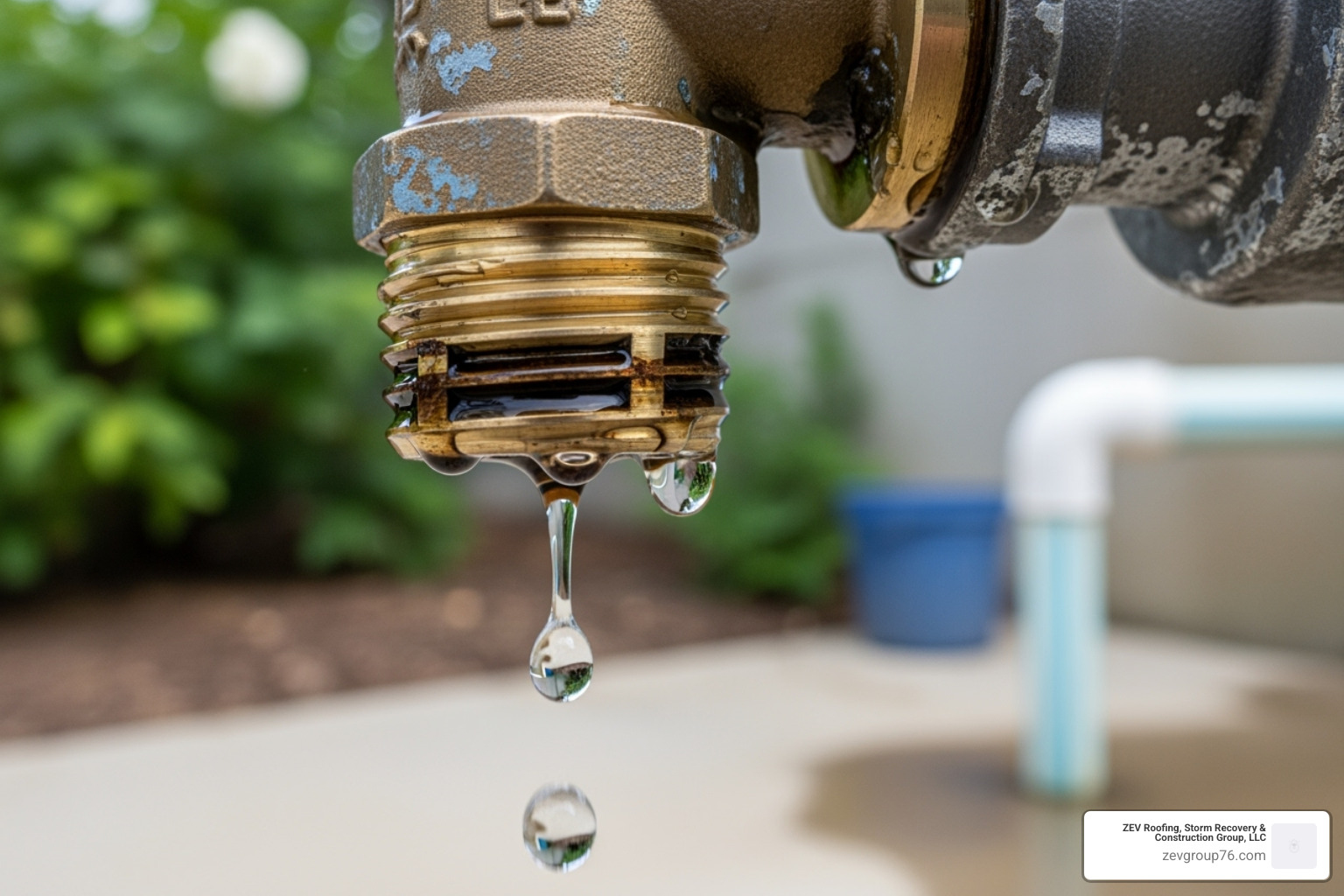
If your backflow preventer won’t stop dripping, one of these issues is likely the cause:
- Debris: Tiny particles like dirt, sand, mineral buildup, or PVC shavings can get lodged in check valves and relief valves, preventing a complete seal and causing a constant drip.
- Worn-Out Internal Parts: Over time, rubber seals, gaskets, O-rings, and springs can wear out, crack, or weaken. Constant use and pressure changes take their toll on these components.
- Incorrect Installation: Leaks can start from day one if the device was installed improperly. Overtightening connections can crack components, and incorrect placement can cause damaging pressure buildup.
- Water Hammer: Sudden pressure surges in your pipes can damage internal parts or dislodge debris, leading to leaks. Ongoing high water pressure issues can be the root cause.
Are backflow preventers supposed to leak if parts are old?
While backflow preventers aren’t supposed to leak, it’s inevitable that they will develop leaks as they age. Their internal rubber and plastic parts simply wear out over time from constant use. These devices have a limited lifespan, and as sealing components break down, you’ll notice persistent dripping.
This is why regular maintenance and annual testing are so important. At ZEV Roofing & Construction, we emphasize catching these problems early, before they compromise your water safety. You can learn more about our commitment on our About Us page. Knowing when normal aging becomes a dangerous failure is key to taking timely action.
How to Spot a Problem: Signs of a Malfunctioning Backflow Preventer
Knowing how to spot a malfunctioning backflow preventer can protect your family’s health and save you from costly repairs. Catching these early warning signs is key.
Visible Signs of a Failing Device
Look for these obvious clues that your device needs attention:
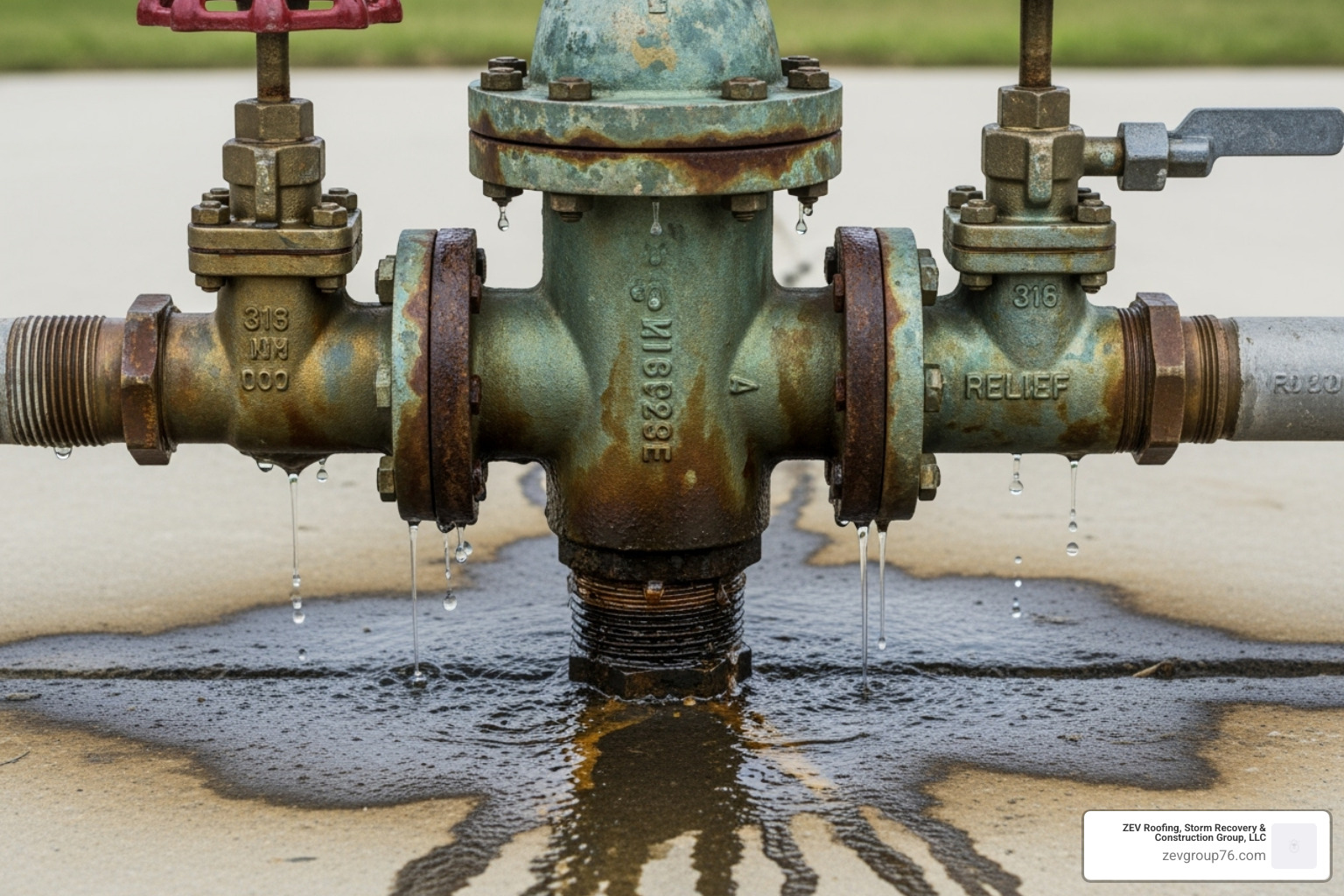
- Constant Dripping or Gushing Water: As we’ve covered, backflow preventers are not supposed to leak continuously. A steady stream or gush is a major red flag.
- Water Pooling Around the Base: The ground around your device should be dry. Soggy patches or standing water indicate a leak.
- Rust and Corrosion: While minor surface rust is normal, heavy corrosion, especially around connections, often points to a persistent leak.
- Discolored Water: If your tap water suddenly appears cloudy or rusty, your backflow preventer may have failed. This is a serious health risk that requires immediate professional help.
Other Telltale Symptoms
Sometimes, the signs of a problem appear elsewhere in your plumbing system:
- Sudden Changes in Water Pressure: A struggling backflow preventer can cause noticeable drops in water pressure throughout your home.
- Unusual Noises: A properly working device is quiet. Pay attention to hissing (escaping air), banging (loose internal parts), or gurgling (trapped air or debris), as these can signal a malfunction.
Most of these issues develop over time, giving you a chance to act before a complete failure occurs. Paying attention to these signals is the first step.
A Step-by-Step Guide to Troubleshooting and Fixing Minor Leaks
While some minor backflow preventer leaks can be a DIY fix, it’s crucial to know when to call a professional to avoid bigger problems.
Safety first: Always shut off the main water supply to the device before starting any work. This prevents water waste and potential contamination. Wear gloves and safety glasses.
DIY Troubleshooting Steps for Simple Issues
For small drips, especially from hose-end types, gather an adjustable wrench, replacement washers, a small brush, and a flashlight. Then, try these steps:
- Inspect for Debris: Carefully disconnect the device and look inside for dirt, sand, or PVC shavings that could be preventing a proper seal.
- Clean Check Valves: If your model allows, access and remove the spring assembly. Rinse it under clean water, working the spring to dislodge any hidden grit.
- Check Washer Seals: Leaks at connection points are often due to a dried-out or cracked rubber washer. Replace it, ensuring the new one sits flat.
- Avoid Overtightening: Hand-tighten fittings first. For hose threads, don’t use Teflon tape. Overtightening, especially with plastic parts, can cause cracks or damage the seal.
After your repair, turn the water back on slowly. A brief drip is normal, but if it continues after five minutes, the problem is more complex.
When to Stop and Call a Professional
It’s time to call for expert help in these situations:
- Persistent Leaks: If your DIY troubleshooting doesn’t stop the drip, the issue is likely internal.
- Gushing Water: If water is gushing or you suspect a cracked valve body, shut off the water immediately and call a pro.
- Required Annual Testing: In Texas and New Mexico, annual testing by a certified technician is often required by law to stay compliant and avoid water service interruption.
- Complex Internal Repairs: Fixing check valves, relief valves, or other internal components requires specialized tools and certification. A botched repair can compromise your water safety.
Our team at ZEV Roofing & Construction can connect you with certified professionals to handle any backflow issue, ensuring your water is safe and your system is compliant. Don’t hesitate to Contact Us for expert help.
Prevention and Compliance: Keeping Your Water Safe
Proactive maintenance is the best way to ensure your backflow preventer works correctly and to avoid contaminated water and costly repairs. Backflow preventers aren’t supposed to leak when properly maintained.
Preventative Maintenance Checklist
Follow this checklist for a long-lasting, reliable backflow preventer:
- Regular Visual Inspections: Every few months, check for constant drips, water pooling, or heavy rust. Catching problems early is key.
- Annual Professional Testing: This is often required by law in Texas and New Mexico. A certified tester will ensure all components are working and handle the required paperwork for your local water authority.
- Winterization: In areas with freezing temperatures like West Texas, properly drain and insulate your device to prevent burst pipes. Follow the manufacturer’s instructions for winterizing.
- System Flushing: Occasionally flush your irrigation lines to clear out debris before it can damage the backflow preventer’s internal parts.
For more property maintenance tips, check out our Blogs.
Understanding Local Regulations
Local municipalities have strict rules for backflow prevention to protect the public water supply.
- Installation & Testing: Requirements for installation and annual testing vary by location. Your device is likely registered with the local water provider, and they require proof of annual testing by a certified professional. Non-compliance can lead to fines or water service disconnection.
- Certified Professionals Only: Testing and complex repairs must be done by a technician with specific training and certification. Always verify a professional’s credentials.
Texas provides a helpful consumer’s guide to backflow prevention. At ZEV Roofing & Construction, we understand the regulations in our service areas and can help ensure your system is compliant.
Frequently Asked Questions about Backflow Preventer Leaks
We get a lot of questions about backflow preventers at ZEV Roofing & Construction. Here are answers to the most common concerns about the keyword: “Are backflow preventers supposed to leak?”
Why does my backflow preventer leak only when the system turns off?
This is often completely normal. When an irrigation system shuts down, the device relieves built-up pressure, causing a brief discharge of water. This is a designed safety feature, especially common with PVB and RPZ assemblies, that prevents system damage. If the water stops flowing within a minute, you’re in the clear. A constant stream, however, indicates a problem.
Are backflow preventers supposed to leak after a few years?
While not “supposed to,” it’s realistic to expect that backflow preventers will eventually develop leaks as they age. The internal rubber seals, O-rings, and plastic parts wear out from constant use, pressure, and temperature changes. This natural aging process is why annual testing is crucial to spot and replace worn components before they fail completely and cause a persistent leak.
Can I repair a backflow preventer myself?
For very simple tasks like cleaning debris or replacing an external washer on a hose-end unit, a DIY approach may be fine. However, anything involving internal components is a job for a professional. Internal repairs and mandatory annual testing must be performed by a certified professional who has the right tools, training, and knowledge of local health codes. Attempting complex repairs yourself can damage the device and compromise your water safety. For help with persistent leaks or finding a certified technician, Contact Us.
Conclusion
So, are backflow preventers supposed to leak? The answer is nuanced: brief, occasional dripping is normal, but a constant leak is a serious problem that puts your water safety at risk.
A properly working backflow preventer is a silent guardian, protecting your family from contaminants like fertilizers and pesticides. When it leaks constantly, that protection is compromised.
Most issues are preventable with regular maintenance. By watching for warning signs like constant dripping, gushing water, or pressure changes, you can catch problems early. While simple cleaning is a DIY task, complex repairs and required annual testing should be left to certified professionals.
At ZEV Roofing, Storm Recovery & Construction Group, LLC, we know that protecting your property is a comprehensive job. Storms can introduce debris into water lines, impacting your backflow preventer. Our team serves West Texas and Eastern New Mexico, from Lubbock to Plainview, with expert construction and repair solutions.
Don’t gamble with your water quality. A small drip today can become a major contamination risk tomorrow. Protect your family and community by taking action. Learn more about safeguarding your property with our leak prevention services. Your water safety is worth the investment.